Your Search Results

      • China Social Sciences Press

        Established in June, 1978, China Social Sciences Press is sponsored by Chinese Academy of Social Sciences. CSSP is a national level publishing house focusing on academic publications mainly in the field of humanities and social sciences. In 1993, CSSP won the honorary title of “national outstanding press” granted by Propaganda Department of CPC and General Administration of Press and Publication.The missions and the publication targets of CSSP are: first, editing and publishing the most outstanding academic results of CASS and great achievements from the fields of social sciences and culture circle in China, including academic works, text books, reference books and popular books; second, translating Chinese versions of significant humanities and social sciences books written by western authors.

        View Rights Portal
      • Strange Days Books, Social Cooperative Enterprise

        Strange Days Books is a social cooperative publishing firm based in Crete, Greece. Since 2012 we have published almost 100 books. Every year we organize Sand Festival, an online Writers’ Workshop and - in cooperation with www.eyelands.gr literary magazine - the one and only international short story competition based in Greece, plus our International Book Awards. In 2019 SDB was the only publishing house in Greece to receive approval by the European Union’s Creative Europe translation funding program for its project "Strange Days in Europe”. Strange Days Books is an entirely independent publisher, primarily interested in showcasing the wealth of new writing voices in Greece. We work closely with our authors to create books that will appeal to booklovers, books about the present, books that strive to push the art of literature forward, books written with talent and passion, books that challenge the way we see the world, books bursting with new ideas and intriguing perspectives.

        View Rights Portal
      • Trusted Partner
        Business, Economics & Law
        June 2025

        Foundations of social ecological economics

        The fight for revolutionary change in economic thought

        by Clive L Spash

        This book explores radical dissent from orthodox mainstream economics, and sets out a theoretically grounded vision for the emerging paradigm of social ecological economics. At the heart of this paradigmatic shift lies an acknowledgement of the inextricable embeddedness of economies in biophysical reality and social structure. The struggle for this transformative vision unfolds through a critical examination of mainstream environmental thought, followed by a nuanced evaluation of contributions from Marxists, socialists, critical institutionalists, feminists and Post-Keynesians grappling with the urgent environmental crisis. Synthesising insights from these diverse and heterodox schools, the book navigates the philosophical underpinnings of science, embracing a critical realist approach that challenges not only mainstream economic thought but also eclectic pluralism, relativism and strong constructionism. The question of what constitutes revolutionary science is explored in light of works by Kuhn, Schumpeter and Neurath, emphasising the pivotal role of values and ideology in works from Marx to Gramsci. Building on these radical and philosophical foundations, the book articulates a preanalytic vision of social ecological economics, dismantling entrenched notions of growth and efficiency in favour of a framework centered on social provisioning and needs embedded in ethics. In a thought-provoking conclusion, the book applies its analytical lens to the multiple crises of modernity within industrialised capital-accumulating economies. An agenda for social ecological transformation toward diverse alternative economies emerges, providing a compelling call to action in the face of contemporary challenges.

      • Trusted Partner
        Humanities & Social Sciences
        July 2015

        The social face of the Regulatory State

        Reforming public services in Europe

        by Sandra Eckert

        Capitalism in Europe is transformed as a result of liberalisation, privatisation and regulatory reform. Unravelling the state as service provider and employer has posed significant social policy challenges to the emerging regulatory state. The book examines how these challenges have been addressed in different varieties of capitalism and across sectors. It compares change in France, Germany and the United Kingdom, takes stock of the reform movement in Europe and internationally, and discusses policy approaches in telecoms and electricity. It pays special attention to falling mail volumes as a driver of change and a new wave of privatisation triggered by the European sovereign debt crisis. The analysis reveals whether and how social policy goals have been addressed by means of regulation and redistribution. The book explains why liberal market economies have been postal reform latecomers and why the regulatory state benefits consumers, but is likely to leave employees' interests behind. ;

      • Trusted Partner
        Humanities & Social Sciences
        April 2025

        Bordering social reproduction

        Migrant mothers and children making lives in the shadows

        by Rachel Rosen, Eve Dickson

        Bordering social reproduction explores what happens when migrants subject to policies that seek to deny them the means of life nonetheless endeavour to make and sustain meaningful lives. Developing innovative theorisations of welfare bordering, the volume provides rich ethnographic insights into the everyday lives of destitute mothers and children who are denied mainstream welfare support in the United Kingdom due to their immigration status. This book shows how enforced destitution and debt work alongside detention and deportation as part of a tripartite of exclusionary technologies of the racial state. It advances the novel concept of weathering to comprehend mother's and children's life-making practices under duress - arguing that these are neither acts of heroic resilience nor solely symptomatic of lives rendered disposable, but indications of the fragilities of repressive migration regimes and, on occasion, refusals to accept their terms of existence.

      • Trusted Partner
      • Trusted Partner
        Humanities & Social Sciences
        April 2007

        Labour, the state, social movements and the challenge of neo-liberal globalisation

        by Andrew Gamble, Steven Fielding, Steve Ludlam, John Callaghan, Andrew Taylor, Steve Ludlam, Stephen Wood

        With the emergence of neo-liberalism in the 1980s as the dominant domestic and international political-economic orthodoxy, labour as both a social category and political movement tended to be written off or ignored by academics, politicians and commentators. However, at a time when the world's working class is growing faster than at any previous time in history and neo-liberalism is widely challenged, this orthodoxy is clearly inadequate. The spread of global production means that to ignore labour, its organisations, interests and politics, is to ignore one of the key components of that process. Labour organisations have not gone away and neither has the state: their relationship remains as significant as ever. The strategic relationship between trade unions and social movements, nationally and internationally, has also developed markedly, especially in the south. New patterns of resistance are emerging to challenge global capital and those who assert that globalisation is irresistible. ;

      • Trusted Partner

        Socially Competent Kids

        How to Stimulate the Eight Key Social and Emotional Skills of your Child

        by Steven Pont

        What makes children truly happy? The answer to that question is simple, but challenging: their social-emotional competences. Socially competent kids feel good and are more successful in different aspects of life.   One of the most important tasks of a parent is therefore to support their children in developing social skills. This book shows parents how to encourage the social-emotional development of their children. It distinguishes eight skills: awareness of the self, social awareness, self-management, goal oriented behaviour, relational skills, personal responsibility, decision making, and positive thinking.   After giving a clear introduction on social-emotional development, the author explains these skills in more detail in eight chapters. Each chapter contains a detailed real-life example, psychological background information, and practical interventions ready for use by parents, teachers and other caretakers. The interventions and examples are aimed at four to twelve year olds.

      • Trusted Partner
        Humanities & Social Sciences
        March 2026

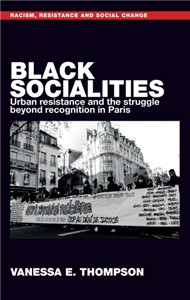
        Black socialities

        Urban resistance and the struggle beyond recognition in Paris

        by Vanessa Eileen Thompson

        From author: This is a cutting-edge exploration of black urban politics in Parisian racialized working class and working poor districts, the formation of abolition geography, and the possibilities of new forms of political blackness. In Black Socialities. Urban resistance and the struggle beyond recognition in Paris, Vanessa E. Thompson argues that black urban politics in the French banlieues are multi-racial and spatially grounded towards abolition. Based on a close engagement with urban black activist practices against racial imagery in the city, policing and state racism, and housing insecurity, she shows how radical anti-racism goes beyond struggles for recognition and unfolds alongside new formations of political blackness that is based on urban conviviality. This form of black politics has much to teach us in this current conjuncture of liberal anti-racism and state recognition politics.

      • Trusted Partner
        Humanities & Social Sciences
        September 2018

        The social world of early modern Westminster

        Abbey, court and community, 1525–1640

        by Peter Lake, J. F. Merritt, Anthony Milton, Jason Peacey, Alexandra Gajda

        Early modern Westminster is familiar as the location of the Royal Court at Whitehall, parliament, the law courts and the emerging West End, yet it has never been studied in its own right. This book is the first study to provide an integrated picture of the town during this crucial period in its history. It reveals the often problematic relations between the diverse groups of people who constituted local society - the Court, the aristocracy, the Abbey, the middling sort and the poor - and the competing visions of Westminster's identity which their presence engendered. Different chapters study the impact of the Reformation and of the building of Whitehall Palace; the problem of poverty and the politics of communal responsibility; the character and significance of the increasing gentry presence in the town; the nature and ideology of local governing elites; the struggles over the emerging townscape; and the changing religious culture of the area, including the problematic role of the post-Reformation Abbey. A comprehensive study of one of the most populous and influential towns in early modern England, this book covers the entire period from the Reformation to the Civil War. It will make fascinating reading for historians of English society, literature and religion in this period, as well as enthusiasts of London's rich history.

      • Trusted Partner
      • Trusted Partner
        Humanities & Social Sciences
        March 2014

        Transforming conflict through social and economic development

        Practice and policy lessons from Northern Ireland and the Border Counties

        by Sandra Buchanan

        Transforming conflict through social and economic development examines lessons learned from the Northern Ireland and Border Counties conflict transformation process through social and economic development and their consequent impacts and implications for practice and policymaking, with a range of functional recommendations produced for other regions emerging from and seeking to transform violent conflict. It provides, for the first time, a comprehensive assessment of the region's transformation activity, largely amongst grassroots actors, enabled by a number of specific funding programmes, namely the International Fund for Ireland, Peace I, II and III and INTERREG I, II and IIIA. These programmes have been responsible for a huge increase in grassroots practice which to date has attracted virtually no academic analysis; this book seeks to fill this gap. In focusing on the politics of the socioeconomic activities that underpinned the elite negotiations of the peace process, key theoretical transformation concepts are firstly explored, followed by an examination of the social and economic context of Northern Ireland and the border counties. The three programmes and their impacts are then assessed before considering what policy lessons can be learned and what recommendations can be made for practice. This is underpinned by a range of semi-structured interviews and the author's own experience as a project promoter through these programmes in the border counties for more than a decade. The book will be essential reading for students, practitioners and policymakers in the fields of peace and conflict studies, conflict transformation, peacebuilding, post-agreement reconstruction and the political economy of conflict and those interested in contemporary developments in the Northern Ireland peace process. ;

      • Trusted Partner
        The Arts
        November 2009

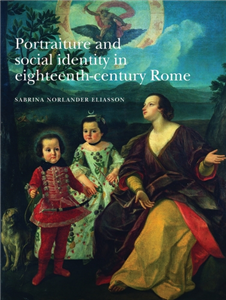
        Portraiture and social identity in eighteenth-century Rome

        by Sabrina Eliasson

        Portraiture and Social Identity in Eighteenth-Century Rome sheds new light on the relationship between portraiture, social affirmation and the myth of Antiquity as it was experienced and elaborated in eighteenth-century Rome. Drawing upon a wealth of unpublished documents and previously unexamined literary texts, it offers new insights and readings into how the experience of the City in terms of abstract or concrete appropriation affected the ways of portraying native or visiting elite sitters. The Grand Tour portrait, usually discussed as a purely British phenomenon, is here put in its original context of production and compared to the portraits of the Romans themselves. Portraiture and social identity in eighteenth-century Rome will become essential reading for anyone with a particular interest in eighteenth-century art and its social use. ;

      • Trusted Partner
        Humanities & Social Sciences
        October 2008

        The social context of economic change in Britain

        Between policy and performance

        by Terrence Casey

        This important book, newly available in paperback, examines a period of dramatic economic change in Britain during the Thatcher era. The Conservatives' free market policies generally improved the performance of the economy in Britain, but some parts of the country still did poorly (for example northern England). Casey argues that this was as a result of variations in social contexts - a combination of institutions, interests and economic culture. Southern England, possessing a more individualistic culture and higher levels of entrepreneurialism, has a 'market responsive' social context that can prosper under free market policies. Social context is thus a crucial intervening variable between the policies selected by decision-makers and the performance of economies, the key for enhancing prosperity is the proper match between economic policies and the context in which they are implemented. The social context of economic change in Britain provides an original theoretical framework linking economic growth and civil society and offers a unique insight into the Thatcher era. This book will be of interest to students of British politics and comparative political economy, public policy and political history. ;

      • Trusted Partner
        Business, Economics & Law
        February 2024

        Foundations of social ecological economics

        by Clive L Spash

      • Trusted Partner
      • Trusted Partner
        Social issues (Children's/YA)
        June 2014

        Youth policy, civil society and the modern Irish state

        by Fred Powell, Martin Geoghegan, Margaret Scanlon, Katharina Swirak

        This book, now available in paperback, explores the development of youth policy and youth work in Ireland from the mid-nineeenth century to the present day. Based on original research, funded by the Irish Research Council for the Humanities and Social Sciences (IRCHSS), it looks at the social construction of youth, the emergence of the early youth movements and the nature and scope of contemporary youth work. Key issues include: the shift from mainstream to targeted provision, the professionalisation of the sector and the increased partnership between the state and voluntary sector. A second major theme is the treatment of young people in industrial and reformatory schools, with particular reference to the findings of the Ryan Report on child abuse (2009). This is the only book which combines an exploration of the history and current scope of youth work and youth policy, and which is based on comprehensive original research. It will be essential reading for lecturers and students in youth work, social sciences, social history and related fields.

      • Trusted Partner
        Humanities & Social Sciences
        October 2025

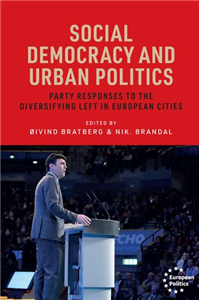
        Social democracy and the urban scene

        Party responses to the diversifying centre-left

        by Nik. Brandal, Øivind Bratberg

        Social democratic parties struggle to appeal to a divided electorate. Particularly prescient is the clash between working-class voters thatare socially conservative and middle-class voters who are liberally inclined but economicallyleft. Are politics and policies that appeal to both even a possibility? Nowhere is thatdebate more acute than in European cities, yet in no other political space are answers more likely to be found.Where urban voters turn left, they are increasingly attracted by radical and green alternatives to social democracy.Social democracy and urban politicsdelves into the changing relationship between these three party families on the urban scene. Mapping electoral geography, governing strategies and the interface between parties and social movements on the left, the authors reflect upon the formation and dilemmas of a broader progressive alliance.

      • Trusted Partner
        November 2025

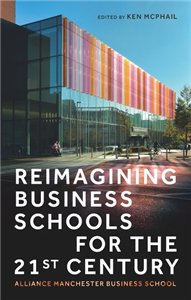
        Reimagining business schools for the 21st century

        Alliance Manchester Business School

        by Kenneth McPhail, James Pendrill

        Whether it's dealing with regional economic disparities, global geopolitical upheaval, climate change, or the impact of new technologies such as artificial intelligence, we are living in pivotal times. To mark its 60th anniversary in 2025, this accessible book from Alliance Manchester Business School outlines in detail how business schools can play a significant role in confronting these huge challenges, and equip the next generation of business leaders with the skills they need to embrace them. Informing public and political debate on the role of business in both the causes and solutions to our biggest challenges the book offers a rethinking of the role of business in society. It will also discuss specific examples of how collaborations with business are leading to impact and change in society. Featuring a range of thought-provoking essays co-authored by eminent academics and business leaders, this collection will challenge the status quo and outline how business and management research is helping address grand challenges, generate economic growth, inform policy development, and define business thinking over the next generation.

      • Trusted Partner
        Humanities & Social Sciences
        March 2017

        Unfit for heroes

        Reconstruction and soldier settlement in the empire between the wars

        by Kent Fedorowich

        Research on soldier settlement has to be set within the wider history of emigration and immigration. This book examines two parallel but complementary themes: the settlement of British soldiers in the overseas or 'white' dominions, Australia, Canada, New Zealand and South Africa, between 1915 and 1930. One must place soldier settlement within the larger context of imperial migration prior to 1914 in order to elicit the changes in attitude and policy which occurred after the armistice. The book discusses the changes to Anglo-dominion relations that were consequent upon the incorporation of British ex-service personnel into several overseas soldier settlement programmes, and unravels the responses of the dominion governments to such programmes. For instance, Canadians and Australians complained about the number of ex-imperials who arrived physically unfit and unable to undertake employment of any kind. The First World War made the British government to commit itself to a free passage scheme for its ex-service personnel between 1914 and 1922. The efforts of men such as L. S. Amery who attempted to establish a landed imperial yeomanry overseas is described. Anglicisation was revived in South Africa after the second Anglo-Boer War, and politicisation of the country's soldier settlement was an integral part of the larger debate on British immigration to South Africa. The Australian experience of resettling ex-servicemen on the land after World War I came at a great social and financial cost, and New Zealand's disappointing results demonstrated the nation's vulnerability to outside economic factors.

      Subscribe to our

      newsletter