Your Search Results

      • Trusted Partner
        Teaching, Language & Reference
        June 2025

        Pluriversal sovereignty and the state

        by Ajay Parasram

      • Trusted Partner
        Business, Economics & Law
        January 2026

        Sovereignty disputes and the United Nations Convention on the Law of the Sea

        A public order perspective

        by Thomas D. Grant

        Because maritime questions are often admixed with territorial sovereignty questions, parties sometimes seek to settle them together. Jurisdiction under the United Nations Convention on the Law of the Sea-UNCLOS-according to the received view does not encompass disputes concerning territorial sovereignty. In this book, international law scholar and practitioner Thomas D. Grant argues that the received view overstates the exclusion of sovereignty disputes. In Coastal State Rights, UNCLOS Annex VII arbitrators overstated the scope of the term 'sovereignty dispute' as well, an error of definition compounded when they ignored evidence probative as to whether a sovereignty dispute exists. Examining UNCLOS, its drafting history, and decades of decided cases, Sovereignty Disputes and the United Nations Convention on the Law of the Sea relates an important problem of international dispute settlement to the public order of which UNCLOS forms part.

      • Trusted Partner
        Humanities & Social Sciences
        August 2025

        Invoking Empire

        Imperial citizenship and Indigenous rights across the British World, 1860–1900

        by Darren Reid

        Invoking Empire examines the histories of Canada, South Africa, Australia, and New Zealand during the transitional decades between 1860-1900, when each gained some degree of self-government yet still remained within the sovereignty of the British Empire. It applies the conceptual framework of imperial citizenship to nine case studies of settlers and Indigenous peoples who lived through these decades to make two main arguments. It argues that colonial subjects adapted imperial citizenship to both support and challenge settler sovereignty, revealing the continuing importance of imperial authority in self-governing settler spaces. It also posits that imperial citizenship was rendered inoperable by a combination of factors in both Britian and the colonies, highlighting the contingency of settler colonialism on imperial governmental structures and challenging teleological assumptions that the rise of settler nation states was an inevitable result of settler self-government.

      • Trusted Partner
        Humanities & Social Sciences
        July 2025

        Cross-border intimacies

        Affect and emotions in marriage migration

        by Lara Momesso

        Since the early 1990s, economic exchanges between China and Taiwan have paved the way to migration across a previously closed border and to social and cultural interactions between the two populations. Despite these broader changes, the unresolved issue of Taiwan sovereignty has tainted not only the relations between the two governments but also the everyday life of those who move across the Taiwan Strait. In this politicised environment, intimate and affective practices linked to cross-border marriage and family formation are never just private. Instead, they are deeply entangled with the emotional and affective processes generated at the macro and meso level of political and social life and revolving around national interests. Tracing the intimate, emotional and affective practices linked to family creation, identity formation and integration with the local and national communities, this ethnographic study offers a subjective, dynamic, and complex picture of what it means to be a mainland spouse in Taiwan.

      • Trusted Partner
        Humanities & Social Sciences
        April 2024

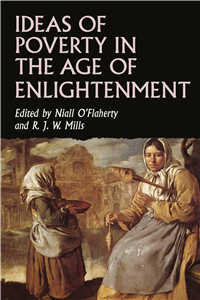
        Ideas of poverty in the Age of Enlightenment

        by Niall O’Flaherty, Robin Mills

        This collection of essays examines the ways in which poverty was conceptualised in the social, political, and religious discourses of eighteenth-century Europe. It brings together experts with a wide range of expertise to offer pathbreaking discussions of how eighteenth-century thinkers thought about the poor. Because the theme of poverty played important roles in many critical issues in European history, it was central to some of the key debates in Enlightenment political thought throughout the period, including the controversies about sovereignty and representation, public and private charity, as well as questions relating to crime and punishment. The book examines some of the most important contributions to these debates, while also ranging beyond the canonical Enlightenment thinkers, to investigate how poverty was conceptualised in the wider intellectual culture, as politicians, administrators and pamphlet writers grappled with the issue.

      • Trusted Partner
        Humanities & Social Sciences
        April 2017

        Negotiating sovereignty and human rights

        by Sibylle Scheipers

      • Trusted Partner
        Humanities & Social Sciences
        January 2015

        The reign of Richard II

        From minority to tyranny 1377–97

        by Alison McHardy

        The long-awaited prequel to Chronicles of the revolution covers the first twenty years (1377-97) of Richard II's reign. This richly-documented period offers exceptional opportunities and challenges to students, and the editor has selected material from a wide range of sources: well-known English chronicles, foreign chronicles and legal, administrative and financial records. These are arranged chronologically to form a coherent narrative of the reign. Clear and lively commentary and notes enable readers to make the fullest use of each document. The introduction describes the complex domestic and international situation which confronted the young king and offers guidance on the strengths and weaknesses of the reign's leading chronicles. The dramatic and diverse politics of the reign of Richard II make this the ideal special subject and an accessible, affordable, student-friendly documentary history of Richard II's reign has long been needed. This book is designed to fill that gap.

      • Trusted Partner
        Humanities & Social Sciences
        April 2025

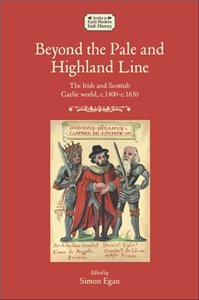
        Beyond the Pale and Highland Line

        The Irish and Scottish Gaelic world

        by Simon Egan

        This book offers important new insights into the history and culture of the Gaelic-speaking world from the mid-fifteenth century through to the reign of James VI and I. Throughout this period, the reach of the English and Scottish crowns within these western regions was limited. The initiative lay with local communities and royal power was contingent upon negotiating with well-established and largely autonomous aristocratic lineages. Moreover, events within this western world could exert a powerful, often unpredictable, influence upon the affairs of the wider archipelago. Using a series of case studies, this collection examines the evolving relationship between Ireland and Scotland in rich detail. It demonstrates how this world interacted with the encroaching English and Scottish states and underlines the importance of paying closer attention to this neglected area of Irish and British history.

      • Trusted Partner
        Humanities & Social Sciences
        August 1998

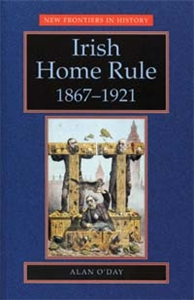
        Irish Home Rule

        by Alan O'Day, Mark Greengrass

        Irish Home Rule considers the pre-eminent issue in British politics during the late nineteenth and early twentieth-centuries. It is the first account to explain the various self-government plans, to place these in context and examine the motives for putting the schemes forward. The book distinguishes between moral and material home rulers, making the point that the first appealed especially to outsiders, some Protestants and the intelligentsia, who saw in self-government a means to reconcile Ireland's antagonistic traditions. In contrast, material home rulers viewed a Dublin Parliament as a forum of Catholic interests. This account appraises the home rule movement from a fresh angle, distinguishing it from the usual division drawn between physical force and constitutional nationalists It maintains that an ideological continuity runs from Young Ireland, the Fenians, the early home rulers including Isaac Butt and Charles Stewart Parnell, to the Gaelic Revivalists to the Men of 1916. These nationalists are distinguishable from material home rulers not on the basis of methods or strategy but by a fundamental ideological cleavage. ;

      • Trusted Partner
        Humanities & Social Sciences
        June 2022

        People power

        by Robert Ingram, Christopher Barker

      • Trusted Partner
        Humanities & Social Sciences
        May 2009

        Direct rule and the governance of Northern Ireland

        by Derek Birrell

        This is the first comprehensive study of direct rule as the system of governance which operated in Northern Ireland for most of the period between 1972 and 2007. The major institutions of governance are described and examined in detail, including the often neglected sectors of the role of the Westminster parliament, the civil service, local government, quangos, ombudsmen offices, cross-border structures and the public expenditure process. The book explains how the complex system covering transferred, reserved and excepted functions worked and provided viable governance despite political violence, constitutional conflict and political party disagreements. In addition, a comparison is drawn between direct rule and devolution, analysing both the positive and negative impact of direct rule, as well as identifying where there has been minimal divergence in processes and outcomes. It will prove an invaluable reference source on direct rule and provide a comparative basis for assessing devolution for students of public administration, government, politics, public policy and devolution. ;

      • Trusted Partner
        Humanities & Social Sciences
        May 2020

        Governing Britain

        by Philip Norton

      • Trusted Partner
        Literature & Literary Studies
        June 2026

        The Queen, or the Excellency of Her Sex

        by Lisa Hopkins

      • Trusted Partner
        Literature & Literary Studies
        January 2017

        Literary and visual Ralegh

        by J. B. Lethbridge, Christopher Armitage

      • Trusted Partner
        Humanities & Social Sciences
        June 2025

        Conquering the maharajas

        by Harrison Akins

      • Trusted Partner
        Humanities & Social Sciences
        December 2021

        Translations, an autoethnography

        by Paul Carter

      • Trusted Partner
        Humanities & Social Sciences
        May 2023

        Decolonising the Hajj

        The pilgrimage from Nigeria to Mecca under empire and independence

        by Matthew Heaton

        Muslims from the region that is now Nigeria have been undertaking the Hajj for hundreds of years. But the process of completing the pilgrimage changed dramatically in the twentieth century as state governments became heavily involved in its organization and management. Under British colonial rule, a minimalist approach to pilgrimage control facilitated the journeys of many thousands of mostly overland pilgrims. Decolonization produced new political contexts, with nationalist politicians taking a more proactive approach to pilgrimage management for both domestic and international reasons. The Hajj, which had previously been a life-altering journey undertaken slowly and incrementally over years, became a shorter, safer, trip characterized by round trip plane rides. In examining the transformation of the Nigerian Hajj, this book demonstrates how the Hajj became ever more intertwined with Nigerian politics and governance as the country moved from empire to independence.

      • Trusted Partner
        Humanities & Social Sciences
        November 2024

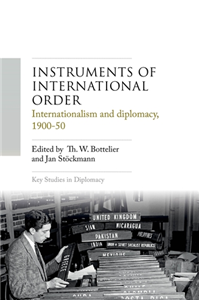
        Instruments of international order

        Internationalism and diplomacy, 1900-50

        by Thomas W. Bottelier, Jan Stöckmann

        During the first half of the twentieth century, world politics was reshaped in pursuit of a new international order. The ideological foundations of the 'new diplomacy' (and its fate during the interwar period) are well known. This book instead examines the practices of internationalism and diplomacy from the First Hague Conference of 1899 to the aftermath of the Second World War. By focusing on these practices, such as disarmament regimes or public diplomacy, and their use as instruments to build international order(s), it emphasises the constructed, contested, and experimental character of what subsequently became a standard repertoire of international politics. Essays from a range of interdisciplinary scholars address well-established principles such as self-determination, and also less prominent practices such as small arms control or parliamentary inquiry. The book makes a major contribution to the growing historiography on twentieth-century internationalism.

      Subscribe to our

      newsletter