Your Search Results

      • Spilbulu Verlag

        Geschichten, die Dich in Deiner Identität bestärken und inspirieren, einfach Du zu sein!  Spilbulu möchte Dich auf eine humorvolle, aber tiefe Reise zum Nachdenken mitnehmen. Eine Reise, die Dich ermutigt niemals vor Deinem Herzensziel zu kapitulieren!  Es ist nur unmöglich, wenn Du aufgibst!

        View Rights Portal
      • World for kids

        Our passion is to show kids, how colourful and fascinating the world is. There is not only one way to live but so many. We love curious children and we do the books they need to explore the world. So we do travel books for kids and novels for the journey in a hammock.

        View Rights Portal
      • Trusted Partner
        The Arts
        October 2023

        Windows for the world

        Nineteenth-century stained glass and the international exhibitions, 1851–1900

        by Jasmine Allen

        Windows for the world explores the display and reception of nineteenth-century British stained glass in a secular exhibition context. International in scope, the book focuses on the global development of stained glass in this period as showcased at, and influenced by, these exhibitions. It recognises those who made and exhibited stained glass and demonstrates the long-lasting impact of the classification and modes of display at these events. A number of exhibits are illustrated in colour and are analysed in relation to stylistic developments, techniques and material innovations, as well as the broader iconographies of nation and empire in the nineteenth century.

      • Trusted Partner
        Humanities & Social Sciences
        January 2026

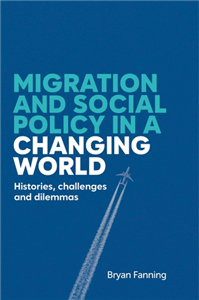
        Migration and social policy in a changing world

        Histories, challenges and dilemmas

        by Bryan Fanning

        Migration and social policy in a changing world bridges the generally separate fields of social policy and migration studies. This book traces social policy responses to migration from the Industrial Revolution to today's era of globalisation and large-scale migration. Through case studies from across the globe, the book explores key themes including rural-urban migration, social citizenship, welfare internationalism and diasporic care systems. It examines how migrants are included in or excluded from social citizenship in host societies, and how they become providers of welfare services such as health and social care. Moving beyond a methodological nationalist focus, the book investigates migrant incorporation into welfare states through family networks, faith communities, and other informal welfare structures. It combines migrants' experiences with host societies' immigration politics, institutional perspectives and policies to present a comprehensive analysis of the migration-welfare relationship. This volume fills a gap in academic literature and offers policymakers, practitioners and scholars a framework for understanding the interplay between migration and social policy in our changing world.

      • Trusted Partner
      • Trusted Partner
        Humanities & Social Sciences
        March 2024

        How to be multiple

        The philosophy of twins

        by Helena de Bres, Julia de Bres

        In How to be multiple, Helena de Bres - a twin herself - argues that twinhood is a unique lens for examining our place in the world and how we relate to other people. The way we think about twins offers remarkable insights into some of the deepest questions of our existence, from what is a person? to how should we treat one another? Deftly weaving together literary and cultural history, philosophical enquiry and personal experience, de Bres examines such thorny issues as binary thinking, objectification, romantic love and friendship, revealing the limits of our individualistic perspectives. In this illuminating, entertaining book, wittily illustrated by her twin sister, de Bres ultimately suggests that to consider twinhood is to imagine the possibility of a more interconnected, capacious human future.

      • Trusted Partner
        Humanities & Social Sciences
        October 2021

        Higher education in a globalising world

        Community engagement and lifelong learning

        by Peter Mayo

        This book focuses on current policy discourse in Higher Education, with special reference to Europe. It discusses globalisation, Lifelong Learning, the EU's Higher Education discourse, this discourse's regional ramifications and alternative practices in Higher Education from both the minority and majority worlds with their different learning traditions and epistemologies. It argues that these alternative practices could well provide the germs for the shape of a public good oriented Higher Education for the future. It theoretically expounds on important elements to consider when engaging Higher Education and communities, discussing the nature of the term 'community' itself. Special reference is accorded to the difference that lies at the core of these ever-changing communities. It then provides an analysis of an 'on the ground project' in University community engagement, before suggesting signposts for further action at the level of policy and provision. This book is relevant to United Nations Sustainable Development Goal 4, Quality education

      • Trusted Partner
        The Arts
        December 2025

        The double game of music

        Paradoxes of power, status and class in music education

        by Live Weider Ellefsen, Petter Dyndahl, Anne Jordhus-Lier, Siw Graabræk Nielsen

        The double game of music imagines music education as a series of games - each with its own rules, play currency and players - to challenge readers to rethink the significance of music and musical upbringing in shaping social structures. Drawing on their own empirical research and a wide range of international contributions, the authors unravel the intertwining of social positioning and power hierarchies with players beliefs in the pure values and virtues of their games, whether these relate to parenting, children's play, schooling, academic pursuits, musical leisure activities or the television and music industries. In a world where music is often celebrated as an important tool for inclusion and democratisation, this groundbreaking book offers a timely critique, revealing complexities and contradictions that tend to be overlooked by teachers, researchers, politicians and others interested in the powers of music education.

      • Trusted Partner
      • Trusted Partner
        Humanities & Social Sciences
        June 1999

        The rise and fall of world orders

        by Torbjorn Knutsen

        Drawing in lessons from 400 years of Great-Power politics, this volume challenges both the "declinist" arguments and the overstretched hypothesis of Paul Kennedy to develop an alternative approach to the debate on the rise and fall of the Great Powers. The first half of the book compares the Spanish, Dutch and the First and Second British world orders. It identifies their common features in order to find the most salient causes for their rise as world powers, and the most probable reasons for their decline. The second half of the book addresses the American world order in the 20th century, from Pax Americana to the End of US Hegemony. The author sees the dissolution of the Soviet Union and the resurgence of the US as evidence of the role played by normative dimensions, commonly underestimated in International Relations analysis. Theoretically challenging, Knutsen's volume provides a fresh approach to debates in international relations aimed at both students and scholars.

      • Trusted Partner
        Humanities & Social Sciences
        January 2013

        Christian Dualist Heresies in the Byzantine World, c. 650-c. 1450

        by Janet Hamilton, Bernard Hamilton

        Christian dualism originated in the reign of Constans II (641-68). It was a popular religion, which shared with orthodoxy an acceptance of scriptual authority and apostolic tradition and held a sacramental doctrine of salvation, but understood all these in a radically different way to the Orthodox Church. One of the differences was the strong part demonology played in the belief system. This text traces, through original sources, the origins of dualist Christianity throughout the Byzantine Empire, focusing on the Paulician movement in Armenia and Bogomilism in Bulgaria. It presents not only the theological texts, but puts the movements into their social and political context.

      • Trusted Partner
        Humanities & Social Sciences
        November 2023

        Critical theory and human rights

        From compassion to coercion

        by David McGrogan

        This book describes how human rights have given rise to a vision of benevolent governance that, if fully realised, would be antithetical to individual freedom. It describes human rights' evolution into a grand but nebulous project, rooted in compassion, with the overarching aim of improving universal welfare by defining the conditions of human well-being and imposing obligations on the state and other actors to realise them. This gives rise to a form of managerialism, preoccupied with measuring and improving the 'human rights performance' of the state, businesses and so on. The ultimate result is the 'governmentalisation' of a pastoral form of global human rights governance, in which power is exercised for the general good, moulded by a complex regulatory sphere which shapes the field of action for the individual at every turn. This, unsurprisingly, does not appeal to rights-holders themselves.

      • Trusted Partner
        Business, Economics & Law
        June 2025

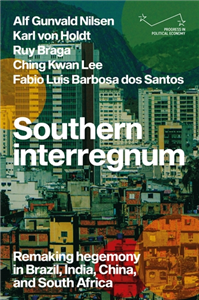
        Southern interregnum

        Remaking hegemony in Brazil, India, China, and South Africa

        by Alf Gunvald Nilsen, Karl von Holdt, Ruy Braga, Ching Kwan Lee, Fabio Luis Barbosa dos Santos

        How do governing elites in the global South attempt to remake hegemony in a conjuncture of durable crisis? This is the question at the core of Southern interregnum, a comparative conjunctural analysis of hegemonic projects in Brazil, India, China, and South Africa. Working with a Gramscian notion of crisis, centred on the interregnum as an enduring period of instability and uncertainty, in which hegemonic authority erodes and competing projects for crisis resolution emerge, the book proposes a novel critical reading of the convulsions that are currently reshaping the political economy of the global South and the world-system. Mapping the variegated trajectories of elite projects to reconcile accumulation and legitimation - and probing the limits of these projects - the book breaks new ground in the study of the contemporary global South.

      • Trusted Partner
        Medicine
        February 2025

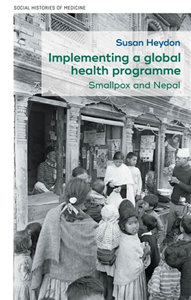
        Implementing a global health programme

        Smallpox and Nepal

        by Susan Heydon

        Worldwide eradication of the devastating viral disease of smallpox was devised as a distant global policy, but success depended on implementing a global vaccination programme within nation states. How this was achieved remains relevant and topical for responding to today's global communicable disease challenges. The small and poor Himalayan kingdom of Nepal faced enormous geographical and infrastructure challenges if it was going to succeed in a nationwide vaccination programme. This book acknowledges the key role of the WHO but disrupts the top-down, centre-led standard narrative. Against a background of widespread internal political and social change, Nepal's programme was expanded, effectively decentralised and a vaccination strategy introduced that aligned with people's beliefs. Few foreign personnel were involved.

      • Trusted Partner
        Humanities & Social Sciences
        July 2006

        India in a globalized world

        by Sagarika Dutt, Caroline Wilding

        This book looks at India in the context of a globalized world. It starts by looking at the history of Indian civilization, exploring the roots of Indian identity and highlighting processes such as foreign invasions, foreign trade, cultural imperialism, colonial rule and the growth of Indian nationalism. The book examines the gradual democratization of Indian politics. Cultural and ethnic divisions in Indian society are examined in depth, as are the problems that have prevented economic development and stood in the way of economic liberalization. The history of India's integration into the global economy is considered, and the opportunities available to the country in the early years of the 21st century are detailed. The final chapters consider the Indian government's perception of the Indian diaspora, as well as the changing priorities reflected in India's foreign policy since 1947.

      • Trusted Partner
        International relations
        December 2014

        India in a globalized world

        by Sagarika Dutt

        This book, newly available in paperback, looks at India in the context of a globalized world. It starts by looking at the history of Indian civilization, exploring the roots of Indian identity and highlighting processes such as foreign invasions, foreign trade, cultural imperialism, colonial rule and the growth of Indian nationalism. The book examines the gradual democratization of Indian politics. Cultural and ethnic divisions in Indian society are examined in depth, as are the problems that have prevented economic development and stood in the way of economic liberalization. The history of India's integration into the global economy is considered, and the opportunities available to the country in the early years of the twenty-first century are detailed. The final chapters consider the Indian government's perception of the Indian diaspora, as well as the changing priorities reflected in India's foreign policy since 1947.

      • Trusted Partner
        Science & Mathematics
        September 2024

        The elephant and the dragon in contemporary life sciences

        A call for decolonising global governance

        by Joy Y. Zhang, Saheli Datta Burton

        This book provides a powerful diagnosis of why the global governance of science struggles in the face of emerging powers. Through unpacking critical events in China and India over the past twenty years, it demonstrates that the 'subversiveness' assumed in the two countries' rise in the life sciences reflects many of the regulatory challenges that are shared worldwide. It points to a decolonial imperative for science governance to be responsive and effective in a cosmopolitan world. By highlighting epistemic injustice within contemporary science, the book extends theories of decolonisation.

      • Trusted Partner
        Humanities & Social Sciences
        August 2008

        Time and world politics

        Thinking the present

        by Kimberly Hutchings, Simon Tormey, Jon Simons

        This book offers the first authoritative guide to assumptions about time in theories of contemporary world politics. It demonstrates how predominant theories of the international or global 'present' are affected by temporal assumptions, grounded in western political thought, that fundamentally shape what we can and cannot know about world politics today. The first part of the book traces the philosophical roots of assumptions about time in contemporary political theory. The second part examines contemporary theories of world politics, including liberal and realist International Relations theories and the work of Habermas, Hardt and Negri, Virilio and Agamben. In each case, it is argued, assumptions about political time ensure the identification of the particular temporality of western experience with the political temporality of the world as such and put the theorist in the unsustainable position of holding the key to the direction of world history. In the final chapter, the book draws on postcolonial and feminist thinking, and the philosophical accounts of political time in the work of Derrida and Deleuze, to develop a new 'untimely' way of thinking about time in world politics. ;

      • Trusted Partner
        Humanities & Social Sciences
        December 2011

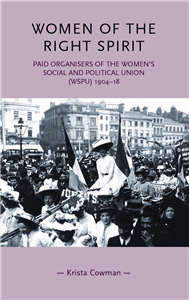
        Women of the right spirit

        Paid organisers of the Women's Social and Political Union (WSPU), 1904–18

        by Krista Cowman, Pamela Sharpe, Penny Summerfield, Lynn Abrams, Cordelia Beattie

        This book is the first investigation on how official organizers built and sustained the national militant campaign of the Women's Social and Political Union between 1903 and 1918. Whilst the overall policy of the Union was devised by an ever-decreasing circle of women, centred around the mother-daughter team of Emmeline and Christabel Pankhurst, much of its actual activity, including its more extreme militant actions such as arson, was devised and implemented by these organizers who worked in the provinces and in London. Women of the right spirit reveals organizers to be a diverse bunch of women, whose class backgrounds ranged from the aristocratic to the extremely impoverished. It describes the ways in which they were recruited and deployed, and the work they undertook throughout Britain. The exhausting pace of their itinerant life is revealed as well as the occasions when organizers fell out with their employers or their own branches. Taking the story of the WSPU's workers up to the end of the First World War, it considers what directions they took when votes for women became a reality. The book will appeal to academics, postgraduates and undergraduates with an interest in women's history, as well as a more general readership wishing to understand the extent of support for the votes for women campaign and the mechanisms through which it organized. ;

      • Trusted Partner

      Subscribe to our

      newsletter