
Your Search Results
-

-

Agriculture & International Development
Textbooks, research and professional titles in Agriculture and International Development
View Rights Portal
-
Promoted Content

 The ArtsMarch 1905
Concerning the Spiritual in Art
by Wassily Kandinsky
A pioneering work in the movement to free art from its traditional bonds to material reality, this book is one of the most important documents in the history of modern art. Written by the famous nonobjective painter Wassily Kandinsky (1866–1944), it explains Kandinsky's own theory of painting and crystallizes the ideas that were influencing many other modern artists of the period. Along with his own groundbreaking paintings, this book had a tremendous impact on the development of modern art. Kandinsky's ideas are presented in two parts. The first part, called "About General Aesthetic," issues a call for a spiritual revolution in painting that will let artists express their own inner lives in abstract, non-material terms. Just as musicians do not depend upon the material world for their music, so artists should not have to depend upon the material world for their art. In the second part, "About Painting," Kandinsky discusses the psychology of colors, the language of form and color, and the responsibilities of the artist. An Introduction by the translator, Michael T. H. Sadler, offers additional explanation of Kandinsky's art and theories, while a new Preface by Richard Stratton discusses Kandinsky's career as a whole and the impact of the book. Making the book even more valuable are nine woodcuts by Kandinsky himself that appear at the chapter headings. This English translation of Über das Geistige in der Kunst was a significant contribution to the understanding of nonobjectivism in art. It continues to be a stimulating and necessary reading experience for every artist, art student, and art patron concerned with the direction of 20th-century painting.
-
Promoted Content

 Literature & Literary StudiesOctober 2023
Spectral Dickens
The uncanny forms of novelistic characterization
by Alexander Bove
Drawing on the recent ontological turn in critical theory, Spectral Dickens explores an aspect of literary character that is neither real nor fictional, but spectral. This work thus provides an in-depth study of the inimitable characters populating Dickens' illustrated novels using three hauntological concepts: the Freudian uncanny, Derridean spectrality, and the Lacanian real. Thus, while the current discourse on character studies, which revolves around values like realism, depth, and lifelikeness, tends to see characters as mimetic of persons, this book invents new critical concepts to account for non-mimetic forms of characterization. These spectral forms bring to light the important influence of developments in nineteenth-century visual culture, such as the lithography and caricature of Daumier and J.J. Grandville. The spectrality of novelistic characters developed here paves the way for a new understanding of fictional characters in general.
-
 Trusted Partner
 Humanities & Social SciencesJuly 2025
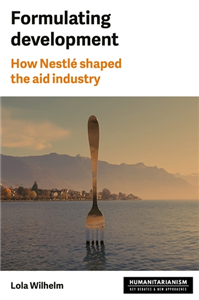
Formulating development
How Nestlé shaped the aid industry
by Lola Wilhelm
In the 1970s, Nestlé became a lightning rod for criticism against the food industry's negative impacts on humans and their environment, especially in the Global South. But what has so far eluded historical scrutiny is that the picture was more nuanced. This book tells the exclusive story of how the Swiss food giant, and more broadly corporate capitalism, have shaped the aid industry since the late nineteenth century. It follows Nestlé's bid for a share of the humanitarian market brokered by the Red Cross in wartime Europe, of its clinical trials in Swiss and Senegalese maternities, and of its agricultural modernisation schemes in Mexico, India, and the Ivory Coast. Based on extensive research in the firm's own historical archives and the records of national and international aid agencies, the volume interrogates the legacies of this long history for international development today.
-
Trusted Partner
 Humanities & Social SciencesOctober 2021
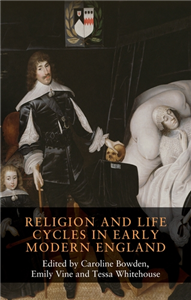
Religion and life cycles in early modern England
by Caroline Bowden, Emily Vine, Tessa Whitehouse
Religion and life cycles in early modern England assembles scholars working in the fields of history, English literature and art history to further our understanding of the intersection between religion and the life course in the period c. 1550-1800. Featuring chapters on Catholic, Protestant and Jewish communities, it encourages cross-confessional comparison between life stages and rites of passage that were of religious significance to all faiths in early modern England. The book considers biological processes such as birth and death, aspects of the social life cycle including schooling, coming of age and marriage and understandings of religious transition points such as spiritual awakenings and conversion. Through this inclusive and interdisciplinary approach, it seeks to show that the life cycle was not something fixed or predetermined and that early modern individuals experienced multiple, overlapping life cycles.
-
Trusted Partner
 Humanities & Social SciencesApril 2021
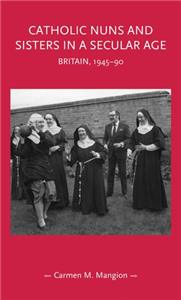
Catholic nuns and sisters in a secular age
Britain, 1945–90
by Carmen M. Mangion
This is the first in-depth study of post-war female religious life. It draws on archival materials and a remarkable set of eighty interviews to place Catholic sisters and nuns at the heart of the turbulent 1960s, integrating their story of social change into a larger British and international one. Shedding new light on how religious bodies engaged in modernisation, it addresses themes such as the Modern Girl and youth culture, '1968', generational discourse, post-war modernity, the voluntary sector and the women's movement. Women religious were at the forefront of the Roman Catholic Church's movement of adaptation and renewal towards the world. This volume tells their stories in their own words.
-
Trusted Partner
 Humanities & Social SciencesMay 2024
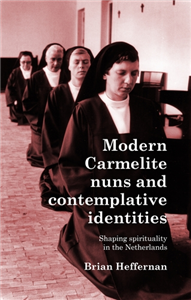
Modern Carmelite nuns and contemplative identities
Shaping spirituality in the Netherlands
by Brian Heffernan
Discalced Carmelite convents are among the most influential wellsprings of female spirituality in the Catholic tradition, as the names of Teresa of Avila, Therese of Lisieux and Edith Stein attest. Behind these 'great Carmelites' stood communities of women who developed discourses on their relationship with God and their identity as a spiritual elite in the church and society. This book looks at these discourses as formulated by Carmelites in the Netherlands, from their arrival there in 1872 up to the recent past, providing an in-depth case study of the spiritualities of modern women contemplatives. The female religious life was a transnational phenomenon, and the book draws on sources and scholarship in English, Dutch, French and German to provide insights on gendered spirituality, memory and the post-conciliar renewal of the religious life.
-
Trusted Partner
 Humanities & Social SciencesApril 2022
Chinese religion in contemporary Singapore, Malaysia and Taiwan
The cult of the Two Grand Elders
by Fabian Graham
In Singapore and Malaysia, the inversion of Chinese Underworld traditions has meant that Underworld demons are now amongst the most commonly venerated deities in statue form, channelled through their spirit mediums, tang-ki. The Chinese Underworld and its sub-hells are populated by a bureaucracy drawn from the Buddhist, Taoist and vernacular pantheons. Under the watchful eye of Hell's 'enforcers', the lower echelons of demon soldiers impose post-mortal punishments on the souls of the recently deceased for moral transgressions committed during their prior incarnations. Chinese religion in contemporary Singapore, Malaysia and Taiwan offers an ethnography of contemporary Chinese Underworld traditions, where night-time cemetery rituals assist the souls of the dead, exorcised spirits are imprisoned in Guinness bottles, and malicious foetus ghosts are enlisted to strengthen a temple's spirit army. Understanding the religious divergences between Singapore and Malaysia (and their counterparts in Taiwan) through an analysis of socio-political and historical events, Fabian Graham challenges common assumptions about the nature and scope of Chinese vernacular religious beliefs and practices. Graham's innovative approach to alterity allows the reader to listen to first-person dialogues between the author and channelled Underworld deities. Through its alternative methodological and narrative stance, the book intervenes in debates on the interrelation between sociocultural and spiritual worlds, and promotes the destigmatisation of spirit possession and discarnate phenomena in the future study of mystical and religious traditions.
-
Trusted Partner
 Humanities & Social SciencesJuly 2020
Political theologies and development in Asia
by Giuseppe Bolotta, Philip Fountain, R. Michael Feener
-
Trusted Partner

 2025
2025Why Be a Christian Today?
by Elisabeth Zoll / Thomas Seiterich (eds.)
The exciting texts and reports by professing Christians offer a fresh perspective for all those who have cultivated a Christian spirituality for many years. However, the book also provides easy access for those who are newly interested in the Christian faith. There are probably as many professions of Christian faith as there are believers in the world. But what do Christians think and how have they been moulded? Elisabeth Zoll and Thomas Seiterich have compiled very personal ideas about the Christian faith in this book. When selecting the contributors, the editors deliberately chose not to include people with church offices or specialised theologians. Irrespective of church policy issues and church scandals, the contributors have provided insights into their path to faith.
-
Trusted Partner
 Literature & Literary StudiesOctober 2025
Objects of belief
Material culture and religious writings in late Medieval England
by Joshua Easterling, Fiona Somerset
Objects in late medieval Europe were a means for lay people and clergy to negotiate their access to powers beyond the everyday, in folk practice as well as religious observance. As has been noted by scholars, this period is marked by a profusion of objects granted special importance, imaginary as well as material. These objects prompt reconsideration of cultural and intellectual frameworks, for example of superstition, reform, and heresy, that never quite successfully contain them. Essays in this volume center attention on these things themselves, from puppets to rosaries, as indeed do the written accounts through which they are often mediated. With a focus on England, contributors re-evaluate our understanding of works and authors including Geoffrey Chaucer, Walter Hilton, Nicholas Love, Julian of Norwich, miracles of the Virgin, Edward Hall's Chronicle, the Wycliffite Glossed Gospels, and the Croxton Play of the Sacrament.
-
Trusted Partner
 Humanities & Social SciencesFebruary 2023
No masters but God
Portraits of anarcho-Judaism
by Hayyim Rothman
The forgotten legacy of religious Jewish anarchism, and the adventures and ideas of its key figures, finally comes to light in this book. Set in the decades surrounding both world wars, No masters but God identifies a loosely connected group of rabbis and traditionalist thinkers who explicitly appealed to anarchist ideas in articulating the meaning of the Torah, traditional practice, Jewish life and the mission of modern Jewry. Full of archival discoveries and first translations from Yiddish and Hebrew, it explores anarcho-Judaism in its variety through the works of Yaakov Meir Zalkind, Yitshak Nahman Steinberg, Yehudah Leyb Don-Yahiya, Avraham Yehudah Heyn, Natan Hofshi, Shmuel Alexandrov, Yehudah Ashlag and Aaron Shmuel Tamaret. With this ground-breaking account, Hayyim Rothman traces a complicated story about the modern entanglement of religion and anarchism, pacifism and Zionism, prophetic anti-authoritarianism and mystical antinomianism.
-
Trusted Partner
 Literature & Literary StudiesSeptember 2025
Ghosts and the Gothic
by Ruth Heholt, Joanne Ella Parsons
Ghosts have long been connected with the Gothic, but until now there has not been a book dedicated to the subject. This collection examines ghostly presences (and absences) in both classic and lesser-known Gothic texts from the beginning of the genre to the present in a global context. Arguing that the undead, in the form of ghosts, are intrinsic to the Gothic mode, essays in the collection question the place of manifested spirits. The Gothic has always been 'political', and essays in this collection examine some of the most relevant issues facing us today: from the destruction of the natural environment, to questions of 'freedom', to gender politics.
-
Trusted Partner
 Humanities & Social Sciences
Naguib Mahfouz Annuals: About Youth and Freedom
by Naguib Mahfouz
Religion is taught in schools as if a branch of science consisting of some Koranic verses, prophetic tradition (Hadith), creed, worships, and biography! Pupils usually study such items by heart, then they go to exam and forget all. Religion is neither a branch of science nor a branch of material knowledge. Religion is a spiritual education that had to be applied in society. It is felt in the way people behave or conduct. Sometimes we meet a clever pupil but he has bad manners! Another, may get high marks in religion but dismissed out of the school for his ill behaviors and bad manners. I believe that religion must be taught as a spiritual education surrounded by a sphere of sympathy and affection. It is something felt by heart, not studied by heart. Teachers have to adress minds to make pupils convinced. They have to teach them biography of the prophet and also of the orthodox Caliphs. They have to select Koran verses according to “the age and the need”. For example Koranic verses dealing with” prayers”, must be studied in an early stage. Then Koranic verses dealing with “fasting”. After that comes verses dealing with moral conducts. In an advanced stage or secondary school, students can study views, ideas, conceptions, visions and philosophy of Islamic eminent characters, as well as eminent characters of other religions. There is a sort of a deflagrated competition between different religions, though they are similar in concepts and attitudes. Also, rivalary between Islam and Western civilization, and communism, is considered. Western civilization has its own entity. It is an integral doctrine having its theories and applications. Western civilization admits human rights and free economy. It could achieve marvellous progress in different fields of life. At the other hand communism also has its own integral doctrine with a private philosophy, economy and ruling systems. It aspires equality between all people, regardless to their colour or race. As a matter of fact it could achieve marevellous progress in different fields of life. Islam stands in between those two different civilizations, trying to get up and rise after a long sleep in the darkness of stagnancy and retardation. Lately, Islam did not achieve adequate progress in fields like modern science, technology, and material power. But it didn’t surrender, because it is till standing as a civilization having its own historical dignity and tradition. But now it is working hard to compensate what it did lose and indemnify what has gone, without contradicting its message and entity.
-
Trusted Partner
 Literature & Literary StudiesAugust 2021
The Massacre at Paris
By Christopher Marlowe
by Martin White, Mathew R. Martin
This volume presents a modernised edition of Christopher Marlowe's critical engagement with one of the bloodiest and traumatic episodes of the French Wars of Religion, the wholesale massacre of French Huguenots in Paris in August, 1572. Sensorily shocking and intellectually gripping, the play's dramatic action spans a tumultuous two decades in French history to unfold for its audience the tragic consequences of religious fanaticism, power politics, and dynastic rivalry. Comprehensively introduced and containing full commentary notes, this edition opens up this frequently neglected but historically significant and dramatically powerful play to student and scholar alike. The introduction examines such topics as the history of the massacre, the play's treatment of its sources, the play's dramatisation of trauma, and the play's exploration of notions of religious toleration.
-
Trusted Partner
 Literature & Literary StudiesFebruary 2021
Spectral Dickens
by Alexander Bove, Anna Barton, Andrew Smith
-
Trusted Partner
 Literature & Literary StudiesFebruary 2025
The Massacre at Paris
By Christopher Marlowe
by Mathew R. Martin
This volume presents a modernised edition of Christopher Marlowe's critical engagement with one of the bloodiest and traumatic episodes of the French Wars of Religion, the wholesale massacre of French Huguenots in Paris in August, 1572. Sensorily shocking and intellectually gripping, the play's dramatic action spans a tumultuous two decades in French history to unfold for its audience the tragic consequences of religious fanaticism, power politics, and dynastic rivalry. Comprehensively introduced and containing full commentary notes, this edition opens up this frequently neglected but historically significant and dramatically powerful play to student and scholar alike. The introduction examines such topics as the history of the massacre, the play's treatment of its sources, the play's dramatisation of trauma, and the play's exploration of notions of religious toleration.
-
Trusted Partner
-
Trusted Partner
-
Trusted Partner
 Sociology: sport & leisureFebruary 2017
Localizing global sport for development
by Iain Lindsey. Series edited by John Horne
This jointly authored book extends understanding of the use of sport to address global development agendas by offering an important departure from prevailing theoretical and methodological approaches in the field. Drawing on nearly a decade of wide-ranging multidisciplinary research undertaken with young people and adults living and working in urban communities in Zambia, the book presents a localised account that locates sport for development in historical, political, economic and social context. A key feature of the book is its detailed examination of the lives, experiences and responses of young people involved in sport for development activities, drawn from their own accounts. The book's unique approach and content will be highly relevant to academic researchers and post-graduate students studying sport and development in across many different contexts.
-
Trusted Partner
 Teaching, Language & ReferenceFebruary 2012
Workers, state and development in Brazil
Powers of labour, chains of value
by Benjamin Selwyn
How do changing class relations contribute to processes of capitalist development? Within development studies the importance of class relations is usually relegated to lesser status than the roles of states and markets in generating and allocating resources. This book argues that the changing class relations are central to different patterns of capitalist development and that processes and outcomes of class struggle co-determine the form that development takes. Workers, State and Development in Brazil, nominated for the International Political Economy Group (IPGG) Book Prize 2013 and now available in paperback, illuminates these claims through a detailed empirical investigation of class dynamics and capitalist development in North East Brazil's São Francisco valley. It details how workers in the valley's export grape sector have won significant concessions from employers, contributing to a progressive pattern of regional capitalist development. The book will appeal to students and researchers interested in processes of capitalist development, agrarian political economy and international political economy. ;


