
Self-Counsel Press
Livres Canada Books
View Rights Portal

Geschichten, die Dich in Deiner Identität bestärken und inspirieren, einfach Du zu sein! Spilbulu möchte Dich auf eine humorvolle, aber tiefe Reise zum Nachdenken mitnehmen. Eine Reise, die Dich ermutigt niemals vor Deinem Herzensziel zu kapitulieren! Es ist nur unmöglich, wenn Du aufgibst!
View Rights Portal
Critical theory and Independent Living explores intersections between contemporary critical theory and disabled people's struggle for self-determination. The book highlights the affinities between the Independent Living movement and studies of epistemic injustice, biopower, and psychopower. It discusses in depth the activists' critical engagement with welfare-state paternalism, neoliberal marketisation, and familialism. This helps develop a pioneering comparison between various welfare regimes grounded in Independent Living advocacy. The book draws on the activism of disabled people from the European Network on Independent Living (ENIL) by developing case studies of the ENIL's campaigning for deinstitutionalisation and personal assistance. It is argued that this work helps rethink independence as a form of interdependence, and that this reframing is pivotal for critical theorising in the twenty-first century.
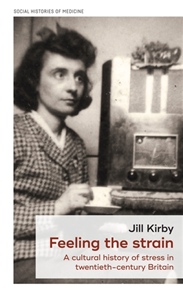
Examining the popular discourse of nerves and stress, this book provides a historical account of how ordinary Britons understood, explained and coped with the pressures and strains of daily life during the twentieth century. It traces the popular, vernacular discourse of stress, illuminating not just how stress was known, but the ways in which that knowledge was produced. Taking a cultural approach, the book focuses on contemporary popular understandings, revealing continuity of ideas about work, mental health, status, gender and individual weakness, as well as the changing socio-economic contexts that enabled stress to become a ubiquitous condition of everyday life by the end of the century. With accounts from sufferers, families and colleagues it also offers insight into self-help literature, the meanings of work and changing dynamics of domestic life, delivering a complementary perspective to medical histories of stress.
 Trusted Partner


The exciting texts and reports by professing Christians offer a fresh perspective for all those who have cultivated a Christian spirituality for many years. However, the book also provides easy access for those who are newly interested in the Christian faith. There are probably as many professions of Christian faith as there are believers in the world. But what do Christians think and how have they been moulded? Elisabeth Zoll and Thomas Seiterich have compiled very personal ideas about the Christian faith in this book. When selecting the contributors, the editors deliberately chose not to include people with church offices or specialised theologians. Irrespective of church policy issues and church scandals, the contributors have provided insights into their path to faith.


A pioneering work in the movement to free art from its traditional bonds to material reality, this book is one of the most important documents in the history of modern art. Written by the famous nonobjective painter Wassily Kandinsky (1866–1944), it explains Kandinsky's own theory of painting and crystallizes the ideas that were influencing many other modern artists of the period. Along with his own groundbreaking paintings, this book had a tremendous impact on the development of modern art. Kandinsky's ideas are presented in two parts. The first part, called "About General Aesthetic," issues a call for a spiritual revolution in painting that will let artists express their own inner lives in abstract, non-material terms. Just as musicians do not depend upon the material world for their music, so artists should not have to depend upon the material world for their art. In the second part, "About Painting," Kandinsky discusses the psychology of colors, the language of form and color, and the responsibilities of the artist. An Introduction by the translator, Michael T. H. Sadler, offers additional explanation of Kandinsky's art and theories, while a new Preface by Richard Stratton discusses Kandinsky's career as a whole and the impact of the book. Making the book even more valuable are nine woodcuts by Kandinsky himself that appear at the chapter headings. This English translation of Über das Geistige in der Kunst was a significant contribution to the understanding of nonobjectivism in art. It continues to be a stimulating and necessary reading experience for every artist, art student, and art patron concerned with the direction of 20th-century painting.
Trusted Partner
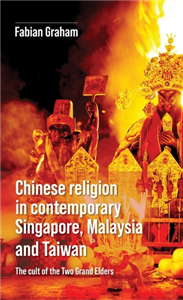
In Singapore and Malaysia, the inversion of Chinese Underworld traditions has meant that Underworld demons are now amongst the most commonly venerated deities in statue form, channelled through their spirit mediums, tang-ki. The Chinese Underworld and its sub-hells are populated by a bureaucracy drawn from the Buddhist, Taoist and vernacular pantheons. Under the watchful eye of Hell's 'enforcers', the lower echelons of demon soldiers impose post-mortal punishments on the souls of the recently deceased for moral transgressions committed during their prior incarnations. Chinese religion in contemporary Singapore, Malaysia and Taiwan offers an ethnography of contemporary Chinese Underworld traditions, where night-time cemetery rituals assist the souls of the dead, exorcised spirits are imprisoned in Guinness bottles, and malicious foetus ghosts are enlisted to strengthen a temple's spirit army. Understanding the religious divergences between Singapore and Malaysia (and their counterparts in Taiwan) through an analysis of socio-political and historical events, Fabian Graham challenges common assumptions about the nature and scope of Chinese vernacular religious beliefs and practices. Graham's innovative approach to alterity allows the reader to listen to first-person dialogues between the author and channelled Underworld deities. Through its alternative methodological and narrative stance, the book intervenes in debates on the interrelation between sociocultural and spiritual worlds, and promotes the destigmatisation of spirit possession and discarnate phenomena in the future study of mystical and religious traditions.
Trusted Partner

Drawing on the recent ontological turn in critical theory, Spectral Dickens explores an aspect of literary character that is neither real nor fictional, but spectral. This work thus provides an in-depth study of the inimitable characters populating Dickens' illustrated novels using three hauntological concepts: the Freudian uncanny, Derridean spectrality, and the Lacanian real. Thus, while the current discourse on character studies, which revolves around values like realism, depth, and lifelikeness, tends to see characters as mimetic of persons, this book invents new critical concepts to account for non-mimetic forms of characterization. These spectral forms bring to light the important influence of developments in nineteenth-century visual culture, such as the lithography and caricature of Daumier and J.J. Grandville. The spectrality of novelistic characters developed here paves the way for a new understanding of fictional characters in general.
Trusted Partner
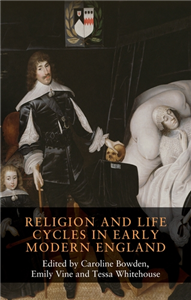
Religion and life cycles in early modern England assembles scholars working in the fields of history, English literature and art history to further our understanding of the intersection between religion and the life course in the period c. 1550-1800. Featuring chapters on Catholic, Protestant and Jewish communities, it encourages cross-confessional comparison between life stages and rites of passage that were of religious significance to all faiths in early modern England. The book considers biological processes such as birth and death, aspects of the social life cycle including schooling, coming of age and marriage and understandings of religious transition points such as spiritual awakenings and conversion. Through this inclusive and interdisciplinary approach, it seeks to show that the life cycle was not something fixed or predetermined and that early modern individuals experienced multiple, overlapping life cycles.
Trusted Partner
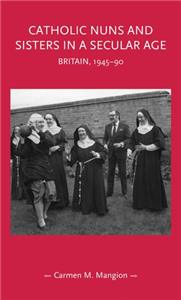
This is the first in-depth study of post-war female religious life. It draws on archival materials and a remarkable set of eighty interviews to place Catholic sisters and nuns at the heart of the turbulent 1960s, integrating their story of social change into a larger British and international one. Shedding new light on how religious bodies engaged in modernisation, it addresses themes such as the Modern Girl and youth culture, '1968', generational discourse, post-war modernity, the voluntary sector and the women's movement. Women religious were at the forefront of the Roman Catholic Church's movement of adaptation and renewal towards the world. This volume tells their stories in their own words.
Trusted Partner
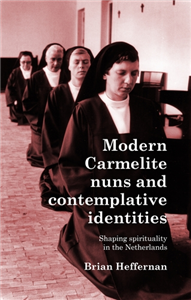
Discalced Carmelite convents are among the most influential wellsprings of female spirituality in the Catholic tradition, as the names of Teresa of Avila, Therese of Lisieux and Edith Stein attest. Behind these 'great Carmelites' stood communities of women who developed discourses on their relationship with God and their identity as a spiritual elite in the church and society. This book looks at these discourses as formulated by Carmelites in the Netherlands, from their arrival there in 1872 up to the recent past, providing an in-depth case study of the spiritualities of modern women contemplatives. The female religious life was a transnational phenomenon, and the book draws on sources and scholarship in English, Dutch, French and German to provide insights on gendered spirituality, memory and the post-conciliar renewal of the religious life.
Trusted Partner

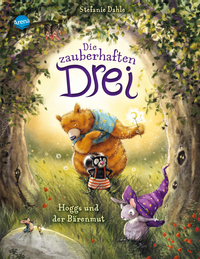
Hoggs the bear would love to be brave. But he is afraid of spiders and ghosts. And so Hoggs and his best friend Poki the skunk decide to go on an adventure in order to practise being brave. They head for the abandoned witch’s house behind the bee field. Ugh, it’s certainly ghostly! In fact there’s a kettle bubbling quite scarily…”Anybody there?” asks Hoggs cautiously. Yes! Fips the rabbit urgently needs help. And – whoosh! – suddenly the friends find themselves right in the middle of a stormy but magical adventure…
Trusted Partner


Minor illness or a serious disease ? Through systematic questioning, pharmacists or pharmaceutical technicians can establish the possibilities and limits of self-medication. Each monograph on the over 100 indications for self-medication includes: - A flow chart: basis for the structured consultation - A brief description: additional information about the symptoms - Recommended medications/groups of medications: the treatment options - Additional advice: individual supportive and alternative treatment options - Specific knowledge for advising particular patient groups: e.g. pregnant women, children and senior citizens New for the 7th edition: Monographs that explore the possibilities of supportive self-medication for indications such as hypertension and diabetes. Information about what to do in the case of poisoning, scabies or inflammation of the nail bed (paronychia) is also provided! The details about active substances, products and additional tips have been updated. The pocket guide has long been the standard for providing advice on self-medication – a “must-have”!
Trusted Partner
Suicide and the Gothic is the first protracted study of how the act of self-destruction recurs and functions within one of the most enduring and popular forms of fiction. Comprising eleven original essays and an authoritative introduction, this collection explores how the act of suicide has been portrayed, interrogated and pathologised from the eighteenth century to the present. The featured fictions embrace both canonical and the less-studied texts and examine the crisis of suicide - a crisis that has personal, familial, religious, legal and medical implications - in European, American and Asian contexts. Featuring detailed interventions into the understanding of texts as temporally distant as Thomas Percy's Reliques and Patricia Highsmith's crime fictions, and movements as diverse as Wertherism, Romanticism and fin-de-siècle decadence, Suicide and the Gothic provides a comprehensive and compelling overview of this recurrent crisis in fiction and culture.
Trusted Partner

Explores the network of social, political and spiritual connections in north west England as a site for regional drama, introducing the reader to the non-metropolitan theatre spaces which formed a vital part of early modern dramatic activity. Uses the possibility that Shakespeare began his theatrical career to provide a range of new contexts for reading his plays. Examines the contexts in which the apprentice dramatist would have worked, providing new insight into regional performance, touring theatre & the patronage of the Earls of Derby. Examines the experiences of Catholic families and the way in which Lancashire's status as a Catholic stronghold led to conflict with central government's attempts to create a united state.. All this feeds into innovative readings of individual plays such as Twelfth Night, Romeo and Juliet and A Midsummer Night's Dream. ;
Trusted Partner

 Trusted Partner

Revolutionäres Vorbild, Internationalist und Kosmopolit, Theoretiker, Philosoph, Schriftsteller, Politiker, Liebhaber, Ehemann, Vater, Jude, Feind und verfolgtes Opfer. Leo Trotzki, einer der bedeutendsten politischen Führer der ersten Hälfte des 20. Jahrhunderts, war von schillernder Gestalt. Der 1879 in der Südukraine als Lew Dawidowitsch Bronstein geborene hat den Grundstein zur Gründung der Sowjetunion gelegt, und wird doch immer wieder unterschlagen, wenn die führenden Köpfe der russischen Revolution genannt werden. Zusammen mit Lenin stand er, der Gründer der Roten Armee, 1917 an der Spitze der Oktoberrevolution. Als Volkskommissar war er unter anderem verantwortlich für das Kriegs- und Verlagswesen. Trotzki war nicht nur politischer Führer, sondern auch produktiver Schriftsteller und begnadeter Redner. Fragen nach Kultur und Alltagsleben waren ihm ebenso wichtig wie Politik und Geschichte. Der Aufstieg der Stalinfraktion nach Lenins Tod 1924 führte zu seinem Ausschluß aus den politischen Führungspositionen und schließlich zu seiner Verbannung 1929. Im Jahr 1940 wurde Trotzki in Mexiko-City von einem GPU-Agenten mit einem Eispickel erschlagen. Robert Service, Professor für Russische Geschichte und Spezialist für Russische Revolutionsgeschichte, hat viele Jahre unveröffentlichtes Archivmaterial gesichtet und mit seiner packenden Biographie nicht nur das Bild eines der brillantesten politischen Köpfe der Revolution gezeichnet, sondern sich – unparteiisch und unverfälscht – auch mit der überfälligen Debatte um das Verhältnis zwischen Trotzki und Stalin auseinandergesetzt.
Trusted Partner
Trusted Partner

Religion is taught in schools as if a branch of science consisting of some Koranic verses, prophetic tradition (Hadith), creed, worships, and biography! Pupils usually study such items by heart, then they go to exam and forget all. Religion is neither a branch of science nor a branch of material knowledge. Religion is a spiritual education that had to be applied in society. It is felt in the way people behave or conduct. Sometimes we meet a clever pupil but he has bad manners! Another, may get high marks in religion but dismissed out of the school for his ill behaviors and bad manners. I believe that religion must be taught as a spiritual education surrounded by a sphere of sympathy and affection. It is something felt by heart, not studied by heart. Teachers have to adress minds to make pupils convinced. They have to teach them biography of the prophet and also of the orthodox Caliphs. They have to select Koran verses according to “the age and the need”. For example Koranic verses dealing with” prayers”, must be studied in an early stage. Then Koranic verses dealing with “fasting”. After that comes verses dealing with moral conducts. In an advanced stage or secondary school, students can study views, ideas, conceptions, visions and philosophy of Islamic eminent characters, as well as eminent characters of other religions. There is a sort of a deflagrated competition between different religions, though they are similar in concepts and attitudes. Also, rivalary between Islam and Western civilization, and communism, is considered. Western civilization has its own entity. It is an integral doctrine having its theories and applications. Western civilization admits human rights and free economy. It could achieve marvellous progress in different fields of life. At the other hand communism also has its own integral doctrine with a private philosophy, economy and ruling systems. It aspires equality between all people, regardless to their colour or race. As a matter of fact it could achieve marevellous progress in different fields of life. Islam stands in between those two different civilizations, trying to get up and rise after a long sleep in the darkness of stagnancy and retardation. Lately, Islam did not achieve adequate progress in fields like modern science, technology, and material power. But it didn’t surrender, because it is till standing as a civilization having its own historical dignity and tradition. But now it is working hard to compensate what it did lose and indemnify what has gone, without contradicting its message and entity.
Trusted Partner


People with dementia experience their condition as a big change in which, for example, new events are not linked to existing experiences and wishes, thoughts, and actions can no longer be connected to each other. This kind of experience of the self, due to the intergative function of the brainbeing temporarily or permanently lost, is called dissociative self-experience. Based on this understanding of dementia, the author develops an approach to effectively understand and support people with dementia in everyday activities. Typical everyday situations and behaviours are presented and reflected on in a practical context.
Trusted Partner
Trusted Partner



