
Splendid Books Limited
Indie publisher Splendid Books focuses largely on entertainment, autobiographical and historical titles. Their varied list includes memoirs of a Bond fan and a British TV location guide.
View Rights Portal
Indie publisher Splendid Books focuses largely on entertainment, autobiographical and historical titles. Their varied list includes memoirs of a Bond fan and a British TV location guide.
View Rights Portal
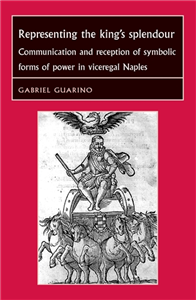
Compensating for a general neglect of Iberian civilization in Southern Italy, this book seeks to shed light on the viceregal court of Spanish Naples in the seventeenth century, a time when this European metropolis reached the zenith of its splendour. It looks at the cultural projection of Spain and its values, either via the direct visual representations of power of the viceregal court, or the public policies and actions that fostered Spanish attitudes. It explores cultural and social manifestations as court ceremonial, state festivities, and fashion. Each of these issues also takes into account the social and political structure of the city, and the various pressure groups that interacted with the Spanish government. Aimed at students and scholars of early modern Europe, the Spanish Empire, and the princely courts of Europe, this study will also be of interest to scholars of communication and cultural studies, and to readers interested in cultural history during the Baroque era. ;

A grand strategy of peace is the first detailed account of Britain's role in the creation of the United Nations Organization during the Second World War. As a work of traditional diplomatic history that brings in elements of intellectual history, the book describes how British officials, diplomats, politicians, and writers - previously seen to be secondary actors to the United States in this period - thought about, planned for, and helped to establish a future international order. While in the present day, many scholars and analysts have returned to the origins of the post- 1945 international system, this book offers an exhaustive account of how the statesmen and more importantly, the officials working below the statesmen, actually conceived of and worked to establish a post-war world order.
 Trusted Partner
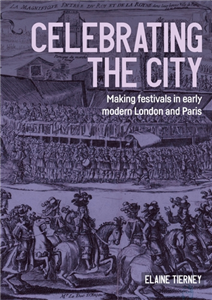
Celebrating the city goes behind the scenes of early modern celebrations. Moving from splendid coronations to courtyard bonfires, it offers the first comparative, interdisciplinary study of festivals in London and Paris. In a major departure from existing scholarship, it uses the widest range of textual, visual and material evidence to demonstrate the importance of designing, making and organising to how and why festivals were meaningful. Mining evidence of the active processes by which events were made, it argues that urban festival politics cannot be understood without incorporating its material world into our analysis. The book's unique methodology, combining the tools of design history and the concerns of political history, will shed new light on how political publics were formed in early modern European cities. In showing how cities made festivals - and festivals made cities - this wide-ranging study makes a significant contribution to histories of festivals, political culture and urban life.
Trusted Partner

Colonial war played a vital part in transforming the reputation of the military and placing it on a standing equal to that of the navy. The book is concerned with the interactive culture of colonial warfare, with the representation of the military in popular media at home, and how these images affected attitudes towards war itself and wider intellectual and institutional forces. It sets out to relate the changing image of the military to these fundamental facts. For the dominant people they were an atavistic form of war, shorn of guilt by Social Darwinian and racial ideas, and rendered less dangerous by the increasing technological gap between Europe and the world. Attempts to justify and understand war were naturally important to dominant people, for the extension of imperial power was seldom a peaceful process. The entertainment value of war in the British imperial experience does seem to have taken new and more intensive forms from roughly the middle of the nineteenth century. Themes such as the delusive seduction of martial music, the sketch of the music hall song, powerful mythic texts of popular imperialism, and heroic myths of empire are discussed extensively. The first important British war correspondent was William Howard Russell (1820-1907) of The Times, in the Crimea. The 1870s saw a dramatic change in the representation of the officer in British battle painting. Up to that point it was the officer's courage, tactical wisdom and social prestige that were put on display.
Trusted Partner
Trusted Partner
Trusted Partner
Trusted Partner
Trusted Partner
Trusted Partner
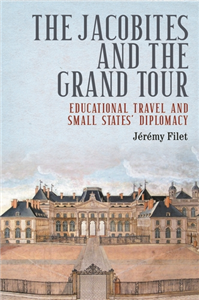
In the first monograph to fully examine the intersecting networks of Jacobites and travellers to the continent, Filet considers how small states used official diplomacy and deployed soft power - embodied by educational academies - to achieve foreign policy goals. This work uses little-known archival materials to explain how and why certain small states secretly supported the Jacobite cause during the crucial years surrounding the 1715 rising, while others stayed out of Jacobite affairs.At the same time, the book demonstrates how early modern small states sought to cultivate good relations with Britain by attracting travellers as part of a wider trend of ensuring connections with future diplomats or politicians in case a Stuart restoration never came.This publication therefore brings together a study of Britain, small states, Jacobitism, and educational travel, in its nexus at continental academies.
Trusted Partner
 Trusted Partner
Trusted Partner
Trusted Partner
Trusted Partner
Trusted Partner

Invasions is an ambitious, new and authoritative study of one of the defining cultural products of the Victorian and Edwardian eras. By the outbreak of war in 1914 invasion-scare fiction had profoundly changed British society, becoming not just a vibrant part of popular culture, but a reference point among military planners, advertisers, and politicians. This intersection between politics and culture, between entertainment and war planning, sets invasion-scare stories apart as one of the most versatile and interesting fictional products in modern British history. Building on recent work in both history and literature studies, Invasions is the first study of invasion-scare fiction to examine both the form (that is, fiction) and the function (the political argument) of the genre.
Trusted Partner
Trusted Partner

 Trusted Partner


»›Woran arbeiten Sie?‹ wurde Herr K. gefragt. Herr K. antwortete: ›Ich habe viel Mühe, ich bereite meinen nächsten Irrtum vor.‹« Diese Situation ist typisch für die Geschichten vom Herrn Keuner: eine einfache, alltägliche Ausgangsfrage und die überraschende, unerwartete Antwort. Die dialogisch-dialektische Struktur dieser parabelhaften Prosaminiaturen und ihr subtiler Humor eignen sich eigentlich hervorragend für die Umsetzung als Comic. Dennoch kann es nicht verwundern, dass sich bislang noch niemand an sie herangetraut hat, denn: Wie lassen sich Denkbilder in gezeichnete Bilder umsetzen? Und wie lässt sich Bertolt Brechts Kunst- und Spielfigur Keuner, die durchaus autobiografische Züge trägt und dennoch als ein Mann ohne Eigenschaften gilt, überhaupt darstellen? Ulf K., einer der international renommiertesten deutschen ComicKünstler, hat es nun gewagt und überrascht mit einem Herrn K., der absolut zeitlos-modern ist und dennoch unser Zeitgenosse sein könnte. Diese schwungvoll-frische Adaption erweckt den Eindruck, Brecht habe die Geschichten soeben erst für unsere unmittelbare Gegenwart geschrieben und uns gemeinsam mit Ulf K. ein ebenso intellektuelles wie ästhetisches Vergnügen beschert.
Trusted Partner

Vom Tautropfen und vom Firmament, vom Blick ins eigene Innere und dem zu den Sternen, von Augenblick und Ewigkeit sprechen die Gedichte dieses Bandes, sie feiern die Welt in einer enthusiastischen Weise. Ob Angelus Silesius oder William Blake, Hölderlin oder Leopardi, Gottfried Benn oder Saint-John Perse, die hier ausgewählten Gedichte entdecken die Welt in uns und uns in der Welt.Dieter M. Gräf hat die Gedichte in inhaltlich und historisch aussagekräftige Kapitel und einen Epilog gegliedert: »Der ewigen Vorschmeckung erste Blum«, »Ehre sei Gott für gesprenkelte Dinge«, »Ich bin ein Eingeborener dieser Welt«, »Das Durchscheinende ist erschienen«, »Der Tramp ist so heilig wie der Seraph«, »Ich bin nicht mehr da« – so die überschriften nach Verszeilen der hier vertretenen Autoren.
Trusted Partner

This book examines the distinctive aspects that insiders and outsiders perceived as characteristic of Irish and Scottish ethnic identities in New Zealand. When, how, and why did Irish and Scots identify themselves and others in ethnic terms? What characteristics did the Irish and the Scots attribute to themselves and what traits did others assign to them? Did these traits change over time and if so how? Contemporary interest surrounding issues of ethnic identities is vibrant. In countries such as New Zealand, descendants of European settlers are seeking their ethnic origins, spurred on in part by factors such as an ongoing interest in indigenous genealogies, the burgeoning appeal of family history societies, and the booming financial benefits of marketing ethnicities abroad. This fascinating book will appeal to scholars and students of the history of empire and the construction of identity in settler communities, as well as those interested in the history of New Zealand.
Trusted Partner

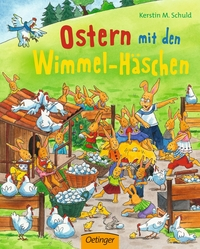
In "Ostern mit den Wimmel-Häschen" von Kerstin M. Schuld erleben junge Leserinnen und Leser ein zauberhaftes Osterabenteuer. Ein weiser Osterhasen-Opa führt die kleinen Häschen durch die bunte Welt der Ostertraditionen, von der Arbeit auf dem Hühnerhof bis hin zur kreativen Malwerkstatt. Er teilt sein Wissen darüber, wie man perfekte Ostereier bemalt und hübsche Osternester bastelt, mit einer liebevollen Hingabe, die das Herz jedes Kindes höher schlagen lässt. Dieses Buch ist nicht nur eine visuelle Entdeckungsreise durch detaillierte Wimmelbilder, sondern auch eine lehrreiche Geschichte, die Kindern die Bedeutung und Freuden des Osterfests näherbringt. Perfekt für die Osterzeit: Ein Muss für das Osternest, das Kindern die Traditionen und Bräuche rund um Ostern näherbringt. Lehrreich und unterhaltsam: Bietet Kindern ab 24 Monaten eine spielerische Lernmöglichkeit über die Vorbereitungen zum Osterfest. Detailreiche Wimmelbilder: Fördert die Beobachtungsgabe und Konzentration, während die Kinder in die wimmelige Welt der Osterhasen eintauchen. Charmante Reime und Illustrationen: Die Kombination aus bezaubernden Reimen und kunstvollen Illustrationen macht dieses Buch zu einem visuellen und auditiven Genuss. Für Wimmelbuch-Fans unverzichtbar: Ein ideales Geschenk für kleine Entdecker*innen ab 2 Jahren, die Freude am Suchen und Finden haben.



