
RANOK Corporation
Ukrainian Publishing House “RANOK” founded in 1997 is prominent for its endless love for books and reading.
View Rights Portal
Ukrainian Publishing House “RANOK” founded in 1997 is prominent for its endless love for books and reading.
View Rights Portal
At Penguin Random House UK, we champion the world's most brilliant voices, bringing them to life in compelling and dynamic ways for audiences everywhere. Our books shape the broader cultural life of our society and accompany people of all ages on their journey of discovery of the greatest stories, the smartest thinking and the best ideas. Penguin Random House UK Group Rights represents Foreign and Domestic Rights across the company’s seven divisions. One team represents Ebury, Cornerstone, Penguin General and Penguin Press, another represents Transworld, Michael Joseph and Vintage, and the third represents illustrated titles across the seven divisions. For more information and our catalogue, please visit our webpage.
View Rights Portal
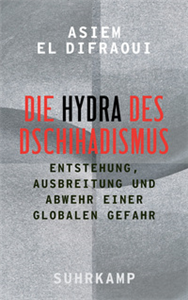
Nachdem der »IS« in Trümmern lag und »Kalif« al-Baghdadi im Oktober 2019 von US-Truppen getötet wurde, schien der »Krieg gegen den Terror« einmal mehr beendet. Aber der Dschihadismus ist längst eine globale Bewegung geworden, der Dutzende von Organisationen angehören – und mit Gewalt allein ist ihr nicht beizukommen.Seit drei Jahrzehnten verfolgt Asiem El Difraoui als Filmemacher, Journalist und Wissenschaftler diese Entwicklung. Er traf Kampfgefährten bin Ladens in Khartum und PR-Strategen, die in Berlin-Charlottenburg Propagandavideos produzierten. In Kriegsgebieten wie Bosnien, dem Irak oder in Afghanistan hat er selbst den Terror gegen die Bevölkerung miterlebt. Und immer wieder kam der Terror auch zu ihm, wie in Gestalt der Anschläge 1995 und 2015 in Paris, die sich in seiner unmittelbaren Nachbarschaft ereigneten. Kenntnisreich und anschaulich schildert Difraoui, wie der Dschihadismus entstanden ist, wie seine Denkmuster und PR-Strategien sich gewandelt haben und woraus die Hydra ihre Kraft bezieht. Was macht die todbringende Ideologie gerade auch für junge Menschen in Europa attraktiv? Welchen Anteil hat der Westen, haben die Medien an ihrem Erfolg? Und wie kann es gelingen, ihre Macht zu brechen? Ein aufrüttelnder Appell, sich einer der größten Gefahren der Gegenwart zu stellen.
 Trusted Partner


(B)ordering Britain argues that Britain is the spoils of empire, its immigration law is colonial violence and irregular immigration is anti-colonial resistance. In announcing itself as postcolonial through immigration and nationality laws passed in the 60s, 70s and 80s, Britain cut itself off symbolically and physically from its colonies and the Commonwealth, taking with it what it had plundered. This imperial vanishing act cast Britain's colonial history into the shadows. The British Empire, about which Britons know little, can be remembered fondly as a moment of past glory, as a gift once given to the world. Meanwhile immigration laws are justified on the basis that they keep the undeserving hordes out. In fact, immigration laws are acts of colonial seizure and violence. They obstruct the vast majority of racialised people from accessing colonial wealth amassed in the course of colonial conquest. Regardless of what the law, media and political discourse dictate, people with personal, ancestral or geographical links to colonialism, or those existing under the weight of its legacy of race and racism, have every right to come to Britain and take back what is theirs.
Trusted Partner
Trusted Partner
Trusted Partner
Trusted Partner
Trusted Partner
Trusted Partner
Trusted Partner
Trusted Partner

 Trusted Partner
Trusted Partner
Trusted Partner
Trusted Partner
Trusted Partner
Trusted Partner
Trusted Partner

 Trusted Partner
Trusted Partner
Trusted Partner
Trusted Partner
Trusted Partner
Trusted Partner
Trusted Partner
Trusted Partner
Trusted Partner




