Your Search Results

      • Bookline & Thinker

        Hookline Books is our fiction imprint - all authors have attended writing classes to post-graduate university level. All manuscripts are approved by book groups before being accepted for publication. Non-fiction publisher specialising in self-help, travel and social history.

        View Rights Portal
      • Woongjin Thinkbig Co., Ltd.

        Established in 1980, Woongjin Thinkbig is a multi-award winning top publishing and education company in South Korea. We provide tutoring at home sevices, various children's books and a digital library service with a variety of digital contents.

        View Rights Portal
      • Trusted Partner
        May 2021

        The Humane Idea

        Rudolf Virchow and Hermann von Helmholtz. The legacy of the Charité

        by Ernst Peter Fischer, Detlev Ganten

        Two of today’s leading scientists, Ernst Peter Fischer and Detlev Ganten, reconfirm the legacy of two influential 19th-century researchers. To mark the 200th birthday of Rudolf Virchow (1821–1902) and Hermann von Helmholtz (1821–1894), they explain why pioneering research and holistic thinking are still relevant for health science and practice, and for a sustainable balance of people, society and the environment. The historical achievement of Virchow and Helmholtz continues today with the work of researchers like Emmanuelle Charpentier and Christian Drosten, so ensuring that the humane idea continues to be fruitful in the future. An insight into the history of medical science.

      • Trusted Partner
        2023

        Food Composition Table for the Practice

        The small Souci/Fachmann/Kraut

        by Founded by S.W. Souci, W. Fachmann and H. Kraut. Revised by Dr. Petra Steinhaus. Edited by the Leibniz Institute of Food Systems Biology at the Technical University of Munich.

        ■ How many omega-3 fatty acids does salmon contain? ■ Which dairy product contains the most calcium? ■ How iron-rich is spinach, really? Whether calories, vitamins or amino acids – whether in field beans, bananas, eggs, chicken, parmesan cheese or onion – it is all here. The compact edition of the time-tested „large SFK [Souci/Fachmann/Kraut]“ offers tested data on over 70 ingredients in more than 360 foods, systematically structured according to food groups. This edition with thousands of values has been completely revised and updated by the Leibniz Institute of Food Systems Biology at the Technical University of Munich. Extra: 32 summary tables cover more than 300 other, less common foods and allow for targeted, clear comparisons. 16 orientation tables provide information about foods with particularly high or low amounts of ingredients. Nutritional values, energy content, main components and ingredients displayed in uniform systematics and a practical format – just look it up!

      • Trusted Partner
        Children's & YA

        Wild. They Hear You Thinking

        by Ella Blix

        They hear you thinking. But you can’t understand them. Not yet! After a terrifying experience on a school trip to the forest, Noomi isn’t the same anymore. Fragments of memories that are as thrilling as they are disturbing continually lead her back to this same day in the forest. Something has happened to her since then and she has to find out what went on there. Why can’t she remember? Why does she now feel so close to animals? One secret experiment. Four young offenders. Animals acting like humans in the forest. Evolution at a turning point - FEEL NATURE! Atmospheric, enigmatic and disturbing – the new novel from the prize-winning author duo Ella Blix, consisting of Antje Wagner and Tania Witte. 2019 literary awards: the Mannheim Feuergriffel (Fire Pen) for Tania Witte and the town of Wetzlar’s Fantasy Prize. Printed on recycled paper and certified with the Blue Angel.

      • Trusted Partner
        Business, Economics & Law
        August 2013

        Negotiation and Persuasion

        The Science and Art of Winning Cooperative Partners

        by Marco Behrmann

        This book is a clear and compact guide on how to succeed by means of goal-oriented negotiation and cooperative persuasion. Readers learn models to understand and describe what takes place during negotiations, while numerous figures, charts, and checklists clearly summarize effective strategies for analyzing context, processes, competencies, and the impact of our own behavior. Real-life case examples vividly illustrate the specific measures individuals and teams can take to systematically improve their powers of persuasion and bargaining strength. The book also describes a modern approach to raising negotiation competencies as part of personnel development, making it suitable for use in training courses as well as for anyone who wants to be a more persuasive and successful negotiator.   Target Group: For work and organizational psychologists, HR professionals, coaches, management trainers and trainees.

      • Trusted Partner
        Business, Economics & Law
        October 2004

        Qualities of food

        by Mark Harvey, Andrew McMeekin, Alan Warde

        In this book, the complexity and the significance of the foods we eat are analysed from a variety of perspectives, by sociologists, economists, geographers and anthropologists. Chapters address a number of intriguing questions: how do people make judgments about taste? How do such judgments come to be shared by groups of people?; what social and organisational processes result in foods being certified as of decent or proper quality? How has dissatisfaction with the food system been expressed? What alternatives are thought to be possible? The multi-disciplinary analysis of this book explores many different answers to such questions. The first part of the book focuses on theoretical and conceptual issues, the second part considers processes of formal and informal regulation, while the third part examines social and political responses to industrialised food production and mass consumption. Qualities of food will be of interest to researchers and students in all the social science disciplines that are concerned with food, whether marketing, sociology, cultural studies, anthropology, human nutrition or economics.

      • Trusted Partner
        Literature & Literary Studies
        August 2021

        Spenser and Donne

        Thinking poets

        by Yulia Ryzhik

        The names Edmund Spenser and John Donne are typically associated with different ages in English poetry, the former with the sixteenth century and the Elizabethan Golden Age, the latter with the 'metaphysical' poets of the seventeenth century. This collection of essays, part of The Manchester Spenser series, brings together leading Spenser and Donne scholars to challenge this dichotomous view and to engage critically with both poets, not only at the sites of direct allusion, imitation, or parody, but also in terms of common preoccupations and continuities of thought, informed by the literary and historical contexts of the politically and intellectually turbulent turn of the century. Juxtaposing these two poets, so apparently unlike one another, for comparison rather than contrast changes our understanding of each poet individually and moves towards a more holistic, relational view of their poetics.

      • Trusted Partner
        Humanities & Social Sciences
        April 2024

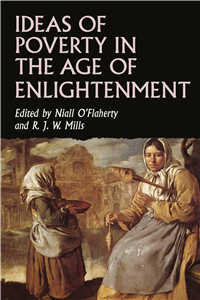
        Ideas of poverty in the Age of Enlightenment

        by Niall O’Flaherty, Robin Mills

        This collection of essays examines the ways in which poverty was conceptualised in the social, political, and religious discourses of eighteenth-century Europe. It brings together experts with a wide range of expertise to offer pathbreaking discussions of how eighteenth-century thinkers thought about the poor. Because the theme of poverty played important roles in many critical issues in European history, it was central to some of the key debates in Enlightenment political thought throughout the period, including the controversies about sovereignty and representation, public and private charity, as well as questions relating to crime and punishment. The book examines some of the most important contributions to these debates, while also ranging beyond the canonical Enlightenment thinkers, to investigate how poverty was conceptualised in the wider intellectual culture, as politicians, administrators and pamphlet writers grappled with the issue.

      • Trusted Partner
        Humanities & Social Sciences
        October 2009

        The political thought of the Liberals and Liberal Democrats since 1945

        by Kevin Hickson

        This book provides the most comprehensive analysis of the post-war political thought of the Liberals and Liberal Democrats to date. The rationale of the book stems from a belief that contemporary debate over the party's future ideological direction can only be fully appreciated by placing it within a broader historical context. The book begins by outlining the three dominant ideological traditions within the Liberals and Liberal Democrats - namely, classical liberalism, the 'centre' and social liberalism. The main ideas, policies and personalities associated with each tradition are evaluated. Leading experts in the field then examine a range of themes and issues including constitutional reform, decentralization, political economy, social morality, internationalism and political strategy. The final section consists of three commentaries from different ideological perspectives written by leading Liberal Democrat MPs - Vincent Cable, David Howarth and Steve Webb. In adopting a new approach to the Liberals and Liberal Democrats and in combining expert analysis with political commentary, this book will be of interest to students and the general reader alike. ;

      • Trusted Partner
        Computing & IT
        May 2026

        Democratizing AI

        by Annette Zimmermann

        Democratizing AI offers a powerful rethinking of how artificial intelligence should be governed. Challenging the dominance of tech elites in shaping AI's future, Zimmermann argues that AI deployment is a political act-one that must be subject to democratic control. She proposes a practical "playbook" for reclaiming agenda-setting power through civic participation, public ownership, and institutional reform. Engaging with leading critics, Zimmermann defends a risk-sensitive proceduralist approach while acknowledging the deeper structural challenges posed by capitalism, inequality, and democratic fatigue. This book is a call to action: to resist learned helplessness, confront techno-authoritarianism, and shape AI's trajectory in line with democratic values. Thoughtful, urgent, and visionary, the book is essential reading for anyone concerned with the future of technology and democracy.

      • Trusted Partner
        The Arts
        September 2020

        Science in performance

        Theatre and the politics of engagement

        by Simon Parry

        This electronic version has been made available under a Creative Commons (BY-NC-ND) open access license. This book is about science in theatre and performance. It explores how theatre and performance engage with emerging scientific themes from artificial intelligence to genetics and climate change. The book covers a wide range of performance forms from Broadway musicals to educational theatre, from Somali drama to grime videos. It features work by pioneering companies including Gob Squad, Headlong Theatre and Theatre of Debate as well as offering fresh analysis of global blockbusters such as Wicked and Urinetown. The book offers detailed description and analysis of theatre and performance practices as well as broader commentary on the politics of theatre as public engagement with science. Science in performance is essential reading for researchers, students and practitioners working between science and the arts within fields such as theatre and performance studies, science communication, interdisciplinary arts and health humanities.

      • Trusted Partner
        Humanities & Social Sciences
        July 2026

        Modernity and philosophy in Max Horkheimer

        On the contemporary relevance of critical theory

        by Raffaele Carbone

        This book shows that Max Horkheimer's program of critical theory and his research throughout his career as a university professor and thinker are rooted in the cogency of philosophical questions and an in-depth knowledge of the historical development of philosophical problems in their close correlation with the socio-economic framework which shaped the 'bourgeois society' and the Modern Era. Indeed, his analyses of modern philosophers allows us to understand how the bourgeoisie seeks legitimisation and consolidation of its position, partly through the voices of its thinkers. In this way, in his investigation of early modern philosophy problems, and through constant dialogue with his colleagues Adorno, Marcuse, Pollock and Fromm, Horkheimer expresses a profound awareness of the critical force inherent in thought which, admittedly, is ever vulnerable to crisis and weakening, but which can always be reactivated.

      • Trusted Partner
        Humanities & Social Sciences
        June 2012

        Thinking towards humanity

        Themes from Norman Geras

        by David Aaronovitch, Stephen de Wijze, Ophelia Benson, Eve Gerrard, Gideon Calder

        How should we respond to the inhumanity that suffused the twentieth Century and continues in the present one? Has there been an adequate treatment of this issue by the political left? Questions such as these are treated in this, the first scholarly book to combine academic and blogging approaches to some of the major political issues of the day. It does this by focusing on the work of Norman Geras - Marxist, political philosopher and blogger - and developing the central themes of his work such as crimes against humanity, the Holocaust, Marxism, and the means/ends problem in politics. It contains contributions by famous political philosophers such as Michael Walzer, Hillel Steiner and David McLennan, and bloggers and journalists such as David Aaronovitch, Nick Cohen and Ophelia Benson. The book contains a unique response by Geras in which he draws together the various themes it covers. It will be of interest to all who are concerned with these pressing political issues of our time. The book will be particularly relevant for those with an academic or general interest in politics, philosophy, sociology, genocide studies, applied ethics, international relations and law. It will also be of interest to bloggers and all those who regard new technology as having significant implications for public debate on these issues. ;

      • Trusted Partner
        Business, Economics & Law
        January 2009

        Understanding criminal law

        by Stephen Buckley, Caroline Buckley

        A complete understanding of criminal law is essential to pass the A2 in law, and this book provides that - for the first time linking all the elements of criminal law together to form a coherent whole. Written by two practising teachers, the book is accessible and user-friendly, featuring summary boxes and tables, clear introductions and references to key cases, as well as study skills and sample examination questions. The book provides a complete overview of criminal law and skilfully links all the elements together. It stresses the practical application of modern criminal law as it is currently used in the English judicial system and establishes the key roles of prosecution, the Crown Prosecution Service, the defence and the judiciary. It goes on to examine how the prosecution build up a case, looking in depth at the offences of murder and manslaughter and how they interrelate, and examining theft, assault and regulatory offences in detail, before looking at the role and nature of the defence. A vitally important final chapter concentrates on study skills relevant to criminal law, including note-taking, file organisation, essay and problem questions, revision strategy and the use of legal sources.

      • Trusted Partner
        The Arts
        January 2024

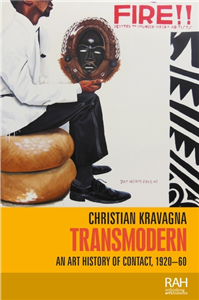
        Transmodern

        An art history of contact, 1920–60

        by Christian Kravagna,

        How can we reconfigure our picture of modern art after the postcolonial turn without simply adding regional art histories to the Eurocentric canon? Transmodern examines the global dimension of modern art by tracing the crossroads of different modernisms in Asia, Europe and the Americas. Featuring case studies in Indian modernism, the Harlem Renaissance and post-war abstraction, it demonstrates the significance of transcultural contacts between artists from both sides of the colonial divide. The book argues for the need to study non-western avant-gardes and Black avant-gardes within the west as transmodern counter-currents to mainstream modernism. It situates transcultural art practices from the 1920s to the 1960s within the framework of anti-colonial movements and in relation to contemporary transcultural thinking that challenged colonial concepts of race and culture with notions of syncretism and hybridity.

      • Trusted Partner
        The Arts
        June 2022

        Transmodern

        An art history of contact, 1920–60

        by Christian Kravagna, Marsha Meskimmon, Amelia Jones,

        How can we reconfigure our picture of modern art after the postcolonial turn without simply adding regional art histories to the Eurocentric canon? Transmodern examines the global dimension of modern art by tracing the crossroads of different modernisms in Asia, Europe and the Americas. Featuring case studies in Indian modernism, the Harlem Renaissance and post-war abstraction, it demonstrates the significance of transcultural contacts between artists from both sides of the colonial divide. The book argues for the need to study non-western avant-gardes and Black avant-gardes within the west as transmodern counter-currents to mainstream modernism. It situates transcultural art practices from the 1920s to the 1960s within the framework of anti-colonial movements and in relation to contemporary transcultural thinking that challenged colonial concepts of race and culture with notions of syncretism and hybridity.

      • Trusted Partner
        The Arts
        June 2022

        Transmodern

        An art history of contact, 1920–60

        by Christian Kravagna, Marsha Meskimmon, Amelia Jones,

        How can we reconfigure our picture of modern art after the postcolonial turn without simply adding regional art histories to the Eurocentric canon? Transmodern examines the global dimension of modern art by tracing the crossroads of different modernisms in Asia, Europe and the Americas. Featuring case studies in Indian modernism, the Harlem Renaissance and post-war abstraction, it demonstrates the significance of transcultural contacts between artists from both sides of the colonial divide. The book argues for the need to study non-western avant-gardes and Black avant-gardes within the west as transmodern counter-currents to mainstream modernism. It situates transcultural art practices from the 1920s to the 1960s within the framework of anti-colonial movements and in relation to contemporary transcultural thinking that challenged colonial concepts of race and culture with notions of syncretism and hybridity.

      • Trusted Partner
        The Arts
        June 2022

        Transmodern

        An art history of contact, 1920–60

        by Christian Kravagna, Marsha Meskimmon, Amelia Jones,

        How can we reconfigure our picture of modern art after the postcolonial turn without simply adding regional art histories to the Eurocentric canon? Transmodern examines the global dimension of modern art by tracing the crossroads of different modernisms in Asia, Europe and the Americas. Featuring case studies in Indian modernism, the Harlem Renaissance and post-war abstraction, it demonstrates the significance of transcultural contacts between artists from both sides of the colonial divide. The book argues for the need to study non-western avant-gardes and Black avant-gardes within the west as transmodern counter-currents to mainstream modernism. It situates transcultural art practices from the 1920s to the 1960s within the framework of anti-colonial movements and in relation to contemporary transcultural thinking that challenged colonial concepts of race and culture with notions of syncretism and hybridity.

      • Trusted Partner

      Subscribe to our

      newsletter