
Running the Goat, Books & Broadsides
Livres Canada Books
View Rights Portal



The first book to share the untold story of this unique sport, from its origins in the Victorian era to the present day. Over the past two decades, mountain, ultra and trail running has experienced a massive boom in participation, media attention and corporate consumerism. Once little more than an oddball recreation for mountain athletics romantics, the sport has become a mass activity in ways that were previously unimaginable. In Dirtbag dreams, Carl Morris offers the first complete account of mountain, ultra and trail running in North America and Britain. Revealing the sport's eccentric Victorian origins, he traces its development through 200 years of history, travelling from the Sierra Nevada and the English Lake District to the streets of London and New York. Packed with gripping races and colourful characters, Dirtbag dreams is the essential companion for anyone who wants to understand this unique endurance sport.

Do dogs belong with humans? Scientific accounts of dogs' 'species story,' in which contemporary dog-human relations are naturalised with reference to dogs' evolutionary becoming, suggest that they do. Dog politics dissects this story. This book offers a rich empirical analysis and critique of the development and consolidation of dogs' species story in science, asking what evidence exists to support it, and what practical consequences, for dogs, follow from it. It explores how this story is woven into broader scientific shifts in understandings of species, animals, and animal behaviours, and how such shifts were informed by and informed transformative political events, including slavery and colonialism, the Second World War and its aftermath, and the emergence of anti-racist movements in the twentieth and twenty-first centuries. The book pays particular attention to how species-thinking bears on 'race,' racism, and individuals.
 Trusted Partner
The double game of music imagines music education as a series of games - each with its own rules, play currency and players - to challenge readers to rethink the significance of music and musical upbringing in shaping social structures. Drawing on their own empirical research and a wide range of international contributions, the authors unravel the intertwining of social positioning and power hierarchies with players beliefs in the pure values and virtues of their games, whether these relate to parenting, children's play, schooling, academic pursuits, musical leisure activities or the television and music industries. In a world where music is often celebrated as an important tool for inclusion and democratisation, this groundbreaking book offers a timely critique, revealing complexities and contradictions that tend to be overlooked by teachers, researchers, politicians and others interested in the powers of music education.
Trusted Partner
 Trusted Partner

 Trusted Partner

This collection brings together scholars from disciplines including Children's Literature, Classics, and History to develop fresh approaches to children's culture and the uses of the past. It charts the significance of historical episodes and characters during the long nineteenth-century (1750-1914), a critical period in children's culture. Boys and girls across social classes often experienced different pasts simultaneously, for purposes of amusement and instruction. The book highlights an active and shifting market in history for children, and reveals how children were actively involved in consuming and repackaging the past: from playing with historically themed toys and games to performing in plays and pageants. Each chapter reconstructs encounters across different media, uncovering the cultural work done by particular pasts and exposing the key role of playfulness in the British historical imagination.
Trusted Partner

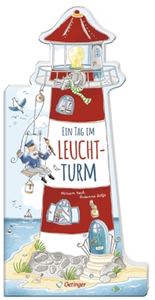
Susanne Lütjes "Ein Tag im Leuchtturm" entführt Kinder ab 24 Monaten in die faszinierende Welt eines Leuchtturmwärters an der Küste. Der Protagonist Ole, der liebenswerte Leuchtturmwärter, zusammen mit der kleinen Robbe Snorre, führt die jungen Leser durch einen ereignisreichen Tag im hohen Norden. Durch die lebendigen und detailreichen Illustrationen von Miriam Koch und die passenden Reime von Susanne Lütje, einem bekannten Nordlicht, wird das Buch zu einem visuellen und sprachlichen Erlebnis. Die robuste Gestaltung des Pappbilderbuchs in einem außergewöhnlichen, extragroßen Leuchtturm-Format mit einer Höhe von 40 cm macht es nicht nur zu einem Hingucker im Bücherregal, sondern auch zu einem langlebigen Begleiter für kleine Entdecker. Die Geschichte führt durch den Alltag von Ole, der neben seinen Aufgaben als Leuchtturmwärter auch Zeit mit seinen tierischen Freunden verbringt. Von der Ankunft eines Pakets mit einer neuen Lampe für den Leuchtturm bis hin zu gemeinsamen Mahlzeiten mit der Robbe, zeichnet das Buch ein bildhaftes Szenario des Küstenlebens. Die abwechslungsreichen Wetterbedingungen, von strahlendem Sonnenschein bis zu stürmischen Regentagen, bieten einen realistischen Einblick in die Herausforderungen und Schönheiten des Lebens am Meer. Das Buch schließt mit einer warmherzigen Szene, in der Ole den Leuchtturm für die Nacht aktiviert, symbolisch für die stetige Wache, die er und der Leuchtturm über die sicher heimkehrenden Schiffe halten. Einzigartiges Format: Extravagantes, extragroßes Leuchtturm-Format (40 cm Höhe) macht es zu einem außergewöhnlichen Blickfang im Kinderzimmer. Robuste Qualität: Stabiles Pappbilderbuch, ideal für kleine Kinderhände und ausgiebiges Blättern. Lern- und Entdeckerspaß: Bietet eine reiche Auswahl an liebevollen Details zum Entdecken und Lernen für Kinder ab 24 Monaten. Förderung der Sprachentwicklung: Durch die begleitenden Reime von Susanne Lütje wird spielerisch das Sprachgefühl gefördert. Nordischer Wohlfühlcharme: Die wimmeligen Illustrationen und liebevollen Reime versetzen direkt an die Küste und vermitteln ein heimeliges Gefühl. Langlebiges Lesevergnügen: Durch die robuste Gestaltung für langanhaltende Freude am gemeinsamen Lesen und Entdecken. Pädagogisch wertvoll: Fördert die Fantasie und das Verständnis für Natur und Umwelt bei jungen Kindern. Perfektes Geschenk: Ideal als Geschenk für kleine Küsten- und Meerliebhaber, das durch seine besondere Form und Gestaltung in Erinnerung bleibt.
Trusted Partner
A moving exploration of the life and work of the celebrated American writer, blending biography and memoir with literary criticism. Since James Baldwin's death in 1987, his writing - including The Fire Next Time, one of the manifestoes of the Civil Rights Movement, and Giovanni's Room, a pioneering work of gay fiction - has only grown in relevance. Douglas Field was introduced to Baldwin's essays and novels by his father, who witnessed the writer's debate with William F. Buckley at Cambridge University in 1965. In Walking in the dark, he embarks on a journey to unravel his life-long fascination and to understand why Baldwin continues to enthral us decades after his death. Tracing Baldwin's footsteps in France, the US and Switzerland, and digging into archives, Field paints an intimate portrait of the writer's life and influence. At the same time, he offers a poignant account of coming to terms with his father's Alzheimer's disease. Interweaving Baldwin's writings on family, illness, memory and place, Walking in the dark is an eloquent testament to the enduring power of great literature to illuminate our paths.
Trusted Partner
Head in the game brings together international scholars from multiple humanities, social science, and scientific disciplines to critically examine one of the most vexing issues in global sport: concussion. It argues that science and medicine alone cannot solve the concussion crisis: sociocultural factors must also be considered. This edited collection draws attention to the ways that social, cultural, historical, political, literary, philosophical, and legal factors have shaped the concussion crisis in sport. Head in the game is essential reading for those who want to understand how the concussion crisis came to be, and provides guidance for developing ethical and evidence-based solutions in the future.
Trusted Partner
Trusted Partner
 Trusted Partner
 Trusted Partner
Trusted Partner
Trusted Partner
Trusted Partner
Trusted Partner
Presents the 1925 Paris Exhibition as a key moment in attempts to update the image of Paris as "capital of the 19th century". At the Exposition Internationale des Arts Decoratifs et Industriels Modernes, Paris itself, as much as the commodity, was put on show. This text focuses on the Exhibition as a set of contesting representations of the modern city, stressing the importance of consumption and display for concepts of urban modernity. Here Le Corbusier's "Pavillon de L'Esprit Nouveau" with its "Plan Voisin" for the redesign of Paris confronted another equally up-to-date city - Paris "a woman's city", world centre of fashion and shopping. Taking as her starting point one of the most dramatic 1925 exhibits, the Rue des Boutiques which spanned the river Seine, the author analyzes the contemporary significance of the small Parisian luxury shop. She demonstrates how boutiques, conceived both as urbanism and as advertising, redefined Paris as the modern city. ;
Trusted Partner
This book offers the first comprehensive history of white workers from the end of the First World War to Zimbabwean independence in 1980. It reveals how white worker identity was constituted, examines the white labouring class as an ethnically and nationally heterogeneous formation comprised of both men and women, and emphasises the active participation of white workers in the ongoing and contested production of race. White wage labourers' experiences, both as exploited workers and as part of the privileged white minority, offer insight into how race and class co-produced one another and how boundaries fundamental to settler colonialism were regulated and policed. Based on original research conducted in Zimbabwe, South Africa and the UK, this book offers a unique theoretical synthesis of work on gender, whiteness studies, labour histories, settler colonialism, Marxism, emotions and the New African Economic History.
Trusted Partner


We moderns were the inhabitants of an age of impetuous forward movement and voracious discontent. Our main virtue was to increase our reach. Increasing our having and accelerating our being were the signposts towards the future. We just could not get enough. Using the blinkers of ignorance and self-anaesthesia, however, we managed to forget the tremendous costs incurred by this intoxication. Now disillusionment has set in. We look to the future with anxiety. We know that we have long since crossed a line and that a revision of our lifestyle is imminent. We have a bad feeling, and doubts about progress often give way to anger and rebellion. Which stocks of the modern narrative should we defend; which would we do better to let go? How will we even "be able to stop"? The path to a different society needs an attractive goal, because without the prospect of a different, better life, we will not move forward. We should start practising immediately. There is no time to lose.
Trusted Partner
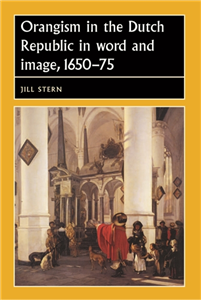
This remarkable study represents a completely original presentation of the language and imagery used by the Orangists in the critical period in the mid-seventeenth century Netherlands as they sought the restoration of the stadholderate in the person of the young prince William III. Stern argues that the Orangists had no desire for the prince to become a monarch, rather that they viewed the stadholderate as an essential component of the Dutch constitution, the Union of Utrecht, and fulfilling a key role as defender of the rights and privileges of the citizenry against an overwheening urban oligarchy. Source material is drawn not only from books and political pamphlets but also from contemporary drama, poetry, portraits, prints, and medals. This enables the author to examine the imagery used by the supporters of the House of Orange, in particular the symbols of rebirth and regeneration which were deployed to propagate the restoration of the stadholderate in the person of William III. ;
Trusted Partner
 Trusted Partner

For more than 500 years, the clock has dictated the rhythm of life in the Western World. Clocks were impossible to miss: they were on church towers, at railway stations and factories, they struck the hours and urged people to hurry. But these days, clocks and the punctuality they insisted upon are on the retreat. Nowadays, we are rarely asked “What is the time?” and it is no longer customary to present golden watches or clocks to commemorate important life events. Now we rely on mobile devices and displays to tell us the time, the steady stroke of the rigid clock has been replaced by a more flexible network: we stream TV programmes when we feel like it, we listen to podcasts at any time; chatting, flirting and dating no longer requires prior agreement on time and place. However, what will follow after we have freed ourselves from the chains of the clock god? Emeritus Professor of Economics and time expert Karlheinz A. Geißler shows us that when the influence of the clock disappears, liberating perspectives emerge for experiencing time in social relationships – beyond time pressure and dictates of punctuality.



