
Your Search Results
-

-

AlFulk Translation and Publishing
AlFulk Translation & Publishing: An independent publishing house, launched in October 2015 and based in Abu Dhabi. It specialisation is translating children and young adult literature from different languages into Arabic. AlFulk aims for:1. To enrich the Arabic library with diverse cultural collections, in order to aware the readers of the intercultural communication importance. 2. To establish a reading habits base for children from 0-4.3. To increase the level of YA books -both Fantasy, fiction and non-fiction- in terms of their content and illustrations.As the majority in the publishing industry, we have been affected by COVID-19 epidemic. However, we have decided to participate at Frankfurter Buchmesse this year to look at what is new in the industry and to expand our network. We seek long term partnerships.
View Rights Portal
-
Promoted Content

 2022
2022Medical Device Information for Pharmaceutical Technicians
by Founded by Friedlinde Wilson and Baldur Kohm.Edited by Dr. Anette Vasel-Biergansand Hannelore Eitel-Hirschfeld
Ranging from eyebaths and compression stockings to electronic cigarettes, the variety of medical aids available is huge. Every day, expert advice on these is needed at the pharmacy. The authors have summarised these aids in a practically oriented way. They provide background information, specifics about the materials, application descriptions, practical tips and product examples. Colourful illustrations show how they are used on or by the patient. Fully updated, the new edition of the book contains not only conventional medical devices but also those asked for at a contemporary community pharmacy. This 11th edition, which has been completely revised, contains: - definitions enabling rapid familiarisation with the topic, - tables that provide an overview, - illustrations and advice tips to help with practical use, - mnemonics and practice questions which help reinforce the knowledge Bonus: QR codes take the user to additional digital material! The ideal companion in training and on the job!
-
Promoted Content

 Health & Personal Development
Affirmative Counseling for Transgender and Gender Diverse Clients
by lore m. dickey, Jae A. Puckett
A how-to guide to affirmative counseling with transgender clients• Presents the best evidence-basedcare• Instructions for strategies to improveinclusivity• Illustrated with case studies• Printable tools for clinical use This volume provides fundamental and evidence-based information on working with transgender and gender diverse people in mental health services. The authors, who are experts in the field, outline the key qualities of affirming mental health services, as well as explore strategies for improving inclusivity and what evidence-based care with trans clients looks like. They also provide insight into current topics, such as working with youth, the harmful and ill-advised approach known as rapid onset gender dysphoria, and whether and how autism is a co-occurring diagnostic concern. Practitioners will find the printable resources provided invaluable for their clinical practice, including sample letters of support for trans clients who are seeking gender affirming medical care. For:• clinical psychologists• psychiatrists• psychotherapists• family practitioners• counselors• students
-
 Trusted Partner

 The ArtsFebruary 2026
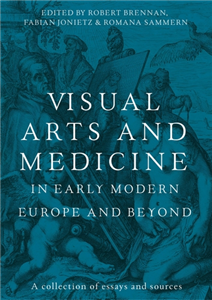
Visual arts and medicine in early modern Europe and beyond
A collection of essays and sources
by Robert Brennan, Fabian Jonietz, Romana Sammern
This book opens up new perspectives on the relationship between art, medicine, and science in late-medieval and early modern Europe. Looking beyond the traditional nexus of art, anatomy, and optics, the volume sheds light on a broader array of connections between artists and physicians: collaborations between painters and doctors on colour charts, handwork skills common to sculptors and surgeons, the transmission of art theory through medical texts long before the emergence of art writing itself as an independent genre, and the kinship of medical diagnosis with early modes of connoisseurship. Reconfiguring the histories of art, medicine, and science, the book also traverses conventional boundaries between physical and mental health, religious and medical modes of healing, menial and exalted forms of knowledge and labour, as well as vernacular and scientific understandings of human difference, including gender, race, and neurodiversity.
-
Trusted Partner
 The ArtsSeptember 2019
Queer Objects
by Chris Brickell, Judith Collard
Queer lives give rise to a vast array of objects: the things we fill our houses with, the gifts we share with our friends, the commodities we consume at work and at play, the clothes and accessories we wear, and the analogue and digital technologies we use to communicate with one another. But what makes an object queer? The sixty-three chapters in Queer Objects consider this question in relation to lesbian, gay and transgender communities across time, cultures and space. In this unique international collaboration, well-known and newer writers traverse world history to write about items ranging from ancient Egyptian tomb paintings and Roman artefacts to political placards, snapshots, sex toys and the smartphone. Fabulous, captivating, transgressive.
-
Trusted Partner
 MedicineMarch 2024
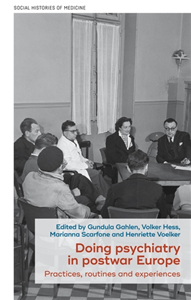
Doing psychiatry in postwar Europe
Practices, routines and experiences
by Gundula Gahlen, Henriette Voelker, Volker Hess, Marianna Scarfone
Doing psychiatry engages with the history of European psychiatry in the second half of the twentieth century through a close and fresh look at the practices that contributed to reshape the mental health field. Case studies from across Europe allow readers to appreciate how new 'ways of doing' contributed to transform the field, beyond the watchwords of deinstitutionalisation, the prescription of neuroleptics, centrality of patients and overcoming of asylum-era habits. Through a variety of sources and often adopting a small-scale perspective, the chapters take a close look at the way new practices emerged and at how they installed themselves, eventually facing resistance, injecting new purposes and contributing to enlarging psychiatry's fields of expertise, therefore blurring its once-more-defined boundaries.
-
Trusted Partner
 History of medicineNovember 2011
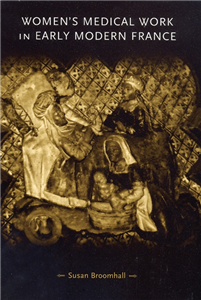
Women's medical work in early modern France
by Susan Broomhall
Women have long been crucial to the provision of medical services, both in the treatment of sickness and in maintaining health. In this study, Susan Broomhall situates the practices and perceptions of women's medical work in France in the context of the sixteenth century and its medical evolution and innovations. She argues that early modern understandings of medical practice and authority were highly flexible and subject to change. She furthermore examines how a focus on female practitioners, who cut across most sectors of early modern medical practice, can reveal the multifaceted phenomenon of these negotiations for authority. This new paperback edition of Women's medical work in early modern France skilfully combines detailed research with a clear presentation of the existing literature of women's medical work, making it invaluable to students of gender and medical history.
-
Trusted Partner
 MedicineNovember 2024
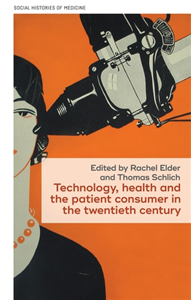
Technology, health and the patient consumer in the twentieth century
by Rachel Elder, Thomas Schlich
Technology and consumerism are two characteristic phenomena in the history medicine and healthcare, yet the connections between them are rarely explored by scholars. In this edited volume, the authors address this disconnect, noting the ways in which a variety of technologies have shaped patients' roles as consumers since the early twentieth century. Chapters examine key issues, such as the changing nature of patient information and choice, patients' assessment of risk and reward, and matters of patient role and of patient demand as they relate to new and changing technologies. They simultaneously investigate how differences in access to care and in outcomes across various patient groups have been influenced by the advent of new technologies and consumer-based approaches to health. The volume spans the twentieth and twenty-first centuries, spotlights an array of medical technologies and health products, and draws on examples from across the United States and United Kingdom.
-
Trusted Partner
 Humanities & Social SciencesJune 2025
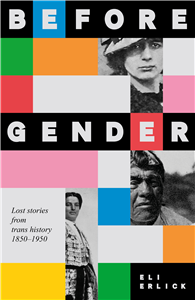
Before Gender
Lost stories from trans history 1850-1950
by Eli Erlick
Discover the trailblazing lives of thirty trans people who will radically change everything you've been told about transgender history. Highlighting influential individuals from 1850 to 1950 who are all but unknown today, Eli Erlick shares thirty remarkable stories from romance to rebellion and mystery to murder. These narratives chronicle the grit, joy and survival of trans people long before gender became an everyday term. Organised into four parts, paralleling today's controversies over gender identity - kids, activists, workers and athletes - Before Gender introduces figures whose forgotten stories transform the discussion. These ground-breaking histories include two of the first teens to access gender-affirming medical treatment, a countess who instigated an LGBTQ+ riot forty years before Stonewall and the greatest female billiards player of the 1910s. Bold and visionary, Erlick's debut uncovers these lost stories from the depths of the archives to narrate trans lives in a way that has never been attempted before.
-
Trusted Partner

 May 2021
The Humane Idea
Rudolf Virchow and Hermann von Helmholtz. The legacy of the Charité
by Ernst Peter Fischer, Detlev Ganten
Two of today’s leading scientists, Ernst Peter Fischer and Detlev Ganten, reconfirm the legacy of two influential 19th-century researchers. To mark the 200th birthday of Rudolf Virchow (1821–1902) and Hermann von Helmholtz (1821–1894), they explain why pioneering research and holistic thinking are still relevant for health science and practice, and for a sustainable balance of people, society and the environment. The historical achievement of Virchow and Helmholtz continues today with the work of researchers like Emmanuelle Charpentier and Christian Drosten, so ensuring that the humane idea continues to be fruitful in the future. An insight into the history of medical science.
-
Trusted Partner
-
Trusted Partner
-
Trusted Partner
-
Trusted Partner
 2022
2022Drugs and Medical Devices in Nursing
Training for nurses and carers
by Dr. Constanze Schäfer
What applies when storing potatoes is also good for drugs and medical devices! But this is where the similarities end. If medicines are not stored correctly or used properly, they may not be effective. Pharmacists - the experts on medicines - explain to the nursing team: - How light, air and temperature can cause damage - Where the pitfalls lie in the use of tablets, drops etc. - What makes medical devices so different from drugs New in the 3rd edition: Improved overview of the types of use. Clearer comparison of drugs and medical devices. Video clips on the use of specific dosage forms can now be directly launched from the presentation. 36 editable PowerPoint slides, videos and a complete text of the presentation are available on CD-ROM and for download
-
Trusted Partner
 Humanities & Social SciencesJanuary 2019
Sickness, medical welfare and the English poor, 1750-1834
by Steven King, Keir Waddington, David Cantor
At the core of this book are three central contentions: That medical welfare became the totemic function of the Old Poor Law in its last few decades; that the poor themselves were able to negotiate this medical welfare rather than simply being subject to it; and that being doctored and institutionalised became part of the norm for the sick poor by the 1820s, in a way that had not been the case in the 1750s. Exploring the lives and medical experiences of the poor largely in their own words, Sickness, medical welfare and the English poor offers a comprehensive reinterpretation of the so-called crisis of the Old Poor Law from the later eighteenth century. The sick poor became an insistent presence in the lives of officials and parishes and the (largely positive) way that communities responded to their dire needs must cause us to rethink the role and character of the poor law.
-
Trusted Partner
-
Trusted Partner
 MedicineMay 2025
Brutal treatments
Medicine and colonial violence at the end of empire
by Russell T. Moul
Brutal treatments explores the role medical doctors played in the colonial counterinsurgency campaigns in British Kenya (1952-1960) and French Algeria (1954-1962) in the final years of empire. It not only examines how these medical professionals became embroiled in the conflict, but also how they used their knowledge to further the interests of the state. The book makes a substantial and significant contribution to the history of medicine, the history of medical ethics, and the history of colonialism.
-
Trusted Partner
 2019
2019Harmed Not Cured
Major medical and pharmaceutical scandals in Germany
by Eckart Roloff and Karin Henke-Wendt
Botched medications, malpractice, the transplant business: when doctors or pharmaceutical companies make mistakes or cross ethical boundaries, this often has serious consequences for patients. One example is thalidomide. Despite inadequate testing, the sleeping pill was marketed from 1957 to 1961, and caused a large number of pregnant women to give birth to children with severe deformities. Less well known, but no less scandalous, is the “Anti-D” affair in the former GDR, where, during 1978 and 1979, thousands of women and many children were infected with hepatitis C through contaminated immunoglobulins. This was not revealed until years later. This book presents 16 such cases – often the stuff of thrillers, but tragic at the same time. People who reach out for help, are instead deceived and harmed. All the more important are courageous and persistent patients and journalists, who have uncovered medical scandals, publicised them and taken the perpetrators to court. Without this, no-one would be learning from the mistakes.
-
Trusted Partner

 2021
2021Lexicon of Medicinal Plants
by Prof. Dr. Dietrich Frohne (†), in collaboration with Prof. Dr. Birgit Classen
Indian mulberry, St. John’s wort, Hawaiian baby woodrose – whether disputed wonder drug, traditional medicinal plant or unknown exotic plant – the Lexicon of Medicinal Plants can always be relied upon. The lexical and classic knowledge about the individual medicinal plants – such as family, origin, use, effect and constituents – garnered over decades and peppered with particular anecdotes on the herbal drugs, can be regarded as unique and largely timeless. At the repeated request of readers, this reference work has therefore been reissued in book form, with its contents largely unchanged but with misprints corrected and its layout modernised. A wealth of experience that even in the fast-moving digital world preserves traditional knowledge.
-
Trusted Partner
 Humanities & Social SciencesMarch 2017
Payment and philanthropy in British healthcare, 1918–48
by George Campbell Gosling, Keir Waddington
This book is available as an open access ebook under a CC-BY-NC-ND licence. At a time when payment is claiming a greater place than ever before within the NHS, this book provides the first in-depth investigation of the workings, scale and meaning of payment in British hospitals before the NHS. There were only three decades in British history when it was the norm for patients to pay the hospital; those between the end of the First World War and the establishment of the National Health Service in 1948. Payment played an important part in redefining rather than abandoning medical philanthropy, based on class divisions and the notion of financial contribution as a civic duty. With new insights on the scope of private medicine and the workings of the means test in the hospital, as well as the civic, consumer and charitable meanings associated with paying the hospital, Gosling offers a fresh perspective on healthcare before the NHS and welfare before the welfare state.
-
Trusted Partner
 Humanities & Social SciencesMarch 2019
Managing diabetes, managing medicine
Chronic disease and clinical bureaucracy in post-war Britain
by Martin D. Moore, Keir Waddington, David Cantor
This book is available as an open access ebook under a CC-BY-NC-ND licence. Through its study of diabetes care in twentieth-century Britain, Managing diabetes, managing medicine offers the first historical monograph to explore how the decision-making and labour of medical professionals became subject to bureaucratic regulation and managerial oversight. Where much existing literature has cast health care management as either a political imposition or an assertion of medical control, this work positions managerial medicine as a co-constructed venture. Although driven by different motives, doctors, nurses, professional bodies, government agencies and international organisations were all integral to the creation of managerial systems, working within a context of considerable professional, political, technological, economic and cultural change.



