Your Search Results

      • Trusted Partner
        Humanities & Social Sciences
        January 2025

        Crisis and change in European Union foreign policy

        by Nikki Ikani

      • Trusted Partner
        Literature: history & criticism
        September 2016

        Spenserian allegory and Elizabethan biblical exegesis

        A context for The Faerie Queene

        by Series edited by J. B. Lethbridge, Margaret Christian

        Edmund Spenser famously conceded to his friend Walter Raleigh that his method in The Faerie Queene 'will seeme displeasaunt' to those who would 'rather have good discipline delivered plainly in way of precepts, or sermoned at large'. Spenser's allegory and Elizabethan biblical exegesis is the first book-length study to clarify Spenser's comparison by introducing readers to the biblical typologies of contemporary sermons and liturgies. The result demonstrates that 'precepts ... sermoned at large' from lecterns and pulpits were themselves often 'clowdily enwrapped in allegoricall devises'. In effect, routine churchgoing prepared Spenser's first readers to enjoy and interpret The Faerie Queene. A wealth of relevant quotations invites readers to adopt an Elizabethan mindset and encounter the poem afresh. The 'chronicle history' cantos, Florimell's adventures, the Souldan episode, Mercilla's judgment on Duessa and even the two stanzas that close the Mutabilitie fragment, all come into sharper focus when juxtaposed with contemporary religious rhetoric.

      • Trusted Partner
        The Arts
        June 2026

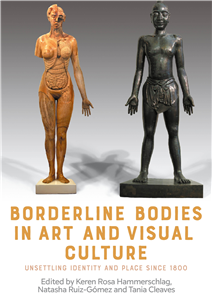
        Borderline bodies in art and visual culture

        Unsettling identity and place since 1800

        by Keren Hammerschlag, Natasha Ruiz-Gómez, Tania Anne Cleaves

        Borderline bodies offers original interpretations of visual representations of human bodies as bounded and unbounded, fortified and permeable, mobile and static-subject to borders and able to traverse and challenge them. It also takes as its focus images and objects that might be considered 'borderline' because they sit at the intersection of disciplines or sit outside accepted notions of what constitutes serious 'art.' By mapping the ways human bodies traverse borders and straddle-even dismantle-categories, this volume's essays approach afresh the relationship of bodies to traditional modes of representation, especially in art and medicine, and encourage us to think anew about how we understand the relationship between human corporeality, identity and place. Critical transdisciplinary and transnational analyses of objects and images from a range of geographies shed new light on the themes of: bodies and identity; typologies of the body; racialised bodies; 'normal' and 'abnormal' bodies; encounters between bodies; bodies in transition; bodies and mobility; and the bounded and unbounded human body. The outcome is a fresh approach to depictions of the human body produced for the purposes of artistic and medical education, aesthetic edification, and scientific and professional advancement, which disrupts assumptions about the normative human body perpetuated through Western image-making traditions.

      Subscribe to our

      newsletter