Your Search Results

      • Grupo Planeta

        Grupo Planeta is Spain’s leading family-owned publishing and media group and it boasts an extensive product offering at the service of culture, learning, news and audiovisual entertainment. In the years since Editorial Planeta was founded in Barcelona by José Manuel Lara Hernández, in 1949, the Group has become a multinational enterprise. It combines a solid business tradition with its capacity for innovation and its European and international vocation, with an especially prominent presence in Spain, France, Portugal and Latin America.

        View Rights Portal
      • E-planet Educational Services

        About E-planet E-planet Educational Services is an international organisation created by a dedicated and enthusiastic team of experts on education, marketing and development. Our goal is to provide our partners, students and customers with top-level services and products. That is why we have developed a unique, fully integrated company for ESL (English as a Second Language) educational services and business training. We combine traditional methods with cutting-edge technology to achieve a variety of purposes!

        View Rights Portal
      • Trusted Partner
      • Trusted Partner
        The Arts
        September 2024

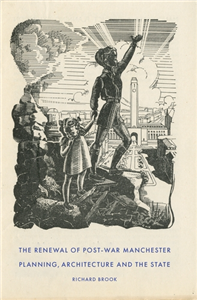
        The renewal of post-war Manchester

        Planning, architecture and the state

        by Richard Brook

        A compelling account of the project to transform post-war Manchester, revealing the clash between utopian vision and compromised reality. Urban renewal in Britain was thrilling in its vision, yet partial and incomplete in its implementation. For the first time, this deep study of a renewal city reveals the complex networks of actors behind physical change and stagnation in post-war Britain. Using the nested scales of region, city and case-study sites, the book explores the relationships between Whitehall legislation, its interpretation by local government planning officers and the on-the-ground impact through urban architectural projects. Each chapter highlights the connections between policy goals, global narratives and the design and construction of cities. The Cold War, decolonialisation, rising consumerism and the oil crisis all feature in a richly illustrated account of architecture and planning in post-war Manchester.

      • Trusted Partner
        Humanities & Social Sciences
        October 2025

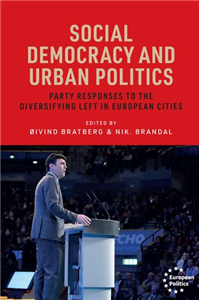
        Social democracy and the urban scene

        Party responses to the diversifying centre-left

        by Nik. Brandal, Øivind Bratberg

        Social democratic parties struggle to appeal to a divided electorate. Particularly prescient is the clash between working-class voters thatare socially conservative and middle-class voters who are liberally inclined but economicallyleft. Are politics and policies that appeal to both even a possibility? Nowhere is thatdebate more acute than in European cities, yet in no other political space are answers more likely to be found.Where urban voters turn left, they are increasingly attracted by radical and green alternatives to social democracy.Social democracy and urban politicsdelves into the changing relationship between these three party families on the urban scene. Mapping electoral geography, governing strategies and the interface between parties and social movements on the left, the authors reflect upon the formation and dilemmas of a broader progressive alliance.

      • Trusted Partner
        Humanities & Social Sciences
        August 2024

        The machinic city

        Media, performance and participation

        by Marcos P. Dias

        As human and machine agency become increasingly intermingled and digital media is overlaid onto the urban landscape, The machinic city argues that performance art can help us to understand contemporary urban living. Dias analyses interventions from performance artists such as Blast Theory, Rafael Lozano-Hemmer and Rimini Protokoll, which draw from a rich history of avant-garde art movements to create spaces for deliberation and reflection on urban life, and speculation on its future. While cities are increasingly controlled by autonomous processes mediated by technical machines, Dias analyses the performative potential of the aesthetic machine, as it assembles with media, capitalist, human and urban machines. The aesthetic machine of performance art in urban space is examined through its different components - design, city and technology actants. This unveils the unpredictable nature and emerging potential of performance art as it unfolds in the machinic city.

      • Trusted Partner
        Geography & the Environment
        August 2020

        Urban transformations and public health in the emergent city

        by Michael Keith, Andreza Aruska de Souza Santos, Susan Parnell

        The imperatives of public health shaped our understanding of the cities of the global north in the first industrial revolutions of the nineteenth and twentieth centuries. They are doing so again today, reflecting new geographies of the urban age of the twenty-first. Emergent cities in parts of the globe experiencing most profound urban growth face major problems of economic, ecological and social sustainability when making sense of new health challenges and designing policy frameworks for public health infrastructures. The rapid evolution of complex 'systems of systems' in today's cities continually reconfigure the urban commons, reshaping how we understand urban public health, defining new problems and drawing on new data tools for analysis that work from the historical legacies and geographical variations that structure public health systems.

      • Trusted Partner
        Humanities & Social Sciences
        May 2026

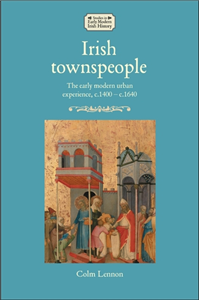
        Irish townspeople

        The early modern urban experience, c.1400–c.1640

        by Colm Lennon

        Through a series of innovative perspectives, this book examines how early modern Irish townspeople experienced the urban world through a range of family and associational ties. Migrants inducted through town citizenship and marriage bonded more closely as sisters or brothers of confraternities and guilds, consolidating parish membership. Civic religion saw the integration of religion with town politics and councils, and monastic charity of the friars' hospitals preceded the era of modern municipal welfare. In circumstances of the alienation of the long-settled Catholic townspeople from the state's religious and political Reformation in the seventeenth century, they drew sustenance from the continuity of institutions such as colleges, fraternities and hospitals and forms of coexistence with Protestant fellow-citizens.

      • Trusted Partner
        The Arts
        January 2026

        David Simon's American City

        by Mikkel Jensen

        This book examines the television serials created by influential showrunner David Simon. The book argues that Simon's main theme is the state of the contemporary American city and that all of his serials (barring one about the Iraq War) explore different facets of the metropolis. Each series offers distinctly different visions of the American city, but taken together they represent a sustained and intricate exploration of urban problems in modern America. From deindustrialisation in The Wire and residential segregation in Show Me a Hero to post-Katrina New Orleans in Treme and the transformation of the urban core in The Deuce, David Simon's American city traces the urban through-line in Simon's body of work. Based on sustained analysis of these serials and their engagement with contemporary politics and culture, David Simon's American city offers a compelling examination of one of television's most arresting voices.

      • Trusted Partner
        Humanities & Social Sciences
        October 2006

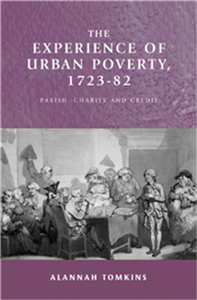
        The experience of urban poverty, 1723–82

        Parish, charity and credit

        by Alannah Tomkins

        This comparative study of urban poverty is the first to chart the irregular pulse of poverty's encounters with officialdom. It exploits an unusual methodology to secure new perspectives from familiar sources. The highly localised characteristics of the welfare economy generated a peculiarly urban environment for the poor. Separate chapters examine the parameters of workhouse life when the preconceptions of contemporaries have been stripped away; the reach of institutional charities such as almshouses, schools and infirmaries; and the surprisingly broad clientele of urban pawnbrokers. Detailed analysis of the poor is achieved via meticulous matching of individuals who fell within the purview of two or more authorities. The result is a unique insight into the survival economics of urban poverty, arising not from a tidy network of welfare but from a loose assembly of options, where the impoverished positioned themselves repeatedly to fit official, philanthropic, or casual templates of the 'deserving'. This book will be essential reading for historians of English poverty and welfare, and eighteenth-century social and economic life. ;

      • Trusted Partner
      • Trusted Partner
        Humanities & Social Sciences
        March 2021

        African cities and collaborative futures

        Urban platforms and metropolitan logistics

        by Michael Keith, Andreza Aruska de Souza Santos, Susan Parnell

        This groundbreaking volume brings together scholars from across the globe to discuss the infrastructure, energy, housing, safety and sustainability of African cities, as seen through local narratives of residents. Drawing on a variety of fields and extensive first-hand research, the contributions offer a fresh perspective on some of the most pressing issues confronting urban Africa in the twenty-first century. At a time when the future of the region as a whole will be determined in large part by its cities, the implications of these developments are profound. With case studies from cities in Ethiopia, Kenya, Malawi, Niger, Nigeria, South Africa and Tanzania, this volume explores how the rapid growth of African cities is reconfiguring the relationship between urban social life and its built forms. While the most visible transformations in cities today can be seen as infrastructural, these manifestations are cultural as well as material, reflecting the different ways in which the city is rationalised, economised and governed. How can we 'see like a city' in twenty-first-century Africa, understanding the urban present to shape its future? This is the central question posed throughout this volume, with a practical focus on how academics, local decision makers and international practitioners can collaborate to meet the challenge of rapid growth, environmental pressures and resource gaps.

      • Trusted Partner
        Humanities & Social Sciences
        January 2021

        Remaking the urban

        by Naomi Roux

      • Trusted Partner
      • Trusted Partner
        2024

        Brave new city

        Smart Cities - a survaillance-nightmare?

        by Peter Schaar

        The dream of the ideal city is as old as the city itself. Since real cities often develop chaotically, the idea of perfecting them, even tearing them down if necessary, and rebuilding them according to the prevailing patterns of thought is an obvious one. The latest manifestation of this utopia is the smart city - the intelligent city, packed with the latest technology and extensively digitised. But will air taxis and hyperloops, ubiquitous sensors, access control systems and data-driven management really make the city of the future a better place to live? Are they the answer to the enormous challenges facing today's fast-growing metropolises? Or will the supposed administrative paradise ultimately mutate into a digital juggernaut?

      • Trusted Partner
      • Trusted Partner
      • Trusted Partner
        Business, Economics & Law
        October 2020

        Design Thinking Navigator

        Kartenset zur kreativen Projektarbeit

        by Mayer, Lena; Osann, Isabell; Szymanski, Caroline; Taheri, Mana

        Design Thinking: Solve problems together, user-centered and iterative, develop innovations and have fun doing so! - Practical cards for innovation project work with change of perspective- Consistently customer-oriented and iterative- Targeted use of the maps in project planning and implementation with Design Thinking- Pragmatic, compact and wonderfully descriptive- Suitable for the most diverse questions or problems- With folding poster for targeted use of maps in project planning and decorative at the workplace- From the authors "Design Thinking Quick Start

      • Trusted Partner
        Humanities & Social Sciences
        March 2026

        Black socialities

        Urban resistance and the struggle beyond recognition in Paris

        by Vanessa Eileen Thompson

        From author: This is a cutting-edge exploration of black urban politics in Parisian racialized working class and working poor districts, the formation of abolition geography, and the possibilities of new forms of political blackness. In Black Socialities. Urban resistance and the struggle beyond recognition in Paris, Vanessa E. Thompson argues that black urban politics in the French banlieues are multi-racial and spatially grounded towards abolition. Based on a close engagement with urban black activist practices against racial imagery in the city, policing and state racism, and housing insecurity, she shows how radical anti-racism goes beyond struggles for recognition and unfolds alongside new formations of political blackness that is based on urban conviviality. This form of black politics has much to teach us in this current conjuncture of liberal anti-racism and state recognition politics.

      • Trusted Partner
        Humanities & Social Sciences
        August 2002

        City of Revolution

        Restructuring Manchester

        by Jamie Peck, Kevin Ward, Martin Hargreaves

        Provides a critical account of one of Europe's most celebrated examples of urban transformation, getting beneath the hype to ask what has really changed in the 'new' Manchester.. The first comprehensive account of contemporary political and economic change in Manchester.. Explores the costs and consequences of making the transition from an industrial to a post-industrial or 'entrepreneurial' city, with broad implications for other major cities. ;

      Subscribe to our

      newsletter