
Good values
Picture books on values and social issues. (Kidible imprint)
View Rights Portal


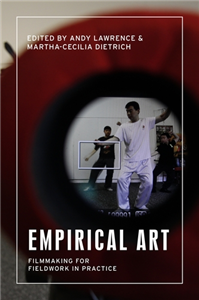
Empirical art: Filmmaking for fieldwork in practice is an insightful exploration of what the craft of filmmaking brings to social science research. Providing creative avenues on how to narrate encounters, relationships, and experiences during fieldwork, this comprehensive volume offers a rich tapestry of theoretical explorations and explorative methodologies. Skilfully connecting the worlds of ethnography, art and cinema, the contributors in this book act as a compass for filmmakers and researchers venturing to use a camera and microphone to relate and narrate their research collaborations and fieldsites. Drawing from the authors' extensive experience in disciplines like social anthropology, environmental humanities, and political science, "Empirical Art" breaks down the intricate process of crafting ethnographic films that departs from the researcher's subjectivity. Covering aspects of filmmaking from conceptualisation to production and distribution, readers are equipped with a treasure trove of collaborative techniques, innovative approaches, and ethical considerations necessary to generate and examine storytelling practices in contemporary fields of study. The authors discuss the significance of the multiple roles that technologies of filmmaking play in reflecting on cultural practices, social dynamics, and (beyond) human storytelling and their transformative potentials. Whether a seasoned filmmaker, an aspiring ethnographer, or an academic seeking new dimensions for their research, Empirical Art serves as a guide to integrating visual storytelling, cinema craft and empirical research.
 Trusted Partner
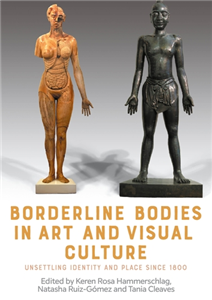
Borderline bodies offers original interpretations of visual representations of human bodies as bounded and unbounded, fortified and permeable, mobile and static-subject to borders and able to traverse and challenge them. It also takes as its focus images and objects that might be considered 'borderline' because they sit at the intersection of disciplines or sit outside accepted notions of what constitutes serious 'art.' By mapping the ways human bodies traverse borders and straddle-even dismantle-categories, this volume's essays approach afresh the relationship of bodies to traditional modes of representation, especially in art and medicine, and encourage us to think anew about how we understand the relationship between human corporeality, identity and place. Critical transdisciplinary and transnational analyses of objects and images from a range of geographies shed new light on the themes of: bodies and identity; typologies of the body; racialised bodies; 'normal' and 'abnormal' bodies; encounters between bodies; bodies in transition; bodies and mobility; and the bounded and unbounded human body. The outcome is a fresh approach to depictions of the human body produced for the purposes of artistic and medical education, aesthetic edification, and scientific and professional advancement, which disrupts assumptions about the normative human body perpetuated through Western image-making traditions.
Trusted Partner
Vibes as value explores the relationship between subjectivity, labour and value in the hospitality industry, and thereby how youth, gender, sexuality, race and social class are embodied and made productive in the service economy. It shows that the key product of hospitality labour is 'vibes', or moments of enjoyment and relationality co-produced through exploitative relationships amongst workers and consumers. In the process, the book theorises hospitality as a form of affective labour organised through the normative and structural relations of precarious service work. It shows how identity construction produces value within the highly unequal social terrain of the service economy, and how hospitality labour enacts hierarchies of value extending far beyond the limits of the industry itself.


A pioneering work in the movement to free art from its traditional bonds to material reality, this book is one of the most important documents in the history of modern art. Written by the famous nonobjective painter Wassily Kandinsky (1866–1944), it explains Kandinsky's own theory of painting and crystallizes the ideas that were influencing many other modern artists of the period. Along with his own groundbreaking paintings, this book had a tremendous impact on the development of modern art. Kandinsky's ideas are presented in two parts. The first part, called "About General Aesthetic," issues a call for a spiritual revolution in painting that will let artists express their own inner lives in abstract, non-material terms. Just as musicians do not depend upon the material world for their music, so artists should not have to depend upon the material world for their art. In the second part, "About Painting," Kandinsky discusses the psychology of colors, the language of form and color, and the responsibilities of the artist. An Introduction by the translator, Michael T. H. Sadler, offers additional explanation of Kandinsky's art and theories, while a new Preface by Richard Stratton discusses Kandinsky's career as a whole and the impact of the book. Making the book even more valuable are nine woodcuts by Kandinsky himself that appear at the chapter headings. This English translation of Über das Geistige in der Kunst was a significant contribution to the understanding of nonobjectivism in art. It continues to be a stimulating and necessary reading experience for every artist, art student, and art patron concerned with the direction of 20th-century painting.
Trusted Partner


From pills and capsules to patches, drops and creams – the world of pharmaceutical forms is highly diverse. This variety poses new challenges for pharmaceutical professionals every day. Whether transdermal patches, sustained-release pills, oral inhalers or suppositories – safe and effective treatment can only be ensured through correct use. This standard reference offers in-depth knowledge, practical advice and numerous tips for the correct handling of dosage forms. It combines background knowledge with practical tips. The author discusses common application errors and also examines the physiological characteristics of special groups such as geriatric and paediatric patients. New in this edition: content on Connected Drug Delivery Devices. The book also includes: • Numerous product images, • Overview tables of commonly used finished medicinal products by form, • Application videos for dosage forms requiring detailed explanation. This indispensable reference work for pharmacies, clinics and teaching is essential when the package insert falls short. Expert advice ensures safe use. Target group: Pharmacicsts, pharmaceutical technicians, students of pharmacy, pharmacy interns
Trusted Partner
Trusted Partner
Trusted Partner

Bourgeois Consumption looks at how the middle classes in late nineteenth-century London and Paris used food and dining as forms of social expression and identity. This engaging treatise about how class and gender informed people's eating habits focuses on the complex interactions between bodies, ritual and identity. Forgoing the traditional food history territory of recipes and ingredients in favor of how people ate in different circles, Bourgeois Consumption explores the role of real and imagined meals in shaping Victorian lives. The perception of the middle classes as rigid and upright, found in the extensive pages of their etiquette books, is contrasted with a more flexible and spontaneous bourgeoisie, gleaned from the pages of their own colorful memoirs, diaries and letters, leading us on a lively journey into eating spaces, mealtimes, manners, and social interactions between diners. Further, contrasting Paris with London reveals some of the ways each city shaped its inhabitants but, more surprisingly, throws up a range of similarities that suggest the middle classes were, in fact, a transnational class. Rachel Rich's work will be of interest to anyone intrigued by the history of food, consumption and leisure, as well as to a broader audience curious about how the Victorian middle classes distinguished themselves through daily life and manners. ;
Trusted Partner
In an age when engraving and photography were making artistic images available to a much wider public, artists were able to influence public attitudes more powerfully than ever before. This book examines works of art on military themes in relation to ruling-class ideologies about the army, war and the empire. The first part of the book is devoted to a chronological survey of battle painting, integrated with a study of contemporary military and political history. The chapters link the debate over the status and importance of battle painting to contemporary debates over the role of the army and its function at home and abroad. The second part discusses the intersection of ideologies about the army and military art, but is concerned with an examination of genre representations of soldiers. Another important theme which runs through the book is the relation of English to French military art. During the first eighty years of the period under review France was the cynosure of military artists, the school against which British critics measured their own, and the place from which innovations were imported and modified. In every generation after Waterloo battle painters visited France and often trained there. The book shows that military art, or the 'absence' of it, was one of the ways in which nationalist commentators articulated Britain's moral superiority. The final theme which underlies much of the book is the shifts which took place in the perception of heroes and hero-worship.
Trusted Partner


The assessment of nursing and care needs and the organisation and quality assurance of nursing care are key tasks performed by nursing staff. This also includes administering medication, something which requires sound organisation, control, implementation and documentation. Nurses observe whether medication is taken consistently, has the desired effect, and whether undesirable side effects occur. The drug product as a „special commodity“ – whether in inpatient long-term care, in outpatient care, or in hospital – requires special knowledge concerning - correct storage, - the pharmacological effect, and - appropriate application. This book is geared towards the diseases and symptoms of people requiring nursing or care. All the important facts concerning the use of medicines are presented here in an understandable manner, focusing on the essentials. Numerous illustrations and practical tips provide the link to everyday nursing care. It is the ideal textbook and reference work for nursing and care assistants as well as nursing professionals.
Trusted Partner
Trusted Partner


The literature on diagnosis and treatment of drug and substance abuse is filled with successful, empirically based approaches, but also with controversy and hearsay. Health professionals in a range of settings are bound to meet clients with troubles related to drugs – and this text helps them separate the myths from the facts. It provides trainees and professionals with a handy, concise guide for helping problem drug users build enjoyable, multifaceted lives using approaches based on decades of research. Readers will improve their intuitions and clinical skills by adding an overarching understanding of drug use and the development of problems that translates into appropriate techniques for encouraging clients to change behavior themselves. This highly readable text explains not only what to do, but when and how to do it. Seasoned experts and those new to the field will welcome the chance to review the latest developments in guiding self-change for this intriguing, prevalent set of problems. Target Group: clinical psychologists, psychiatrists, psychotherapists, counselors, students.
Trusted Partner

Concrete guidance on harm reduction treatment (HaRT) with substance-using patients:• Written by experts from the field• Details a unique evidence-based approach• Includes example scripts• Provides case studies• Includes downloadable handouts Harm reduction approaches are effective alternatives to abstinence-based treatment for people who are not ready, willing, or able to stop using substances. This volume outlines the scientific basis and historical development of these approaches, and reviews why abstinence-based approaches often do not work. The authors then share their expertise about harm reduction treatment (HaRT), an empirically based approach co-developed with community members impacted by substance-related harm – a first of its kind. The reader learns in detail about the pragmatic mindset and compassionate heartset of HaRT and the three treatment components: measurement and tracking of patient-preferred substance-related metrics, harm-reduction goal setting and achievement, and discussion of safer-use strategies. In addition, the book provides example scripts for use in daily practice.
Trusted Partner


From insects to fish as well as birds and primates: the use of tools is amazingly widespread in the animal kingdom. It’s a misnomer to presume that humans are distinguished by tool use and conscious capacity. So where is culture initiated? The biologist Peter-René Becker has evaluated numerous studies and cites plenty of evidence for the use of the hammer and anvil, lances, bait or sponges. Animals also use “tools as social implements”. Ultimately, the depth of man’s conscience singles him out from other animals.
Trusted Partner
Trusted Partner

Cannabis has been used as a drug since antiquity – but only recently has it progressed to become one of the most exciting medical-pharmaceutical topics of our times. In scarcely any other area of pharmacotherapy has the state of knowledge recently developed at comparable speed. Experts from a variety of fields are constantly working to generate new scientific evidence for the therapeutic use of cannabis and/or cannabinoids and to provide patients with quality-assured medicinal cannabis. This book is the first to give representatives of all relevant areas of expertise the chance to speak. Alongside medical-therapeutic aspects, they address such questions as cultivation, quality assurance, patient care practices and patient counselling. The result of this accumulated knowledge and skill is a unique overall picture that, for the first time, combines and consolidates the current legal and scientific framework of medicinal cannabis provision! All facts have been painstakingly researched and checked. The result is a scientifically valid work, which sets the standard. This excellent compendium is indispensable for everyone who comes into contact with cannabis for professional or personal reasons.
Trusted Partner
This book opens up new perspectives on the relationship between art, medicine, and science in late-medieval and early modern Europe. Looking beyond the traditional nexus of art, anatomy, and optics, the volume sheds light on a broader array of connections between artists and physicians: collaborations between painters and doctors on colour charts, handwork skills common to sculptors and surgeons, the transmission of art theory through medical texts long before the emergence of art writing itself as an independent genre, and the kinship of medical diagnosis with early modes of connoisseurship. Reconfiguring the histories of art, medicine, and science, the book also traverses conventional boundaries between physical and mental health, religious and medical modes of healing, menial and exalted forms of knowledge and labour, as well as vernacular and scientific understandings of human difference, including gender, race, and neurodiversity.
Trusted Partner
Windows for the world explores the display and reception of nineteenth-century British stained glass in a secular exhibition context. International in scope, the book focuses on the global development of stained glass in this period as showcased at, and influenced by, these exhibitions. It recognises those who made and exhibited stained glass and demonstrates the long-lasting impact of the classification and modes of display at these events. A number of exhibits are illustrated in colour and are analysed in relation to stylistic developments, techniques and material innovations, as well as the broader iconographies of nation and empire in the nineteenth century.
Trusted Partner

The therapeutic use of cannabis follows the maxim: Start low, go slow! That is how to reach the optimum dose and efficacy with minimum side effects. But this balancing act requires relevant information. Our authors, recognised cannabis experts, have put everything important together in one place: - Indications and routes of administration - Effects, interactions and side effects - Selection and prescription of suitable cannabis-based medicines - Practical tips, e.g. about travelling or driving and road use The 4th edition includes updates on the legal situation, the pharmacology of the endocannabinoid system and of cannabidiol. Directions for use and tips for patients taking cannabis have been added, together with the new prescribing modalities for physicians as well as a list of available cannabis products. This prescribing aid covers the expanded range of cannabis-based medicines and the current legal position.



