
Veterinary & Animal Sciences
Textbooks, research and professional titles in Veterinary and Animal Sciences
View Rights Portal
Textbooks, research and professional titles in Veterinary and Animal Sciences
View Rights Portal
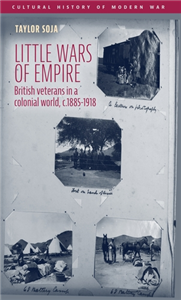
Little Wars of Empire is a group biography of British veterans who experienced multiple wars across the British empire. Throughout the nineteenth century, Britain was constantly at war in its colonies, defending against anti-colonial resistance or trying to expand its influence. The veterans of these wars did not disappear once they were over, and many of them went on to later experience World War I. By using personal sources such as letters, diaries, and photograph albums, this book works to show how colonial violence and British military history depend upon one another, and argues that colonial war fundamentally shaped the British experience of empire. This was true for all kinds of British veterans, from British Army soldiers and officers to nurses and military families, whose experiences demonstrate the central place of colonial violence to British life.


1999 lernen sich Sébastien Jondeau und Karl Lagerfeld kennen. Für den Jugendlichen aus einfachen Pariser Verhältnissen wird ein Traum wahr: Ab diesem Zeitpunkt wird er nicht mehr von der Seite des Modeschöpfers weichen. Jondeau wird Fahrer, Leibwächter, Assistent, Vertrauter, enger Freund. Lagerfeld eröffnet ihm eine Welt, die er, das Arbeiterkind aus einem Pariser Banlieue, sonst nie gekannt hätte: Er fliegt mit ihm in Privatjets, zu den wichtigen Modeschauen in New York, Mailand, Paris, begleitet ihn in seine Luxusvillen und lernt die internationale Prominenz kennen. Lagerfeld wird zu einer Vaterfigur für Jondeau, ein Vorbild, das er bis zu dessen Tod im Jahr 2019 begleitet - und das eine große Lücke in seinem Leben hinterlässt. In »Ça va, cher Karl?« erinnert Jondeau sich an die gemeinsamen Jahre – und erzählt voller Ehrlichkeit, Bewunderung, Demut, aber auch mit Humor und Herz von einem Menschen, dem er so nah war wie kein anderer.
 Trusted Partner

1999 lernen sich Sébastien Jondeau und Karl Lagerfeld kennen. Für den Jugendlichen aus einfachen Pariser Verhältnissen wird ein Traum wahr: Ab diesem Zeitpunkt wird er nicht mehr von der Seite des Modeschöpfers weichen. Jondeau wird Fahrer, Leibwächter, Assistent, Vertrauter, enger Freund. Lagerfeld eröffnet ihm eine Welt, die er, das Arbeiterkind aus einem Pariser Banlieue, sonst nie gekannt hätte: Er fliegt mit ihm in Privatjets, zu den wichtigen Modeschauen in New York, Mailand, Paris, begleitet ihn in seine Luxusvillen und lernt die internationale Prominenz kennen. Lagerfeld wird zu einer Vaterfigur für Jondeau, ein Vorbild, das er bis zu dessen Tod im Jahr 2019 begleitet - und das eine große Lücke in seinem Leben hinterlässt. In »Ça va, cher Karl?« erinnert Jondeau sich an die gemeinsamen Jahre – und erzählt voller Ehrlichkeit, Bewunderung, Demut, aber auch mit Humor und Herz von einem Menschen, dem er so nah war wie kein anderer.
Trusted Partner
 Trusted Partner

This book examines the militant Irish republican movement in the United States from the final months of the Irish Civil War through to the Second World War. The narrative carefully and creatively intertwines the personalities, events and policies that shaped the activism during this period and shows the evolution of its inherently transnational nature. Through a bottom-up historical analysis that incorporates an examination of more than eighty archival collections in the US, Ireland and Britain, the book presents for the first time an account of the anti-Treaty IRA veterans who arrived in the US after the Irish Civil War. Upon their settlement in Irish-American communities, these republicans directly influenced and guided the US-based militant republican organisation, Clan na Gael, transformed the overall dynamics of militant Irish republicanism in America and provided leadership and co-ordination for an IRA bombing campaign. With the inclusion of these veterans' stories, the book provides a fresh interpretation of the inter-war movement in America that shows it to be far from as stagnant, wayward and detached from Irish affairs as has previously been claimed. ;
Trusted Partner
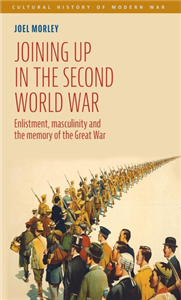
This book connects the First and Second World Wars. It uses oral histories and Mass Observation material to explore men's attitudes to Second World War enlistment and the relationship they perceived between military service and masculinity, and how these were influenced by understandings of the First World War. Locating the cultural legacy of First World War in the subjectivities of men who participated in the Second World War demonstrates the breadth of sources that informed men's understandings of the First World War in interwar Britain. Its cultural legacy was omnipresent and diverse, and informed young men's attitudes and service preferences, but it reinforced Edwardian conceptions of wartime masculinity as often as it undermined them. Two decades after the First World War ended, they remained resilient in the subjective understandings of men who grew up in the Great War's shadow.
Trusted Partner

What is it like to live next door to a British Army base? England's military heartland provides an eye-opening account of the sprawling military presence on Salisbury Plain, drawing on a wide range of voices from both sides of the divide. Targeted for expansion under government plans to reorganise the UK's global defence estate, the Salisbury 'super garrison' offers a unique opportunity to explore the impact of the military footprint in a particular place. But this is no ordinary environment: as well as being the world-famous site of Stonehenge, the grasslands of Salisbury Plain are home to rare plants and wildlife. How does the army take responsibility for conserving this unique landscape as it trains young men and women to use lethal weapons? Are its claims that its presence is a positive for the environment anything more than propaganda? This book investigates these questions against the backdrop of a historic landscape inscribed with the legacy of perpetual war.
Trusted Partner
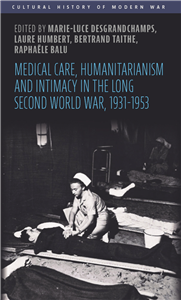
This book offers a micro-global history of humanitarianism and medical care during the 'long' Second World War, which challenges the traditional and Eurocentric chronological boundaries of 1939/1945. It takes as its starting point the Japanese invasion of Manchuria in 1931, which led to the progressive dislocation of the League of Nations, with the Japanese, German and Soviet departures in the 1930s. It ends with the termination of the Korean War in 1953, and the subsequent dismantlement of the first United Coalition and UN Peace enforcement operation. It considers the slow, messy and ambivalent transformation of humanitarian actors' relations to the suffering of distant others through a study of humanitarian encounters, practices, spaces and affects. Paying close attention to a variety of actors, such as French colonial doctors, Swiss ICRC delegates, Egyptian relief workers, Chinese-style physicians, Peruvian and Ecuadorian nurses or American member of the Unitarian Service Committee, the book provides a more holistic story of humanitarianism.
Trusted Partner

A considered investigation of a long-standing army base's impact on the British countryside. What is it like to live next door to a British Army base? Beyond the barracks provides an eye-opening account of the sprawling military presence on Salisbury Plain, drawing on a wide range of voices from both sides of the divide. Targeted for expansion under government plans to reorganise the UK's global defence estate, the Salisbury 'super garrison' offers a unique opportunity to explore the impact of the military footprint in a particular place. But this is no ordinary environment: as well as being the world-famous site of Stonehenge, the grasslands of Salisbury Plain are home to rare plants and wildlife. How does the army take responsibility for conserving this unique landscape as it trains young men and women to use lethal weapons? Are its claims that its presence is a positive for the environment anything more than propaganda? Beyond the barracks investigates these questions against the backdrop of a historic landscape inscribed with the legacy of perpetual war.
Trusted Partner
Trusted Partner

 Trusted Partner
Trusted Partner
Trusted Partner
Trusted Partner
Trusted Partner
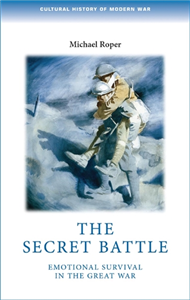
What did home mean to British soldiers and how did it help them to cope with the psychological strains of the Great War? Family relationships lie at the heart of this book. It explores the contribution letters and parcels from home played in maintaining the morale of this largely young, amateur army. And it shows how soldiers, in their turn, sought to adapt domestic habits to the trenches. Pursuing the unconscious clues within a rich collection of letters and memoirs with the help of psychoanalytical ideas, including those formulated by the veteran tank commander Wilfred Bion, this study asks fundamental questions about the psychological resources of this generation of young men. It reveals how the extremities of battle exposed the deepest emotional ties of childhood, and went on marking the post-war domestic lives of those who returned. ;
Trusted Partner

The career of Wisconsin-born Joseph Losey spanned over four decades and several countries. A self-proclaimed Marxist and veteran of the 1930s Soviet agit-prop theater, he collaborated with Bertholt Brecht before directing noir B-pictures in Hollywood. A victim of McCarthyism, he later crossed the Atlantic to direct a series of seminal British films such as "Time Without Pity," "Eve," "The Servant," and "The Go-Between," which mark him as one of the cinema's greatest baroque stylists. His British films reflect on exile and the outsider's view of a class-bound society in crisis through a style rooted in the European art house tradition of Resnais and Godard. Gardner employs recent methodologies from cultural studies and poststructural theory, exploring and clarifying the films' uneasy tension between class and gender, and their explorations of fractured temporality.
Trusted Partner


In der Nähe von Tromsø wird während der Polarnacht in einem Kuhstall ein Mann ermordet aufgefunden. Er wurde auf dem Heuboden an den Armen aufgehängt, Spuren am Tatort deuten darauf hin, dass er gefoltert wurde ... Der Afghanistan-Veteran Alexander Winther, der als Journalist bei der Zeitung »Nordlys« arbeitet, wird auf den Fall angesetzt. Sehr schnell sieht er Verbindungen zu Grausamkeiten, die sich vor sechzig Jahren am selben Ort abgespielt haben. An dem Ort, an dem die Deutschen 1942 ein Lager für jugoslawische Kriegsgefangene aufgebaut hatten, in dem Häftlinge auf brutale Art und Weise gefoltert und getötet wurden. Ein später Racheakt? Die Spuren führen ihn nach und nach auch zum Balkankrieg Anfang der 1990er Jahre – und zu einem streng gehüteten Staatsgeheimnis.
Trusted Partner

In der Nähe von Tromsø wird während der Polarnacht in einem Kuhstall ein Mann ermordet aufgefunden. Er wurde auf dem Heuboden an den Armen aufgehängt, Spuren am Tatort deuten darauf hin, dass er gefoltert wurde ... Der Afghanistan-Veteran Alexander Winther, der als Journalist bei der Zeitung »Nordlys« arbeitet, wird auf den Fall angesetzt. Sehr schnell sieht er Verbindungen zu Grausamkeiten, die sich vor sechzig Jahren am selben Ort abgespielt haben. An dem Ort, an dem die Deutschen 1942 ein Lager für jugoslawische Kriegsgefangene aufgebaut hatten, in dem Häftlinge auf brutale Art und Weise gefoltert und getötet wurden. Ein später Racheakt? Die Spuren führen ihn nach und nach auch zum Balkankrieg Anfang der 1990er Jahre – und zu einem streng gehüteten Staatsgeheimnis.
Trusted Partner
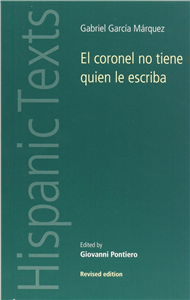
Gabriel García Márquez has been described as the greatest writer in Spanish since Cervantes, and El coronel no tiene quien le escriba is considered to be one of his best works. This reflective and atmospheric novel is set in a small Colombian town where the frustrated and stubborn Colonel, a veteran of the 'War of a Thousand Days', is still, after thirty years, waiting for the letter authorising payment of his war pension. The old soldier and his wife mourn the brutal killing of their only son, and the story of their struggle against poverty and sickness culminates in the Colonel's defiant refusal to part with his cherished fighting cock, however serious the consequences. The moving narrative pays tribute to the resilience of human nature and man's will to survive in the face of heavy odds. The novel also throws light on the turbulent religious and political troubles in Latin America. Now revised to include an updated chronology and bibliography, Giovanni Pontiero's acclaimed critical edition provides English-speaking students with an introduction to, and notes on the text, and a selected vocabulary. ;
Trusted Partner

Vietnam, 1969: Die beiden Schwestern Trang und Quỳnh wachsen in einem kleinen Dorf im Mekongdelta auf. Als junge Frauen bestellen sie die Reisefelder ihrer verarmten Eltern, der Vater ist als Invalide aus dem Krieg heimgekehrt. Als eine Freundin ihnen erzählt, in Saigon wäre es für Mädchen wie sie leicht, Arbeit als Barmädchen zu finden, fassen sie den Entschluss, in die Stadt zu gehen. Trang lernt dort einen amerikanischen Soldaten kennen und stürzt sich mitten in den Wirren des Krieges in eine Affäre mit ihm, die nicht ohne Folgen bleibt …Jahrzehnte später kehrt ein amerikanischer Veteran zurück nach Ho-Chi-Minh-Stadt in der Hoffnung, sich von den Schatten der Vergangenheit befreien zu können. Er trifft auf Phong, den Sohn einer Vietnamesin und eines ehemaligen GIs, der in einem Waisenhaus aufwuchs und verzweifelt seine Eltern sucht – kann Phong ihm helfen, seine alte Schuld wiedergutzumachen? Der atmosphärisch dichte neue Roman der internationalen Bestsellerautorin ergründet das bewegende Schicksal der Kinder vietnamesischer Frauen mit amerikanischen Soldaten – und erzählt eine unvergessliche Geschichte von Schuld und Vergebung.
Trusted Partner
Transnational solidarity excavates the forgotten histories of solidarity that were vital to radical political imaginaries during the 'long' 1960s. It decentres the conventional Western focus of this critical historical moment by foregrounding transnational solidarity with, and across, anticolonial and anti-imperialist liberation struggles. The book traces the ways in which solidarity was conceived, imagined and enacted in the border crossings - of nation, race and class - made by grassroots activists. This diverse collection draws links between exiled revolutionaries in Uruguay, post-colonial immigrants in Britain, and Greek communist refugees in East Germany who campaigned for their respective causes from afar while identifying and linking up with wider liberation struggles. Meanwhile, Arab immigrants in France, Pakistani volunteers and Iraqi artists found myriad ways to express solidarity with the Palestinian cause. Neglected archives also reveal Tricontinental Cuban-based genealogies of artistic militancy, as well as transnational activist networks against Portuguese colonial rule in Africa. Bringing together original research with contributions from veteran activists and artists, this interdisciplinary volume explores how transnational solidarity was expressed in and carried through the itineraries of migrants and revolutionaries, film and print cultures, art and sport, political campaigns and armed struggle. It presents a novel perspective on radical politics of the global sixties which remains crucial to understanding anti-racist solidarity today. With a foreword by Vijay Prashad.



