Your Search Results

      • Guangdong Petrel Electronic & Audio-Visual Publishing House

        Founded in 1996 as an affiliate of Southern Publishing & Media Co.Ltd.(SPM),Guangdong Petrel Electronic & Audio-Visual Publishing House (PEPH) has now become an all-media publisher specializing in online publishing, as well as creating, publishing and distributing audio-visual products, electronic reading materials, and books,etc.                                                                               PEPH has designed and produced lots of electronic &audio-visual publications and hundreds of books related to social,science,education,language,science and technology, culture,art,among which several series of books were oriented toward international copyright exchanges.                                                                                                             Till now, PEPH has already established cooperative relationships with publishers from South-East Asia and North America, totally exporting more than 200 titles.

        View Rights Portal
      • Trusted Partner
      • Trusted Partner
        Humanities & Social Sciences
        March 2021

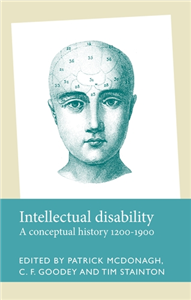
        Intellectual disability

        A conceptual history, 1200–1900

        by Patrick McDonagh, C. F. Goodey, Timothy Stainton

        This collection explores the historical origins of our modern concepts of intellectual or learning disability. The essays, from some of the leading historians of ideas of intellectual disability, focus on British and European material from the Middle Ages to the late-nineteenth century and extend across legal, educational, literary, religious, philosophical and psychiatric histories. They investigate how precursor concepts and discourses were shaped by and interacted with their particular social, cultural and intellectual environments, eventually giving rise to contemporary ideas. Intellectual disability is essential reading for scholars interested in the history of intelligence, intellectual disability and related concepts, as well as in disability history generally.

      • Trusted Partner
        Humanities & Social Sciences
        April 2018

        Disability in the Industrial Revolution

        Physical impairment in British coalmining, 1780–1880

        by David M. Turner, Daniel Blackie, Julie Anderson

        An electronic version of this book is also available under a Creative Commons (CC-BY-NC-ND) license, thanks to the support of the Wellcome Trust. The Industrial Revolution produced injury, illness and disablement on a large scale and nowhere was this more visible than in coalmining. Disability in the Industrial Revolution sheds new light on the human cost of industrialisation by examining the lives and experiences of those disabled in an industry that was vital to Britain's economic growth. Although it is commonly assumed that industrialisation led to increasing marginalisation of people with impairments from the workforce, disabled mineworkers were expected to return to work wherever possible, and new medical services developed to assist in this endeavour. This book explores the working lives of disabled miners and analyses the medical, welfare and community responses to disablement in the coalfields. It shows how disability affected industrial relations and shaped the class identity of mineworkers. The book will appeal to students and academics interested in disability, occupational health and social history.

      • Trusted Partner
      • Trusted Partner
        The Arts
        June 2026

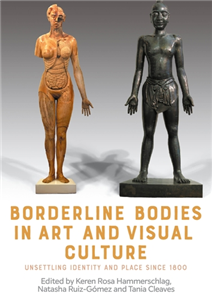
        Borderline bodies in art and visual culture

        Unsettling identity and place since 1800

        by Keren Hammerschlag, Natasha Ruiz-Gómez, Tania Anne Cleaves

        Borderline bodies offers original interpretations of visual representations of human bodies as bounded and unbounded, fortified and permeable, mobile and static-subject to borders and able to traverse and challenge them. It also takes as its focus images and objects that might be considered 'borderline' because they sit at the intersection of disciplines or sit outside accepted notions of what constitutes serious 'art.' By mapping the ways human bodies traverse borders and straddle-even dismantle-categories, this volume's essays approach afresh the relationship of bodies to traditional modes of representation, especially in art and medicine, and encourage us to think anew about how we understand the relationship between human corporeality, identity and place. Critical transdisciplinary and transnational analyses of objects and images from a range of geographies shed new light on the themes of: bodies and identity; typologies of the body; racialised bodies; 'normal' and 'abnormal' bodies; encounters between bodies; bodies in transition; bodies and mobility; and the bounded and unbounded human body. The outcome is a fresh approach to depictions of the human body produced for the purposes of artistic and medical education, aesthetic edification, and scientific and professional advancement, which disrupts assumptions about the normative human body perpetuated through Western image-making traditions.

      • Trusted Partner
      • Trusted Partner
      • Trusted Partner
        Literature & Literary Studies
        October 2013

        Literary and visual Ralegh

        by J. B. Lethbridge

        This collection of essays by scholars from Great Britain, the United States, Canada and Taiwan covers a wide range of topics about Ralegh's diversified career and achievements. Some of the essays shed light on less familiar facets such as Ralegh as a father and as he is represented in paintings, statues, and in movies; others re-examine him as poet, historian, as a controversial figure in Ireland during Elizabeth's reign, and look at his complex relationship with and patronage of Edmund Spenser. A recurrent topic is the Hatfield Manuscript in Ralegh's handwriting, which contains his long, unfinished poem 'The Ocean to Cynthia', usually considered a lament about his rejection by Queen Elizabeth after she learned of his secret marriage to one of her ladies-in-waiting. The book is appropriate for students of Elizabethan-Jacobean history and literature. Among the contributors are well-known scholars of Ralegh and his era, including James Nohrenberg, Anna Beer, Thomas Herron, Alden Vaughan and Andrew Hiscock. ;

      • Trusted Partner
        Humanities & Social Sciences
        January 2026

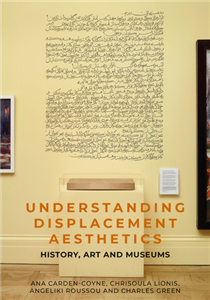
        Understanding displacement aesthetics

        History, art and museums

        by Ana Carden-Coyne, Charles Green, Chrisoula Lionis, Angeliki Roussou

        Since the Second World War and the formalisation of the international refugee regime, forced displacement has been marked by a set of aesthetic, practical, and institutional concerns. Understanding Displacement Aesthetics examines how visual culture and art practice constructs and challenges ideas about forced displacement and refugees. The novel framework for 'displacement aesthetics' moves beyond conventional understandings of aesthetics as merely representational, demonstrating the entanglement of visual culture, art practices, and forced displacement in postmigrant contexts. Bringing together the fields of cultural history, art history, and curatorial studies, Understanding Displacement Aesthetics identifies four areas for consideration: visual tropes of refugeedom; language and identity; institutional and artistic responses to displacement; and lived experiences of artists with backgrounds of displacement. Through archival research, visual culture and art, interviews, and collaborative curatorship, Understanding Displacement Aesthetics offers new insight into overcoming the limitations that contexts of displacement can present for artists, art galleries and institutions addressing refugeedom and its legacies.

      • Trusted Partner
      • Trusted Partner
        2019

        Why ADHD is Not a Disease

        A polemic

        by Amrei Wittwer

        In some European countries, one in four children is now diagnosed with ADHD (attention deficit/hyperactivity disorder) due to their socially disruptive behaviour. The treatment usually consists of suppressing the symptoms with psychostimulants such as Ritalin. This treatment does not improve school performance, but it curbs the children’s creativity and may stigmatise them for their entire lives. Taking an opposing viewpoint, ADHD expert Dr. Amrei Wittwer focuses on the physical and psychological well-being of the affected children. Because almost all “ADHD patients“ are facing difficulties in relationships with adults, she considers that a solution begins with the children’s domestic and school environments, instruction of parents and teachers, and by using therapeutic approaches rather than simply sedating the children. “Children are our future”, is a common theme in Sunday speeches. Anyone who takes this point seriously, whether or not they themselves are immediately affected, should think about this important topic.

      • Trusted Partner
        Health & Personal Development
        June 2016

        Studying Successfully with ADHD

        A Pratical Guide for Parents

        by Stefanie Rietzler, Fabian Grolimund

        For children with ADHD and their parents, the school years are often difficult. Children may avoid homework they dislike, involve their parents in endless discussions of the point or pointlessness of particular exercises, dawdle and daydream their time away, or explode with frustration if they get something wrong or cannot do something.   This book provides parents with concrete and practical help. It shows you how you can:   • improve your child’s concentration and stamina• increase your child’s motivation to learn and study• reduce frustration, arguments, and tears over homework• control chaos and forgetfulness• help your child succeed by using smart learning methods• develop your child’s strengths• help your child cope with failure and maintain self-confidence• establish a good relationship with the school.     For: • parents / relatives of children with ADHD• therapists• learning coaches• teachers

      • Trusted Partner
        June 2009

        Max Frisch. Citoyen

        by Max Frisch, Matthias Gunten

        »Wir riefen Gastarbeiter, und es kamen Menschen.« Mit Sätzen wie diesem griff Max Frisch immer wieder in das öffentliche Leben der Schweiz ein. Als politischer Intellektueller war er auch in anderen Ländern ein gefragter Gesprächspartner: Er diskutierte mit Henry Kissinger über den Krieg in Vietnam, war 1977 in der Nacht, in der die »Landshut« gestürmt wurde, bei Helmut Schmidt in Bonn. Dem Citoyen, dem engagierten Bürger Max Frisch hat Matthias von Gunten sein Porträt gewidmet. Zu Wort kommt, neben Kissinger und Schmidt sowie Schriftstellerkollegen wie Christa Wolf, Günter Grass und Peter Bichsel, auch der Autor Max Frisch selbst – seine Tagebucheinträge und Reden werden gelesen von Reto Hänny. »Solche Stimmen fehlen heute in der Schweiz«, sagte von Gunten dazu der Neuen Zürcher Zeitung. Man möchte ergänzen: und anderswo.

      • Trusted Partner
        March 2011

        Max-Frisch-DVD-Box zum 100. Geburtstag

        by Max Frisch

        Zu Max Frischs 100. Geburtstag versammelt eine DVD-Box in der filmedition suhrkamp auf fünf DVDs die wichtigsten Filme von, mit und über den großen Schweizer Schriftsteller: ein Porträt des öffentlichen Intellektuellen Frisch (Matthias von Guntens Dokumentation "Max Frisch. Citoyen"), die vielfach ausgezeichnete Verfilmung "Holozän" von Heinz Bütler und Manfred Eicher, Richard Dindos "Journal I-III" (eine filmische Lektüre der Erzählung Montauk) sowie die Gespräche im Alter, die Philippe Pilliod in den Jahren 1985/1986 geführt hat. Vervollständigt wird das Paket durch ein besonderes Extra: Volker Schlöndorffs "Homo faber"-Adaption. Die Verfilmung mit internationaler Starbesetzung macht die Box zu einem Ereignis. Ein einzigartiger Zugang zu Leben und Werk des großen Autors.

      • Trusted Partner
        Humanities & Social Sciences
        July 2022

        The looking machine

        Essays on cinema, anthropology and documentary filmmaking

        by David MacDougall

        This new collection of essays presents the latest thoughts of one of the world's leading ethnographic filmmakers and writers on cinema. It will provide essential reading for students in cinema studies, filmmaking, and visual anthropology. The dozen wide-ranging essays give unique insights into the history of documentary, how films evoke space, time and physical sensations, and the intellectual and emotional links between filmmakers and their subjects. In an era of reality television, historical re-enactments, and designer packaging, MacDougall defends the principles that inspired the earliest practitioners of documentary cinema. He urges us to consider how the form can more accurately reflect the realities of our everyday lives. Building on his own practice in filmmaking, he argues that this means resisting the pressures for self-censorship and the inherent ethnocentrism of our own society and those we film.

      • Trusted Partner
        Films, cinema
        November 2006

        Spanish visual culture

        by Paul Julian Smith

      • Trusted Partner
        Humanities & Social Sciences
        November 2011

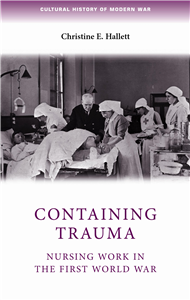
        Containing trauma

        Nursing work in the First World War

        by Christine Hallett, Bertrand Taithe, Penny Summerfield, Peter Gatrell, Max Jones, Ana Carden-Coyne

        In this lucid and cogently-argued book, Christine Hallett explores the nature of the practices developed by nurses and their volunteer-assistants during the First World War. She argues that nurses found meaning in their complex and stressful work by identifying it as a process of 'containing trauma'. Broad in its scope and detailed in its research, the book analyses the work of nurses from Britain, Australia, New Zealand, Canada, South Africa and the United States of America. It draws on highly personal writings: letters and diaries drawn from archives and libraries throughout the world. This wide-ranging book explores a range of treatment scenarios, from the Western and Eastern Fronts to the Eastern Mediterranean, Mesopotamia and India. It considers both the efforts of nurses to provide physical, emotional and moral containment to their patients, and the work they did to maintain their own physical and emotional integrity. ;

      • Trusted Partner
        Literature & Literary Studies
        January 2017

        Literary and visual Ralegh

        by J. B. Lethbridge, Christopher Armitage

      Subscribe to our

      newsletter