Your Search Results

      • Guangdong Petrel Electronic & Audio-Visual Publishing House

        Founded in 1996 as an affiliate of Southern Publishing & Media Co.Ltd.(SPM),Guangdong Petrel Electronic & Audio-Visual Publishing House (PEPH) has now become an all-media publisher specializing in online publishing, as well as creating, publishing and distributing audio-visual products, electronic reading materials, and books,etc.                                                                               PEPH has designed and produced lots of electronic &audio-visual publications and hundreds of books related to social,science,education,language,science and technology, culture,art,among which several series of books were oriented toward international copyright exchanges.                                                                                                             Till now, PEPH has already established cooperative relationships with publishers from South-East Asia and North America, totally exporting more than 200 titles.

        View Rights Portal
      • Troubador Publishing Ltd.

        Troubador is an independent UK-based trade and academic publisher which also offers authors a high quality self-publishing services through its imprint Matador for fiction, non-fiction and communications.

        View Rights Portal
      • Trusted Partner
      • Trusted Partner
        July 2021

        The World of the North

        Between Ragnarok and welfare utopia: A cultural-historical deconstruction

        by Bernd Henningsen

        — Analysis of how we view Europe's North and how this image emerged — An outsider's perspective on Nordic societies and their self image — Serves as an introduction into Northern European culture and society Our image of Northern Europe has been shaped by projections and desires in the long history of encounters: berserkers and war atrocities, bad weather, beautiful nature, stable political systems, social welfare, equality and prosperity, peacefulness, low corruption, hygge and Bullerby – all this is part of the Nordic narrative. But what about the religious, linguistic and ethnic homogeneity, what about the muchvaunted Nordic cooperation? How do politics "work" in the North? Why are Northern Europeans the happiest people?

      • Trusted Partner
        The Arts
        June 2026

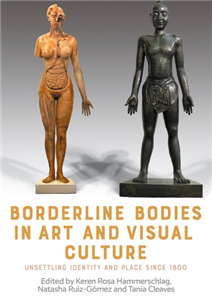
        Borderline bodies in art and visual culture

        Unsettling identity and place since 1800

        by Keren Hammerschlag, Natasha Ruiz-Gómez, Tania Anne Cleaves

        Borderline bodies offers original interpretations of visual representations of human bodies as bounded and unbounded, fortified and permeable, mobile and static-subject to borders and able to traverse and challenge them. It also takes as its focus images and objects that might be considered 'borderline' because they sit at the intersection of disciplines or sit outside accepted notions of what constitutes serious 'art.' By mapping the ways human bodies traverse borders and straddle-even dismantle-categories, this volume's essays approach afresh the relationship of bodies to traditional modes of representation, especially in art and medicine, and encourage us to think anew about how we understand the relationship between human corporeality, identity and place. Critical transdisciplinary and transnational analyses of objects and images from a range of geographies shed new light on the themes of: bodies and identity; typologies of the body; racialised bodies; 'normal' and 'abnormal' bodies; encounters between bodies; bodies in transition; bodies and mobility; and the bounded and unbounded human body. The outcome is a fresh approach to depictions of the human body produced for the purposes of artistic and medical education, aesthetic edification, and scientific and professional advancement, which disrupts assumptions about the normative human body perpetuated through Western image-making traditions.

      • Trusted Partner
      • Trusted Partner
        The Arts
        November 2006

        Spanish visual culture

        Cinema, television, internet

        by Paul Julian Smith, Susan Williams

        This book is the first to explore three visual media in contemporary Spain: cinema, television and the internet. It also examines cultural products in each of these media in terms of three vital themes: emotion, location and nostalgia. The first two chapters focus on emotion. They analyze the 'emotional imperative' in a recent Almodóvar feature film and in Spanish television's top-rated period drama, and investigate the politics of affect in TV drama in the last decade. The next pair of chapters deal with location. They use cultural geography to re-read contradictory accounts of the movida (the post-Franco cultural boom) and examine an attempt to anchor a US-derived genre (the youth movie) in the urban landscape of Madrid. The fifth and sixth chapters introduce the theme of location into nostalgia. They treat the unique cases of a successful Spanish heritage movie and a contemporary Spanish thriller remade in Hollywood. The peunultimate chapter investigates electronic artists and the virtual universe, and the book ends with a look at the implications of Hispano-Mexican co-productions and the interconnectedness of economic and aesthetic cultural forms. ;

      • Trusted Partner
        Literature & Literary Studies
        October 2013

        Literary and visual Ralegh

        by J. B. Lethbridge

        This collection of essays by scholars from Great Britain, the United States, Canada and Taiwan covers a wide range of topics about Ralegh's diversified career and achievements. Some of the essays shed light on less familiar facets such as Ralegh as a father and as he is represented in paintings, statues, and in movies; others re-examine him as poet, historian, as a controversial figure in Ireland during Elizabeth's reign, and look at his complex relationship with and patronage of Edmund Spenser. A recurrent topic is the Hatfield Manuscript in Ralegh's handwriting, which contains his long, unfinished poem 'The Ocean to Cynthia', usually considered a lament about his rejection by Queen Elizabeth after she learned of his secret marriage to one of her ladies-in-waiting. The book is appropriate for students of Elizabethan-Jacobean history and literature. Among the contributors are well-known scholars of Ralegh and his era, including James Nohrenberg, Anna Beer, Thomas Herron, Alden Vaughan and Andrew Hiscock. ;

      • Trusted Partner
      • Trusted Partner
      • Trusted Partner
      • Trusted Partner
        The Arts
        September 2016

        Marcantonio Raimondi, Raphael and the image multiplied

        by Edward H. Wouk, Leslie A. Geddes, Jun Nakamura, Lisa Pon, David Morris, Edward H. Wouk, Henri Zerner, Tatiana Bissolati, Guido Rebecchini, Kathleen Christian, Paul Joannides, Bryony Bartlett-Rawlings, Beverly Louise Brown, Patricia Emison, Catherine Jenkins, Madeleine Viljoen, Sarah Vowles, Jamie Gabbarelli, Peter Black, Barbara Furlotti, Steven Milner, Jenny Spinks, Rheagan E. Martin, Sophie Gordon Cumming, Imogen Harley, Jemima Rose, Heather Garner, Max Weaver, Albert Lindsell, Peter Hayes, Monique Nievas, Holly Smallbone, James Wildgoose

        Best known for his partnership with Raphael, the engraver Marcantonio Raimondi (c. 1480-c. 1534) enabled Renaissance artists to disseminate their designs in print, advancing a revolution in visual communication that still reverberates in our own information age. Yet Marcantonio did more than render compositions by famous artists in the novel medium of engraving. The entries and essays in this catalogue, written by a group of international scholars and published to accompany the first exhibition of Marcantonio's work in over three decades, reveal the diversity of Marcantonio's oeuvre and the scope of his innovation as the leading printmaker of the Italian Renaissance. In-depth studies of Marcantonio's engravings expand our knowledge of his collaboration with Raphael, while also probing Marcantonio's creative response to the dynamic humanist culture in his native Bologna and later in Venice and Rome. Contributions also examine engravings by Marcantonio's 'followers' and consider the importance of his work to the history of print collecting.

      • Trusted Partner
        Humanities & Social Sciences
        June 2024

        Passages

        On Geo-Analysis and the aesthetics of precarity

        by Sam Okoth Opondo, Michael J. Shapiro

        Passages: On geo-analysis and the aesthetics of precarity is a multi-genre and transdisciplinary text addressing themes such as colonialism, nuclear zones of abandonment, migration control regimes, transnational domestic work, the biocolonial hostilities of the hospitality industry, legal precarities behind the international criminal justice regime, the shadow-worlds of the African soccerscape, and immunity regimes related to the COVID-19 pandemic. This book invites inquiry into today's apocalyptic narratives, humanitarian reason, and international criminal justice regimes, as well as the precarity generated by citizen time and 'consulate time'. The aesthetic breaks emerging from the book's image-text montage draw attention to the ethics of encounter and passage that challenges colonial, domestic, and nation-statist sovereignty regimes of inattention.

      • Trusted Partner
        The Arts
        February 2025

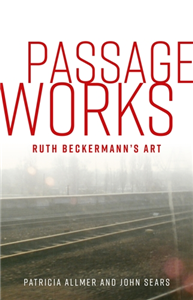
        Passage works

        Ruth Beckermann’s art

        by Patricia Allmer, John Sears

        Passage Works is the first book-length English language critical analysis of the transdisciplinary work of the Austrian film-maker, writer, and artist Ruth Beckermann (b. 1952, Vienna). Beckermann's works interrogate identity and geography as formations of the intersections between the past and the contemporary. Taking as her central topics Austria and its history and politics, her own identity as a Jewish woman, and the contemporary global geopolitics of migration and displacement, Beckermann develops wider meditations in film, art, and writing on the persistence of European memory, and the meanings of Europe itself; on borders, migrations, and identities; on memories, traumas, and traditions; on the image as marker of presence and absence, repository of the traces of historical violence; and on the passage as metaphor for a range of physical, psychological, and ideological movements defining the complexities of contemporary cosmopolitan identities.

      • Trusted Partner
        The Arts
        June 2021

        Cinesonica

        Sounding film and video

        by Andy Birtwistle

        Cinesonica: sounding film and video explores previously neglected and under-theorised aspects of film and video sound, drawing on detailed case study analyses of Hollywood cinema, art cinema, animated cartoons, and avant-garde film and video. Adopting an interdisciplinary approach to the study of the soundtrack, and breaking away from the focus on narrative and signification that has tended to dominate the study of film sound, the book examines the way in which sound's materiality figures within audiovisual experience. Through a close examination of sound-image relations in a range of film and video forms and genres - including Warner Bros. cartoons, scratch video, and artist's film and video - Cinesonica recasts the film and video text as the meeting point of audio and visual materialities, cultural practices and perceptual activity. The interdisciplinary approach adopted by the book makes its discussion of sound of interest to those studying and working in a range of subject disciplines, including film studies, sound studies, sonic arts, cultural studies, music and art history.

      • Trusted Partner
        Humanities & Social Sciences
        July 2022

        The looking machine

        Essays on cinema, anthropology and documentary filmmaking

        by David MacDougall

        This new collection of essays presents the latest thoughts of one of the world's leading ethnographic filmmakers and writers on cinema. It will provide essential reading for students in cinema studies, filmmaking, and visual anthropology. The dozen wide-ranging essays give unique insights into the history of documentary, how films evoke space, time and physical sensations, and the intellectual and emotional links between filmmakers and their subjects. In an era of reality television, historical re-enactments, and designer packaging, MacDougall defends the principles that inspired the earliest practitioners of documentary cinema. He urges us to consider how the form can more accurately reflect the realities of our everyday lives. Building on his own practice in filmmaking, he argues that this means resisting the pressures for self-censorship and the inherent ethnocentrism of our own society and those we film.

      • Trusted Partner
        Films, cinema
        November 2006

        Spanish visual culture

        by Paul Julian Smith

      • Trusted Partner
        Humanities & Social Sciences
        February 2017

        Images of Africa

        by Julia Gallagher

      • Trusted Partner
        The Arts
        January 2026

        Decolonizing images

        by Ronnie Close

      • Trusted Partner
        Literature & Literary Studies
        January 2017

        Literary and visual Ralegh

        by J. B. Lethbridge, Christopher Armitage

      Subscribe to our

      newsletter