Your Search Results

      • Trusted Partner
        Literature & Literary Studies
        October 2023

        Spectral Dickens

        The uncanny forms of novelistic characterization

        by Alexander Bove

        Drawing on the recent ontological turn in critical theory, Spectral Dickens explores an aspect of literary character that is neither real nor fictional, but spectral. This work thus provides an in-depth study of the inimitable characters populating Dickens' illustrated novels using three hauntological concepts: the Freudian uncanny, Derridean spectrality, and the Lacanian real. Thus, while the current discourse on character studies, which revolves around values like realism, depth, and lifelikeness, tends to see characters as mimetic of persons, this book invents new critical concepts to account for non-mimetic forms of characterization. These spectral forms bring to light the important influence of developments in nineteenth-century visual culture, such as the lithography and caricature of Daumier and J.J. Grandville. The spectrality of novelistic characters developed here paves the way for a new understanding of fictional characters in general.

      • Trusted Partner
        Children's & YA

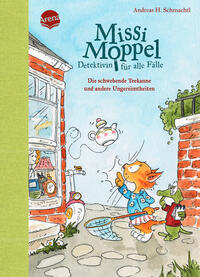
        Missi Moppel - Detective for all Cases (2). The Floating Teapot and other Weird Wonders

        by Andreas H. Schmachtl

        The master detective is after a cunning thief who steals colourful, random objects like Leonardo da Vinci’s paintbrush or antique sugar bowls. During a visit to Grandpa Pots, she uncovers the secret of Ghost Island and solves the puzzle of the floating teapot in Mr Goldrand’s junk shop. Only the nasty blackmailing letters from the mysterious “Magpie” present her with a seemingly insoluble mystery. Someone is testing the powers of the great investigator to their very limit…Will she be able to crack even this case? 15 original detective stories told in masterly fashion by the Spiegel bestselling author Andreas H. Schmachtl.

      • Trusted Partner
        The Arts
        March 2025

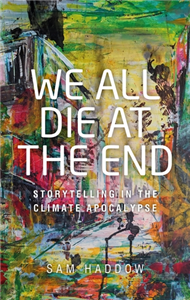
        We all die at the end

        Storytelling in the climate apocalypse

        by Sam Haddow

        We all die at the end offers a survey of contemporary end-of-the-world fiction, spanning literature, children's fiction, video games, theatre and film. It draws on eco-critical philosophy and narrative theory to show ways in which the climate crisis is reorienting storytelling in the face of foreseeable human extinction. In the process, it argues that such stories have a role to play in helping us come to terms with the severity and scale of the crisis that we face.

      • The Arts
        March 1905

        Concerning the Spiritual in Art

        by Wassily Kandinsky

        A pioneering work in the movement to free art from its traditional bonds to material reality, this book is one of the most important documents in the history of modern art. Written by the famous nonobjective painter Wassily Kandinsky (1866–1944), it explains Kandinsky's own theory of painting and crystallizes the ideas that were influencing many other modern artists of the period. Along with his own groundbreaking paintings, this book had a tremendous impact on the development of modern art. Kandinsky's ideas are presented in two parts. The first part, called "About General Aesthetic," issues a call for a spiritual revolution in painting that will let artists express their own inner lives in abstract, non-material terms. Just as musicians do not depend upon the material world for their music, so artists should not have to depend upon the material world for their art. In the second part, "About Painting," Kandinsky discusses the psychology of colors, the language of form and color, and the responsibilities of the artist. An Introduction by the translator, Michael T. H. Sadler, offers additional explanation of Kandinsky's art and theories, while a new Preface by Richard Stratton discusses Kandinsky's career as a whole and the impact of the book. Making the book even more valuable are nine woodcuts by Kandinsky himself that appear at the chapter headings. This English translation of Über das Geistige in der Kunst was a significant contribution to the understanding of nonobjectivism in art. It continues to be a stimulating and necessary reading experience for every artist, art student, and art patron concerned with the direction of 20th-century painting.

      • Trusted Partner
        Literature: history & criticism
        February 2003

        The uncanny

        by Nicholas Royle

      • Trusted Partner
        Humanities & Social Sciences
        September 2025

        Folklore

        A journey through the past and present

        by Owen Davies, Ceri Houlbrook

        A gripping guide to the weird yet everyday world of British folklore. In this ground-breaking book, two leading experts provide the definitive guide to British folklore past and present. Owen Davies and Ceri Houlbrook explore folklore in all its remarkable variations, from village rituals and fairy tales to UFO legends and internet fanfiction. Travelling through a landscape of witches, wizards and wicker men, they reveal how folklore has been researched and written about in the past and show how it continues to be lived in the present. At the same time, they provide the reader with a valuable toolkit for understanding how to interpret the diverse examples given. The book's key message is that folklore is much more than the fossilised remains of a distant, rural past. Folklore is and always has been ubiquitous, dynamic and political. It is a living tradition that draws from many sources, including migrant communities, and is forever being renewed and updated.

      • Trusted Partner
      • Trusted Partner
      • Trusted Partner
      • Trusted Partner
        Literature & Literary Studies
        May 2024

        EcoGothic gardens in the long nineteenth century

        by Sue Edney

      • Trusted Partner
        Literature & Literary Studies
        September 2021

        Mid-century gothic

        by Lisa Mullen

      • Trusted Partner
        Literature & Literary Studies
        June 2017

        A familiar compound ghost

        by Sarah Annes Brown

      • Trusted Partner
        Literature & Literary Studies
        May 2016

        Gothic Renaissance

        by Elisabeth Bronfen, Beate Neumeier

      • Trusted Partner
      • Trusted Partner
        Fiction
        August 2024

        Deirdre Madden

        New critical perspectives

        by Anne Fogarty, Marisol Morales-Ladrón

        The Irish writer, Deirdre Madden, has written key novels about the Northern Irish Troubles and about contemporary Ireland. In these works, she weighs up the aftermath of violence and the impact of the shift to a more open but materialist society in the country overall. Memory, trauma, and the abiding but elusive links between the past and the present are central concerns of her fiction. This pioneering set of essays by leading experts in Irish Studies explores the many dimensions of her novels from a wide variety of perspectives. Madden's skill at interweaving novels of ideas with artist novels that draw out the complex inner predicaments of her characters is highlighted. States of dislocation are concentrated on in her texts, but also the quest for a home in the world and a lasting set of values that allows for personal integrity and authenticity. These multifaceted explorations bear out the compelling and enduring aspects of Madden's highly regarded novels.

      • Trusted Partner
        Literature & Literary Studies
        January 2026

        Reanimating grief

        by William McEvoy

      • Trusted Partner
        Literature & Literary Studies
        February 2021

        Spectral Dickens

        by Alexander Bove, Anna Barton, Andrew Smith

      • Trusted Partner
        Literature & Literary Studies
        May 2026

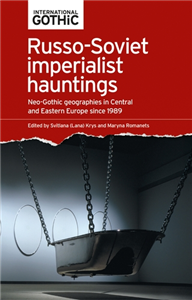
        Russo-Soviet imperialist hauntings

        Neo-Gothic geographies in Central and Eastern Europe since 1989

        by Svitlana Krys, Maryna Romanets

        Russo-Soviet imperialist hauntings attempts to capture some of the ghosts of the colonial and totalitarian past that have been proliferating in international political and cultural landscapes after the collapse of the USSR. By conflating postcolonial, post-totalitarian, postcommunist, and Gothic discourses, it maps virtually untouched aspects of cultural decolonization, focusing on unsettling "hauntings" of unresolved memory traces of Russo-Soviet domination in the former Eastern Bloc countries and Soviet republics. Operating within a vast intertextual field of social, cultural, and ideological discourses, the volume enables a productive exchange across distinct (inter)disciplinary boundaries and represents a range of voices from Europe and North America. The contributors' diverse interests draw on transmedia (literature, visual arts, and film), transnational, and translingual (diasporic literature) approaches, providing insights into a variety of forms that the Gothic has taken in the (late) twentieth and twenty-first centuries, and demonstrating its consistent engagement with history, ideology, and politics.

      Subscribe to our

      newsletter