Your Search Results

      • Trusted Partner
        Humanities & Social Sciences
        November 2024

        Culture is bad for you

        by Orian Brook, Dave O'Brien, Mark Taylor

      • Trusted Partner
        Business, Economics & Law
        August 2010

        Markets, rules and institutions of exchange

        None

        by Stan Metcalfe, Mark Harvey, Mark Harvey

        This book is about how to understand the huge variety of markets and market organisation in contemporary economies through a dialogue between a group of UK and French scholars. It presents a critique and development of institutional views of markets, and 'puts markets in their place' in a wider political and social context. In the wake of the 2008 financial crisis in markets, the book makes a topical and significant contribution on the importance of the rules and regulations that constitute markets, and their broader political and legal frameworks. Moreover, the disruption of markets brings to the fore their interconnection with the broader economy, with production, distribution and consumption in a way often ignored at the height of market bubbles. Both theoretical and empirical, a wide range of markets are considered, capital markets for new technology and venture capital, for food, domestic services and scientific knowledge. The authors address how markets emerge and disappear, or indeed why they fail to appear, as well has how they become stable and institutionalised. ;

      • Trusted Partner
        Humanities & Social Sciences
        July 2025

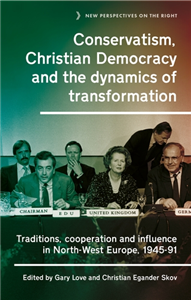
        Conservatism, Christian Democracy and the dynamics of transformation

        Traditions, cooperation and influence in North-West Europe, 1945-91

        by Gary Love, Christian Egander Skov

        Conservatism, Christian Democracy, and the Dynamics of Transformation compares the centre-right political traditions of Britain, the Nordic countries, France, West Germany, and Austria and looks for evidence of political cooperation and influence across borders during the period 1945-90. The book explores howa variety of intellectuals, politicians, and political parties transformed their politics in response to major economic, social, and political challenges and seeks to explain why conservatives and Christian democrats came to feel that they belonged to a wider centre-right political family by the end of this period. It also examines why these political traditions found it difficult to cooperate with each other after the Second World War and why they decided to invest more political capital in inter-party relations and wider transnational projects from the 1960s. As the book shows, these developments resulted in two new centre-right internationals: the European Democrat Union and the International Democrat Union.

      • Trusted Partner
        Gardens (descriptions, history etc)
        February 2017

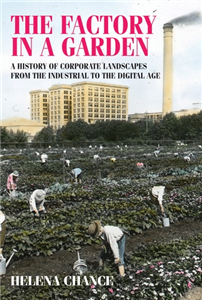
        The factory in a garden

        A history of corporate landscapes from the industrial to the digital age

        by Helena Chance. Series edited by Christopher Breward

        When we think about Victorian factories, 'Dark Satanic Mills' might spring to mind - images of blackened buildings and exhausted, exploited workers struggling in unhealthy and ungodly conditions. But for some employees this image was far from the truth, and this is the subject of 'The Factory in a Garden' which traces the history of a factory gardens movement from its late-eighteenth century beginnings in Britain to its twenty-first century equivalent in Google's vegetable gardens at their headquarters in California. The book is the first study of its kind examining the development of parks, gardens, and outdoor leisure facilities for factories in Britain and America as a model for the reshaping of the corporate environment in the twenty-first century. This is also the first book to give a comprehensive account of the contribution of gardens, gardening and recreation to the history of responsible capitalism and ethical working practices.

      • Trusted Partner
        The Arts
        December 2025

        The double game of music

        Paradoxes of power, status and class in music education

        by Live Weider Ellefsen, Petter Dyndahl, Anne Jordhus-Lier, Siw Graabræk Nielsen

        The double game of music imagines music education as a series of games - each with its own rules, play currency and players - to challenge readers to rethink the significance of music and musical upbringing in shaping social structures. Drawing on their own empirical research and a wide range of international contributions, the authors unravel the intertwining of social positioning and power hierarchies with players beliefs in the pure values and virtues of their games, whether these relate to parenting, children's play, schooling, academic pursuits, musical leisure activities or the television and music industries. In a world where music is often celebrated as an important tool for inclusion and democratisation, this groundbreaking book offers a timely critique, revealing complexities and contradictions that tend to be overlooked by teachers, researchers, politicians and others interested in the powers of music education.

      • Trusted Partner
        Humanities & Social Sciences
        July 2021

        Post-everything

        An intellectual history of post-concepts

        by Herman Paul, Adriaan van Veldhuizen

        Postmodern, postcolonial and post-truth are broadly used terms. But where do they come from? When and why did the habit of interpreting the world in post-terms emerge? And who exactly were the 'post boys' responsible for this? Post-everything examines why post-Christian, post-industrial and post-bourgeois were terms that resonated, not only among academics, but also in the popular press. It delves into the historical roots of postmodern and poststructuralist, while also subjecting more recent post-constructions (posthumanist, postfeminist) to critical scrutiny. This study is the first to offer a comprehensive history of post-concepts. In tracing how these concepts found their way into a broad range of genres and disciplines, Post-everything contributes to a rapprochement between the history of the humanities and the history of the social sciences.

      • Trusted Partner
        Humanities & Social Sciences
        April 2007

        Labour, the state, social movements and the challenge of neo-liberal globalisation

        by Andrew Gamble, Steven Fielding, Steve Ludlam, John Callaghan, Andrew Taylor, Steve Ludlam, Stephen Wood

        With the emergence of neo-liberalism in the 1980s as the dominant domestic and international political-economic orthodoxy, labour as both a social category and political movement tended to be written off or ignored by academics, politicians and commentators. However, at a time when the world's working class is growing faster than at any previous time in history and neo-liberalism is widely challenged, this orthodoxy is clearly inadequate. The spread of global production means that to ignore labour, its organisations, interests and politics, is to ignore one of the key components of that process. Labour organisations have not gone away and neither has the state: their relationship remains as significant as ever. The strategic relationship between trade unions and social movements, nationally and internationally, has also developed markedly, especially in the south. New patterns of resistance are emerging to challenge global capital and those who assert that globalisation is irresistible. ;

      • Trusted Partner
        Humanities & Social Sciences
        April 2025

        The return of the housewife

        Why women are still cleaning up

        by Emma Casey

        An illuminating look at the world of cleanfluencers that asks why the burden of housework still falls on women. Housework is good for you. Housework sparks joy. Housework is beautiful. Housework is glamorous. Housework is key to a happy family. Housework shows that you care. Housework is women's work. Social media is flooded with images of the perfect home. TikTok and Instagram 'cleanfluencers' produce endless photos and videos of women cleaning, tidying and putting things right. Figures such as Marie Kondo and Mrs Hinch have placed housework, with its promise of a life of love and contentment, at the centre of self-care and positive thinking. And yet housework remains one of the world's most unequal institutions. Women, especially poorer women and women of colour, do most low-paid and unpaid domestic labour. In The return of the housewife, Emma Casey asks why these inequalities matter and why they persist after a century of dramatic advances in women's rights. She offers a powerful call to challenge the prevailing myths around housework and the 'naturally competent' woman homemaker.

      • Trusted Partner
        Humanities & Social Sciences
        March 2026

        Negotiating identity conflicts in a fragmenting world order

        by Paul Willem Meerts, Mark Anstey

        At every level of human interaction new levels of identity-based tension are in evidence. Contributors to this book explore facets of fragmentation processes within systems of state and interstate organisation, how they influence the use of negotiation, and how negotiation might be used to effect renewed coherence. Following Anstey's (Ch1) introductory chapter framing the nature and shape of fragmentation dynamics, Zartman (Ch 2) argues that the use of negotiation as a process of conflict resolution is deeply shaped by identity groups whose internal coherence is dependent on sustaining a negative identity of others. International relations are no longer solely the realm of experienced diplomats but are shaped as Meerts (Ch3) points out by politicians seeking to be responsive to voting publics rather than wider concerns. Anstey digs into problems of fragmentation (Ch. 4) and Troitskiy (Ch 5) points out how a reluctant acceptance of the power of 'the other' can lead to a form of strategic stability in relations. Anstey and Meerts (Ch 6) point out in their analysis of the Israeli-Palestinian case as an identity conflict turned very bad. Guggenbuhl (Ch 7 ) reveals how structures and processes have been designed within the EU to prevent, contain and regulate conflicts to limit risks of confrontation and fragmentation. Schuessler (Ch 8) to advocates a shift away from a template or roadmap approach to EU membership to a cohesion based on non-dominance. There is still a strong desire on the part of some states, like Northern Macedonia, to become EU members, as reflected in Manton's (Ch 9). Paula Garzon and Frans Schram explain the success of the Colombia Peace Negotiations (Ch 10), while Odigie and da Rocha (Ch 11) analyse the struggle faced by ECOWAS to influence coup leaders in Mali to return to constitutional government and changes of government by constitutional means. Liang (Ch12) discusses how the internet as the modern vehicle of inter-state, inter-group and interpersonal communication has become weaponised. In Ch 13 Anstey draws some lessons from contributions to the compilation.

      • Trusted Partner
        The Arts
        December 2024

        The picture politics of Sir Francis Carruthers Gould

        Britain's pioneering political cartoonist

        by Mark Bryant

        This is the first major study of Britain's pioneering graphic satirist, Sir Francis Carruthers Gould (1844-1925), the first staff political cartoonist on a daily newspaper in Britain, and the first of his kind to be knighted. Written by the distinguished media historian, Colin Seymour-Ure, it is essential reading for anyone interested in cartoons, caricature and illustration and will also be welcomed by students of history, politics and the media. It examines Gould's career in Fleet Street until his retirement after the First World War. It also discusses his illustrations for magazines and books and there is an analysis of his use of symbolism and literary allusion to lampoon such eminent politicians as Gladstone and Joseph Chamberlain. As Lord Baker says in his Foreword, this book is 'a major contribution to our knowledge of British cartooning.'

      • Trusted Partner
      • Trusted Partner
        The Arts
        June 2026

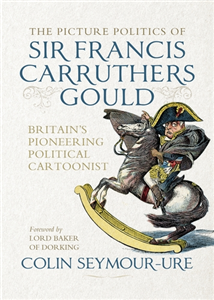
        The picture politics of Sir Francis Carruthers Gould

        Britain's pioneering political cartoonist

        by Colin Seymour-Ure, Mark Bryant

        This is the first major study of Britain's pioneering graphic satirist, Sir Francis Carruthers Gould (1844-1925), the first staff political cartoonist on a daily newspaper in Britain, and the first of his kind to be knighted. Written by the distinguished media historian, Colin Seymour-Ure, it is essential reading for anyone interested in cartoons, caricature and illustration and will also be welcomed by students of history, politics and the media. It examines Gould's career in Fleet Street until his retirement after the First World War. It also discusses his illustrations for magazines and books and there is an analysis of his use of symbolism and literary allusion to lampoon such eminent politicians as Gladstone and Joseph Chamberlain. As Lord Baker says in his Foreword, this book is 'a major contribution to our knowledge of British cartooning.'

      • Trusted Partner
        Medicine
        June 2025

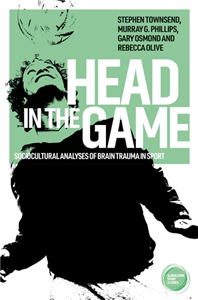
        Head in the game

        Sociocultural analyses of brain trauma in sport

        by Stephen Townsend, Murray G. Phillips, Gary Osmond, Rebecca Olive

        Head in the game brings together international scholars from multiple humanities, social science, and scientific disciplines to critically examine one of the most vexing issues in global sport: concussion. It argues that science and medicine alone cannot solve the concussion crisis: sociocultural factors must also be considered. This edited collection draws attention to the ways that social, cultural, historical, political, literary, philosophical, and legal factors have shaped the concussion crisis in sport. Head in the game is essential reading for those who want to understand how the concussion crisis came to be, and provides guidance for developing ethical and evidence-based solutions in the future.

      • Trusted Partner
        Humanities & Social Sciences
        February 2007

        The child at risk

        paedophiles, media responses and public opinion

        by Anneke Meyer, Chantal Hamil

        Paedophilia continues to be a public and emotive topic in contemporary Britain which is capable of generating great and varying levels of interest, concern and condemnation. The child at risk charts these social responses and unravels their underlying dynamics through detailed empirical research and theoretical analysis. Anneke Meyer looks beyond the media and 'moral panics' for explanations of emotive social responses and the paradox pervading them (the paradox of increased regulation, of paedophiles and children, coinciding with continuing popular concern). Drawing on and developing a wide range of theoretical frameworks, the book identifies a number of dynamics which produce concern and renders regulation designed to reduce fears ineffective. These dynamics include the moral rhetoric of childhood and the exposition of the crisis of neo-liberalism and conceptualisations of 'the paedophile' as a dangerous pervert. As a result the book points beyond its immediate subject and furthers understanding in the areas of risk, childhood and governance, as well as collective concerns and emotions. It will be essential reading in sociology, media studies and for those interested in media representation and governance. ;

      • Trusted Partner
        Humanities & Social Sciences
        June 2023

        Worrier state

        Risk, anxiety and moral panic in South Africa

        by Nicky Falkof

        Risk, anxiety and moral panic are endemic to contemporary societies and media forms. How do these phenomena manifest in a place like South Africa, which features heightened insecurity, deep inequality and accelerated social change? What happens when cultures of fear intersect with pervasive systems of gender, race and class? Worrier state investigates four case studies in which fear and anxiety appear in radically different ways: the far right myth of 'white genocide'; so-called 'Satanist' murders of young women; an urban legend about township crime; and social theories about safety and goodness in the suburbs. Falkof foregrounds the significance of emotion as a socio-political force, emphasising South Africa's imbrication within globalised conditions of anxiety and thus its fundamental and often-ignored hypermodernity. The book offers a bold and creative perspective on the social roles of fear and emotion in South Africa and thus on everyday life in this complex place.

      • Trusted Partner
        The Arts
        September 2024

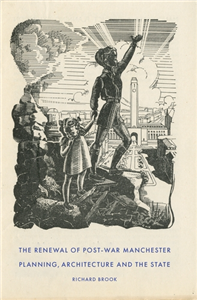
        The renewal of post-war Manchester

        Planning, architecture and the state

        by Richard Brook

        A compelling account of the project to transform post-war Manchester, revealing the clash between utopian vision and compromised reality. Urban renewal in Britain was thrilling in its vision, yet partial and incomplete in its implementation. For the first time, this deep study of a renewal city reveals the complex networks of actors behind physical change and stagnation in post-war Britain. Using the nested scales of region, city and case-study sites, the book explores the relationships between Whitehall legislation, its interpretation by local government planning officers and the on-the-ground impact through urban architectural projects. Each chapter highlights the connections between policy goals, global narratives and the design and construction of cities. The Cold War, decolonialisation, rising consumerism and the oil crisis all feature in a richly illustrated account of architecture and planning in post-war Manchester.

      • Trusted Partner
        Biography & True Stories
        November 2024

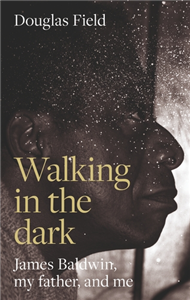
        Walking in the dark

        James Baldwin, my father and I

        by Douglas Field

        A moving exploration of the life and work of the celebrated American writer, blending biography and memoir with literary criticism. Since James Baldwin's death in 1987, his writing - including The Fire Next Time, one of the manifestoes of the Civil Rights Movement, and Giovanni's Room, a pioneering work of gay fiction - has only grown in relevance. Douglas Field was introduced to Baldwin's essays and novels by his father, who witnessed the writer's debate with William F. Buckley at Cambridge University in 1965. In Walking in the dark, he embarks on a journey to unravel his life-long fascination and to understand why Baldwin continues to enthral us decades after his death. Tracing Baldwin's footsteps in France, the US and Switzerland, and digging into archives, Field paints an intimate portrait of the writer's life and influence. At the same time, he offers a poignant account of coming to terms with his father's Alzheimer's disease. Interweaving Baldwin's writings on family, illness, memory and place, Walking in the dark is an eloquent testament to the enduring power of great literature to illuminate our paths.

      • Trusted Partner
        Humanities & Social Sciences
        August 1999

        British Politics in an Age of Reform

        by Michael J. Turner, Mark Greengrass

        This work is a detailed examination of principal themes in the political history of late 18th- and early 19th-century Britain. It evaluates much recent research, links the politics of the elite with the politics of the people and seeks to explain significant developments with reference to both their long- and short-term causes. Among the issues addressed are the relative powers of crown, cabinet and parliament between 1760 and 1832; the impact on domestic politics of revolution and war abroad; the growth of radicalism and popular political activity; agitation for reform and the responses of government; the rise of party; the connections between extra-parliamentary pressure and instability; at the centre of power. ;

      Subscribe to our

      newsletter