
All Things Women
Find your focus and strengths in times of crisis.
View Rights Portal

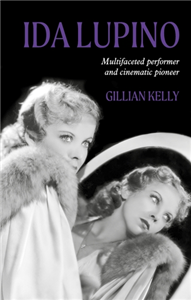
This book contributes to a welcome new wave focusing on the importance of female filmmakers, providing a reappraisal of Ida Lupino, a cinematic figure of significant importance. Given her ability to move between popular and independent cinemas and her status as both a Hollywood star and director/writer/producer of socially relevant films overlooked by the mainstream, Lupino is a particularly interesting case study. Employing a range of critical approaches, including feminist theory, auteur theory and critical theory, this book investigates key themes and motifs that developed across Lupino's unusual and unique career as one of the most significant female players in film history. Investigating her oeuvre as actress, director, writer and producer, it discusses Lupino as a complex and important filmmaker whose career, on both sides of the camera, requires substantially more critical attention than it has been awarded thus far.

Medieval film explores theoretical questions about the ideological, artistic, emotional and financial investments inhering in cinematic renditions of the medieval period. What does it mean to create and watch a 'medieval film'? What is a medieval film and why are they successful? This is the first work that attempts to answer these questions, drawing, for instance, on film theory, postcolonial theory, cultural studies and the growing body of work on medievalism. Contributors investigate British, German, Italian, Australian, French, Swedish and American film, exploring topics such translation, temporality, film noir, framing and period film - and find the medieval lurking in unexpected corners. In addition it provides in-depth studies of individual films from different countries including The Birth of a Nation to Nosferatu, and Robin Hood: Prince of Thieves. Medieval film will be of interest to medievalists working in disciplines including literature, history, art history, to scholars working on film and in cultural studies. It will also be of interest to undergraduates, postgraduates and to an informed enthusiast in film or/and medieval culture.
 Trusted Partner

Medieval film explores theoretical questions about the ideological, artistic, emotional and financial investments inhering in cinematic renditions of the medieval period. What does it mean to create and watch a 'medieval film'? What is a medieval film and why are they successful? This is the first work that attempts to answer these questions, drawing, for instance, on film theory, postcolonial theory, cultural studies and the growing body of work on medievalism. Contributors investigate British, German, Italian, Australian, French, Swedish and American film, exploring topics such translation, temporality, film noir, framing and period film - and find the medieval lurking in inexpected corners. In addition it provides in-depth studies of individual films from different countries including The Birth of a Nation to Nosferatu, and Robin Hood: Prince of Thieves. Medieval Film will be of interest to medievalists working in disciplines including literature, history, to scholars working on film and in cultural studies. It will also be of interest to undergraduates, postgraduates and to an informed enthusiast in film or/and medieval culture.
Trusted Partner

'Realist film theory and cinema' embraces studies of cinematic realism and 19th century tradition, the realist film theories of Lukács, Grierson, Bazin and Kracauer, and the relationship of realist film theory to the general field of film theory and philosophy. This is the first book to attempt a rigorous and systematic application of realist film theory to the analysis of particular films. The book suggests new ways forward for a new series of studies in cinematic realism, and for a new form of film theory based on realism. It stresses the importance of the question of realism both in film studies and in contemporary life. Aitken's work will be of interest to scholars and advanced students of film studies, literary studies, media studies, cultural studies and philosophy.
Trusted Partner

Lukácsian film theory and cinema explores Georg Lukács' writings on film. The Hungarian Marxist critic Georg Lukács is primarily known as a literary theorist, but he also wrote extensively on the cinema. These writings have remained little known in the English-speaking world because the great majority of them have never actually been translated into English - until now. Aitken has gathered together the most important essays and the translations appear here, often for the first time. This book thus makes a decisive contribution to understandings of Lukács within the field of film studies, and, in doing so, also challenges many existing preconceptions concerning his theoretical position. For example, whilst Lukács' literary theory is well known for its repudiation of naturalism, in his writings on film Lukács appears to advance a theory and practice of film that can best be described as naturalist. Lukácsian film theory and cinema is divided into two parts. In part one, Lukács' writings on film are explored, and placed within relevant historical and intellectual contexts, whilst part two consists of the essays themselves. This book will be of considerable interest to scholars and students working within the fields of film studies, literary studies, intellectual history, media and cultural studies. It is also intended to be the final volume in a trilogy of works on cinematic realism, which includes the author's earlier European film theory and cinema (2001), and Realist film theory and cinema (2006).
Trusted Partner
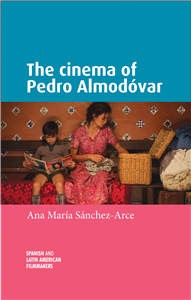
This book offers a comprehensive film-by-film analysis of Spain's most famous living director, Pedro Almodóvar. It shows how Almodóvar's films draw on various national cinemas and genres, including Spanish cinema of the dictatorship, European art cinema, Hollywood melodrama and film noir. It also argues that Almodóvar's work is a form of social critique, his films consistently engaging with and challenging stereotypes about traditional and contemporary Spain in order to address Spain's traumatic historical past and how it continues to inform the present. Drawing on scholarship in both English and Spanish, the book will be of interest to undergraduate and postgraduate students of film studies and Hispanic studies, scholars of contemporary cinema and general readers with a passion for the films of Pedro Almodóvar.
Trusted Partner

Contemporary French cinema is an essential introduction to popular French film of the last 35 years. It charts recent developments in all genres of French cinema with analyses of over 120 movies, from Les Valseuses to Caché. Reflecting the diversity of French film production since the New Wave, this clear and perceptive study includes chapters on the heritage film, the thriller and the war movie, alongside the 'cinéma du look', representations of sexuality, comedies, the work of women film makers and le jeune cinéma. Each chapter introduces the public reception and critical debates surrounding a given genre, interwoven with detailed accounts of relevant films. Confirmed as a major contribution to both Film Studies and French Studies, this book is a fascinating volume for students and fans of French film alike.
Trusted Partner

Contemporary French cinema is an essential introduction to popular French film of the last 35 years. It charts recent developments in all genres of French cinema with analyses of over 120 movies, from Les Valseuses to Caché. Reflecting the diversity of French film production since the New Wave, this clear and perceptive study includes chapters on the heritage film, the thriller and the war movie, alongside the 'cinéma du look', representations of sexuality, comedies, the work of women film makers and le jeune cinéma. Each chapter introduces the public reception and critical debates surrounding a given genre, interwoven with detailed accounts of relevant films. Confirmed as a major contribution to both Film Studies and French Studies, this book is a fascinating volume for students and fans of French film alike.
Trusted Partner

European Film Noir is the first book to bring together specialist discussions of film noir in specific European national cinemas. Written by leading scholars, this groundbreaking study provides an authoritative understanding of an important aspect of European cinema and of film noir itself, for too long considered as a solely American form. The Introduction reviews the problems of defining film noir, its key characteristics and discusses its significance to the development of European film, the relationship of specific national films noirs to each other, to American noir and to historical and social change. Eight chapters then discuss film noir in France, Germany, Britain and Spain, analysing both earlier developments and the evolution of neo-noir through to the present. A further chapter explores film noir in Italian cinema where its presence is not so well defined. Each piece provides a critical overview of the most significant films in relation to their industrial and social contexts. European Film Noir is an important contribution to the study of European cinema that will have a broad appeal to undergraduates, cinéastes, film teachers and researchers.
Trusted Partner
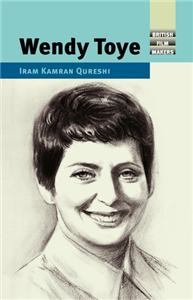
This groundbreaking book delves into the remarkable career of Wendy Toye, one of Britain's most prolific, versatile and pioneering directors. Spanning a fascinating journey through her work in cinema, television, and advertising, the study highlights her mastery of visual storytelling, choreographic brilliance, and technical innovation. From her landmark short film The Stranger Left No Card to her contributions in musicals, comedy, fantasy films, and television productions, Toye's work consistently broke boundaries in a male-dominated industry. This insightful analysis also examines her ability to combine artistry with precision, her influence on the postwar cultural landscape, and her lasting legacy as a multidimensional creative force. A must-read for cinema enthusiasts, scholars, and anyone inspired by women's achievements in the media landscape.
Trusted Partner

Contemporary focus, right up to date with material from 1980s and 90s. Wide-ranging analyses of major directors, themes, genres and issues, including historical film, genre cinema, women in film and autonomies.
Trusted Partner

Provides an introduction to the products and context of the new Australian film industry which arose toward the end of the 1960s. Traces the development of Australian film, in terms of prominent directors and stars, consistent themes, styles and evolving genres. The evolution of the film genres peculiar to Australia, and the adaptation of conventional Hollywood forms (such as the musical and the road movie) are examined in detail through textual readings of landmark films. Films and trends discussed include: the period film and Picnic at Hanging Rock; the Gothic film and the Mad Max trilogy; camp and kitsch comedy and the Adventures of Pricilla, Queen of the Desert. The key issue of the revival (the definition, representation and propagation of a national image) is woven through analysis of the new Australian cinema.
Trusted Partner

Looking at contemporary film and television, this book explores how popular genres frame our understanding of on-screen performance. Previous studies of screen performance have tended to fix upon star actors, directors, or programme makers, or they have concentrated upon particular training and acting styles. Moving outside of these confines, this book provides a truly interdisciplinary account of performance in film and television and examines a much neglected area in our understanding of how popular genres and performance intersect on screen. Each chapter concentrates upon a particular genre or draws upon generic case studies in examining the significance of screen performance. Individual chapters examine contemporary film noir, horror, the biopic, drama-documentary, the western, science fiction, comedy performance in 'spoof news' programmes and the television 'sit com' and popular Bollywood films.
Trusted Partner
 Trusted Partner

Catherine Deneuve is indisputably one of the world's most celebrated actresses, both in her native France and throughout the world. Her career has spanned five decades during which she has worked with the most significant of French auteurs, as well as forging partnerships with international directors such as Bunuel and Polanski. The Deneuve star persona has attained such iconic status that it can now symbolise the very essence of French womanhood and civic identity. In this wide-ranging and authoritative collection of essays by a selection of international film academics and writers, the Deneuve persona is scrutinised and illuminated. Beyond the glamorous iconographic status of Yves Saint Laurent's muse, and the epitome of sexual inviolability, Deneuve's status as actress is foregrounded. The book will be essential reading for students and lecturers in star studies.
Trusted Partner
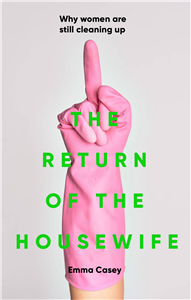
An illuminating look at the world of cleanfluencers that asks why the burden of housework still falls on women. Housework is good for you. Housework sparks joy. Housework is beautiful. Housework is glamorous. Housework is key to a happy family. Housework shows that you care. Housework is women's work. Social media is flooded with images of the perfect home. TikTok and Instagram 'cleanfluencers' produce endless photos and videos of women cleaning, tidying and putting things right. Figures such as Marie Kondo and Mrs Hinch have placed housework, with its promise of a life of love and contentment, at the centre of self-care and positive thinking. And yet housework remains one of the world's most unequal institutions. Women, especially poorer women and women of colour, do most low-paid and unpaid domestic labour. In The return of the housewife, Emma Casey asks why these inequalities matter and why they persist after a century of dramatic advances in women's rights. She offers a powerful call to challenge the prevailing myths around housework and the 'naturally competent' woman homemaker.
Trusted Partner

An incidental pleasure of watching a film is what it tells us about the society in which it is made. Using a sociological model, The British working class in postwar film looks at how working-class people were portrayed in British feature films in the decade after the Second World War. Though some of the films examined are well known, others have been forgotten and deserve reassessment. Original statistical data is used to assess the popularity of the films with audiences. With its interdisciplinary approach and the avoidance of jargon, this book seeks to broaden the approach to film studies. Students of media and cultural studies are introduced to the skills of other disciplines, while sociologists and historians are encouraged to consider the value of film evidence in their own fields. This work should appeal to all readers interested in social history and in how cinema and society works.
Trusted Partner
 Trusted Partner

Auteurism - the idea that a director of a film is its source of meaning and should retain creative control over the finished product - has been one of film studies' most important paradigms ever since the French New Wave of the late 1950s and early 1960s, and the adoption of the term auteur by Andrew Sarris. Through the popular, controversial and critically acclaimed films of Olivier Assayas, Jacques Audiard, the Dardenne borthers, Michael Haneke and Francois Ozon, this book looks into how the meaning of 'auteur' has changed over this half-century, and assesses the current state of Francophone auteur cinema. It combines French philosophical and sociological approaches with methodologies from the Anglo-American fields of gender studies, queer theory and postmodernism. This volume will be of interest to researchers and students of film studies, European cinema and French and Francophone studies, as well as to film enthusiasts.
Trusted Partner



