Silke Heiss (Give Your Writing The Edge)
We are a one-woman charity, hoping to transform into a self-sustaining business, devoted to reminding readers of themselves.
View Rights Portal
We are a one-woman charity, hoping to transform into a self-sustaining business, devoted to reminding readers of themselves.
View Rights Portal

In this bold and exhilarating mix of memoir and writing guide, Melissa Febos tackles the emotional, psychological, and physical work of writing intimately while offering an utterly fresh examination of the storyteller's life and the challenges it presents. How do we write about the relationships that have formed us? How do we describe our bodies, their desires and traumas? What does it mean to have your writing, or living, dismissed as "navel-gazing"-or else hailed as "so brave, so raw"? And to whom, in the end, do our most intimate stories belong? Drawing on her journey from aspiring writer to acclaimed author and writing professor-via addiction and recovery, sex work and academia-Melissa Febos has created a captivating guide to the writing life, and a brilliantly unusual exploration of subjectivity, privacy, and the power of divulgence. Candid and inspiring, Body Work will empower readers and writers alike, offering ideas-and occasional notes of caution-to anyone who has ever hoped to see their true self reflecting back from the open page.

In this bold and exhilarating mix of memoir and writing guide, Melissa Febos tackles the emotional, psychological, and physical work of writing intimately while offering an utterly fresh examination of the storyteller's life and the challenges it presents. How do we write about the relationships that have formed us? How do we describe our bodies, their desires and traumas? What does it mean to have your writing, or living, dismissed as "navel-gazing"-or else hailed as "so brave, so raw"? And to whom, in the end, do our most intimate stories belong? Drawing on her journey from aspiring writer to acclaimed author and writing professor-via addiction and recovery, sex work and academia-Melissa Febos has created a captivating guide to the writing life, and a brilliantly unusual exploration of subjectivity, privacy, and the power of divulgence. Candid and inspiring, Body Work will empower readers and writers alike, offering ideas-and occasional notes of caution-to anyone who has ever hoped to see their true self reflecting back from the open page.
 Trusted Partner

In this bold and exhilarating mix of memoir and writing guide, Melissa Febos tackles the emotional, psychological, and physical work of writing intimately while offering an utterly fresh examination of the storyteller's life and the challenges it presents. How do we write about the relationships that have formed us? How do we describe our bodies, their desires and traumas? What does it mean to have your writing, or living, dismissed as "navel-gazing"-or else hailed as "so brave, so raw"? And to whom, in the end, do our most intimate stories belong? Drawing on her journey from aspiring writer to acclaimed author and writing professor-via addiction and recovery, sex work and academia-Melissa Febos has created a captivating guide to the writing life, and a brilliantly unusual exploration of subjectivity, privacy, and the power of divulgence. Candid and inspiring, Body Work will empower readers and writers alike, offering ideas-and occasional notes of caution-to anyone who has ever hoped to see their true self reflecting back from the open page.
Trusted Partner
Writing power radically rethinks the place of the canon and canonicity as objects and concepts in contemporary academia and the everyday intellectual practices of academics. It is distinctive in its demonstration of how academics' engagements with canons shape their writing practices but also how scholars' writing practices, spaces, proclivities, and desires shape the canon and changing ideas of value in canonicity. The book thinks through frequently discussed problems of legitimacy and knowledge production from fresh perspectives of lived experience and the everyday to offer new insights into the politics of knowledge in contemporary social sciences.
Trusted Partner
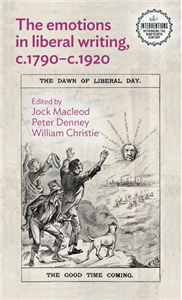
This volume of essays from a selection of distinguished international scholars is the first of its kind to explore in depth the emotional dimensions of liberal writing in Britain over the long nineteenth century. Addressing liberal writing in the public sphere rather than high political or parliamentary liberalism, it comprises a clear, context-setting introduction and eleven substantive chapters. The chapters analyse key texts and figures from the 1790s through to the 1920s and offer several different approaches to the central concern with the emotions and liberalism. These include examining the place of the emotions in the 'good life'; the social and political function of the emotions; emotional rhetoric in liberal writing; and liberal theories of the emotions. Both individually and as a collection, the essays provide an essential foundation for further scholarly work in this emerging field.
Trusted Partner
Trusted Partner
Trusted Partner
Trusted Partner
Trusted Partner
Trusted Partner

How has it happened that from being politely ignored or marginalized just half a century ago, women writers in Italy are now at the centre of literary activity? To what extent does writing by women reflect the successes and failures of Italy in the post-war period? What form did the feminist movement in Italy take, and how did this affect what - and how - women wrote? And how are women who write responding to a more fragmented post-modern age? These are just some of the questions asked of the relationship between women and fiction in post-war Italy in this anthology. It includes stories by Cialente, Ginzburg, Ortese, Morante, Romano, Maraini and Duranti as well as Bompiani, Sanvitale, Mizzau, Scaramuzzino, Capriolo and Petrignani. The thirteen stories presented offer a range of style and content indicative of the wealth and diversity of writing by women, and their reading is supported by critical notes and an extensive vocabulary. This is a clear and challenging introduction to the rich field of women and fiction in Italy. ;
Trusted Partner

Sie interessieren sich für das Schriftstellerleben? Wollen wissen, was jenseits des Schreibtisches sonst so passiert? Was es heißt, in einer Fußballkneipe nach seinem Beruf gefragt zu werden, sich als deutscher Gastautor unvermutet in einer brasilianischen Basketballhalle vor fünftausend Brasilianerinnen wiederzufinden oder als Ein-Satz-Schauspieler in einem Hollywoodfilm? Und wie es ist, vorm Nachtpostschalter Schlange zu stehen, um eine Story in letzter Minute zu einem lukrativen Wettbewerb zu schicken, und plötzlich vor und hinter sich Gesichter von Kollegen zu erblicken ... In neun Erzählungen lüftet Bernd Cailloux die Geheimnisse des »german writing«: etwa, daß der Ausdruck von irischen Fischern stammt und für die runenartig krakeligen Zeichnungen auf Hummerpanzern steht. Und daß ein fetter Hummer und ein dicker Panzer nie verkehrt sind.
Trusted Partner
 Trusted Partner
The acclaimed author of Sins of My Father shares the secrets of writing a new, transformative kind of memoir. Into being is an essential guide to writing memoir in a radical and empowering way. Drawing on her experience as a memoirist and a teacher of creative writing, Lily Dunn presents the ground-breaking idea that the craft of memoir itself can offer a form of transformation. Dunn demystifies the memoirist's art, helping readers to find meaning in raw experience and elevate the personal to the universal. She considers intriguing questions, from why our memories give greater significance to certain events to how we can write honestly without intruding too far into the lives of our loved ones. She also explores how writers are extending the memoir form to create something hybrid, playful and subversive. In an age of social media, filled with confessions, re-inventions and distortions of the self, the question of what it means to be an individual is more urgent than ever. Into being shows readers how to turn writing memoir into a journey of discovery - one that can be shared with the whole world.
Trusted Partner

Reading, writing and the influence of Harold Bloom takes the work of the world's best-known living literary critic and discovers what it is like to read 'with', 'against' and 'beyond' his ideas. The editors, Alan Rawes and Jonathon Shears, introduce the collection by assessing the impact of Bloom's brand of agonistic criticism on literary critics and its ongoing relevance to a discipline attempting to redefine and settle on its collective goals. Firmly grounded in, though not confined to, Bloom's first specialism of Romantic Studies, the volume contains essays that examine Bloom's debts to high Romanticism, his quarrels with feminism, his resistance to historicism, the tensions with the 'Yale School' and his recent work on Shakespeare and genius. Crucially, chapters are also devoted to putting Bloom's anxiety-themed ratios into practice on the poetry of Wordsworth, Shelley, Keats and D. H. Lawrence, amongst others. The Harold Bloom that emerges from this collection is by turns divisive and unifying, marginalised and central, radical and conservative.
Trusted Partner

This book offers a critical reassessment of the uses of history in contemporary Irish literature and culture. It argues that in much recent Irish writing, history is approached not as the proverbial 'nightmare' from which Joyce's Stephen Dedalus tried to awake, but as a rich, imaginative resource. Drawing on recent debates in Irish literary and cultural criticism, On the uses of history in recent Irish writing explores the varied, creative, and often critically challenging forms of rewriting Ireland's troubled past in contemporary prose, drama and poetry. Individual chapters focus on literary treatments of the Tudor reconquest, the Famine, the Northern Irish Troubles and other key events in Irish history, highlighting in a series of close readings the unique forms of historical thought enabled by different literary forms and genres. Canonical works by authors such as Seamus Heaney, Derek Mahon, Tom Paulin, Brian Friel, Stewart Parker and Frank McGuinness are considered alongside lesser known writers and texts, placing each in their wider social, cultural and historical contexts. ;
Trusted Partner
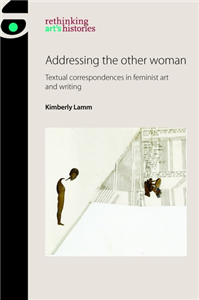
This book analyses how three artists - Adrian Piper, Nancy Spero and Mary Kelly - worked with the visual dimensions of language in the 1960s and 1970s. These artists used text and images of writing to challenge female stereotypes, addressing viewers and asking them to participate in the project of imagining women beyond familiar words and images of subordination. The book explores this dimension of their work through the concept of 'the other woman', a utopian wish to reach women and correspond with them across similarities and differences. To make the artwork's aspirations more concrete, it places the artists in correspondence with three writers - Angela Davis, Valerie Solanas, and Laura Mulvey - who also addressed the limited range of images through which women are allowed to become visible.
Trusted Partner
Letter writing in the Northumbrian Kingdom offers the first comprehensive study of Northumbria's vibrant epistolary culture in the seventh and eighth centuries. Through a close examination of more than fifty surviving Latin letters-many written by or to figures such as Bede, Acca of Hexham, Ælfflæd of Whitby, and Alcuin -this book uncovers the literary, political, and spiritual dimensions of early medieval correspondence. From royal diplomacy to theological debate, these letters reveal a world where communication was both a practical necessity and a refined art. Drawing on previously underexamined texts and placing Northumbria in its broader European context, this groundbreaking study sheds new light on the role of letter writing in shaping a Christian kingdom's identity, influence, and intellectual legacy.
Trusted Partner

In this fascinating study, Samantha George explores the cultivation of the female mind and the feminised discourse of botanical literature in eighteenth-century Britain. In particular, she discusses British women's engagement with the Swedish botanist, Carl Linnaeus, and his unsettling discovery of plant sexuality. Previously ignored primary texts of an extraordinary nature are rescued from obscurity and assigned a proper place in the histories of science, eighteenth-century literature, and women's writing. The result is groundbreaking: the author explores nationality and sexuality debates in relation to botany and charts the appearance of a new literary stereotype, the sexually precocious female botanist. She uncovers an anonymous poem on Linnaean botany, handwritten in the eighteenth century, and subsequently traces the development of a new genre of women's writing - the botanical poem with scientific notes. The book is indispensable reading for all scholars of the eighteenth century, especially those interested in Romantic women's writing, or the relationship between literature and science.
Trusted Partner

A fully-rounded anthology of women's writing from World War One containing the known and unknown biographers and fiction writers of the period.. Explores the impact of the war on ideology, gender, genre and society and is a perfect complimentary text to Trudi Tate's Women Men and the Great War.. Aims to re-read the First World War as a female experience by drawing on the public and private sources of a wide range of different women.. Uses diaries, letters, articles and essays many of which have not been published.. Invaluable source document for scholars in many disciplines. ;