
Cohete Cómics
Cohete Cómics' catalog gathers transgressive works of sequential art in lines such as documentary comics, autobiography and fiction.
View Rights Portal
Cohete Cómics' catalog gathers transgressive works of sequential art in lines such as documentary comics, autobiography and fiction.
View Rights Portal
Adaiyaalam means identity. 1998 was a time when secular India was slowly moving towards religiosity. Adaiyaalam was founded with the support of like-minded friends to publish the voices of people who were oppressed culturally and politically, Not-for-profit. We aim to bring out the works of marginalised people like Dalits, minorities, women, children, tribals, villagers and other unrepresented people. We continue our journey embracing a diverse range of work in literature, non-fiction, philosophy, politics, and new genres of storytelling. We are proud to say that till today, we have published more than five hundred titles. Adaiyaalam has managed to bring more than a hundred translated works into Tamil language collaborating with 54 international publishing houses. Adaiyaalam plays an important role in social change. We live in an era where most of the publishing world is only focused on making profits the priority. We at adaiyaalam encourage originality and alternative narratives. Join our journey.
View Rights Portal

Three of the most important chronicles of eleventh-century Germany were composed in the south-western duchy of Swabia. The chronicles reveal how between 1049 and 1100 the centripetal attraction of the reform papacy became the dominant fact of intellectual life in German reformed monastic circles. In the abbey of Reichenau Herman 'the Lame' composed a chronicle of the reign of Emperor Henry III (1039-56). His pupil, Berthold of Reichenau, continued his master's work, composing a detailed account of 1076-1079 in Germany. Bernold, a clergyman of Constance, continued the work of Herman and Berthold in a text containing the fullest extant account of 1080-1100. Herman's waning enthusiasm for the monarchy and growing interest in the newly reformed papacy were intensified in Berthold's chronicle, and writing in the new context of the reformed monasteries of south-western Germany, Bernold preached total obedience to the Gregorian papacy. The Swabian chronicles are an indispensable resource to the student of the changing loyalties and conflicts of eleventh-century Germany.

The eleventh-century papal reform transformed western European Church and society and permanently altered the relations of Church and State in the west. The reform was inaugurated by Pope Leo IX (1048-54) and given a controversial change of direction by Pope Gregory VII (1073-85). This book contains the earliest biographies of both popes, presented here for the first time in English translation with detailed commentaries. The biographers of Leo IX were inspired by his universally acknowledged sanctity, whereas the biographers of Gregory VII wrote to defend his reputation against the hostility generated by his reforming methods and his conflict with King Henry IV. Also included is a translation of Book to a Friend, written by Bishop Bonizo of Sutri soon after the death of Gregory VII, as well as an extract from the violently anti-Gregorian polemic of Bishop Benzo of Alba (1085) and the short biography of Leo IX composed in the papal curia in the 1090s by Bishop Bruno of Segni. These fascinating narrative sources bear witness to the startling impact of the papal reform and of the 'Investiture Contest', the conflict of empire and papacy that was one of its consequences. An essential collection of translated texts for students of medieval history.
 Trusted Partner

This is a translation of the eleventh-century Latin Annals of Lampert, monk of Hersfeld, with detailed commentary and introduction. No translation has hitherto been published in English, despite the fact that it is one of the best known of all the narrative sources of the Middle Ages, constantly mentioned in the English secondary literature. Lampert produced the most detailed account of the events of 1056-77 (the minority of Henry IV of Germany and the first decade of his personal rule), a period of crisis and rebellion culminating in the conflict between the king and Pope Gregory VII. He is widely regarded as 'the unrivalled master among medieval historians' and 'a superb story-teller', noted for his vivid characterisation and narrative. An English translation of this work is of the greatest value to teachers and students of medieval history and also of interest to the general reader of European literature.
Trusted Partner

Three of the most important chronicles of eleventh-century Germany were composed in the south-western duchy of Swabia. The chronicles reveal how between 1049 and 1100 the centripetal attraction of the reform papacy became the dominant fact of intellectual life in German reformed monastic circles. In the abbey of Reichenau Herman 'the Lame' composed a chronicle of the reign of Emperor Henry III (1039-56). His pupil, Berthold of Reichenau, continued his master's work, composing a detailed account of 1076-1079 in Germany. Bernold, a clergyman of Constance, continued the work of Herman and Berthold in a text containing the fullest extant account of 1080-1100. Herman's waning enthusiasm for the monarchy and growing interest in the newly reformed papacy were intensified in Berthold's chronicle, and writing in the new context of the reformed monasteries of south-western Germany, Bernold preached total obedience to the Gregorian papacy. The Swabian chronicles are an indispensable resource to the student of the changing loyalties and conflicts of eleventh-century Germany. ;
Trusted Partner

The eleventh-century papal reform transformed western European Church and society and permanently altered the relations of Church and State in the west. The reform was inaugurated by Pope Leo IX (1048-54) and given a controversial change of direction by Pope Gregory VII (1073-85). This book contains the earliest biographies of both popes, presented here for the first time in English translation with detailed commentaries. The biographers of Leo IX were inspired by his universally acknowledged sanctity, whereas the biographers of Gregory VII wrote to defend his reputation against the hostility generated by his reforming methods and his conflict with King Henry IV. Also included is a translation of Book to a Friend, written by Bishop Bonizo of Sutri soon after the death of Gregory VII, as well as an extract from the violently anti-Gregorian polemic of Bishop Benzo of Alba (1085) and the short biography of Leo IX composed in the papal curia in the 1090s by Bishop Bruno of Segni. These fascinating narrative sources bear witness to the startling impact of the papal reform and of the 'Investiture Contest', the conflict of empire and papacy that was one of its consequences. An essential collection of translated texts for students of medieval history. ;
Trusted Partner
 Trusted Partner


Wie konnte sich der Ausdruck ›Revolution‹, der ursprünglich immerhin ein Terminus für astronomische Vorgänge, Umläufe oder Umdrehungen von Himmelskörpern, gewesen war, in einen Begriff der politischen Macht- und Herrschaftsgeschichte verwandeln? Und wie kam es dazu, dass dieser gesellschaftspolitische Revolutionsbegriff wiederum auf die Naturwissenschaften und deren Erkenntnisgeschichte angewandt wurde? Ist es überhaupt legitim, den Begriff der politischen Revolution einschließlich all seiner machttheoretischen Konnotationen auf den Siegeszug einer naturwissenschaftlichen Idee, eines erkenntnisleitenden Paradigmas, zu übertragen, wie es uns die theoretische Wissenschaftsgeschichtsschreibung seit Th. S. Kuhn lehrt? Die sind die Fragen, mit denen Cohens Untersuchung über Revolutionen in der Naturwissenschaft anhebt. Cohen verfolgt einen Zeitraum von mehr als vier Jahrhunderten umspannt und nahezu alle wichtigen Bereiche der Naturwissenschaften erfasst – von der Astronomie bis zur Evolutionstheorie, von den Geowissenschaften bis zur Freudschen Psychoanalyse, von der Galileischen Kinematik bis zur Einsteinschen Relativitätstheorie und Atomphysik -, die historische Kariere eines Begriffs, der sich in mehreren Wandlungen und Metamorphosen durch die Naturwissenschafts- und Sozialgeschichte hindurchzieht, um letztlich als der entscheidende Begriff des mit Kuhn vollzogenen sociological turn in der Wissenschaftsgeschichtsschreibung eine neue Auferstehung zu erleben.
Trusted Partner

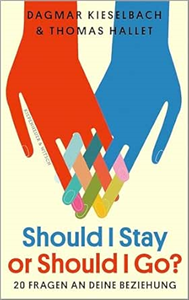
Die Liebe neu entfachen oder sich doch verabschieden? 20 klärende Fragen für Frauen in langjährigen Beziehungen. Fühlen Sie sich in Ihrer Beziehung festgefahren oder stecken gar in einer Ehekrise?Haben Sie das Gefühl, nur noch nebeneinanderher zu leben?Fehlt die Leidenschaft, und der Zweifel an der Partnerschaft nagt an Ihnen? Besonders Frauen in der Lebensmitte stellen sich oft die Frage: War das schon alles oder kommt da noch was? Soll ich gehen oder bleiben? In »Should I Stay or Should I Go?« stellen die erfahrenen Paartherapeuten Dagmar Kieselbach und Thomas Hallet, selbst seit über 30 Jahren verheiratet, 20 essenzielle Fragen, die Ihnen dabei helfen, ehrlich Bilanz zu ziehen. Anhand von aufschlussreichen Fallbeispielen aus ihrer Praxis und konkreten Hilfestellungen zeigen sie Wege auf, wie Sie Ihre Beziehung wieder mit Leben füllen können – oder woran Sie erkennen, dass es Zeit ist, loszulassen und über eine Scheidung oder Trennung nachzudenken. Persönlich, provokant und praxisnah liefert dieses Buch wertvolle Einsichten statt plumpe Ratgeberfloskeln. »Das Einzige, was nachweislich glücklich macht, sind gute Beziehungen. Dank dieses Buches wissen wir, ob unser Miteinander überhaupt ›gut‹ ist und wie wir es vor allem besser machen können. Ein Muss für alle, die Liebe in ihrem Leben haben möchten!« Nicole Staudinger
Trusted Partner

Wie sieht ein überzeugendes Verständnis der Freiheit von Individuen in Gesellschaft und Politik aus? Welche philosophischen Traditionen helfen bei der Beantwortung dieser Frage? Welcher analytische Zugang ist geboten? Das in den 1990er Jahren wiedererwachte Interesse an einer theoretischen Reflexion der Freiheit hat seither zu einer Reihe von bahnbrechenden Studien geführt, die an einflussreiche Beiträge aus der zweiten Hälfte des 20. Jahrhunderts anschließen, wie sie etwa Isaiah Berlin, Hannah Arendt oder Friedrich August von Hayek geliefert haben. Der Band versammelt sowohl diese Klassiker als auch diejenigen Texte, die im Zentrum der aktuellen Debatte stehen: von Charles Taylor, Philip Pettit, Quentin Skinner, Rainer Forst, Gerald Cohen, Nancy Hirschmann u. a. Er bietet so eine umfassende Einführung in eine der lebhaftesten und wichtigsten philosophischen Kontroversen der Gegenwart.
Trusted Partner

Ich wird dir erklären, hat Leo mir gesagt: Adam, das waren Adam und Eva in einem Körper vereinigt, ehedem. Das war der Mensch, den Gott gemacht hat, und so war es gerecht, und warum es anders gekommen ist, kann ich dir auch nicht sagen. Aber ich weiß: wenn die Liebe zwischen zwei Menschen kommt, dann hat sie die Funktion von Leim, und die zwei können eins werden zusammen, wie Adam. Und wenn ihnen kein Gedanke auf die Seite geht, dann hält der Kleister, und sie haben das Paradies schon auf der Erde. Seit es Menschen gibt, gibt es den Mythos von der einen, einzigen, großen Liebe, von dem zustand, in dem alles, Freude und Schmerz, aufgehoben ist in einer Harmonie, die ertragen kann, was immer ihr widerfährt. Aber seit es Menschen gibt, gibt es auch den Zweifel an jenem Mythos, den Unglauben, die Skepsis, der große Traum könnte eines Tages wahr werden. Dennoch: er ist virulent. Und beseelt von ihm ist die junge Protagonistin dieses Buchs, Schauspielerin in Hamburg, wo es naß und kalt ist, eine, die auf der Bühne spielt, was ihr durch den Kopf geht, und auf den Straßen erlebt, daß das Leben meistens anders ist: kein Theater jedenfalls. Aber wo immer sie sich aufhält, wartet sie auf das eine, den Einen, auf das, was ihr fehlt. Unablässig denkt sie: Es gibt doch auch die zwei, die sich so lieben, daß sie von Anfang bis Ende auf des anderen Seite gehen. Und sieht alles, was ihr begegnet, im Lichte dieser Vision, die sie zur Fremden macht für die anderen - und doch auch zur Vertrauten, weil es niemanden gibt, dem die Vision fremd ist. Wann kommt er endlich? Oder ist denn alles nur Kino? Oder Theater? Oder doch möglich? In Hamburg, wo es naß und kalt ist? Die Schauspielerin hat ein Happy-End - und weiß zugleich, daß der letzte Akt noch immer nicht wirklich stimmt. Vision bleibt Vision. Ulla Berkéwicz wagt sich in diesem Buch an ein »schwieriges« Thema, an einen Stoff, der unendlich oft schon beschrieben, besungen und gespielt worden ist. Doch dadurch, daß sie »Adam« an einem Ort ansiedelt, wo alles ohnehin nur Theater ist, wo Unter- und übertreibung vornehmlich dazu dienen, einen Stoff schärfer zu konturieren und damit plastischer und lebendiger zu machen, schafft sie eine Atmosphäre, in dem das Unglaubliche, schwer zu sagende plötzlich glaubhaft und sagbar wird. Es ist hier nichts irreal - die Stadt nicht, die Geschichten nicht, die in der Stadt spielen, das Theater nicht, die Schauspielerin und ihre Kollegen nicht, auf den die Protagonistin wartet, um mit ihm »Adam« zu sein.Mach dich auf und mach dich glücklich. Du läßt den Mann, den du liebst auf die Maße eines Fabelwesens anwachsen, gut, gut, die Bäume wachsen in den Himmel, die Sache ist unendlich. Aber vergiß nicht, wahr ist nur die Harmonie, und obgleich dem Anschein nach zwei, sind wir im Wesen eins, so wie das erste Paar ...
Trusted Partner

What am I doing in New York City? fragt der jüngste und vielversprechendste Songwriter New Yorks, ein Aufnahmegerät in der Hand, ein Notizbuch griffbereit in der Hosentasche. Und was ihm einfällt, landet entweder als Song im Recorder und später auf CD oder im Heft und wird zum pulsierenden Text: Eine Zeitlang sammelte Adam Green seine Textproduktion jenseits der Musik in Fanzines, den sogenannten magazines. Jetzt sind diese, zusammen mit dem Langgedicht "Flowers of Capitalism" und anderen zwischen 2001 und 2004 entstandenen Texten, erstmals in Buchform erhältlich.
Trusted Partner
Trusted Partner
Trusted Partner

Der Mann, der See-Leben I erzählt, ist angestellt bei einer Kölner Firma. Nach seinem Urlaub weigert er sich, in die Firma zurückzukehren; er stellt sein Büro am See auf. Funktioniert das? Man wird sehen.
Trusted Partner
Barbara Adam ist Professorin für Sozialwissenschaften an der Universität Cardiff.
Trusted Partner
Diese Edition von Adam Fergusons An Essay on the History of Civil Society (1767) macht eine zentrale Schrift aus der Vor- und Frühgeschichte der Sozialwissenschaften zugänglich. Fergusons Versuch enthält zentrale und originelle »soziologische Leitgedanken«. Das Zusammenleben der Menschen in Gruppen, ihre gesellschaftlichen Verhaltensweisen, die sozialen Normen, Verhältnisse und Prozesse werden als »Grundtatsachen« der menschlichen Geschichte begriffen. Doch die soziologischen Einsichten haben für Ferguson ihren Sinn nicht in sich selbst. Sie sind Vorstufe und Teil einer ebenso umfassenden wie differenzierten Kritik an der »verfeinerten« Kommerzgesellschaft seiner Zeit.
Trusted Partner

 Trusted Partner
Trusted Partner
Trusted Partner
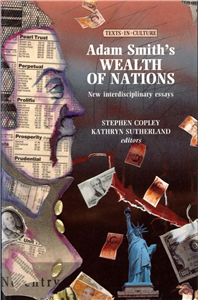
First published in 1776, Adam Smith's Wealth of Nations is much more than just a handbook on the principles of free-market economics; it is a founding text for the organisation of Western society in its broadest sense. In order to understand the impact of Smith's text across the academic disciplines, this volume brings together leading scholars from fields of economics, politics, history, sociology and literature. Each essay offers a different reading of Wealth of Nations and its legacy. Contributors consider the historical context in which Wealth of Nations was written, its reception and its profound impact on contemporary concepts of market liberalism, on education, on gender relations and on environmental debates. The volume also offers deconstructive analyses of the text and a feminist critique of Smith's construction of the economy. This volume will be the ideal companion to Smith's work for all students of literature, politics and economic history. ;
Trusted Partner



