
Your Search Results
-

-

Agriculture & International Development
Textbooks, research and professional titles in Agriculture and International Development
View Rights Portal
-
Promoted Content

 Technology, Engineering & AgricultureMarch 1905
The First Book of Farming
by Charles L. Goodrich
This book is a result of the author's search for these facts and truths as a student and farmer and his endeavor as a teacher to present them in a simple manner to others. The object in presenting the book to the general public is the hope that it may be of assistance to farmers, students and teachers, in their search for the fundamental truths and principles of farming.
-
Promoted Content

 Humanities & Social SciencesJune 2009
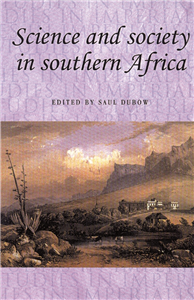
Science and society in southern Africa
by Andrew Thompson, Saul Dubow, John Mackenzie
This collection, dealing with case studies drawn from South Africa, Zimbabwe, Mozambique and Mauritius, examines the relationship between scientific claims and practices, and the exercise of colonial power. It challenges conventional views that portray science as a detached mode of reasoning with the capacity to confer benefits in a more or less even-handed manner. That science has the potential to further the collective good is not fundamentally at issue, but science can also be seen as complicit in processes of colonial domination. Not only did science assist in bolstering aspects of colonial power and exploitation, it also possessed a significant ideological component: it offered a means of legitimating colonial authority by counter-poising Western rationality to native superstition and it served to enhance the self-image of colonial or settler elites in important respects. This innovative volume ranges broadly through topics such as statistics, medicine, eugenics, agriculture, entomology and botany. ;
-
 Trusted Partner
 Humanities & Social SciencesMarch 2017
Science and society in southern Africa
by Saul Dubow
This collection, dealing with case studies drawn from South Africa, Zimbabwe, Mozambique and Mauritius, examines the relationship between scientific claims and practices, and the exercise of colonial power. It challenges conventional views that portray science as a detached mode of reasoning with the capacity to confer benefits in a more or less even-handed manner. That science has the potential to further the collective good is not fundamentally at issue, but science can also be seen as complicit in processes of colonial domination. Not only did science assist in bolstering aspects of colonial power and exploitation, it also possessed a significant ideological component: it offered a means of legitimating colonial authority by counter-poising Western rationality to native superstition and it served to enhance the self-image of colonial or settler elites in important respects. This innovative volume ranges broadly through topics such as statistics, medicine, eugenics, agriculture, entomology and botany.
-
Trusted Partner

 October 2023
Veganomics
The vegan revolution and its future markets
by Joël Luc Cachelin
— A practical guide on how an entirely vegan society can work — A thought-provoking utopia – exactly what we need right now — By the futurologist and founder of the Wissensfabrik ("Knowledge Factory") with a large network We're on an idyllic, albeit fictional, archipelago in the North Sea. Nobody keeps an animal against its will here, and no one sells the materials obtained from killing an animal. No animals are used in agriculture or for research, beauty and food industries. There are no zoos, and there's no animal testing. No one wears wool or leather. Vegania is entirely vegan. Now Karnivoria wants to follow suit, and asks Vegania for advice: how can an entirely different society work; how is it possible to move away from animal products, and how would this affect the catering and food industries and agriculture? An exciting scientific experiment that Joël Luc Cachelin underpins with linguistic sophistication and scientific expertise in this extraordinary book about the possibilities of a livestock-free society.
-
Trusted Partner
 The ArtsSeptember 2020
Science in performance
Theatre and the politics of engagement
by Simon Parry
This electronic version has been made available under a Creative Commons (BY-NC-ND) open access license. This book is about science in theatre and performance. It explores how theatre and performance engage with emerging scientific themes from artificial intelligence to genetics and climate change. The book covers a wide range of performance forms from Broadway musicals to educational theatre, from Somali drama to grime videos. It features work by pioneering companies including Gob Squad, Headlong Theatre and Theatre of Debate as well as offering fresh analysis of global blockbusters such as Wicked and Urinetown. The book offers detailed description and analysis of theatre and performance practices as well as broader commentary on the politics of theatre as public engagement with science. Science in performance is essential reading for researchers, students and practitioners working between science and the arts within fields such as theatre and performance studies, science communication, interdisciplinary arts and health humanities.
-
Trusted Partner
 Humanities & Social SciencesSeptember 2008
Agricultural policy in Europe
by Alan Greer, Dimitris Papadimitriou, Simon Bulmer, Andrew Geddes, Peter Humphreys
'Agricultural policy in Europe', available for the first time in paperback, provides a unique comparative analysis of the UK, France, Poland, the Netherlands, Greece and Ireland, using up-to-date material on CAP reform, world trade liberalisation, animal disease, rural development and the environment. In its core argument that Europe has a Common Agricultural Policy in name only, the study offers a distinctive interpretation of contemporary policies for agriculture and rural development. Policy is considerably more diverse than usually recognised, and also varies across different policy stages such as agenda setting, formulation and implementation. This diversity is the result of a multilevel policy process in which global, regional and local actors play a key role alongside the institutions of the EU. Yet nation states are central. Despite the existence of the CAP, substantial policy variations reflect different national economies, cultures, priorities and interests, usually mediated through different types of policy networks. Far from greater policy integration, the pressures for diversity have increased in recent years, notably through world trade liberalisation, environmental concern and EU enlargement. With continuing controversy about the future direction and powers of the EU, this groundbreaking book sheds new light on the extent to which agricultural policy in Europe is common. It goes beyond formal legal structures and the rhetoric of popular debate to look at what actually happens in a complex policy process that is both multilevel and multi stage. The result is a very different picture in which agricultural policy is considerably more diverse and fragmented than usually assumed. ;
-
Trusted Partner
 Humanities & Social SciencesJuly 2025
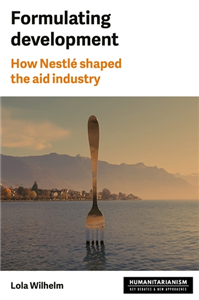
Formulating development
How Nestlé shaped the aid industry
by Lola Wilhelm
In the 1970s, Nestlé became a lightning rod for criticism against the food industry's negative impacts on humans and their environment, especially in the Global South. But what has so far eluded historical scrutiny is that the picture was more nuanced. This book tells the exclusive story of how the Swiss food giant, and more broadly corporate capitalism, have shaped the aid industry since the late nineteenth century. It follows Nestlé's bid for a share of the humanitarian market brokered by the Red Cross in wartime Europe, of its clinical trials in Swiss and Senegalese maternities, and of its agricultural modernisation schemes in Mexico, India, and the Ivory Coast. Based on extensive research in the firm's own historical archives and the records of national and international aid agencies, the volume interrogates the legacies of this long history for international development today.
-
Trusted Partner
 Children's & YADecember 2023
QuBuild
A guided approach to asking better scientific questions in primary schools
by Lynne Bianchi, Tina Whittaker
This book brings a new classroom approach for primary teachers to teach the explicit knowledge of scientific question-asking. This is an essential skill when children are involved in finding out about the world around them through science enquiry. Challenging the assumption that because children ask lots of questions in science, this automatically leads to meaningful learning of the enquiry curriculum, QuBuild is important for all children developing as scientific thinkers. It outlines an approach to explicitly plan for, practice and develop the craft of scientific question-asking. Unlock your children's science learning potential by exploring the QuBuild Process.
-
Trusted Partner
-
Trusted Partner
 The ArtsSeptember 2020
Science in performance
by Maggie B. Gale, Maria M. Delgado, Peter Lichtenfels, Simon Parry
-
Trusted Partner
 October 2022
Ernst Haeckel
Zoologist, artist, philosopher and freethinker
by Rainer Willmann
Ernst Haeckel (1834–1919) is one of the most famous and influential researchers of all times. This brilliant biography by Rainer Willmann recounts Haeckel's fascinating life for science and his fight for freedom of thought. Haeckel is a vehement advocate of Darwinian doctrine and develops it further, which is why he is fiercely attacked not only by the church but also by his fellow scientists. Among other things, we owe to Haeckel the freedom of research and teaching that we take so much for granted. That he was also a talented artist is proven by his drawings of marine organisms ... The gripping and highly interesting life story of an extraordinary freethinker and scientist.
-
Trusted Partner
 May 2021
The Humane Idea
Rudolf Virchow and Hermann von Helmholtz. The legacy of the Charité
by Ernst Peter Fischer, Detlev Ganten
Two of today’s leading scientists, Ernst Peter Fischer and Detlev Ganten, reconfirm the legacy of two influential 19th-century researchers. To mark the 200th birthday of Rudolf Virchow (1821–1902) and Hermann von Helmholtz (1821–1894), they explain why pioneering research and holistic thinking are still relevant for health science and practice, and for a sustainable balance of people, society and the environment. The historical achievement of Virchow and Helmholtz continues today with the work of researchers like Emmanuelle Charpentier and Christian Drosten, so ensuring that the humane idea continues to be fruitful in the future. An insight into the history of medical science.
-
Trusted Partner
-
Trusted Partner
 May 2021
On the Amazement of the World
(Im-)Possibilities of science
by Ernst Peter Fischer
The current debate on the corona virus shows that knowledge, and with that science, plays a central role in the struggle to preserve humanity. Knowledge provides opportunities to influence the world, for better or worse. In times when emotions and appeals to baser instincts often triumph over reason and humanity, Ernst Peter Fischer reminds us of the goal of science that has been pursued since the Enlightenment: “to facilitate the conditions of human existence”. In his new book, the bestselling author takes us on an instructive, varied and enjoyable journey through the history of knowledge and science.
-
Trusted Partner
 Humanities & Social SciencesJanuary 2024
Dog politics
Species stories and the animal sciences
by Mariam Motamedi Fraser
Do dogs belong with humans? Scientific accounts of dogs' 'species story,' in which contemporary dog-human relations are naturalised with reference to dogs' evolutionary becoming, suggest that they do. Dog politics dissects this story. This book offers a rich empirical analysis and critique of the development and consolidation of dogs' species story in science, asking what evidence exists to support it, and what practical consequences, for dogs, follow from it. It explores how this story is woven into broader scientific shifts in understandings of species, animals, and animal behaviours, and how such shifts were informed by and informed transformative political events, including slavery and colonialism, the Second World War and its aftermath, and the emergence of anti-racist movements in the twentieth and twenty-first centuries. The book pays particular attention to how species-thinking bears on 'race,' racism, and individuals.
-
Trusted Partner
-
Trusted Partner
 May 2021
The Sky!
Exploring the world above us
by Rolf Heilmann
We‘re in heaven when we‘re in love, admire the stars and Milky Way on crystal-clear nights, and look up to attempt to forecast the weather. We have always been fascinated and shaped by the sky, and even though science may have demythologised it, nonetheless it uses evernew technology to gaze deeper and farther into the universe and is constantly making new discoveries. Rolf Heilmann picks us up with our everyday experiences and questions about the sky, and takes us along on a fascinating journey through the times – from the worlds of the gods and art, philosophy and technology to the exploration of nearby and distant galaxies and the last secrets of science.
-
Trusted Partner
 February 2023
Tobias Mayer
or measuring the earth, sea and sky
by Thomas Knubben
—300th birthday of Tobias Mayer in February 2023 — The rediscovery of a great scientist — A chapter in the fascinating history of science The story of Tobias Mayer's life (1723 to 1762) is that of a child prodigy and orphan who became a pioneer of the Enlightenment as a cartographer, mathematician, physicist and astronomer. Having never been to university, at the age of 28 he was appointed a professor in Göttingen by the Elector of Hanover and King of England. He revolutionised cartography with his zeal and skill, helping sailors to find the right path across the seas and providing people with the firstever clear view of the moon. 17th February 2023 marks the 300th anniversary of the birth of Tobias Mayer. High time to recall this prototype of a scientist.
-
Trusted Partner
 Children's & YAApril 2024
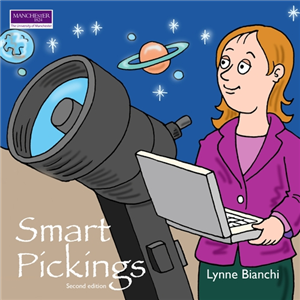
Smart Pickings
2nd Edition
by Lynne Bianchi
Smart Pickings (2nd Edition) further engages young readers with the world of science. It promotes talk between children, their classmates, teachers, parents, family and friends. The book introduces a range of diverse and inspirational scientists who have or are making a difference through their innovations and research. A book to encouraging us all to wonder, ask questions and ask 'Who are they?', 'How might I be like them?'
-
Trusted Partner

 April 2017
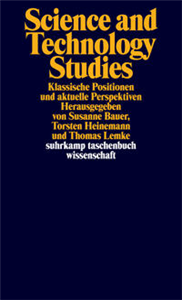
Science and Technology Studies
Klassische Positionen und aktuelle Perspektiven
by Susanne Bauer, Torsten Heinemann, Thomas Lemke
In den vergangenen Jahrzehnten ist mit den Science and Technology Studies (STS) ein Forschungsfeld entstanden, das eine grundlegende Neubestimmung des Verhältnisses von Wissenschaft, Technik und Gesellschaft vornimmt. Der vorliegende Band versammelt erstmals zentrale Texte der STS in deutscher Sprache, u. a. von Bruno Latour, David Bloor, Michel Callon, Donna Harraway oder Karen Barad, und bietet zudem Überblicksdarstellungen aller wichtigen Forschungsgebiete und Theoriepositionen. Entstanden ist so eine grundlegende Einführung in diese innovative Forschungsrichtung, die darüber hinaus auch eine Zwischenbilanz der Entwicklung der STS zieht und aktuelle Herausforderungen und Debatten auslotet.



