
Deutscher Apotheker Verlag
Specialist books in the fields of pharmacy - drug information - medicine.
View Rights Portal Trusted Partner

Specialist books in the fields of pharmacy - drug information - medicine.
View Rights Portal
The German Cultural Forum for Central and Eastern Europe publishes richly illustrated non-fiction books about the cultural history of those areas of Central and Eastern Europe where Germans used to, or still do live. The carefully edited titles with elaborated appendices are written by well-known experts who are able to present information about Central and Eastern Europe in an attractive way by cultural travel guides or historical overview books. The Cultural Forum also edits an annual and a bimonthly magazine, Blickwechsel ("Change of perspective") and Kulturkorrespondenz östliches Europa ("Cultural Correspondence Central and Eastern Europe"). Furthermore, the Forum organizes popular lectures, discussions, readings, exhibitions, concerts, journalist trips, writer residencies and prize-givings.
View Rights Portal

Aus dem Englischen von Johannes Sabinski
Trusted Partner

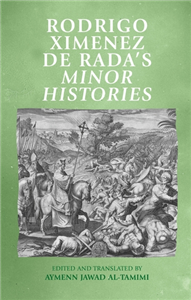
This work provides the first complete English translation of works by Toledan archbishop Rodrigo Ximénez de Rada (1170-1247 CE), whose 'Minor Histories' are sequels to his larger 'Gothic History' and thus round off his grand history of Spain project that he began at the request of King Ferdinand III. The 'Minor Histories' include Rodrigo's 'History of the Arabs' that can be considered the first surviving Western monograph focused on Arab and Islamic history and thus occupies a unique position in the medieval Latin corpus of writings. In addition to the translation, this book provides a thorough and accessible introduction to the life and works of Rodrigo, making sense of the context in which he wrote and his historical method. The translations are thoroughly annotated including cross-references to other Latin and Arabic sources for comparison.
Trusted Partner
Trusted Partner
Trusted Partner

Mahmoud Al-Zein is the head of the Al-Zein clan, one ofthe most influential large families in GermanyStark, controversial, unsanitised: the brutal truth about violence,power and honour Arab clans rule Germany’s inner cities and are often in the headlines. One of the most influential of these large families is the Al-Zeins. Their family head, Mahmoud Al-Zein, is known as the notorious Godfather of Berlin. Now, he is the first to break his silence and to give a no-holds-barred account of the inner working of his family organisation: his journey to the top, conflicts with law, time in prison, feuds with rivals, the law of the family and the brutal fight for supremacy on the streets. An incomparable insight into Arab lansand a report on German day-to-day reality.
Trusted Partner
Trusted Partner
Trusted Partner

 Trusted Partner
Trusted Partner
Trusted Partner
Trusted Partner
Trusted Partner
Trusted Partner
Trusted Partner


Goethe hatte ihm ein Stipendium verschafft. Damit konnte der Maler Johann Heinrich Wilhelm Tischbein (1751–1829) einen Aufenthalt in Rom finanzieren, wo er seine künstlerische Ausbildung vervollkommnen wollte. Als Goethe zu seiner ersten Italienreise aufbrach und am 29. Oktober 1786 in Rom ankam, nahm er sofort zu Tischbein Kontakt auf, und bereits am nächsten Tag zog er in Tischbeins Wohnung ein. In den folgenden Wochen und Monaten durchwanderten die Freunde gemeinsam das neue und das alte Rom, und Tischbein unterrichtete Goethe im Zeichnen.Der vorliegende Band dokumentiert diese Künstlerfreundschaft anhand der Gemälde und Zeichnungen Tischbeins, die während ihres gemeinsamen Romaufenthalts entstanden, und durch ausgewählte Passagen aus Briefen und der Italienischen Reise. Ein Essay von Petra Maisak, der diese außergewöhnliche Künstlerfreundschaft kenntnisreich und anschaulich beschreibt, leitet den Band ein.
Trusted Partner

Johann Wolfgang Goethe, am 28. August 1749 in Frankfurt am Main geboren, absolvierte ein Jurastudium und trat dann in den Regierungsdienst am Hof von Weimar ein. 1773 veröffentlichte er Götz von Berlichingen (anonym) und 1774 Die Leiden des jungen Werthers. Es folgte eine Vielzahl weiterer Veröffentlichungen, zu den berühmtesten zählen Italienische Reise (1816/1817), Wilhelm Meisters Lehrjahre (1798) und Faust (1808). Johann Wolfgang Goethe starb am 22. März 1832 in Weimar. Karl Eibl, geboren 1940, war Professor für Neuere deutsche Literaturwissenschaft an der Ludwig-Maximilians-Universität in München. Im Insel Verlag erschien die monographische Studie Die Entstehung der Poesie (1994). Er verstarb am 18.2.2014.
Trusted Partner

 Trusted Partner

 Trusted Partner
Trusted Partner
Trusted Partner
 Trusted Partner


Abdullah kommt aus Syrien. Er ist 16, als er aus seinem Heimatort Ar-Raqqa flieht. Sein älterer Bruder wurde verschleppt, sein Vater bei einem Bombenangriff getötet. Weil die Bedrohung immer größer wurde, stattete seine Familie ihn mit Geld aus. Abdullah schlug sich nach Deutschland durch. In einem Jugendheim findet er Sicherheit und ein neues Zuhause. Doch das Ankommen ist nicht leicht: Hautnah erlebt Abdullah, dass Flüchtlinge wie er als "Islamratten" beschimpft werden. Ständig spürt er misstrauische Blicke. Doch er bekommt auch immer wieder freundliche Hilfe, die ihm Hoffnung gibt. Hoffnung auf seine Zukunft in Deutschland, in einer Welt ohne Krieg.
Trusted Partner



