
Alam Al Kotob
Alam Al Kotob has published a wide array of distinguished books in various fields, including Law, Engineering and Arts, Education and Psychology, Literature, Language.
View Rights Portal
Alam Al Kotob has published a wide array of distinguished books in various fields, including Law, Engineering and Arts, Education and Psychology, Literature, Language.
View Rights Portal Trusted Partner
Trusted Partner
Trusted Partner

 Trusted Partner

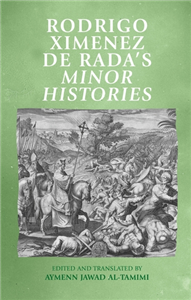
This work provides the first complete English translation of works by Toledan archbishop Rodrigo Ximénez de Rada (1170-1247 CE), whose 'Minor Histories' are sequels to his larger 'Gothic History' and thus round off his grand history of Spain project that he began at the request of King Ferdinand III. The 'Minor Histories' include Rodrigo's 'History of the Arabs' that can be considered the first surviving Western monograph focused on Arab and Islamic history and thus occupies a unique position in the medieval Latin corpus of writings. In addition to the translation, this book provides a thorough and accessible introduction to the life and works of Rodrigo, making sense of the context in which he wrote and his historical method. The translations are thoroughly annotated including cross-references to other Latin and Arabic sources for comparison.
Trusted Partner
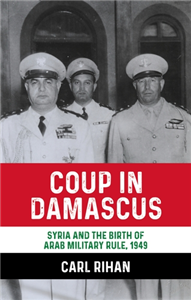
Coup in Damascus is a history of Syria's first military regime. It plots the the fall of Syria's democracy and the rise of its military rulers, particularly Husni al-Zaim, whose brief rule in 1949 represented a profoundly transformative moment for the Syrian nation. It is a history of the thoughts, intentions and motives of political actors underpinning the events that have marked Syria's history after the first Arab-Israeli war, and focuses mainly on the interaction between local, regional and international actors. Unlike most histories of the modern Middle East that tackle broad intervals and that focus on the sequences of events, this history seeks to reconstruct the thought processes behind the events, and anchor them within the epoch's existing political and socioeconomic conditions. It draws on several methodological influences, particularly R.G. Collingwood's 'history as re-enactment of the past'.
Trusted Partner
 Trusted Partner
Trusted Partner
Trusted Partner


Zwei Männer auf einem Diwan: Das Austauschprogramm »West-östlicher Diwan« bringt Schriftsteller aus Deutschland und der arabischen Welt paarweise zusammen, um durch ihr Kennenlernen dem vielbeschworenen ›Kampf der Kulturen‹ entgegenzuwirken. Joachim Helfer und Rashid al-Daif haben die Aufforderung zum Gespräch ernstgenommen. So entstand ein verblüffendes Buch: Der libanesische Autor schreibt ein Protokoll, dessen Gegenstand sein deutscher Kollege ist – und zwar als Privatperson. Er kommentiert dessen gleichgeschlechtliche Lebensweise, beschreibt Ansichten zu Sexualität, Liebe und Moral, die ihm fremd sind. Der deutsche Autor reagiert darauf mit radikaler Offenheit, schildert die Begegnung aus seiner Sicht und zeigt am Text des libanesischen Kollegen dessen eigene, zwischen Tradition und Moderne hin und her gerissenen Vorstellungen von Männer- und Frauenrollen auf. Am Ende macht der auf beiden Seiten mit dem Mut zur Selbstentblößung geführte Dialog erschreckend deutlich, wie sehr im Verhältnis zwischen Orient und Okzident das Private das Politische ist.
Trusted Partner
Trusted Partner

 Trusted Partner
Trusted Partner
Trusted Partner
Trusted Partner
Trusted Partner

 Trusted Partner
Trusted Partner
Trusted Partner

 Trusted Partner
Trusted Partner
Trusted Partner

Mahmoud Al-Zein is the head of the Al-Zein clan, one ofthe most influential large families in GermanyStark, controversial, unsanitised: the brutal truth about violence,power and honour Arab clans rule Germany’s inner cities and are often in the headlines. One of the most influential of these large families is the Al-Zeins. Their family head, Mahmoud Al-Zein, is known as the notorious Godfather of Berlin. Now, he is the first to break his silence and to give a no-holds-barred account of the inner working of his family organisation: his journey to the top, conflicts with law, time in prison, feuds with rivals, the law of the family and the brutal fight for supremacy on the streets. An incomparable insight into Arab lansand a report on German day-to-day reality.
Trusted Partner
Trusted Partner
By examining the PMU's self-positioning as a pillar of Iraq's defence infrastructure, this book offers a critical perspective on the prospects for Security Sector Reform (SSR) and highlights the limitations of externally driven Disarmament, Demobilisation, and Reintegration (DDR) efforts. It speaks to scholars of Iraq and the Middle East, as well as diplomats, security actors, and SSR practitioners. The book is also a valuable teaching resource for undergraduate and postgraduate courses on conflict, security, identity politics, terrorism, and peacebuilding. Its unique fieldwork methodology offers guidance for researchers engaging with armed non-state and para-state actors in post-conflict settings. Altogether, the book addresses a strong academic and policy demand for evidence-based analysis of the PMU's complex identity - offering a flexible framework for studying hybrid security actors with transnational connections and domestic ambitions.



