Alam Al Kotob
Alam Al Kotob has published a wide array of distinguished books in various fields, including Law, Engineering and Arts, Education and Psychology, Literature, Language.
View Rights Portal
Alam Al Kotob has published a wide array of distinguished books in various fields, including Law, Engineering and Arts, Education and Psychology, Literature, Language.
View Rights Portal

Leo Heger, ein junger Flüchtling aus Osteuropa, kommt Ende der 60er Jahre in die Schweiz. In seiner neuen Heimat kennt er niemand und er versteht nicht mehr als ein paar Alltagsfloskeln. Halt und Wärme findet er bei der 34jährigen Martha, seiner Deutschlehrerin, die sich von Leo aus der Trostlosigkeit ihrer Ehe entführen läßt, bis Leo in die USA weiterzieht und sie mit seinem ungeborenen Sohn zurückläßt. Alain Claude Sulzer, der Autor von Ein perfekter Kellner und Spezialist in Sachen Liebesverrat, erzählt in Privatstunden die Geschichte von Leo und Martha, eine Geschichte von Einsamkeit und Fremdsein und von Augenblicken der Erfüllung in einer heimlichen Liebe, die nicht gelebt werden kann.
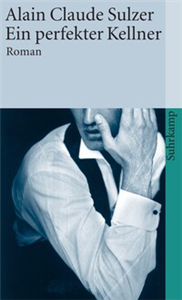
„Dies ist ein Roman, den der gemeine Leser atemlos verschlingen wird, während das literarische Trüffelschwein sich an mancherlei Trouvaillen delektieren kann.“ Die Welt
 Trusted Partner
Trusted Partner
Trusted Partner
Trusted Partner
Trusted Partner
Trusted Partner
Trusted Partner
Trusted Partner
Trusted Partner
Trusted Partner
Trusted Partner
Trusted Partner
Trusted Partner
Trusted Partner
Trusted Partner

Alain-Fournier und Rivière beweisen sich ihre Freundschaft, indem sie aneinander Kritik üben. Sie entwickeln eine erstaunliche Seelenkunde und drängen vor zu einem weiteren Bereich als dem bloß psychologischen: sie verzeihen sich keine Unwahrheit. Das bedeutet, dass dichterischer Ausdruck zugleich ein moralischer wird. Hier allein ist menschliche Wirklichkeit. Benno Reifenberg
Trusted Partner


Placing Robbe-Grillet's filmic oeuvre in the related contexts of both his novelistic work and the different historical and cultural periods in which his films were made, from the early 1960s to the present, the book traces lines of influence and continuity throughout his work, which is shown to exhibit a consistent preoccupation with an identifiable body of themes, motifs and structures. Close readings of all the films are skilfully combined with a thematic approach, ranging across the entire filmic corpus. The book also contains chapters on cinematography and technique. Ultimately, this lucid, comprehensive and fascinating study shows Robbe-Grillet's contribution to the evolution of the cinematic art both in France and internationally to have been considerably more important than previously acknowledged.
Trusted Partner

Als »Legende zu Lebzeiten und eine der prägendsten Figuren der humanwissenschaftlichen Forschung im 20. Jahrhunderts« würdigte Die Zeit den französischen Ethnologen und Universalgelehrten Claude Lévi-Strauss, der im Oktober 2009 im Alter von einhundert Jahren starb. Für ihre Dokumentation haben Pierre-André Boutang und Annie Chevallay Interviews, Zeitzeugnisse sowie Filmmaterial, das Lévi-Strauss selbst gedreht hat, kunstvoll montiert. Der Ethnologe gibt Auskunft über seine Kindheit, seine Forschungsreisen und seine Arbeitsweise, aber auch über seine Liebe zur Musik. Ein »fesselnden Film über ein wohl einzigartiges Wissenschaftlerleben« (Franfkurter Allgemeine Zeitung). Als Extra ist der Dokumentarfilm Traurige Tropen aus dem Jahr 1990 zu sehen.
Trusted Partner
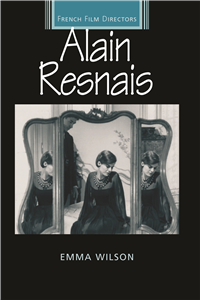
Alain Resnais, director of 'Hiroshima mon amour' (1959) and 'L'Annee derniere a Marienbad' (1961), has transformed the representation of memory, fantasy and desire in modern cinema. This illuminating introduction to his work, extending from his earliest documentaries to the musical films of the last decade, traces the evolving patterns of his filmmaking, its changing reflections on mortality, guilt, chance and human doubt. Exploring questions of the time-image, of trauma, of the senses, this volume sets Resnais' films in the context of important current debates in film theory, and provides a concise account of critical discussions of his work in France and beyond. Yet it also offers a highly personal and detailed engagement with individual images and scenes in Resnais' films. A passionate and partial defence of Resnais' work, old and new, this volume stands apart in its attention to the more tangible and moving pleasures of his films, their pathos, rigour and visual beauty. ;
Trusted Partner

Alain Resnais, director of 'Hiroshima mon amour' (1959) and 'L'Annee derniere a Marienbad' (1961), has transformed the representation of memory, fantasy and desire in modern cinema. This illuminating introduction to his work, extending from his earliest documentaries to the musical films of the last decade, traces the evolving patterns of his filmmaking, its changing reflections on mortality, guilt, chance and human doubt. Exploring questions of the time-image, of trauma, of the senses, this volume sets Resnais' films in the context of important current debates in film theory, and provides a concise account of critical discussions of his work in France and beyond. Yet it also offers a highly personal and detailed engagement with individual images and scenes in Resnais' films. A passionate and partial defence of Resnais' work, old and new, this volume stands apart in its attention to the more tangible and moving pleasures of his films, their pathos, rigour and visual beauty.
Trusted Partner

Alain Robbe-Grillet wurde am 18. August 1922 in Brest geboren. Er hat Landwirtschaft studiert und später am Institut National des Statistiques gearbeitet. 1953 publizierte er seinen ersten Roman: Les Gommes. In der Editions de Minuit versammelten sich mit Alan Robbe-Grillet, Michel Butor, Nathalie Sarraute, Marguerite Duras und Claude Simon die Gründungsfiguren des Nouveau Roman. »Der Nouveau Roman war von Anfang an sehr bekannt, aber genauso verkannt« hat Robbe-Grillet imner wieder gesagt. »Robbe-Grillet will die Objektivität in der Literatur einführen, schrieben die Kritiker. Ich protestierte schon damals dagegen - aber niemand nahm es zur Kenntnis.« 2001, kurz vor seinem 80. Geburtstag, überraschte Robbe-Grillet Leser und Kritik mit seinem Roman La Reprise (Die Wiederholung, 2002), der als »Gründungstext des 21. Jahrhunderts«, als »einer der modernsten Texte der letzten Jahre« gefeiert wurde. Am 18. Feburar 2008 ist Alain Robbe-Grillet 85jährig in Caen gestorben.
Trusted Partner

This book re-examines French cinema of the 1970s. It focuses on the debates which shook French cinema, and the calls for film-makers to rethink their manner of filming, subject matter and ideals in the immediate aftermath of the student revolution of May 1968. Alison Smith examines the effect of this re-thinking across the spectrum of French production, the rise of new genres and re-formulation of older ones. Chapters investigate political thrillers, historical films, new naturalism and Utopian fantasies, dealing with a wide variety of films. A particular concern is the extent to which film-makers' ideas and intentions are contained in or contradicted by their finished work, and the gradual change in these ideas over the decade. The final chapter is a detailed study of two directors who were deeply involved in the debates and events of the 70s, William Klein and Alain Tanner, here taken as exemplary spokesmen for those changing debates as their echoes reached the cinema.
Trusted Partner
Trusted Partner

Auch in dieser Auswahl erstmals ins Deutsche übersetzter Betrachtungen, sogenannter »Propos«, erweist sich der französische Philosoph Alain (eigentlich Emile Auguste Chartier, 1868-1951) als überaus anregend, überraschend, zum Innehalten auffordernd. Alain ist ein Denker, der seine Leser zum Selberdenken provoziert und verführt - und gleichzeitig ein großer Leser und Wiederleser überlieferter Philosophie und Literatur, deren Studium und Nachahmung er verlockend und dringlich zu machen weiß.
Trusted Partner

Introducing novels by the Nobel Prize for Literature author, Claude Simon, this text gives emphasis to peaks in his literary achievement: "The Flanders Road" (1960), "The Georgics" (1981) and "The Acacia" (1989). Alastair Duncan traces the development and recurrence of major themes, such as war, time and memory, and the constantly renewed inventiveness of Simon's manner. Duncan illustrates and comments on the various critical approaches which have been made to the novels over the years, from phenomenological interpretations, through structuralism to the autobiographical and psychobiographical approaches of the 1980s and 1990s. The text includes a chapter on Simon's most recent works ("Le Jardin des Plantes" 1997 and "Le Tramway" 2001).
Trusted Partner
Fast dreißig Jahre lang bestand die Freundschaft zwischen Alain Robbe-Grillet und Roland Barthes. Sie begann 1953 mit einem Brief, in dem Barthes den Roman »Die Radiergummis« als »gelungen«, weil »avantgardistisch« charakterisierte. Im Laufe der folgenden Jahrzehnte entwickelte sich eine enge Beziehung zwischen dem Romancier, der in dem Theoretiker den Schriftsteller lobte, und dem Semiologen, der im Romanautor den praktizierenden Philosophen der »écriture« schätzte. Die hier zum ersten Mal publizierten Stellungnahmen von Alain Robbe-Grillet zu Roland Barthes zeigen das Spannungsfeld zwischen der Lust am Text und der Lust am Spiel mit der Fiktion, in dem sich die französische Literatur in der zweiten Hälfte des 20. Jahrhunderts entwickelte.