
Al-Alia Publishing House
Al-Alia Publishing House produces stories for children. Not only the child enjoys the new experience of reading Alia presents, but so as everyone else.
View Rights Portal
Al-Alia Publishing House produces stories for children. Not only the child enjoys the new experience of reading Alia presents, but so as everyone else.
View Rights Portal
Corregidor is an independent Argentine publisher with more than five decades, dedicated to publishing and distributing a catalog focused in Latin American and Argentine literature.
View Rights Portal

Edwin Morgan is Scotland's major living poet, and Inventions of modernity was the first book-length study of his work. Since the 1940s Morgan's poetry has been carving out an alternative to the conventional evolutions from Modernism to Postmodernism, creating instead a substantial body of writing that ranges from the sublime to the hilarious. Instinctively at odds with the literary politics of the Pound-Eliot axis that remained influential deep into the twentieth century, Morgan develops instead a radical and libertarian poetics in an encyclopaedia of forms; from Anglo-Saxon metre through sonnet-sequences to concrete poems, and including gay poetry, science fiction verse and prize-winning translations into both English and Scots from numerous languages. This authoritative volume is of interest to students, teachers and academic researchers involved with strategies of reading, with cultural studies, with the politics of literary history and with gay and transgressive writing. ;
 Trusted Partner

This book re-examines French cinema of the 1970s. It focuses on the debates which shook French cinema, and the calls for film-makers to rethink their manner of filming, subject matter and ideals in the immediate aftermath of the student revolution of May 1968. Alison Smith examines the effect of this re-thinking across the spectrum of French production, the rise of new genres and re-formulation of older ones. Chapters investigate political thrillers, historical films, new naturalism and Utopian fantasies, dealing with a wide variety of films. A particular concern is the extent to which film-makers' ideas and intentions are contained in or contradicted by their finished work, and the gradual change in these ideas over the decade. The final chapter is a detailed study of two directors who were deeply involved in the debates and events of the 70s, William Klein and Alain Tanner, here taken as exemplary spokesmen for those changing debates as their echoes reached the cinema.
Trusted Partner
Trusted Partner
Trusted Partner

 Trusted Partner
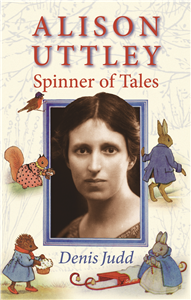
Little Grey Rabbit and Sam Pig are just two of the inspired characters created by Alison Uttley, loved by millions and still very popular today. But who was the real woman spinning enchanting tales of country life and lore, magic and friendship? Alison Uttley gathered much of the inspiration for her stories from the fond memories of her Derbyshire childhood and her love of the countryside. A talented and prolific writer, she was still producing stories in her late eighties. Yet she was often plagued by self-doubt, and extremely possessive over her close friends, family and work. Tragically, Alison's husband committed suicide before her writing successes. She soon developed a smothering relationship with her only child John, even convincing him to jilt his first fiancée and escape to Scotland - the honeymoon destination. With exclusive and unrestricted access to her personal diaries and private letters, Denis Judd paints an intriguing portrait of one of the most successful, creative and troubled children's authors of modern times. ;
Trusted Partner
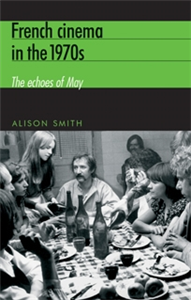
This book re-examines French cinema of the 1970s. It focuses on the debates which shook French cinema, and the calls for film-makers to rethink their manner of filming, subject matter and ideals in the immediate aftermath of the student revolution of May 1968. Alison Smith examines the effect of this re-thinking across the spectrum of French production, the rise of new genres and re-formulation of older ones. Chapters investigate political thrillers, historical films, new naturalism and Utopian fantasies, dealing with a wide variety of films. A particular concern is the extent to which film-makers' ideas and intentions are contained in or contradicted by their finished work, and the gradual change in these ideas over the decade. The final chapter is a detailed study of two directors who were deeply involved in the debates and events of the 70s, William Klein and Alain Tanner, here taken as exemplary spokesmen for those changing debates as their echoes reached the cinema. ;
Trusted Partner
Trusted Partner
Trusted Partner


Robert Walsers Biographie ist von spannender Rätselhaftigkeit. Zeit seines Lebens verlief sein Weg am Rande der literarischen und bürgerlichen Welt, so daß er in den Zeugnissen seiner Zeitgenossen kaum Niederschlag fand. Und Walser seinerseits vermied es, sein Leben irgendwie anders zu dokumentieren als in seiner Literatur. Dort aber spielt er mit seiner Biographie – phantasierend und verwandelnd, so daß die Texte von seinen Lebensumständen mehr verschweigen als verraten. In mehr als 20jähriger Forschung ist es dem Herausgeber gelungen, eine Fülle unbekannter Materialien und Bilder zusammenzutragen. Annähernd 1000 zeitgenössische Bilddokumente erlauben es, Walsers Lebenswelt in einer Nähe und Dichte kennenzulernen, wie es bislang nicht möglich war. »Sein Lebensbild wird nie komplett geschrieben werden können. Schon scheint mancher seinen Charakter zu umkleiden versucht zu haben.« Robert Walser
Trusted Partner
Trusted Partner

This book provides a comprehensive introduction to the work of Robert Bresson, one of the most respected and acclaimed directors in the history of cinema.. The first monograph on his work to appear in English for many years dealing not only with his thirteen feature-length films but also his little-seen early short Affaires publiques and his short treatise Notes on cinematography.. The films are considered in chronological order, using a perspective that draws variously on spectator theory, Catholic mysticism, gender theory and Lacanian psychoanalysis.. The major critical responses to his work, from the adulatory to the dismissive, are summarized and analyzed.. The work includes a full filmography and a critical bibliography.
Trusted Partner

National broadcasting and press regulation is undergoing a process of convergence in Europe. This book, newly available in paperback, explains how this process has been shaped by the actions of the European Union (EU) institutions. Alison Harcourt observes that whilst communications is one of the EU's most successful policy areas, European decision-making is eroding the national capacity to regulate for the public interest. European-level efforts to protect public interest goals have been constrained by the European Treaties. The author argues that increased European coordination in public interest regulation could be more conducive to growth and competitiveness than the dismantling of existing national laws. This, however, would require changes to the political composition of the European Union. This book assesses the potential EU media regulation provides for market growth and the protection of media pluralism, the citizen and ultimately democracy itself. These opportunities are presented in the coming decade with the developing European Constitution, EU enlargement, and the implementation and revision of European regulation.
Trusted Partner

Love's Victory by Lady Mary Wroth (1587-1651) is the first romantic comedy written in English by a woman. The Revels Plays publishes for the first time a fully-authorised, modern spelling edition of the Penshurst manuscript, the only copy of the play containing all five acts, handwritten by Wroth and privately owned by the Viscount De L'Isle. Edited by Alison Findlay, Philip Sidney and Michael G. Brennan, their critical introduction provides details of Wroth's remarkable life and work as a member of the Sidney family, tracing connections between Love's Victory, her prose and poetry and her family's extensive writings. The editors introduce readers to the influence of court drama on Love's Victory and offer a new account of the play's stage history in productions from 1999-2018. Extensive commentary notes guiding the modern reader include explanatory glosses, literary references and staging information.
Trusted Partner

1909 hatte Henri Matisse den Trubel in Paris satt und zog nach Issy-les-Moulineaux – gerade mal sechs Kilometer entfernt von der Hauptstadt. Dem rechteckigen, zweigeschossigen Anwesen, das zum neuen Zentrum seines Lebens werden sollte, schloß sich ein kleiner Park an, in dem Matisse sein „Atelier im Grünen“ einrichtete. In Issy empfing er seine Künstlerfreunde und Galeristen, hier entstanden weltberühmte Werke wie „Der Tanz“ oder „Das rote Atelier“. Der Kunsthistoriker Peter Kropmanns erzählt mit profundem Detailwissen von dem alles verändernden Ortswechsel des Malers; der Band enthält zusätzlich historische Fotografien aus Issy und Reproduktionen zahlreicher Matisse-Werke aus dieser Zeit: Ein wunderbares Geschenk für Kunst- und Gartenfreunde!
Trusted Partner
In Renaissance Drama, the bastard is an extraordinarily powerful and disruptive figure. We have only to think of Caliban or of Edmund to realise the challenge presented by the illegitimate child. Drawing on a wide rage of play texts, Alison Findlay shows how illegitimacy encoded and threatened to deconstruct some of the basic tenets of patriarchal rule. She considers bastards as indicators and instigators of crises in early modern England, reading them in relation to witch craft, spiritual insecurities and social unrest in family and State. The characters discussed range from demi-devils, unnatural villains and clowns to outstanding heroic or virtuous types who challenge officially sanctioned ideas of illegitimacy. The final chapter of the book considers bastards in performance; their relationship with theatre spaces and audiences. Illegitimate voices, Findlay argues, can bring about the death of the author/father and open the text as a piece of theatre, challenging accepted notions of authority. ;
Trusted Partner
Trusted Partner

»Robert Mächler hat die flüchtigen Spuren von Robert Walsers Leben so sorgfältig und verläßlich wie überhaupt gesichert. Wer Robert Walser kennen lernen will, kann sich Mächler anvertrauen. Er findet einen zuverlässigen, umsichtigen Führer und er wird angesichts dieser sachlichen Dichtervita, dieses Bildnisses eines so armen wie reichen Mannes vielleicht von Erschütterung, gewiß aber von Zuneigung und Bewunderung angerührt werden.« Jochen Greven »Mächler hat geschildert und erfaßt, was es zu erfassen gab. Peinlich und aufregend genau wird vom Biographen Kombination, Möglichkeit und Faktum nebeneinandergestellt. Es wird nichts verschwiegen aus dem verschwiegenen Leben, aus diesem lebenslangen Lebensversteck.« Karl Krolow Robert Mächler wurde 1909 in Baden/ Aargau geboren. Nach humanistischen Studien an der Universität Bern war er als Journalist und Schriftsteller tätig. Er starb 1997.
Trusted Partner
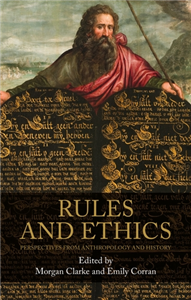
This book investigates the pronounced enthusiasm that many traditions display for codes of ethics characterised by a multitude of rules. Recent anthropological interest in ethics and historical explorations of 'self-fashioning' have led to extensive study of the virtuous self, but existing scholarship tends to pass over the kind of morality that involves legalistic reasoning. Rules and ethics corrects that omission by demonstrating the importance of rules in everyday moral life in a variety of contexts. In a nutshell, it argues that legalistic moral rules are not necessarily an obstruction to a rounded ethical self, but can be an integral part of it. An extended introduction first sets out the theoretical basis for studies of ethical systems that are characterised by detailed rules. This is followed by a series of empirical studies of rule-oriented moral traditions in a comparative perspective.



