
House of Anansi Press
Livres Canada Books
View Rights Portal

MMC EDIZIONI is a publishing house based in Rome.Born in 2001 as a generalist, along the time it has specialized almost exclusively in non-fiction, dedicated in particular (but not only) to the city of Rome.The main series, called "A walk with history" offers an alternative vision of the city through the historical reconnaissance and analysis of some of its urban furnishings that are not taken into consideration such as small fountains, clocks, inscriptions, sacred shrines, plaques. This series stands out for a particular graphic style and for the abundance of photographs, specially made for these books.Other series on Rome are instead dedicated to in-depth studies on specific historical and customs themes, or on the mysterious aspects of the city that also reveal its dark side.In the MMC catalogue are other non-fiction books on topics such as Music, Interculture, Anthropology and a series of stories for children encouraging solidarity, non-violence and respect for the environment
View Rights Portal
The book addresses what is political in critical theory and which aspects, arguments or notions of critical theory maintain political significance for the 20th and the 21st centuries. The collection of essays comprises itself of a series of clear and critical perspectives that analyze the extent to which critical theory relates political argument to modern societies and, thereby, exerts a critique of the multiple social and political phenomena of late modernity. The contributors focus on a multiplicity of universal phenomena such as globalization, multiple crises, late capitalism and the social role of the sciences, and posit some novel criticism of the contemporary social sphere, as it is situated within the wider system of global capitalism. They also present a plurivalent critique that links arguments in Marxism and Freud to all three generations of critical theory.

 Trusted Partner

This volume in the Critical Theory and Contemporary Society series explores the arguments between critical theory and epistemology in the twentieth and twenty-first centuries. Focusing on the first and second generations of critical theorists and Luhmann's systems theory, the book examines how each approaches epistemology. It opens by looking at twentieth-century epistemology, particularly the concept of lifeworld (Lebenswelt). It then moves on to discuss structuralism, poststructuralism, critical realism, the epistemological problematics of Foucault's writings and the dialectics of systems theory. This unique work takes a comparative look at structuralism and post-structuralism's epistemological theory with special reference to scientific reason. It also investigates Luhmann's works in epistemology. The aim is to explore whether the focal point for epistemology and the sciences remain that social and political interests actually form a concrete point of concern for the sciences as well.
Trusted Partner

 Trusted Partner
Trusted Partner
Trusted Partner
Trusted Partner
Trusted Partner

 Trusted Partner
Trusted Partner
Trusted Partner

 Trusted Partner
Trusted Partner
Trusted Partner
Trusted Partner
Trusted Partner
Trusted Partner
Trusted Partner
Trusted Partner
Trusted Partner
Trusted Partner
Trusted Partner

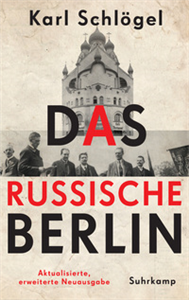
Fast eine halbe Million russischer Flüchtlinge nahm Berlin Anfang der 1920er Jahre auf. Die Stadt war in der Zwischenkriegszeit nicht nur die »Stiefmutter der russischen Städte«, sondern auch heimliches Zentrum der Weltrevolution. Hier trafen die totalitären Bewegungen aufeinander, die das Schicksal Europas im »Zeitalter der Extreme« besiegelten. Karl Schlögel spürt die große Geschichte in der kleinen auf, er folgt den dramatis personae und rekonstruiert die Netzwerke, in denen sie sich bewegen. Die Welt der Bahnhöfe und die der Salons im Tiergartenviertel, die Dichter des Silbernen Zeitalters und die Agitkünstler der Sowjetmacht, der Empfang in der sowjetischen Botschaft und Nabokovs Beobachtungen zum Aufstieg der Nazis, die Stadtwahrnehmung der Taxifahrer und der Skandal um die »Zarentochter Anastasia«. In seiner Darstellung spielen Kursbücher und Adressverzeichnisse eine Rolle, Cafés und Cabarets, das Zeremoniell der Diplomatie und die Praktiken des Untergrundkampfes, die polyglotte Welt der Komintern-Funktionäre und die Karten der Geopolitiker. Das Russische Berlin ist kein romantischer Ort, sondern Schauplatz einer Epoche, die Nachkrieg und Vorkrieg in einem war. Seit der Entfremdung zwischen Russland und der Europäischen Union ist auch das hochvernetzte »Russkij Berlin« der Gegenwart politisch gespalten. Der doppelte Blick auf das einstige und heutige russische Berlin erweist sich als unerwartet aktuell und produktiv.





