Your Search Results

      • Smith-Obolensky Media

        Smith-Obolensky Media is an international media boutique featuring the work by award-winning author Ivan Obolensky. His gothic mystery, Eye of the Moon, sold over ten thousand copies and the sequel is well underway for release next year. The Latin American Spanish literary translation has been accepted into the Librería Nacional chain, the largest in Colombia, for a thousand paperbacks to be sold in their stores (including those in three international airports).   We are magicmakers. How many of us have changed from a simple line we once read, or a film we saw at a crossroads moment? The art of storytelling, in all its facets, is something we celebrate.   In this spirit, we accept projects on a limited basis and focus on one author at a time, so we can fully present their works.

        View Rights Portal
      • Andrew Nurnberg Associates Ltd.

        International literary agency with a distinguished list of fiction, non-fiction and children's authors, specializing in foreign rights.

        View Rights Portal
      • Trusted Partner
        Humanities & Social Sciences
        December 2025

        Bulletin of the John Rylands Library 101/2

        Imaging Heritage Science Initiatives at The John Rylands Research Institute and Library

        by Stefan Hanß, James Robinson

        The John Rylands Library houses one of the finest collections of rare books, manuscripts and archives in the world. The collections span five millennia, have a global reach and cover a wide range of subjects, including art and archaeology; economic, social, political, religious and military history; literature, drama and music; science and medicine; theology and philosophy; travel and exploration. For over a century, the Bulletin of the John Rylands Library has published research that complements the Library's special collections. An electronic edition of this issue is freely available under a Creative Commons (CC BY-NC-ND) licence.

      • Trusted Partner
        Humanities & Social Sciences
        March 2017

        The Arctic in the British imagination 1818–1914

        by Andrew Thompson, John M. MacKenzie, Rob David

        The Arctic region has been the subject of much popular writing. This book considers nineteenth-century representations of the Arctic, and draws upon an extensive range of evidence that will allow the 'widest connections' to emerge from a 'cross-disciplinary analysis' using different methodologies and subject matter. It positions the Arctic alongside more thoroughly investigated theatres of Victorian enterprise. In the nineteenth century, most images were in the form of paintings, travel narratives, lectures given by the explorers themselves and photographs. The book explores key themes in Arctic images which impacted on subsequent representations through text, painting and photography. For much of the nineteenth century, national and regional geographical societies promoted exploration, and rewarded heroic endeavor. The book discusses images of the Arctic which originated in the activities of the geographical societies. The Times provided very low-key reporting of Arctic expeditions, as evidenced by its coverage of the missions of Sir John Franklin and James Clark Ross. However, the illustrated weekly became one of the main sources of popular representations of the Arctic. The book looks at the exhibitions of Arctic peoples, Arctic exploration and Arctic fauna in Britain. Late nineteenth-century exhibitions which featured the Arctic were essentially nostalgic in tone. The Golliwogg's Polar Adventures, published in 1900, drew on adult representations of the Arctic and will have confirmed and reinforced children's perceptions of the region. Text books, board games and novels helped to keep the subject alive among the young.

      • Trusted Partner
        Literature & Literary Studies
        June 2017

        Victorian demons

        Medicine, masculinity, and the Gothic at the fin-de-siècle

        by Andrew Smith

        Victorian demons provides the first extensive exploration of largely middle-class masculinities in crisis at the fin de siècle. It analyses how ostensibly controlling models of masculinity became demonised in a variety of literary and medical contexts, revealing the period to be much more ideologically complex than has hitherto been understood, and makes a significant contribution to Gothic scholarship. Andrew Smith demonstrates how a Gothic language of monstrosity, drawn from narratives such as 'The Strange Case of Dr Jekyll and Mr Hyde' and 'Dracula', increasingly influenced a range of medical and cultural contexts, destabilising these apparently dominant masculine scripts. He provides a coherent analysis of a range of examples relating to masculinity drawn from literary, medical, legal and sociological contexts, including Joseph Merrick ('The Elephant Man'), the Whitechapel murders of 1888, Sherlock Holmes's London, the writings and trials of Oscar Wilde, theories of degeneration and medical textbooks on syphilis.

      • Trusted Partner
        Humanities & Social Sciences
        December 2024

        Bulletin of the John Rylands Library 100/2

        Higher Learning and Civic Cultures of Knowledge: Manchester 1824–2024

        by Stuart Jones

        The John Rylands Library houses one of the finest collections of rare books, manuscripts and archives in the world. The collections span five millennia, have a global reach and cover a wide range of subjects, including art and archaeology; economic, social, political, religious and military history; literature, drama and music; science and medicine; theology and philosophy; travel and exploration. For over a century, the Bulletin of the John Rylands Library has published research that complements the Library's special collections.

      • Trusted Partner
        Humanities & Social Sciences
        January 2017

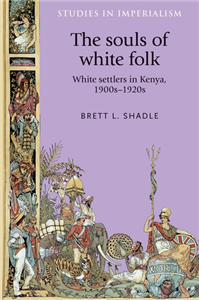
        The souls of white folk

        White settlers in Kenya, 1900s–1920s

        by Brett Shadle, Andrew Thompson, John M. MacKenzie

        Kenya's white settlers have been alternately celebrated and condemned, painted as romantic pioneers or hedonistic bed-hoppers or crude racists. The souls of white folk examines settlers not as caricatures, but as people inhabiting a unique historical moment. It takes seriously - though not uncritically - what settlers said, how they viewed themselves and their world. It argues that the settler soul was composed of a series of interlaced ideas: settlers equated civilisation with a (hard to define) whiteness; they were emotionally enriched through claims to paternalism and trusteeship over Africans; they felt themselves constantly threatened by Africans, by the state, and by the moral failures of other settlers; and they daily enacted their claims to supremacy through rituals of prestige, deference, humiliation and violence. The souls of white folk will appeal to those interested in the histories of Africa, colonialism, and race, and can be appreciated by scholars and students alike.

      • Trusted Partner
        Humanities & Social Sciences
        June 2025

        Bulletin of the John Rylands Library 101/1

        by Fred Schurink, Rachel Winchcombe, Huw Twiston Davies

        The John Rylands Library houses one of the finest collections of rare books, manuscripts and archives in the world. The collections span five millennia, have a global reach and cover a wide range of subjects, including art and archaeology; economic, social, political, religious and military history; literature, drama and music; science and medicine; theology and philosophy; travel and exploration. For over a century, the Bulletin of the John Rylands Library has published research that complements the Library's special collections. An electronic edition of this issue is freely available under a Creative Commons (CC BY-NC-ND) licence.

      • Trusted Partner
        20th century history: c 1900 to c 2000
        December 2016

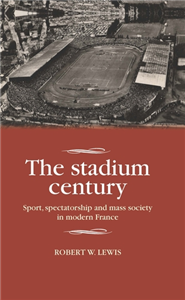
        The stadium century

        Sport, spectatorship and mass society in modern France

        by Robert W. Lewis. Series edited by Maire Cross, David Hopkin

        The stadium century traces the history of stadia and mass spectatorship in modern France from the vélodromes of the late nineteenth century to the construction of the Stade de France before the 1998 soccer World Cup. As the book demonstrates, the stadium was at the centre of debates over public health and urban development and proved to be a key space for mobilising the urban crowd for political rallies and spectator sporting events alike. After 1945, the transformed French stadium constituted part of the process of postwar modernisation but also was increasingly connected to global transformations to the spaces and practices of sport. Drawing from a wide range of sources, the stadium century links the histories of French urbanism, mass politics and sport through the stadium in an innovative work that will appeal to historians, students of French history and the history of sport, and general readers alike.

      • Trusted Partner
        Humanities & Social Sciences
        February 2026

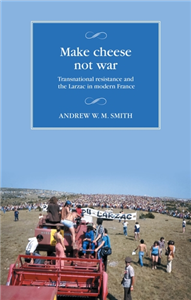
        Make cheese not war

        Transnational resistance and the Larzac in modern France

        by Andrew W. M. Smith

        In 1971, the French government announced a massive extension of its military base on the Larzac plateau in southern France. Land was to be expropriated from 107 farms around the small town of La Cavalerie. Limited resistance was expected, but what happened next exceeded all expectations. Local sheep farmers set up protest camps and occupied the land. They soon attracted an astonishing level of support, pioneering a form of regional radicalism with global implications. Drawing out the international dimensions of the protest, Make cheese not war explores a transnational resistance movement in the 1970s that challenged dominant visions of modernity and became a wellspring of radical alternatives. Exploring previously unconsulted archives in France and elsewhere, the book offers an in-depth analysis of the decade-long peasant movement and its aftermath. Repositioning the Larzac struggle within a wider network of French and international solidarities, from the US to the UK, Germany, Burkina Faso, New Caledonia and Japan, the book retraces political networks of pacifist activism, as well as environmental movements and anti-nuclear protest. It shows how this French peasant campaign became both a platform and a model for popular engagement.

      • Trusted Partner
      • Trusted Partner
        Humanities & Social Sciences
        December 2016

        The stadium century

        by Robert W. Lewis, Maire Cross, David Hopkin

      • Trusted Partner
        Literature & Literary Studies
        April 2026

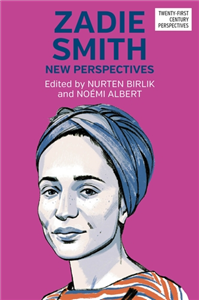
        Zadie Smith

        New perspectives

        by Nurten Birlik, Noémi Albert

        Zadie Smith's fiction reimagines subjectivity, relationality, and the conditions of contemporary life. This book offers a timely reassessment of her work, addressing identity, urban experience, and the category of the human. Moving beyond postcolonial and multiculturalist readings, it brings psychoanalytic, historical, symptomatic, and cultural materialist perspectives to bear across her novels, stories, essays, and plays. The collection explores how Smith's characters, shaped by diverse backgrounds and settings, challenge fixed ideas of Britishness and personhood. It argues that her writing opens up a new ontological space-defined by fluid identities, shifting subjectivities, and evolving forms of relationality. By reconsidering both the human and the spatial in Smith's work, the book makes a valuable contribution to contemporary literary criticism and to current thinking on narrative, identity, and urban life.

      • Trusted Partner
        Literature & Literary Studies
        December 2023

        Bulletin of the John Rylands Library 99/2

        by Stephen Mossman, Cordelia Warr

        The John Rylands Library houses one of the finest collections of rare books, manuscripts and archives in the world. The collections span five millennia and cover a wide range of subjects, including art and archaeology; economic, social, political, religious and military history; literature, drama and music; science and medicine; theology and philosophy; travel and exploration. For over a century, the Bulletin of the John Rylands Library has published research that complements the Library's special collections. The editors invite the submission of articles in these fields and welcome discussion of in-progress projects.

      • Trusted Partner
        Literature & Literary Studies
        June 2022

        Bulletin of the John Rylands Library 98/1

        The Artist of the Future Age: William Blake, Neo-Romanticism, Counterculture and Now

        by Douglas Field

        This special issue of the Bulletin of the John Rylands Library is devoted to William Blake. It explores the British and European reception of Blake's work from the late nineteenth century to the present day, with a particular focus on the counterculture. Opening with two articles by the late Michael Horovitz, an important figure in the 'Blake Renaissance' of the 1960s, the issue goes on to investigate the ideological struggle over Blake in the early part of the twentieth century, with particular reference to W. B. Yeats. This is followed by articles on the artistic avant-garde and underground of the 1960s and on Blake's significance for science fiction authors of the 1970s. The issue closes with an article on the contemporary Belgian art collective maelstrÖm reEvolution.

      • Trusted Partner
        Humanities & Social Sciences
        December 2021

        Bulletin of the John Rylands Library 97/2

        by Stephen Mossman, Cordelia Warr

        The John Rylands Library houses one of the finest collections of rare books, manuscripts and archives in the world. The collections span five millennia and cover a wide range of subjects, including art and archaeology; economic, social, political, religious and military history; literature, drama and music; science and medicine; theology and philosophy; travel and exploration. For over a century, the Bulletin of the John Rylands Library has published research that complements the Library's special collections. The editors invite the submission of articles in these fields and welcome discussion of in-progress projects.

      • Trusted Partner
        Humanities & Social Sciences
        January 2012

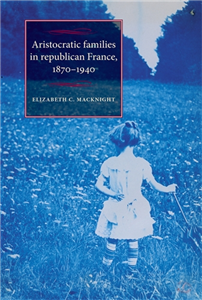
        Aristocratic families in republican France, 1870–1940

        by Maire Cross, Elizabeth C. Macknight, David Hopkin

        This is a study of the daily life, concerns, and dynamics of aristocratic families in the France of the Third Republic. Elizabeth Macknight draws on a vast range of material from private archives to contest assumptions about the irrelevancy of the nobility under the republican regime. Within a challenging political and economic environment nobles were determined to protect their interests and conserve the integrity of the aristocratic way of life. The convictions that underpinned nobles' responses to government initiatives emerge from the sources with freshness and clarity. Macknight interweaves male and female perspectives to provide a very full account of familial activities and decision-making with attention to all stages of the human lifecycle. Nobles' experiences of parenting and grandparenting, sibling and cousin relations, marriage, property negotiations, and interaction with servants are brought to light in a vivid and engaging narrative. ;

      • Trusted Partner
        Humanities & Social Sciences
        October 2024

        Bulletin of the John Rylands Library 100/1

        by Fred Schurink, Rachel Winchcombe

        The John Rylands Library houses one of the finest collections of rare books, manuscripts and archives in the world. The collections span five millennia, have a global reach and cover a wide range of subjects, including art and archaeology; economic, social, political, religious and military history; literature, drama and music; science and medicine; theology and philosophy; travel and exploration. For over a century, the Bulletin of the John Rylands Library has published research that complements the Library's special collections.

      • Trusted Partner
        Biography & True Stories
        May 2026

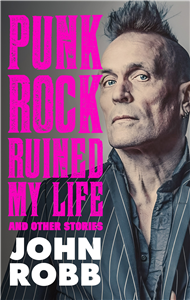
        Punk rock ruined my life

        And other stories

        by John Robb

        The irresistible story of a one-man cultural phenomenon. Minister for the Counterculture, Mancunian mainstay and alternative national treasure John Robb has lived a life in music. In this book he charts his adventures on the cultural frontline, chronicling the making of a DIY icon. Robb's quest began in his hometown of Blackpool - where punk was a battle against the odds - and went international when he toured the world with his band. The first person to interview Nirvana, he also discovered The Stone Roses for weekly newspaper Sounds and did early interviews with The Jesus and Mary Chain and The Manics, before moving on to legends such as Mark E. Smith, Nick Cave and Patti Smith. Along the way, he became an on-screen commentator and author of bestselling books. Robb's memoir tells of deep friendships with figures from Poly Styrene to Chris Packham. Packed with riotous stories, it provides an alternative account of British musical and cultural history and a triumphant blueprint for a punk rock life.

      • Trusted Partner
        Biography & True Stories
        May 2025

        Mrs Dalloway

        Biography of a novel

        by Mark Hussey

        A compelling biography of one of the most celebrated novels in the English language. The fourth and best-known of Virginia Woolf's novels, Mrs Dalloway is a modernist masterpiece that has remained popular since its publication in 1925. Its dual narratives follow a day in the life of wealthy housewife Clarissa Dalloway and shell-shocked war veteran Septimus Warren Smith, capturing their inner worlds with a vividness that has rarely been equalled. Mrs Dalloway: Biography of a novel offers new readers a lively introduction to this enduring classic, while providing Woolf lovers with a wealth of information about the novel's writing, publication and reception. It follows Woolf's process from the first stirrings in her diary through her struggles to create what was quickly recognised as a major advance in prose fiction. It then traces the novel's remarkable legacy to the present day. Woolf wrote in her diary that she wanted her novel 'to give life & death, sanity & insanity. to criticise the social system, & to show it at work, at its most intense.' Mrs Dalloway: Biography of a novel reveals how she achieved this ambition, creating a book that will be read by generations to come.

      Subscribe to our

      newsletter