
Armin Lear Press
Armin Lear Press is home to award-winning editorial and design talent.
View Rights Portal
Armin Lear Press is home to award-winning editorial and design talent.
View Rights Portal
Learnetic is an innovative educational digital publisher, content developer and eLearning technology provider. We are a technology-based company with over 20 years of experience operating in international educational publishing business. We offer a complete suite of advanced software applications supporting all stages of ePublishing, providing our partners with professional Authoring Tools, eLearning Platforms and ready-made interactive learning content.
View Rights Portal
This updated and expanded analysis of King Lear in performance includes new chapters on the television version of the Royal National Theatre production directed by Richard Eyre and starring Ian Holm; and on Akira Kurosawa's 'Ran'. Earlier chapters provide close, detailed analyses of the stage, film and television interpretations of John Gielgud, Harley Granville Barker, Paul Scofield, Peter Brook, Peter Ustinov, Michael Gambon, Adrian Noble, Grigori Kozintsev, Michael Hordern, Jonathan Miller, Laurence Olivier and Michael Elliott. By examining such issues as the playing of Lear, the staging of the storm and the battle, and the choice of historical period, this book shows how interpretation and performance are bound together, and how the play is transformed through different historical and political contexts. This will be essential reading for students in English, drama or film at any level, theatregoers, and anyone involved in productions of the play.

Hilde Spiel in der Weltwoche: »Mit seinem ›Lear‹ ist Bond an die Seite Becketts getreten: sagt dieser uns letzte Wahrheiten über die kosmische Situation des Menschen, so rührt Bond an die sozialen Wurzeln unserer Existenz.«
 Trusted Partner

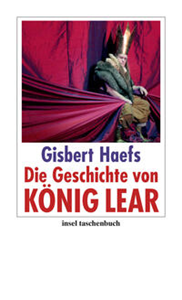
Gisbert Haefs hat die Geschichte von König Lear neu in Prosa übertragen: König Lear will abdanken und das Reich unter seinen Töchtern aufteilen: Wer ihn am meisten liebt, soll am meisten bekommen. Die beiden älteren, Goneril und Regan, bekunden wortreich ihre Liebe, während die jüngste, Cordelia, schweigt, weil Sprache ihre Gefühle nicht ausdrücken kann. Lear erkennt die wahre Liebe seiner jüngsten Tochter nicht, Eitelkeit und Machtverliebtheit machen ihn blind, so daß er sein Reich den beiden älteren zuspricht, die Jüngste aber enterbt. Doch schon bald muß er erfahren, wie sehr er sich getäuscht hat. Goneril und Regan, die ihrem Vater Schutz und Unterhalt versprochen haben, verstoßen ihn bald. Begleitet von einem Getreuen und einem Narren irrt Lear durchs wüste Land und verfällt dem Wahnsinn.
Trusted Partner

Hans Magnus Enzensberger wurde 1929 in Kaufbeuren geboren. Als Lyriker, Essayist, Biograph, Herausgeber und Übersetzer ist er einer der einflussreichsten und weltweit bekanntesten deutschen Intellektuellen.
Trusted Partner
 Trusted Partner
In dieser Studie wird der Versuch einer Reaktualisierung des klassischen Begriffs der Verdinglichung unternommen, dessen Bedeutungsgehalt bei näherer Betrachtung erheblich verschwimmt. Axel Honneth schlägt in Rückgriff auf Lukács, Heidegger und Deweys einen anerkennungstheoretischen Begriff der Verdinglichung vor, der sich auch gesellschaftstheoretisch fruchtbar machen lässt. In ihren luziden Kommentaren diskutieren Judith Butler, Raymond Geuss und Jonathan Lear diesen Vorschlag.
Trusted Partner

In this accessible and sophisticated exploration of the nature and workings of social and political power, Haugaard examines the interrelation between domination and empowerment. Building upon the perspectives of Steven Lukes, Michel Foucault, Amy Allen, Hannah Arendt, Anthony Giddens, Pierre Bourdieu and others, he offers a clear theoretical framework, delineating power in four interrelated dimensions. The first and second dimensions of power entail two different types of social conflict. The third dimension concerns tacit knowledge, uses of truth and reification. Drawing upon genealogical theory and accounts of slavery as social death, the fourth dimension of power concerns the power to create social subjects. The book concludes with an original normative pragmatist power-based account of democracy. Offering lucid and entertaining illustrations of complex theoretical perspectives, this book is essential reading for scholars and activists.
Trusted Partner
 Trusted Partner
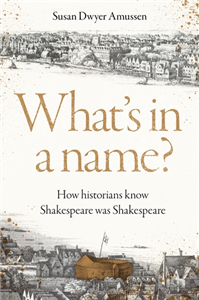
A compelling tour of Shakespeare's England that makes a powerful contribution to the 'authorship question'. How do we know Shakespeare was Shakespeare? Could a glover's son who left school at fifteen really be the author behind such masterpieces as Hamlet, King Lear and The Tempest? Yes! says historian Susan Amussen. She transports readers back to early modern England, to travel the path that carried William Shakespeare from humble origins in Stratford to literary greatness on the London stage. This was a society undergoing rapid change. Grammar schools made education in Latin and Greek available to commoners, while touring players brought the latest dramatic productions to the masses. And in London, a metropolis filled with European visitors, ordinary people had the opportunity to see courtly life up close. No serious historian doubts that Shakespeare was the author of the plays that bear his name. Susan Amussen shares what they know: that Shakespeare's England was a complex and cosmopolitan place, with everything a talented young playwright needed to develop his craft and furnish his imagination.
Trusted Partner

This book examines the links between major contemporary public sector reforms and neoliberal thinking. The key contribution of the book is to enhance our understanding of contemporary neoliberalism as it plays out in the public administration and to provide a critical analysis of generally overlooked aspects of administrative power. The book examines the quest for accountability, credibility and evidence in the public sector. It asks whether this quest may be understood in terms of neoliberal thinking and, if so, how? The book makes the argument that while current administrative reforms are informed by several distinct political rationalities, they evolve above all around a particular form of neoliberalism: constructivist neoliberalism. The book analyses the dangers of the kinds of administrative power seeking to invoke the self-steering capacities of society and administration itself.
Trusted Partner
Trusted Partner
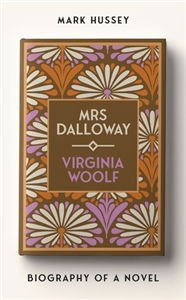
A compelling biography of one of the most celebrated novels in the English language. The fourth and best-known of Virginia Woolf's novels, Mrs Dalloway is a modernist masterpiece that has remained popular since its publication in 1925. Its dual narratives follow a day in the life of wealthy housewife Clarissa Dalloway and shell-shocked war veteran Septimus Warren Smith, capturing their inner worlds with a vividness that has rarely been equalled. Mrs Dalloway: Biography of a novel offers new readers a lively introduction to this enduring classic, while providing Woolf lovers with a wealth of information about the novel's writing, publication and reception. It follows Woolf's process from the first stirrings in her diary through her struggles to create what was quickly recognised as a major advance in prose fiction. It then traces the novel's remarkable legacy to the present day. Woolf wrote in her diary that she wanted her novel 'to give life & death, sanity & insanity. to criticise the social system, & to show it at work, at its most intense.' Mrs Dalloway: Biography of a novel reveals how she achieved this ambition, creating a book that will be read by generations to come.
Trusted Partner
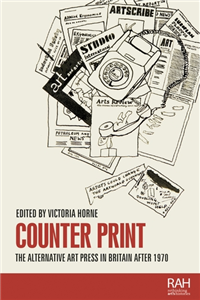
The history of contemporary art is also a history of its newsletters, manifestos, magazines, pamphlets, and journals. Those periodical publications do not simply communicate or record ideas but have worked in exciting ways to shape art's practices, histories and communities. As a new generation of artists, activists and scholars seek to uncover the histories of alternative publishing and artistic networks, this book gathers original archival discoveries while offering methodologies for studying and thinking with those artefacts. As the first essay collection to focus on the periodical art press and the ways we study it, Counter print offers readers an alternative route into the past fifty years of contemporary art, one that is defiantly collaborative, border crossing and disruptive.
Trusted Partner

How and why did the Nazis seize power in Germany? Nearly seventy years on, the question remains heated and important discoveries continue to challenge long standing assumptions. Beginmning with an overview of the historical context within which Nazism grew, looking at the foreign relations, politics and society of Weimar and in particular at the role of the elites in the rise of Nazism. The book questions the anatomy of Nazism itself: What lent Nazi ideology its coherence and credibility? What distinguished the Nazi's programme from their competitors' and how did they project it so effectively? How was Hitler able to put together and fund an organisation so quickly and effectively that it could launch a sustained assault on Weimar? Who supported the Nazis and what were their motives? Where, precisely, does Nazism belong in the history of Europe?. Since the publication of the first edition, important new works have appeared and this new scholarship has been incorporated into the text. ;
Trusted Partner
 Trusted Partner
Trusted Partner
Trusted Partner

This book is about power in welfare encounters. Present-day citizens are no longer the passive clients of the bureaucracy and welfare workers are no longer automatically the powerful party of the encounter. Instead, citizens are expected to engage in active, responsible and coproducing relationships with welfare workers. However, other factors impact these interactions; factors which often pull in different directions. Welfare encounters are thus influenced by bureaucratic principles and market values as well. Consequently, this book engages with both Weberian (bureaucracy) and Foucauldian (market values/NPM) studies when investigating the powerful welfare encounter. The book is targeted Academics, post-graduates, and undergraduates within sociology, anthropology and political science.
Trusted Partner
The labour movement in Lebanon: Power on hold narrates the history of the Lebanese labour movement from the early twentieth century to today. Bou Khater demonstrates that trade unionism in the country has largely been a failure, for reasons including state interference, tactical co-optation, and the strategic use of sectarianism by an oligarchic elite, together with the structural weakness of a service-based laissez-faire economy. Drawing on a vast body of Arabic-language primary sources and difficult-to-access archives, the book's conclusions are significant not only for trade unionism, but also for new forms of workers' organisations and social movements in Lebanon and beyond. The Lebanese case study presented here holds significant implications for the wider Arab world and for comparative studies of labour. This authoritative history of the labour movement in Lebanon is vital reading for scholars of trade unionism, Lebanese politics, and political economy.
Trusted Partner
 Trusted Partner



