
Your Search Results
-

-

Storymoja Publishers
Storymoja Publishers, based in Nairobi with branches in Uganda and Rwanda, has a 15-year legacy of promoting African literature and a vision of putting "a book in every hand".
View Rights Portal
-
Promoted Content

 The ArtsMarch 2006
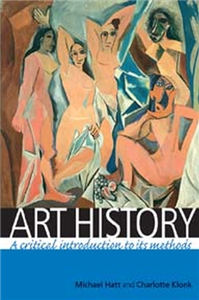
Art history
A critical introduction to its methods
by Michael Hatt, Charlotte Klonk
Art History: A critical introduction to its methods provides a lively and stimulating introduction to methodological debates within art history. Offering a lucid account of approaches from Hegel to post-colonialism, the book provides a sense of art history's own history as a discipline from its emergence in the late-eighteenth century to contemporary debates. By explaining the underlying philosophical and political assumptions behind each method, along with clear examples of how these are brought to bear on visual and historical analysis, the authors show that an adherence to a certain method is, in effect, a commitment to a set of beliefs and values. The book makes a strong case for the vitality of the discipline and its methodological centrality to new fields such as visual culture. This book will be of enormous value to undergraduate and graduate students, and also makes its own contributions to ongoing scholarly debates about theory and method. ;
-
Promoted Content
-

 The ArtsMarch 1905
Concerning the Spiritual in Art
by Wassily Kandinsky
A pioneering work in the movement to free art from its traditional bonds to material reality, this book is one of the most important documents in the history of modern art. Written by the famous nonobjective painter Wassily Kandinsky (1866–1944), it explains Kandinsky's own theory of painting and crystallizes the ideas that were influencing many other modern artists of the period. Along with his own groundbreaking paintings, this book had a tremendous impact on the development of modern art. Kandinsky's ideas are presented in two parts. The first part, called "About General Aesthetic," issues a call for a spiritual revolution in painting that will let artists express their own inner lives in abstract, non-material terms. Just as musicians do not depend upon the material world for their music, so artists should not have to depend upon the material world for their art. In the second part, "About Painting," Kandinsky discusses the psychology of colors, the language of form and color, and the responsibilities of the artist. An Introduction by the translator, Michael T. H. Sadler, offers additional explanation of Kandinsky's art and theories, while a new Preface by Richard Stratton discusses Kandinsky's career as a whole and the impact of the book. Making the book even more valuable are nine woodcuts by Kandinsky himself that appear at the chapter headings. This English translation of Über das Geistige in der Kunst was a significant contribution to the understanding of nonobjectivism in art. It continues to be a stimulating and necessary reading experience for every artist, art student, and art patron concerned with the direction of 20th-century painting.
-
 Trusted Partner

 September 2016
Leben ist keine Art, mit einem Tier umzugehen
by Emma Braslavsky
»Eine gute Geschichte braucht ein Opfer. Eines am Anfang und eines am Ende.« Bessere Menschen. Falsche Tiere. Aussteiger im Paradies. Die einen wollen die Natur retten, den Planeten, die Menschheit. Die anderen nur sich selbst: vor Spielschulden, Ehekrächen, Einsamkeit. In »Leben ist keine Art mit einem Tier umzugehen« erzählt Emma Braslavsky ein großes, packendes Abenteuer – über Fluch und Segen des Menschseins, über unsere Suche nach Erkenntnis und Wahrhaftigkeit. Und nie weiß man, ob man aus Verzweiflung lacht oder vor Glück.
-
Trusted Partner
 The ArtsFebruary 2022
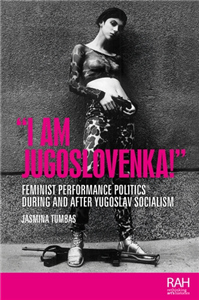
"I am Jugoslovenka!"
Feminist performance politics during and after Yugoslav Socialism
by Jasmina Tumbas, Amelia Jones, Marsha Meskimmon
"I am Jugoslovenka" argues that queer-feminist artistic and political resistance were paradoxically enabled by socialist Yugoslavia's unique history of patriarchy and women's emancipation. Spanning performance and conceptual art, video works, film and pop music, lesbian activism and press photos of female snipers in the Yugoslav wars, the book analyses feminist resistance in a range of performative actions that manifest the radical embodiment of Yugoslavia's anti-fascist, transnational and feminist legacies. It covers celebrated and lesser-known artists from the 1970s to today, including Marina Abramovic, Sanja Ivekovic, Vlasta Delimar, Tanja Ostojic, Selma Selman and Helena Janecic, along with music legends Lepa Brena and Esma Redzepova. "I am Jugoslovenka" tells a unique story of women's resistance through the intersection of feminism, socialism and nationalism in East European visual culture.
-
Trusted Partner
-
Trusted Partner
 The ArtsJune 2026
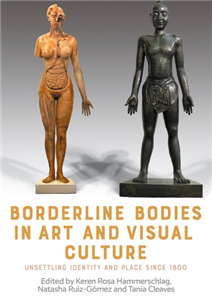
Borderline bodies in art and visual culture
Unsettling identity and place since 1800
by Keren Hammerschlag, Natasha Ruiz-Gómez, Tania Anne Cleaves
Borderline bodies offers original interpretations of visual representations of human bodies as bounded and unbounded, fortified and permeable, mobile and static-subject to borders and able to traverse and challenge them. It also takes as its focus images and objects that might be considered 'borderline' because they sit at the intersection of disciplines or sit outside accepted notions of what constitutes serious 'art.' By mapping the ways human bodies traverse borders and straddle-even dismantle-categories, this volume's essays approach afresh the relationship of bodies to traditional modes of representation, especially in art and medicine, and encourage us to think anew about how we understand the relationship between human corporeality, identity and place. Critical transdisciplinary and transnational analyses of objects and images from a range of geographies shed new light on the themes of: bodies and identity; typologies of the body; racialised bodies; 'normal' and 'abnormal' bodies; encounters between bodies; bodies in transition; bodies and mobility; and the bounded and unbounded human body. The outcome is a fresh approach to depictions of the human body produced for the purposes of artistic and medical education, aesthetic edification, and scientific and professional advancement, which disrupts assumptions about the normative human body perpetuated through Western image-making traditions.
-
Trusted Partner
-
Trusted Partner
The ArtsJune 2025
Death in modern theatre
Stages of mortality
by Adrian Curtin
Death in modern theatre offers a unique account of modern Western theatre, focusing on the ways in which dramatists and theatre-makers have explored historically informed ideas about death and dying in their work. It investigates the opportunities theatre affords to reflect on the end of life in a compelling and socially meaningful fashion. In a series of interrelated, mostly chronological, micronarratives beginning in the late nineteenth century and ending in the early twenty-first century, this book considers how and why death and dying are represented at certain historical moments using dramaturgy and aesthetics that challenge audiences' conceptions, sensibilities, and sense-making faculties. It includes a mix of well-known and lesser-known plays from an international range of dramatists and theatre-makers, and offers original interpretations through close reading and performance analysis.
-
Trusted Partner
 Humanities & Social SciencesJuly 2025
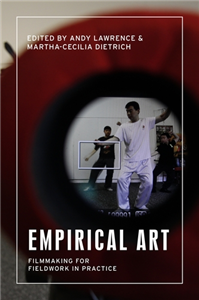
Empirical art
Filmmaking for fieldwork in practice
by Andy Lawrence, Martha-Cecilia Dietrich
Empirical art: Filmmaking for fieldwork in practice is an insightful exploration of what the craft of filmmaking brings to social science research. Providing creative avenues on how to narrate encounters, relationships, and experiences during fieldwork, this comprehensive volume offers a rich tapestry of theoretical explorations and explorative methodologies. Skilfully connecting the worlds of ethnography, art and cinema, the contributors in this book act as a compass for filmmakers and researchers venturing to use a camera and microphone to relate and narrate their research collaborations and fieldsites. Drawing from the authors' extensive experience in disciplines like social anthropology, environmental humanities, and political science, "Empirical Art" breaks down the intricate process of crafting ethnographic films that departs from the researcher's subjectivity. Covering aspects of filmmaking from conceptualisation to production and distribution, readers are equipped with a treasure trove of collaborative techniques, innovative approaches, and ethical considerations necessary to generate and examine storytelling practices in contemporary fields of study. The authors discuss the significance of the multiple roles that technologies of filmmaking play in reflecting on cultural practices, social dynamics, and (beyond) human storytelling and their transformative potentials. Whether a seasoned filmmaker, an aspiring ethnographer, or an academic seeking new dimensions for their research, Empirical Art serves as a guide to integrating visual storytelling, cinema craft and empirical research.
-
Trusted Partner
 The ArtsAugust 2010
Art, museums and touch
by Fiona Candlin, Amelia Jones, Marsha Meskimmon
Art, museums and touch examines conceptions and uses of touch within arts museums and art history. Candlin deftly weaves archival material and contemporary museology together with government policy and art practice to question the foundations of modern art history, museums as sites of visual learning, and the association of touch with female identity and sexuality. This remarkable study presents a challenging riposte to museology and art history that privileges visual experience. Candlin demonstrates that touch was, and still is, crucially important to museums and art history. At the same time she contests the recent characterisation of touch as an accessible and inclusive way of engaging with museum collections, and argues against prevalent ideas of touch as an unmediated and uncomplicated mode of learning. An original and wide-ranging enquiry, this book is essential reading for scholars and students of museum studies, art history, visual culture, disability, and for anyone interested in the cultural construction of the senses. ;
-
Trusted Partner
 Art: Financial Aspects
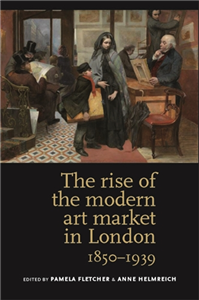
The rise of the modern art market in London
1850–1939
by Edited by Pamela Fletcher and Anne Helmreich
Now available in paperback for the first time, this study of the modern London art market establishes the central importance of London for the development of the modern retail market in fine art. Leading experts track the emergence and development of the structures and practices that have come to characterize the commercial art system, including the commercial art gallery, the professional dealer, the exhibition cycle and its accompanying rhetoric of press coverage and publicity, and an international network for the circulation of goods. This new commercial system involved a massive transformation of the experience of viewing art; of the relationships between artists, dealers, collectors, art objects and audiences; and of the very criteria of aesthetic value itself. Its history is thus a vital part of the history of modern art, and this anthology will be of interest to art historians as well as scholars of Victorian Studies, Museum Studies, and Social History.
-
Trusted Partner
 The ArtsMarch 2018
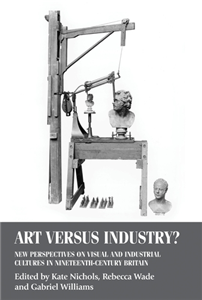
Art versus industry?
New perspectives on visual and industrial cultures in nineteenth-century Britain
by Christopher Breward, Kate Nichols, Bill Sherman, Rebecca Wade, Gabriel Williams
This book is about encounters between art and industry in nineteenth-century Britain. It looks beyond the oppositions established by later interpretations of the work of John Ruskin, William Morris and the Arts and Crafts movement to reveal surprising examples of collaboration - between artists, craftspeople, designers, inventors, curators, engineers and educators - during a crucial period in the formation of the cultural and commercial identity of Britain and its colonies. Across thirteen chapters by fourteen contributors, Art versus industry? explores such diverse subjects as the production of lace, the mechanical translation of sculpture, the display of stained glass, the use of the kaleidoscope in painting and pattern design, the emergence of domestic electric lighting and the development of art and design education and international exhibitions in India.
-
Trusted Partner
 Literature & Literary StudiesOctober 2010
Writing for Art
The aesthetics of ekphrasis
by Stephen Cheeke
Writing for art is a concise introduction to the subject of ekphrasis, and the first study to offer a useful general survey of the larger philosophical and theoretical questions arising from the encounter of literary texts and artworks. Stephen Cheeke offers close readings of poems and prose from the nineteenth and twentieth centuries alongside a generous amount of illustrations, covering a broad range of writing and theory about the relation of literary texts to the visual arts, and extending the subject of ekphrasis to include literary works on photography, as well as celebrated prose descriptions of artworks. ;
-
Trusted Partner
-
Trusted Partner
 The ArtsFebruary 2026
Visual arts and medicine in early modern Europe and beyond
A collection of essays and sources
by Robert Brennan, Fabian Jonietz, Romana Sammern
This book opens up new perspectives on the relationship between art, medicine, and science in late-medieval and early modern Europe. Looking beyond the traditional nexus of art, anatomy, and optics, the volume sheds light on a broader array of connections between artists and physicians: collaborations between painters and doctors on colour charts, handwork skills common to sculptors and surgeons, the transmission of art theory through medical texts long before the emergence of art writing itself as an independent genre, and the kinship of medical diagnosis with early modes of connoisseurship. Reconfiguring the histories of art, medicine, and science, the book also traverses conventional boundaries between physical and mental health, religious and medical modes of healing, menial and exalted forms of knowledge and labour, as well as vernacular and scientific understandings of human difference, including gender, race, and neurodiversity.
-
Trusted Partner
 The ArtsOctober 2025
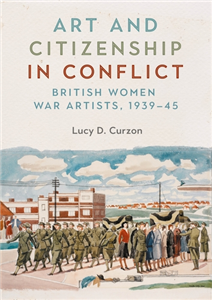
Art and citizenship in conflict
British women war artists, 1939–45
by Lucy Curzon
Art and Citizenship in Conflict examines the work of women war artists in order to highlight the complexity of citizenship and gender in Britain during the Second World War. Evelyn Dunbar, Mary Kessell, Ethel Gabain, Stella Schmolle, and Laura Knight, among others, were commissioned by the War Artists' Advisory Committee (WAAC) to document the millions of women who took up sometimes unconventional roles-in agriculture, the auxiliary services, and manufacturing, among others-to support the British war effort. Indeed, their prints, drawings, and paintings were part of a broader scheme to uphold morale and promote much-needed citizen involvement on the home front. While there is growing interest, the importance of their remit in the history of the Second World War and the quality of their artistry have nonetheless not yet secured them a significant place in scholarship. Art and Citizenship in Conflict seeks to amend this gap while also broadening approaches to the study of war itself.
-
Trusted Partner
 March 2018
»Am Strand von Bochum ist allerhand los«
Postkarten
by Jurek Becker, Christine Becker
Jurek Becker hat sich im Laufe seines Schriftstellerlebens vielen Genres gewidmet. Er schrieb Texte fürs Kabarett, verfasste Drehbücher, wurde mit seinem ersten Roman weltberühmt, veröffentlichte Erzählungen und Essays. In seinem Nachlass fanden sich für die meisten seiner Werke Entwürfe, die er in Schulhefte geschrieben hatte – zumindest für die Texte, die nach der Übersiedlung aus der DDR nach Westberlin entstanden waren. Selbst Briefe und Postkarten schrieb Becker im Konzept, wurden häufig korrigiert, wonach die Postkarte sich bei der Abschrift ein weiteres Mal zum Original wandelte. An der gesteigerten Zahl der Postkarten, die Jurek in erster Linie in seinen letzten Lebensjahren schrieb, lässt sich ablesen, dass es ihm nicht darum ging, dem Freund, der Freundin, dem Familienmitglied eine Freude zu bereiten. Um Mitteilungen des Autors über sich selbst ging es dabei nur nachrangig. In allererster Linie lag Jurek Becker daran, den Leser für Minuten zu unterhalten. Zunehmend wurde die Postkarte eine Textform, in der sich auszudrücken dem Autor Freude bereitete. War es doch eine Form, die ihm einerseits Sprachspielerei und Albernheiten erlaubte – und ihm andererseits die Möglichkeit gab, Zuwendung zu zeigen, ohne allzu viel von sich selbst preisgeben zu müssen. In chronologische Reihenfolge und in Zusammenhang gebracht, erzählen Jurek Beckers Postkarten letztendlich, ob gewollt oder nicht, viel über seine Persönlichkeit und sein Leben, geben Auskunft über Vorlieben und Leidenschaften, ganz besonders aber über die ihm sehr eigene Art, die Liebsten aufzuheitern und sie über Trennungen hinwegzutrösten.
-
Trusted Partner
-
Trusted Partner



