Your Search Results

      • Victorina Press

        Victorina Press was created by  Consuelo Rivera-Fuentes, a Chilean-British writer and academic. We are therefore rooted strongly in Chilean and British cultures. Our mission is to publish inspirational, quality books in the spirit of bibliodiversity, a concept developed by a group of Chilean independent publishers — Editores independientes de Chile. It encourages the celebration of a variety of voices from all over the world and prevents our publishing world from being a monolithic culture. Everyone has a story to tell. We want to be the ones to tell it. Consuelo’s Latin American roots play a huge role in our publishing today, with many of our books being translated into Spanish as stand alone or bilingual publications. Publishing everything from hard-hitting, inspirational memoirs, thrilling YA dystopias, gripping historical fiction, fun early learning, colourful, exciting children's books, literature for the classic shelf, and poetry to entice you, there is one book for every genre!

        View Rights Portal
      • Trusted Partner
        March 1995

        Als der Krieg ausbrach. Als der Krieg zu Ende war

        Zwei Erzählungen

        by Heinrich Böll

        Heinrich Böll wurde am 21. Dezember 1917 in Köln geboren und starb am 16. Juli 1985 in Langenbroich. Nach einer Buchhandelslehre studierte er Germanistik in Köln. Seit 1947 veröffentlichte er Erzählungen, Romane, Hörspiele und Theaterstücke als freier Schriftsteller in Köln. Im Suhrkamp Verlag sind Bölls Übersetzungen, darunter zahlreiche Theaterstücke von Bernhard Shaw, erschienen.

      • Trusted Partner
        January 1996

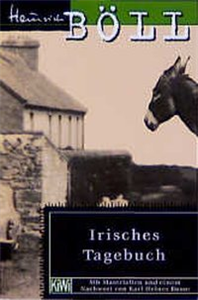
        Irisches Tagebuch

        by Böll, Heinrich

        When Heinrich Böll traveled with his wife to Ireland in the early 1950s, he was immediately enchanted by the landscape and the people. Reveling in the respite from a Europe still recovering from the war, he was captivated by what he saw as a friendly and classless society that took life at a more leisurely pace. He was delighted, for example, by the Irish saying that explained why the trains were always late: “When God made time he made plenty of it.” Böll would return again and again. In this unique entry in his oeuvre, Böll documents his eccentric travels around the Emerald Isle, detailing its charm in a way that gives his own habit of studying character and paradox, not to mention national identity, a beguiling twist. The result, here presented with an epilogue written years later with Böll’s observation of changes since his first visit, is a reflection on the essence of a place and its people that is, indeed, evergreen.

      • Trusted Partner
        June 1974

        Anstoß und Ermutigung - Gustav Heinemann - Bundespräsident 1969-1974

        Herausgegeben von Heinrich Böll, Helmut Gollwitzer, Carlo Schmid

        by Carlo Schmid, Heinrich Böll, Helmut Gollwitzer

        Heinrich Böll wurde am 21. Dezember 1917 in Köln geboren und starb am 16. Juli 1985 in Langenbroich. Nach einer Buchhandelslehre studierte er Germanistik in Köln. Seit 1947 veröffentlichte er Erzählungen, Romane, Hörspiele und Theaterstücke als freier Schriftsteller in Köln. Im Suhrkamp Verlag sind Bölls Übersetzungen, darunter zahlreiche Theaterstücke von Bernhard Shaw, erschienen.

      • Trusted Partner
        January 1991

        Die verlorene Ehre der Katharina Blum

        Mit Materialien und einem Nachwort des Autors

        by Böll, Heinrich

        A young woman inadvertently becomes the centre of the sensationalism and political agitation of a boulevard newspaper. After falling in love with a young man who is wanted by police for “radicalism”, Katharina Blum’s life is made unbearable by journalists who scrutinize and make public every aspect of her private life. The consequence of this violation of her privacy by the media is the beginning of the story: Katharina Blum has shot a journalist and another photographer has been shot by an unknown woman. This is the shocking incident that cries for interpretation and clarification. The pattern of the street ballad of a woman’s lost honour is used here for its emancipatory and aggressive potential: The woman who has been humiliated in the public opinion fights back – if necessary with violence. Böll added in a preface: “Characters and storyline are a work of fiction. Should similarities to the journalistic methods of a certain boulevard newspaper be detected, these similarities are neither intended nor accidental but inevitable.” "Böll sustains a masterly and insidious tension to the end. He is detached, angry and totally in control" (The Times) "Such is the force of Böll’s conviction, the clarity of his vision and the icy economy of his unemotive prose that within this short space he has distilled a spirit that burns into the palate the unmistakeable and lasting tang of truth" (Sunday Times) "A marvel of compression and irony" (Sunday Telegraph)

      • Trusted Partner
        January 1992

        Der Engel schwieg

        by Böll, Heinrich

        The Silent Angel, written between 1949-1950, is Böll’s first novel set in post-war Germany. It begins on May 8, 1945, the day of Germany’s capitulation, and leads us into the debris of a German city. Maybe this was the reason why the manuscript was not published back then after all. People did not want to be reminded of the misery that they had just overcome. So the manuscript was left in a drawer and became a Böll’s quarry and humus for his later works. Today the novel reads like the energetic centre of remembrance which coined Böll’s work. Böll shows the existence of man after the end of everything. A soldier, deserted and with falsified documents, returns to his bombed out home city – looking for bread, a home and for people. He finds humanity, but also the cruelness of self-interest, coated in Christian hypocrisy. Untouched by this the love story remains “clear and brittle, appropriate for the returning generation which knows that there is no such thing as home on this earth.” (Böll) This early novel remained unpublished for more than fourty years, because its subject matter, the immediate aftermath of the war, conjured up too much of what people wished to forget. The novel was only published for the first time in 1992 and became a great success. All major motives of Böll’s work were already present here – a discovery and at the same time an ideal introduction to Böll’s work.

      • Trusted Partner
        June 2025

        Salzburger Bachmann Edition

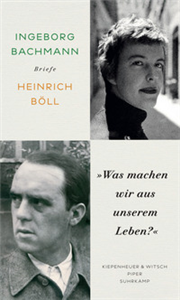
        »Was machen wir aus unserem Leben?«. Der Briefwechsel

        by Ingeborg Bachmann, Heinrich Böll, Renate Langer, Renate Langer, Hans Höller, Renate Langer

        Der bislang unbekannte Briefwechsel zweier der bedeutendsten Autoren des 20. Jahrhunderts Eine junge Lyrikerin, die 1952 erstmals bei der Gruppe 47 auftritt, und ein um neun Jahre älterer, als Autor bereits etablierter Kollege. In ihren Briefen sprechen Ingeborg Bachmann und Heinrich Böll über Politik und Literatur, Religion und Reisen und immer wieder auch über die materiellen Voraussetzungen des Schreibens: Geld und eine angemessene Behausung. Über viele Jahre hinweg lesen sie die Werke des anderen – »Bitte schick mir, was Du schreibst, gegen die Trennung und das Abgetrenntsein.« Trotz unterschiedlicher Lebensentwürfe gibt es viele Gemeinsamkeiten. Beide wünschen sich Konstanz und Geborgenheit, beide reizt zugleich eine Existenz außerhalb des eigenen Sprachraums und der Herkunftskultur: Böll zieht es nach Irland, Bachmann nach Italien. Und beide haben mit inneren Dämonen zu kämpfen. Erschöpfung, Sucht und Depression begleiten den Erfolg. Ingeborg Bachmanns und Heinrich Bölls zwei Jahrzehnte andauernder Briefwechsel bietet faszinierende Perspektiven auf das literarische Leben der ersten Nachkriegsjahrzehnte und profunde Einblicke in die künstlerische und persönliche Entwicklung zweier bedeutender Stimmen der Zeit. Vor allem aber wird deutlich: Bachmann und Böll standen einander näher, als bisher bekannt war. Das Buch ist Teil der Salzburger Bachmann Edition und wird mit zwei Schutzumschlägen ausgeliefert.

      • Trusted Partner
      • Trusted Partner
        1986

        Heinrich Böll

        Leben und Schreiben 1917-1985

        by Linder, Christian

      • Trusted Partner
        January 1995

        Heinrich Böll

        Bilder eines Lebens

        by Scheurer, Hans

      • Trusted Partner
      • Trusted Partner
      • Trusted Partner
      • Trusted Partner
      • Trusted Partner
        October 2007

        Bargfelder Ausgabe. Briefe von und an Arno Schmidt

        Band 5: Briefwechsel mit Kollegen

        by Arno Schmidt, Gregor Strick

        Arno Schmidt bemerkte einmal, er sei ein "fauler" Briefschreiber: "meine näheren Bekannten – denn ich habe deren tatsächlich – wissen das, & harren in Geduld. (Und der schönste ‹Brief›, den ein Autor versenden kann, ist & bleibt ja doch wohl das ‹Neue Buch›. –)" Diese Selbsteinschätzung paßt zwar zu dem öffentlichen Vorurteil über den "Solipsist in der Heide", ist aber nur die halbe Wahrheit, wie der vierte Band der Arno-Schmidt-Briefausgabe beweist. Die komplett dargebotenen Korrespondenzen Schmidts mit Böll, Deschner, Döblin, Edschmid, Hesse, Jahnn, Kreuder, Rühmkorf, Stefl, Steinberg und Martin Walser (nebst einer Fülle von Einzelbriefen) zeigen Schmidt als einen Autor, der aus einer selbstgewählten Randposition sehr wohl die Mechanismen des Literaturbetriebs auf seine Weise zu bedienen wußte. Der ausführliche Kommentar des Kölner Literaturwissenschaftlers Gregor Strick macht den Band zu einem Kompendium bundesrepublikanischer Literaturgeschichte, das weit über den Kreis der Schmidt-Leser hinaus Beachtung finden wird.

      • Trusted Partner
        January 1992

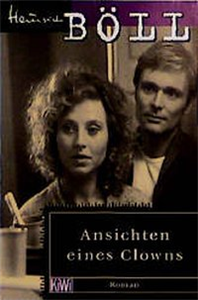
        Ansichten eines Clowns

        by Böll, Heinrich

        Acclaimed entertainer Hans Schneir collapses when his beloved Marie leaves him because he won’t marry her within the Catholic Church.The desertion triggers a searing re-examination of his life – the loss of his sister during the war, the demands of his millionaire father and the hypocrisies of his mother, who first fought to “save” Germany from the Jews, then worked for “reconciliation” afterwards.Heinrich Böll’s gripping consideration of how to overcome guilt and live up to idealism – how to find something to believe in – gives stirring evidence of why he was such an unwelcome presence in post-War German consciousness... and why he was such a necessary one.

      • Trusted Partner
        November 2011

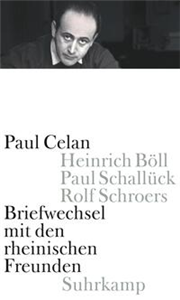
        Briefwechsel mit den rheinischen Freunden

        Heinrich Böll, Paul Schallück, Rolf Schroers

        by Paul Celan, Barbara Wiedemann

        Die Freundschaft mit den Autoren des 'Kölner Realismus': eine der intensivsten, dauerhaftesten und fruchtbarsten Beziehungen Paul Celans Es ist die Geschichte einer langen, an Briefen reichen Freundschaft von 1952 bis in die 1960er Jahre hinein: Drei Vertreter des realistischen deutschen Nachkriegsromans, die ehemaligen Wehrmachtssoldaten Böll, Schallück und Schroers, ließen sich gleich bei ihrer ersten Begegnung auf einen verfolgten Juden und Lyriker ein, der von der zeitgenössischen Kritik als Vertreter des Surrealismus und des Elfenbeinturms wahrgenommen wurde. Über manche Differenzen hinweg haben diese 'rheinischen Freunde' alles getan, um Paul Celan den Weg in die deutsche Öffentlichkeit zu ebnen: als Verlagsberater, als Rundfunkleute, als Rezensenten. Dies ist ein Buch, das es fast nicht mehr hätte geben können. Als im März 2009 das Historische Archiv der Stadt Köln einstürzte, verschwanden auch die Nachlässe von Paul Schallück und Heinrich Böll unter den Trümmern und mit ihnen die Briefe, die Paul Celan an sie geschrieben hat. Für diese Ausgabe waren die Dokumente aber bereits gesichert.

      • Trusted Partner
        March 2020

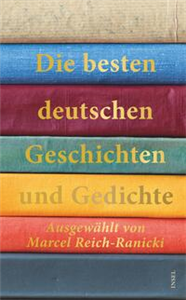
        Die besten deutschen Geschichten und Gedichte

        by Marcel Reich-Ranicki

        Zum 100. Geburtstag Marcel Reich-Ranickis vereint dieser Band erstmals die für den Literaturkritiker bedeutendsten deutschen Geschichten und Gedichte. Die Auswahl reicht vom 12. bis ins 21. Jahrhundert, vom Mittelalter über die Weimarer Klassik bis zur Gegenwart. Versammelt sind darin Texte u. a. von Goethe, Rilke, Wilhelm Hauff, Bertolt Brecht, Heinrich Böll, Paul Celan und Ingeborg Bachmann – literarische Werke, die unvergessen bleiben und noch heute leuchten wie am ersten Tag.

      • Trusted Partner
        September 2007

        Gruppenbild mit Dame

        Roman

        by Böll, Heinrich

        Cited by the Nobel Prize committee as the “crown” of Heinrich Böll’s work, the gripping story of Group Portrait with Lady unspools like a suspenseful documentary. Via a series of tense interviews, an unnamed narrator uncovers the story – past and present – of one of Böll’s most intriguing characters, the enigmatic Leni Pfeiffer, a struggling war widow. At the center of her struggle is her effort to prevent the demolition of her Cologne apartment building, a fight in which she is joined by a motley group of neighbours. Along with her illegitimate son, Lev, she becomes the nexus of a countercultural group rebelling against Germany’s dehumanizing past under the Nazis... and what looks to be an equally dehumanizing future under capitalism.

      Subscribe to our

      newsletter