
board books
for kids 1+
View Rights Portal

Singapore's largest independent publisher of fiction and non-fiction for all ages. Check out our latest catalogue here: July – December 2018 (PDF.)
View Rights Portal

From Diane Abbott to Hugo Young via Keynesianism and Thatcherism, from Major to Millbank and from New Labour to Norman Tebbitt, this book is the ultimate student reference guide to British politics. The 2nd edition has been fully updated to take account of all the changes that have taken place in British politics since 2004. With over one thousand entries, the book covers the personalities, policies and institutions that have shaped British politics, with special emphasis on developments since the beginning of the twentieth century. This is the ideal instant reference book on British politics. It provides the reader with short, authoritative explanations and definitions of key terms, institutions, offices of state, political events, processes and policies as well as biographies of well known politicians, political thinkers, movements and theorists. Any student unsure of a term, an event, the details of the life of a prominent politician, or the inner workings of an institution can turn to this book for immediate assistance. ;
 Trusted Partner

Short, yet comprehensive. Completely up to date. Great value for money textbook by two established scholars . ;
Trusted Partner

A short but comprehensive textbook for students of British politics which interprets changes over the last thirty years and analyses institutions within the context of British society and economics. ;
Trusted Partner
 Trusted Partner

 Trusted Partner
Trusted Partner
Trusted Partner
Trusted Partner
Trusted Partner
 Trusted Partner
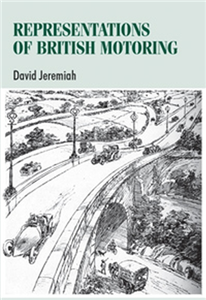
Representations of British motoring provides important new insights into the established discourses of British motoring. Based on the patterns of representation that have mediated between the trade, owners and society, particularly the myths and realities generated by the advertising campaigns and motoring journals, it identifies the landmarks of change and innovation. It is not about great images as such, although some are, but particular attention has been directed towards the creative intervention of the artist-illustrators. Part One emphasises the critical significance of the emerging concerns and aspirations of the first decade of motoring, while the two subsequent parts provide a clear understanding of how the continuity of the public debate has shaped the concepts of modern and popular motoring. The new models, motorists and motoring landscape are the central themes through which it has been possible to track the preoccupation with questions regarding speed and safety, the idea of being British, the aesthetics of the car and motoring, and the family, women and the car. As such it is a design history that redefines and extends the parameters of the history of motoring, providing an overview of the place of the motor-car and motoring in British society that is relevant to undergraduate and postgraduate studies and the motoring enthusiast. ;
Trusted Partner
Trusted Partner
 Trusted Partner

This important book provides new understandings of how the politics of memory impacts peace in societies transitioning from a violent past. It does so by developing a theoretical approach focusing on the intersection of sites, agency, narratives, and events in memory-making. Drawing on rich empirical studies of mnemonic formations in Cyprus, Bosnia and Herzegovina, Rwanda, South Africa and Cambodia, the book speaks to a broad audience. The in-depth, cross-case analysis shows that inclusivity, pluralism, and dignity in memory politics are key to the construction of a just peace. The book contributes crucial and timely knowledge about societies that grapple with the painful legacies of the past and advances the study of memory and peace.
Trusted Partner
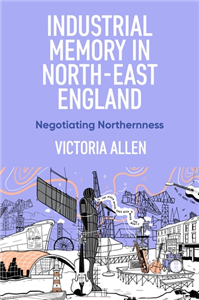
Industrial memory in North East England examines how the region's industrial myth and memory have been articulated in the renegotiation of northernness. The book offers a critical contextualisation of the concept of northernness and the English North, and an introduction to the concept of the PopCultural Portfolio, a mixed-methods approach to conjunctural analysis in cultural and memory studies. The book provides six richly illustrated case studies to demonstrate the practical application of cultural studies' expansive and inclusive understanding of texts, bringing together materials from North East football, folk, indie and exhibition culture to establish how the North East's industrial past continues to be remembered and functionalised as industrial memory. In turn, the conjunctural analysis demonstrates how industrial memory is articulated and mythologised as north(east)ernes in contemporary popular culture.
Trusted Partner
Trusted Partner
Trusted Partner
Trusted Partner
 Trusted Partner
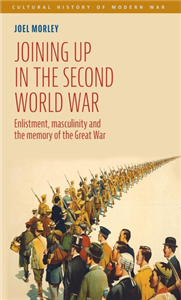
This book connects the First and Second World Wars. It uses oral histories and Mass Observation material to explore men's attitudes to Second World War enlistment and the relationship they perceived between military service and masculinity, and how these were influenced by understandings of the First World War. Locating the cultural legacy of First World War in the subjectivities of men who participated in the Second World War demonstrates the breadth of sources that informed men's understandings of the First World War in interwar Britain. Its cultural legacy was omnipresent and diverse, and informed young men's attitudes and service preferences, but it reinforced Edwardian conceptions of wartime masculinity as often as it undermined them. Two decades after the First World War ended, they remained resilient in the subjective understandings of men who grew up in the Great War's shadow.
Trusted Partner

Investigates the dynamic relationship between experiences of profound social and cultural disruption, and human memory. Critical comparisons are made across a wide variety of catastrophic experiences and memories; not just of war, but also of massacre, genocide, rebellion, famine, partition, shipwreck and fire. The book is an accessible showcase for a wide range of methodological approaches to the study of memory, including literary studies, cultural studies, participant-observation and historical studies, and uses a variety of oral, visual and written sources. Offers a diverse chronological and geographical range of catastrophic cases, from seventeenth-century England to the recent conflicts in the former Yugoslavia, from Ireland to the Indian sub-continent, from Mexico to wartime Leningrad. Well-written and accessible - a fascinating read. ;



