
Your Search Results
-

-

Left Bank Literary
Left Bank Literary is a Sydney-based literary agency specialising in quality fiction and non-fiction. Our name references the creative environment that blossomed in 'the city of light' nearly a century ago. These writers were a vital force in an era of rising conservatism and facism. We have created Left Bank Literary to provide a home for the fertile ideas of our clients and to ensure literature continues to contribute to the most important conversations of the world.
View Rights Portal
-
Promoted Content
-
Promoted Content

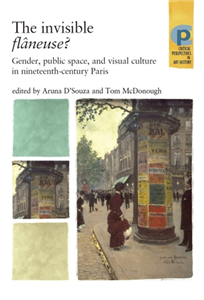 Human figures depicted in artApril 2008
The invisible flâneuse?
Gender, public space and visual culture in nineteenth century Paris
by Edited by Aruna D'Souza and Tom McDonough
This collection of essays revisits gender and urban modernity in nineteenth-century Paris in the wake of changes to the fabric of the city and social life. In rethinking the figure of the flâneur, the contributors apply the most current thinking in literature and urban studies to an examination of visual culture of the period, including painting, caricature, illustrated magazines, and posters. Using a variety of approaches, the collection re-examines the long-held belief that life in Paris was divided according to strict gender norms, with men free to roam in public space while women were restricted to the privacy of the domestic sphere. Framed by essays by Janet Wolff and Linda Nochlin - two scholars whose work has been central to the investigation of gender and representation in the nineteenth century - this collection brings together new methods of looking at visual culture with a more nuanced way of picturing city life.
-
 Trusted Partner

 October 2006
Vilnius
Eine Stadt in Europa
by Tomas Venclova, Arunas Baltenas, Claudia Sinnig
»Niemand kann behaupten, daß Vilnius ihm allein gehört. Die schier phantastische Verschmelzung von Sprachen, Religionen und nationalen Traditionen in einer Stadt, die politische Grenzen ignoriert, fiel Neuankömmlingen immer ins Auge, während ihre Bewohner meinten, daß es gar nicht anders sein könne. « Geschichte, Geographie, persönliche Erinnerung und politische Reflexion souverän miteinander verbindend, zeichnet der litauische Lyriker und Essayist ein Bild seiner Stadt, die wie kaum eine zweite für das Gelingen und Scheitern des »europäischen Traums« stehen kann.



