Andrew Nurnberg Associates Ltd.
International literary agency with a distinguished list of fiction, non-fiction and children's authors, specializing in foreign rights.
View Rights Portal
International literary agency with a distinguished list of fiction, non-fiction and children's authors, specializing in foreign rights.
View Rights Portal Trusted Partner
Trusted Partner
Trusted Partner


This book offers an accessible critical introduction to the work of Graham Swift, one of Britain's most significant contemporary authors. Through detailed readings of his novels and short stories from 'The Sweet Shop Owner' (1980) to 'The Light of Day' (2003), Daniel Lea lucidly addresses the key themes of history, loss, masculinity and ethical redemption, to present a fresh approach to Swift. This study proposes that one of the side-effects of modernity has been the destruction of traditional pathways of self and collective belief, leading to a loss of understanding between individuals about their duties to each other and to society. Swift's writing returns repeatedly to the question of what we can believe in when all the established markers of identity - family, community, gender, profession, history - have become destabilised. Lea suggests that Swift increasingly moves towards a notion of redemption through a lived ethical practice as the only means of finding solace in a world lacking a central symbolic authority. ;
Trusted Partner


Mit 14 überredete Taylor ihre Eltern, von Pennsylvania nach Nashville, in die Stadt der Country-Musik, zu ziehen. Denn darum ging es ihr: Country-Sängerin zu werden. Als sie mit 16 ihr erstes, mit Platin ausgezeichnetes Album Taylor Swift herausbrachte, kannten sehr bald alle ihren Namen. Dann wagte sie den Wechsel von Country zu Pop. Die Texte zu ihren Songs schreibt sie auch weiterhin selbst. Sie füllt die größten Stadien der Welt, und die Erde bebt, wenn die Swifties ihr zujubeln. Sie ist ein Star ohne Allüren, der es versteht, Gefühle in Worte zu fassen, die sagen: Du bist okay, so wie du bist. Little People, Big Dreams erzählt von den beeindruckenden Lebensgeschichten großer Menschen: Jede dieser Persönlichkeiten, ob Philosophin, Forscherin oder Sportler, hat Unvorstellbares erreicht. Dabei begann alles, als sie noch klein waren: mit großen Träumen.
Trusted Partner
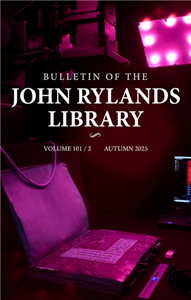
The John Rylands Library houses one of the finest collections of rare books, manuscripts and archives in the world. The collections span five millennia, have a global reach and cover a wide range of subjects, including art and archaeology; economic, social, political, religious and military history; literature, drama and music; science and medicine; theology and philosophy; travel and exploration. For over a century, the Bulletin of the John Rylands Library has published research that complements the Library's special collections. An electronic edition of this issue is freely available under a Creative Commons (CC BY-NC-ND) licence.
Trusted Partner

The Arctic region has been the subject of much popular writing. This book considers nineteenth-century representations of the Arctic, and draws upon an extensive range of evidence that will allow the 'widest connections' to emerge from a 'cross-disciplinary analysis' using different methodologies and subject matter. It positions the Arctic alongside more thoroughly investigated theatres of Victorian enterprise. In the nineteenth century, most images were in the form of paintings, travel narratives, lectures given by the explorers themselves and photographs. The book explores key themes in Arctic images which impacted on subsequent representations through text, painting and photography. For much of the nineteenth century, national and regional geographical societies promoted exploration, and rewarded heroic endeavor. The book discusses images of the Arctic which originated in the activities of the geographical societies. The Times provided very low-key reporting of Arctic expeditions, as evidenced by its coverage of the missions of Sir John Franklin and James Clark Ross. However, the illustrated weekly became one of the main sources of popular representations of the Arctic. The book looks at the exhibitions of Arctic peoples, Arctic exploration and Arctic fauna in Britain. Late nineteenth-century exhibitions which featured the Arctic were essentially nostalgic in tone. The Golliwogg's Polar Adventures, published in 1900, drew on adult representations of the Arctic and will have confirmed and reinforced children's perceptions of the region. Text books, board games and novels helped to keep the subject alive among the young.
Trusted Partner
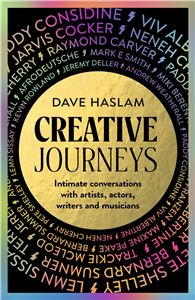
Dave Haslam presents conversations with creative trailblazers. Over forty years, DJ, writer and broadcaster Dave Haslam has interviewed some of the most fascinating figures in music, literature, film and art. Creative journeys gathers revelatory conversations with creative characters including Neneh Cherry, Maxine Peake, Lemn Sissay, Andrew Weatherall, Raymond Carver and Jeremy Deller. From politics and performance to art, fame and addiction, Haslam's interviewees speak with honesty about their creative journeys. Viv Albertine discusses 'Typical Girls' and Paddy Considine recalls Dead Man's Shoes. Jarvis Cocker goes deep into 'This is Hardcore'. Terry Hall and Miki Berenyi speak about childhood trauma. Bernard Sumner recalls the loss of Ian Curtis. Jonathan Franzen talks about torturing his characters. There's darkness but much humour too. The interviews provide fascinating stories of unorthodox, creative artists navigating negativity and personal setbacks to become celebrated cultural icons.
Trusted Partner


This book, the world's first biography of Paul Watzlawick, written by his great-niece, describes the life of this philosopher, therapist, and best-selling author. Paul Watzlawick had a talent for languages and he led an adventurous life, from his childhood in Villach to studying in Venice after the war, to analyst training under C. G. Jung in Zurich, an attempt at establishing himself in India and then in El Salvador as a therapist, and finally to the Mental Research Institute (MRI) in the United States, headed by Don D. Jackson, a venerable scientist. This marked the beginning of the second half of his life, his amazing career as a communication researcher, a pioneer of systemic therapy, a radical constructivist, and a great thinker regarding the divisions between East and West. With many letters, lectures, interviews, and statements from contemporary witnesses and family members, this book makes Paul Watzlawick accessible as a human being and as a spiritually inspired, leading 20th century thinker. It includes a variety of unpublished material from Watzlawick, and introduces a comprehensive and exciting picture of the scientist and cosmopolitan person, Paul Watzlawick. Target Group: For people interest in Paul Watzlawick, communication sciences, systemic therapy, and constructivism.
Trusted Partner
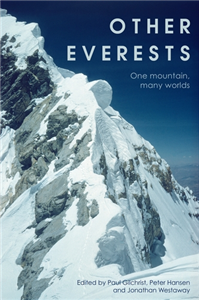
A hundred years after the tragic 1924 British Everest expedition, this collection explores the wider social and cultural history of the mountain. Mount Everest looms large in the popular imagination. Since the deaths of mountaineers George Mallory and Andrew Irvine in 1924, histories of the mountain have overwhelmingly focused on the mythologies of western male adventure and conquest. But there are many more stories waiting to be told. Other Everests brings together new voices and perspectives on the historical and cultural significance of Everest in the modern world. The book shines a light on the overlooked role of local people and high-altitude workers, while also revealing the significant contributions women have made to climbing the mountain and writing its history. It explores the depiction of Everest in a range of media and investigates how the forces of nationalism and commercialism have shaped many different 'Everests'. After years of exploitation, Indigenous people are now reclaiming Mount Everest in the twenty-first century. Other Everests re-examines the past and present of the world's highest peak, presenting an exciting vision of what Everest might become in the future.
Trusted Partner
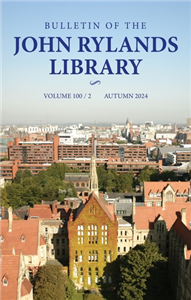
The John Rylands Library houses one of the finest collections of rare books, manuscripts and archives in the world. The collections span five millennia, have a global reach and cover a wide range of subjects, including art and archaeology; economic, social, political, religious and military history; literature, drama and music; science and medicine; theology and philosophy; travel and exploration. For over a century, the Bulletin of the John Rylands Library has published research that complements the Library's special collections.
Trusted Partner
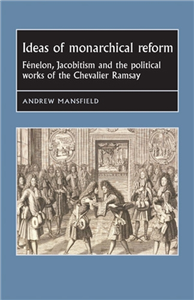
This book examines the political works of Andrew Michael Ramsay (1683-1743) within the context of early eighteenth-century British and French political thought. In the first monograph on Ramsay in English for over sixty years, the author uses Ramsay to engage in a broader evaluation of the political theory in the two countries and the exchange between them. At the beginning of the eighteenth century, Britain and France were on divergent political paths. Yet in the first three decades of that century, the growing impetus of mixed government in Britain influenced the political theory of its long-standing enemy. Shaped by experiences and ideologies of the seventeenth century, thinkers in both states exhibited a desire to produce great change by integrating past wisdom with modern knowledge.
Trusted Partner
One of Britain's foremost TV practitioners, Andrew Davies is the creator of programmes such as 'A Very Peculiar Practice', 'To Serve Them All My Days', 'Pride and Prejudice', 'Othello' and 'The Way We Live Now'. Although best known for his adaptations of the work of writers such as Jane Austen and George Eliot, he has written numerous original drama series, single plays, films, stage plays and books. This volume offers a critical appraisal of Davies's work, and assesses his contribution to British television. Cardwell also explores the conventional notions of authorship and auteurism which are challenged by Davies's work. Can we identify Davies as the author of the varied texts attributed to him? If so, does an awareness of his authorial role aid our interpretation and evaluation of those texts? How does the phenomenon of adaptation affect the issue of authorship? How important is 'the author' to television? This book will appeal to both an academic readership, and to the many people who have taken pleasure in Davies's work. ;
Trusted Partner
 Trusted Partner

A Vision of Battlements is the first novel by the writer and composer Anthony Burgess, who was born in Manchester in 1917. Set in Gibraltar during the Second World War, the book follows the fortunes of Richard Ennis, an army sergeant and incipient composer who dreams of composing great music and building a new cultural world after the end of the war. Following the example of his literary hero, James Joyce, Burgess takes the structure of his book from Virgil's Aeneid. The result is, like Joyce's Ulysses, a comic rewriting of a classical epic, whose critique of the Army and the postwar settlement is sharp and assured. The Irwell Edition is the first publication of Burgess's forgotten masterpiece since 1965. This new edition includes an introduction and notes by Andrew Biswell, author of a prize-winning biography of Anthony Burgess.
Trusted Partner
 Trusted Partner

This study of the British colonial administrator James Tod (1782-1835), who spent five years in north-western India (1818-22) collecting every conceivable type of material of historical or cultural interest on the Rajputs and the Gujaratis, gives special attention to his role as a mediator of knowledge about this little-known region of the British Empire in the early nineteenth century to British and European audiences. The book aims to illustrate that British officers did not spend all their time oppressing and inferiorising the indigenous peoples under their colonial authority, but also contributed to propagating cultural and scientific information about them, and that they did not react only negatively to the various types of human difference they encountered in the field.
Trusted Partner
The John Rylands Library houses one of the finest collections of rare books, manuscripts and archives in the world. The collections span five millennia, have a global reach and cover a wide range of subjects, including art and archaeology; economic, social, political, religious and military history; literature, drama and music; science and medicine; theology and philosophy; travel and exploration. For over a century, the Bulletin of the John Rylands Library has published research that complements the Library's special collections. An electronic edition of this issue is freely available under a Creative Commons (CC BY-NC-ND) licence.
Trusted Partner

The eleventh-century papal reform transformed western European Church and society and permanently altered the relations of Church and State in the west. The reform was inaugurated by Pope Leo IX (1048-54) and given a controversial change of direction by Pope Gregory VII (1073-85). This book contains the earliest biographies of both popes, presented here for the first time in English translation with detailed commentaries. The biographers of Leo IX were inspired by his universally acknowledged sanctity, whereas the biographers of Gregory VII wrote to defend his reputation against the hostility generated by his reforming methods and his conflict with King Henry IV. Also included is a translation of Book to a Friend, written by Bishop Bonizo of Sutri soon after the death of Gregory VII, as well as an extract from the violently anti-Gregorian polemic of Bishop Benzo of Alba (1085) and the short biography of Leo IX composed in the papal curia in the 1090s by Bishop Bruno of Segni. These fascinating narrative sources bear witness to the startling impact of the papal reform and of the 'Investiture Contest', the conflict of empire and papacy that was one of its consequences. An essential collection of translated texts for students of medieval history.
Trusted Partner