
House of Anansi Press
Livres Canada Books
View Rights Portal

Bernd Liske, born in 1956, studied mathematics in Chemnitz and is the owner of Liske information management systems. From its founding in 1998 until May 2015, Bernd Liske was a member of the main board of BITKOM, where he worked in the defense, education and knowledge management working groups. In the course of his efforts to deal with the revelations of Edward Snowden in the NSA affair, he was expelled from BITKOM in 2015. From 1998 to 2003 he was a member of the board of the Association of Organizations and Information Systems (VOI). Bernd Liske has been dealing with socio-political issues for many years. In his analyzes and concepts, he deals with social, political and economic problems in our society in order to make contributions to maintaining Germany as a business location. His book “PRISM A Lesson for our Democracy”, published in September, grew out of this. The diversity of the topics he deals with as well as the systemic principles used for their treatment can be followed on his homepage at and on his TWITTER channels @BerndLiske, @LiskeAphorismen and @LiskeZitate. He now regards his aphorisms as an open source operating system for the analysis and design of social processes and has been using them successfully for years.
View Rights Portal


Schönheit«, so heißt es bei Thomas von Aquin, »ist der Glanz der Ordnung.« Ordnung hat immer auch eine ästhetische Qualität, wie umgekehrt die Schönheit von geordneten Strukturen, von Gesetzmäßigkeiten bestimmt ist. Davon ausgehend stellt Klaus Berger die Frage, ob nicht auch die höchste Kunst, die Kunst, glücklich, und gerecht zu leben, insgesamt etwas zu tun hat mit der ästhetischen Gestaltung und Wahrnehmung der Welt. Nach einer Skizze der verschiedenen Ethik-Modelle in Geschichte und Gegenwart entwickelt Berger seine eigene Perspektive. Dabei geht es ihm weniger um die Probleme der Alltagsmoral als um grundsätzliche Fragen, deren Beantwortung jeder Ethik vorausgeht: Wie kann man notwendige Normen verankern in dem, was ein Mensch tatsächlich erlebt, denkt und tut? Kann es überhaupt allgemeingültige Regeln geben, die den ganzen Menschen in seiner Widersprüchlichkeit erfassen? Klaus Bergers Versuch einer Grundlegung der Ethik erfolgt aus dem Geist der Religion. Bergers Position ist radikal, und in diesem Sinne deutet er auch die Gebote der Bibel, die in ihrer Schärfe für die europäische Kultur noch immer wirksamer sind, als Philosophie und Theologie gelegentlich erklärt haben. Ohne Begehren und Leidenschaft ist das Gute nicht zu verwirklichen, so wie die Wahrheit der Schönheit bedarf. Klaus Berger entwirft eine nicht-normative Ethik für unsere Zeit.
 Trusted Partner

Klaus Berger wurde 1940 in Hildesheim geboren. Von 1974 bis 2006 war er Professor für das Neue Testament an der Theologischen Fakultät in Heidelberg und veröffentlichte mehr als 70 Bücher. Seit 1994 war er Familiar des Zisterzienserordens (Heiligenkreuz). Er starb am 8. Juni 2020 in Heidelberg. Christiane Nord, geboren 1943, ist Professorin für Übersetzungswissenschaften an der Fachhochschule in Magdeburg. Klaus Berger wurde 1940 in Hildesheim geboren. Von 1974 bis 2006 war er Professor für das Neue Testament an der Theologischen Fakultät in Heidelberg und veröffentlichte mehr als 70 Bücher. Seit 1994 war er Familiar des Zisterzienserordens (Heiligenkreuz). Er starb am 8. Juni 2020 in Heidelberg. Christiane Nord, geboren 1943, ist Professorin für Übersetzungswissenschaften an der Fachhochschule in Magdeburg.
Trusted Partner

Klaus Berger, geboren 1940, Dr. theol. Seit 1974 Professor für Neues Testament an der Evangelisch-theologischen Fakultät der Universität Heidelberg.
Trusted Partner


A sweet treat is tempting, but the lurking dangers should not be underestimated. However, it is just as wrong to demonise all types of sugar in general as to avoid it altogether. In this entertaining mini reference book, Reinhild Berger takes the reader on an interesting journey through the labyrinth of sugar, sugar substitutes and sweeteners and gets to the bottom of many questions in the process: How much is too much? What alternatives are there, and which are advisable? How can one select the right one from the deceptive variety in the supermarket? What is the right way to read the food labels on the packaging? What knowledge does one need to be protected against misleading advertisements? - Learn how to recognise differences between the many types of sugar - Read where dangers lie, and which sugar does us good – and in what quantity - Understand how to interpret nutritional values – and that “no artificial sweetener ” does not mean “sugar-free” Welcome to the promising world of the sweet taste!
Trusted Partner

Whereas expressions like “healthy vegetables” or “wholegrain” tend to sound off-putting and intent on spoiling our fun, the term “superfood” makes our hearts sing. Superfoods are considered hip and cool. Self-proclaimed nutritional experts promise the solution to all health problems, including the problem of being overweight. But what is behind these highly praised products? In this compact and entertaining “mini reference guide”, Reinhild Berger takes a critical look at the most popular and most-promoted examples. With introductory sections by Friederike Schmidt. Come and explore the fascinating world of natural products with us!
Trusted Partner
Trusted Partner
Trusted Partner

 Trusted Partner
Trusted Partner
Trusted Partner
Trusted Partner
Trusted Partner
Trusted Partner
Trusted Partner

 Trusted Partner
Trusted Partner
Trusted Partner
Trusted Partner
Trusted Partner
Trusted Partner
Trusted Partner
Trusted Partner
Trusted Partner
Trusted Partner
Trusted Partner

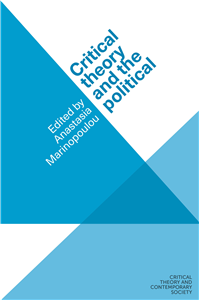
The book addresses what is political in critical theory and which aspects, arguments or notions of critical theory maintain political significance for the 20th and the 21st centuries. The collection of essays comprises itself of a series of clear and critical perspectives that analyze the extent to which critical theory relates political argument to modern societies and, thereby, exerts a critique of the multiple social and political phenomena of late modernity. The contributors focus on a multiplicity of universal phenomena such as globalization, multiple crises, late capitalism and the social role of the sciences, and posit some novel criticism of the contemporary social sphere, as it is situated within the wider system of global capitalism. They also present a plurivalent critique that links arguments in Marxism and Freud to all three generations of critical theory.
Trusted Partner






