
Between the Lines
Livres Canada Books
View Rights Portal

Lindbak + Lindbak is a fresh new Nordic publishing house adding an innovative twist to popular genres like crime, romance & children's books.
View Rights Portal

Während der Sommerferien auf dem Landgut der Eltern seines Schulfreundes wird der dreizehnjährige Leo zum Überbringer heimlicher Liebesbotschaften zwischen Ted, dem Pächter und Marian, der schönen Tochter des Schloßherrn, deren Verlobung mit Lord Trimingham kurz bevorsteht. Doch gegen seinen Willen zieht es Leo immer tiefer in den Strudel des gefährlichen Spiels von Verlangen und Verrat, von versprochener und verbotener Liebe und schließlich steht er vor der ersten großen Gewissensentscheidung seines jungen Lebens. The Go-Between ist ein raffiniert konstruierter Roman über die Strapazen des Erwachsenwerdens und die Gefühlsverwirrungen der Jugend, eine fein beobachtete Gesellschaftsanalyse und eine wunderbare Liebesgeschichte.
 Trusted Partner

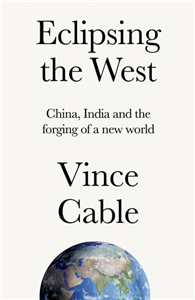
As the international order begins to crumble, this incisive book asks what the rise of the Asian superstates means for the future. The Western-dominated world we have known for the past three hundred years is coming to an end. As America withdraws from its role as enforcer of the international order, other countries are moving in to fill the void. Among them are two rising Asian 'superstates'. Accounting for almost half of the world's population, China and India have the potential to wield enormous economic and political power. China is already vying with the US for the top spot in the global economy, and on some measures has surpassed it. By the middle of the century India may be number two. How will these countries navigate their growing roles on the world stage? What are the implications for commerce, international law and the fight against climate change? Vince Cable has followed China and India for decades, first as a professional economist and later as a senior government minister. In Eclipsing the West he draws on the latest data and a lifetime of political and economic experience to offer a compelling account of what the rise of the Asian superstates means for the future.
Trusted Partner
The politics of Middle English parables examines the dynamic intersection of fiction, theology and social practice in late-medieval England. Parables occupy a prominent place in Middle English literature, appearing in dream visions and story collections as well as in lives of Christ and devotional treatises. While most scholarship approaches the translated stories as stable vehicles of Christian teaching, this book highlights the many variations and points of conflict across Middle English renditions of the same story. In parables related to labour, social inequality, charity and penance, the book locates a creative theological discourse through which writers attempted to re-construct Christian belief and practice. Analysis of these diverse retellings reveals not what a given parable meant in a definitive sense but rather how Middle English parables inscribe the ideologies, power structures and cultural debates of late-medieval Christianity.
Trusted Partner
Trusted Partner


— Astute analysis of the relationship between politics and the natural sciences — Danger of undermining democratic processes Today, political decision-making processes are closely intertwined with processes of scientific knowledge generation. The natural sciences play a central role in politics. This became particularly clear during the corona pandemic and in the regular press conferences in which politicians largely narrowed their course to scientific findings. The consequence of this maxim is that the rationalisation of politics is accompanied by a politicisation of science. Science is exploited, and sometimes allows itself to be exploited. In his equally brilliant and sharp analysis, Klaus Ferdinand Gärditz explains the consequences of this development for the democratic process in particular.
Trusted Partner
Trusted Partner
Trusted Partner
Trusted Partner
Trusted Partner
Trusted Partner
Between 1914 and 1918, military, press and amateur photographers produced thousands of pictures. Either classified in military archives specially created with this purpose in 1915, collected in personal albums or circulated in illustrated magazines, photographs were supposed to tell the story of the war. Picturing the Western Front argues that photographic practices also shaped combatants and civilians' war experiences. Doing photography (taking pictures, posing for them, exhibiting, cataloguing and looking at them) allowed combatants and civilians to make sense of what they were living through. Photography mattered because it enabled combatants and civilians to record events, establish or reinforce bonds with one another, represent bodies, place people and events in imaginative geographies and making things visible, while making others, such as suicide, invisible. Photographic practices became, thus, frames of experience.
Trusted Partner
Middle English literature is intimately concerned with sleep and the spaces in which it takes place. In the medieval English imagination, sleep is an embodied and culturally determined act. It is both performed and interpreted by characters and contemporaries, subject to a particular habitus and understood through particular hermeneutic lenses. While illuminating the intersecting medical and moral discourses by which it is shaped, sleep also sheds light on subjects in favour of which it has hitherto been overlooked: what sleep can enable (dreams and dream poetry) or what it can stand in for or supersede (desire and sex). This book argues that sleep mediates thematic concerns and questions in ways that have ethical, affective and oneiric implications. At the same time, it offers important contributions to understanding different Middle English genres: romance, dream vision, drama and fabliau.
Trusted Partner

The essential message of the 'two regimes' model is that the social politics of fatherhood have taken on a global significance and that the USA and Sweden represent two ends of an international continuum of ways of thinking about fatherhood. The key selling points of the two regimes model are its topicality, originality, its global appeal, and its particularised appeal to readers in the USA, the Nordic countries, Great Britain, Ireland, the European Union, Japan and China. The book offers students a comparative analytical framework and new insights into why some welfare states have 'father-friendly' social policies and others do not. The book makes an original contribution to the growing fields of welfare regime and gender studies by linking the epochal decline of patriarchal fatherhood to welfare state expansion over the course of the twentieth century and it raises new questions about the legitimacy of religiously inspired neo-patriarchy.
Trusted Partner
 Trusted Partner
 Trusted Partner
Trusted Partner
Trusted Partner
Trusted Partner
Trusted Partner

 Trusted Partner



