
ZNN Network Literary and Illustrator Agency
- International Copyright, Licensing, and Literary Agency - International Illustrator Agency and Management Services - Creative Content Development Services
View Rights Portal
- International Copyright, Licensing, and Literary Agency - International Illustrator Agency and Management Services - Creative Content Development Services
View Rights Portal Trusted Partner

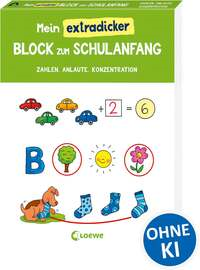
Mein extradicker Block zum Schulanfang = extraviel Spaß + extraviel Wissen! Abwechslungsreiche Übungen zu Zahlen, Anlauten und zur Förderung der Konzentration Trainiert und fördert Kombinationsgeschick, logisches Denken und visuelle Wahrnehmung Mit farbenfrohen und animierenden Bildern Inklusive Lösungen zur Eigenkontrolle So macht Lernen extraviel Spaß! Dieser Block beinhaltet wichtige Grundlagen für den Schulanfang : erste Buchstaben , Zahlen und Konzentrationsaufgaben . Die bunten, liebevoll gestalteten Illustrationen und die spielerische, kindgerechte Wissensvermittlung garantieren Lernspaß . Durch sein handliches Format ist der Lernblock ideal für unterwegs. Dank der Lösungen kann zudem eigenständig geprüft werden, ob alles richtig bearbeitet wurde. So eignen sich die Kinder im Handumdrehen Wissen an und die Vorfreude auf den Schulanfang wird geweckt!
Trusted Partner
Trusted Partner
Trusted Partner
Trusted Partner
Trusted Partner
Trusted Partner
Trusted Partner
Trusted Partner

 Trusted Partner

Living with water brings together sociologists, geographers, artists, writers and poets to explore the ways in which water binds, immerses and supports us. Drawing from international research on river crossings, boat dwelling, wild swimming, sea fishing, and drought impacts, and navigating urban waters, glacial lagoons, barrier reefs and disappearing tarns, the collection illuminates the ways that we live with and without water, and explores how we can think and write with water on land. Water offers a way of attending to emerging and enduring social and ecological concerns and making sense of them in lively and creative ways. By approaching Living with water from different disciplinary and methodological perspectives, and drawing on research from around the world, this collection opens up discussions that reinvigorate and renew previously landlocked debates. This book is relevant to United Nations Sustainable Development Goal 6, Clean water and sanitation
Trusted Partner
Trusted Partner
This book offers a thorough and complete reading of Charlotte Smith's poetry, arguing that we need to engage more directly with historical ideas of gender. ;
Trusted Partner
Trusted Partner
Trusted Partner

Can Russia, the European Union and the three major EU member states adopt a unified policy line in the global arena? Charlotte Wagnsson investigates the cohesiveness of 'greater Europe' through the detailed scrutiny of policy statements by the leadership elites in the UK, France, Germany, Russia and the EU in connection with three defining events in international security: the crisis in Kosovo of 1999; the terrorist attacks of 9/11 and the Iraq crisis of 2003. This extensive empirical enquiry results in a critical constructivist response to neorealist understandings of European security. The book contrasts the EU's new way of 'doing security' with the established, competitive bilateral interplay in the European security sphere and provides a clue to the kind of security politics that will prevail in Europe. It considers the extent to which the major European players pursue similar objectives, and assesses the possible implications for, and the chances of, greater Europe emerging as a cohesive global actor. ;
Trusted Partner
Angela Carter is best known for her novels, short fiction and journalism, but she also produced a substantial body of writing for media other than the printed page, including five radio plays, two film adaptations, an original television documentary and a number of unrealised scripts for stage and screen. Despite increasing academic interest in Carter's work, these dramatic writings have largely been ignored. In this book, Charlotte Crofts redresses this lack of critical attention by examining Carter's dramatic writings together for the first time (including two unpublished works), giving them a more central position in the Carter canon. Divided into three sections on radio, film and television, the book's interdisciplinary approach is underpinned by reference to exclusive interviews with the directors and producers with whom Carter collaborated, giving a unique insight into processes of adaptation and the technologies of media production. The author demonstrates how, far from being an aberration from her real vocation as a writer of fiction, Carter's writing for radio, film and television is an extension of her self-professed demythologising practice. ;
Trusted Partner

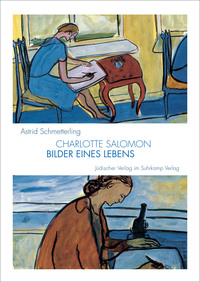
Charlotte Salomon – 1917 in Berlin geboren, 1939 nach Südfrankreich emigriert, 1943 in Auschwitz ermordet – hat ein außergewöhnliches Werk hinterlassen: Leben? oder Theater? . In Bildern und Texten von zeitloser, eigenwilliger Kraft setzt Charlotte Salomon die Lebensgeschichte einer jungen Frau im Berlin der zwanziger und dreißiger Jahre in Szene, die nach der Pogromnacht ins Exil geht. Sie erzählt von der zunehmenden Verfolgung der Juden, von Liebes- und Familienbeziehungen, die alles andere als einfach sind, unsentimental, selbstironisch oft noch da, wo es eigentlich bodenlos wird. Elemente aus Malerei, Literatur, Film und Musik sind in diesem in den Jahren 1940 bis 1942 im französischen Exil entstandenen Zyklus spielerisch miteinander verwoben. Astrid Schmetterling zeigt ein außergewöhnliches Leben, zeigt, wie Charlotte Salomon in ihrer kühnen Vermischung unterschiedlicher Genres eine visuelle Sprache fand, mit der sie ihrem Leben zwischen verschiedenen Identitäten und Orten, als jüdische Frau im Exil, auf einzigartige Weise Ausdruck zu verleihen vermochte. »Geblieben ist uns nur ihr Werk – komplex, lebensvoll, ganz verrückt besonders.«
Trusted Partner



