
Your Search Results
-

-

Iron Bridge Publishing
Iron Bridge Publishing is a new independent & hybrid publisher with a mission to spread positive and constructive ideas.
View Rights Portal
-
Promoted Content

 Humanities & Social SciencesMay 2023
Devolution in Greater Manchester and Liverpool City Region
by Georgina Blakeley, Brendan Evans
-
Promoted Content
 Humanities & Social SciencesMarch 2017
The empire in one city?
Liverpool's inconvenient imperial past
by Sheryllynne Haggerty, Andrew Thompson, Anthony Webster, John M. MacKenzie, Nicholas J. White
From the late eighteenth century to the early twentieth century, Liverpool was frequently referred to as the 'second city of the empire'. Yet, the role of Liverpool within the British imperial system and the impact on the city of its colonial connections remain underplayed in recent writing on both Liverpool and the empire. However, 'inconvenient' this may prove, this specially-commissioned collection of essays demonstrates that the imperial dimension deserves more prevalence in both academic and popular representations of Liverpool's past. Indeed, if Liverpool does represent the 'World in One City' - the slogan for Liverpool's status as European Capital of Culture in 2008 - it could be argued that this is largely down to Merseyside's long-term interactions with the colonial world, and the legacies of that imperial history. In the context of Capital of Culture year and growing interest in the relationship between British provincial cities and the British empire, this book will find a wide audience amongst academics, students and history enthusiasts generally.
-
 Trusted Partner

 2024
2024Brave new city
Smart Cities - a survaillance-nightmare?
by Peter Schaar
The dream of the ideal city is as old as the city itself. Since real cities often develop chaotically, the idea of perfecting them, even tearing them down if necessary, and rebuilding them according to the prevailing patterns of thought is an obvious one. The latest manifestation of this utopia is the smart city - the intelligent city, packed with the latest technology and extensively digitised. But will air taxis and hyperloops, ubiquitous sensors, access control systems and data-driven management really make the city of the future a better place to live? Are they the answer to the enormous challenges facing today's fast-growing metropolises? Or will the supposed administrative paradise ultimately mutate into a digital juggernaut?
-
Trusted Partner

 March 2022
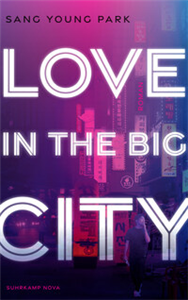
Love in the Big City
Roman
by Sang Young Park, Jan Henrik Dirks
Young flippert zwischen Bude, Hörsaal und den Betten seiner letzten Tinder-Matches hin und her. Er studiert in Seoul, zusammen mit Jaehee, seiner BFF und Mitbewohnerin, zieht er durch die glitzernden Bars und queeren Clubs der Stadt. Mit noch einem Glas Soju in der Hand und eisgekühlten Marlboro Reds zwischen den Lippen beschwören sie die Euphorie, jede Nacht. Gegen die Ängste, gegen die Liebe, gegen die Ansprüche der Familie und die Not mit dem Geld. Doch als auch Jaehee endlich ankommen will, bleibt Young allein zurück im Partymodus. Mit seiner altgewordenen Mutter, mit dutzenden Liebhabern, von denen kaum einer seinen Namen kennt, mit der Leidenschaft fürs Schreiben und einer Frage: Ist in diesem Land für einen wie mich überhaupt eine Zukunft vorgesehen? Kann ich sie erreichen? Love in the Big City ist eine Heldengeschichte von gewaltiger Zärtlichkeit und Lässigkeit. Sang Young Park erzählt von Chaos, Freude, Leichtigkeit des Jungseins, und seinen schmerzhaften Grenzen, in einer Gesellschaft, deren Vergangenheit trotz allem Blitzen, Blinken, Träumen seltsam mächtig bleibt … Das Kultbuch aus Südkorea, Porträt einer Generation, Psychogramm eines faszinierenden Landes.
-
Trusted Partner
The ArtsJanuary 2026
David Simon's American City
by Mikkel Jensen
This book examines the television serials created by influential showrunner David Simon. The book argues that Simon's main theme is the state of the contemporary American city and that all of his serials (barring one about the Iraq War) explore different facets of the metropolis. Each series offers distinctly different visions of the American city, but taken together they represent a sustained and intricate exploration of urban problems in modern America. From deindustrialisation in The Wire and residential segregation in Show Me a Hero to post-Katrina New Orleans in Treme and the transformation of the urban core in The Deuce, David Simon's American city traces the urban through-line in Simon's body of work. Based on sustained analysis of these serials and their engagement with contemporary politics and culture, David Simon's American city offers a compelling examination of one of television's most arresting voices.
-
Trusted Partner
 Humanities & Social SciencesAugust 2002
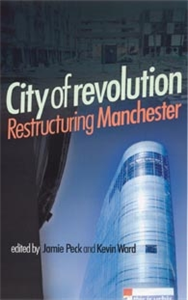
City of Revolution
Restructuring Manchester
by Jamie Peck, Kevin Ward, Martin Hargreaves
Provides a critical account of one of Europe's most celebrated examples of urban transformation, getting beneath the hype to ask what has really changed in the 'new' Manchester.. The first comprehensive account of contemporary political and economic change in Manchester.. Explores the costs and consequences of making the transition from an industrial to a post-industrial or 'entrepreneurial' city, with broad implications for other major cities. ;
-
Trusted Partner
-
Trusted Partner
 Humanities & Social SciencesApril 2010
The flâneur and his city
Patterns of daily life in Paris 1815–1851
by Richard D. E. Burton, Mike Thompson
The book provides a 'flâneur's eye view' of Parisian life in the first half of the nineteenth century: dress, cafés and restaurants, but also shops and passages, the omnibus, bals publics and carnival. The author provides general conclusions about the private and public spheres in 'le vieux Paris'. Like the flâneur, the author concentrates less on factual information for its own sake - which may be found in the secondary works cited in the text and footnotes - than on the 'semiological' or anthropological significance of the cultural forms in question. Links are drawn between cultural institutions and class relations in pre-1850 Paris, with particular emphasis on cultural inequality, on the persistence of cross-class contacts, and the growing differences between classes as reflected in behaviour and attitudes. ;
-
Trusted Partner
-
Trusted Partner
-
Trusted Partner
-
Trusted Partner
-
Trusted Partner
Humanities & Social SciencesAugust 2024
The machinic city
Media, performance and participation
by Marcos P. Dias
As human and machine agency become increasingly intermingled and digital media is overlaid onto the urban landscape, The machinic city argues that performance art can help us to understand contemporary urban living. Dias analyses interventions from performance artists such as Blast Theory, Rafael Lozano-Hemmer and Rimini Protokoll, which draw from a rich history of avant-garde art movements to create spaces for deliberation and reflection on urban life, and speculation on its future. While cities are increasingly controlled by autonomous processes mediated by technical machines, Dias analyses the performative potential of the aesthetic machine, as it assembles with media, capitalist, human and urban machines. The aesthetic machine of performance art in urban space is examined through its different components - design, city and technology actants. This unveils the unpredictable nature and emerging potential of performance art as it unfolds in the machinic city.
-
Trusted Partner

 October 1998
Lulu on the Bridge
Ein Film mit Mira Sorvino und Harvey Keitel
by Auster, Paul / Deutsch Schmitz, Werner
-
Trusted Partner
 Humanities & Social SciencesMarch 2021
African cities and collaborative futures
Urban platforms and metropolitan logistics
by Michael Keith, Andreza Aruska de Souza Santos, Susan Parnell
This groundbreaking volume brings together scholars from across the globe to discuss the infrastructure, energy, housing, safety and sustainability of African cities, as seen through local narratives of residents. Drawing on a variety of fields and extensive first-hand research, the contributions offer a fresh perspective on some of the most pressing issues confronting urban Africa in the twenty-first century. At a time when the future of the region as a whole will be determined in large part by its cities, the implications of these developments are profound. With case studies from cities in Ethiopia, Kenya, Malawi, Niger, Nigeria, South Africa and Tanzania, this volume explores how the rapid growth of African cities is reconfiguring the relationship between urban social life and its built forms. While the most visible transformations in cities today can be seen as infrastructural, these manifestations are cultural as well as material, reflecting the different ways in which the city is rationalised, economised and governed. How can we 'see like a city' in twenty-first-century Africa, understanding the urban present to shape its future? This is the central question posed throughout this volume, with a practical focus on how academics, local decision makers and international practitioners can collaborate to meet the challenge of rapid growth, environmental pressures and resource gaps.
-
Trusted Partner
 Humanities & Social SciencesJuly 2015
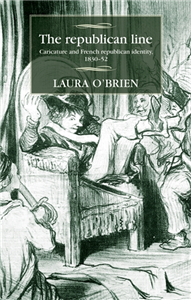
The republican line
Caricature and French republican identity, 1830–52
by Laura O'Brien, Maire Cross, David Hopkin
The years between 1830 and 1852 were turbulent ones in French politics - but were also a golden age for French political caricature. Caricature was wielded as a political weapon, so much so that in 1835 the French politician Adolphe Thiers claimed that 'nothing was more dangerous' than graphic satire. This book is the first full study of French political caricature during the critical years of the July Monarchy (1830-48) and the Second Republic (1848-52). Focusing on the crucial question of republicanism, it shows how caricature was used - by both republicans and anti-republicans - to discuss, define and articulate notions of republican identity during this highly significant period in modern French and European history. ;
-
Trusted Partner
 Humanities & Social SciencesMay 1999
Colony and Mother City in Ancient Greece (Sandpiper Books)
by A J Graham
-
Trusted Partner
 Humanities & Social SciencesJuly 2022
Performing the jumbled city
by Olivia Casagrande, Faye Ginsburg, Andrew Irving, Sarah Pink, Paul Henley
-
Trusted Partner
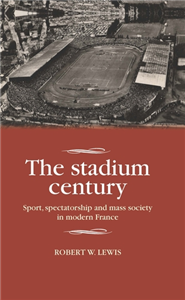 20th century history: c 1900 to c 2000December 2016
The stadium century
Sport, spectatorship and mass society in modern France
by Robert W. Lewis. Series edited by Maire Cross, David Hopkin
The stadium century traces the history of stadia and mass spectatorship in modern France from the vélodromes of the late nineteenth century to the construction of the Stade de France before the 1998 soccer World Cup. As the book demonstrates, the stadium was at the centre of debates over public health and urban development and proved to be a key space for mobilising the urban crowd for political rallies and spectator sporting events alike. After 1945, the transformed French stadium constituted part of the process of postwar modernisation but also was increasingly connected to global transformations to the spaces and practices of sport. Drawing from a wide range of sources, the stadium century links the histories of French urbanism, mass politics and sport through the stadium in an innovative work that will appeal to historians, students of French history and the history of sport, and general readers alike.
-
Trusted Partner
 The ArtsOctober 2008
The encompassing city
Streetscapes in early modern art and culture
by Stuart Blumin
The streetscape - the closely observed, faithfully rendered view of the city's streets, squares, canals, buildings and people - was a new artistic genre of the early modern era, a period in which the city itself was assuming new forms and taking on new roles in Europe and America. This unique book reopens the window of the early city view makers by tracing earlier forms of urban representation in European art into the sudden coalescence of the new genre in Italy and the Low Countries during the middle years of the seventeenth century. It explores the rapid expansion and diffusion of the genre through the eighteenth century, its appeal to such artists as Canaletto, Bernardo Bellotto, Francesco Guardi, and Giovanni Battista Piranesi, and its embrace of a culture of secular improvement more commonly understood through the writings of Enlightenment philosophes. To examine the long history of the genre is to learn much about the early modern city, and to rediscover many beautiful and long-forgotten works of art. ;



