Your Search Results

      • LeftWord Books

        LeftWord Books is a New Delhi-based publishing house that seeks to reflect the views of the left in India and South Asia. We publish critical and analytical works on a range of subjects, and pay special attention to works on Marxist theory. We project the interests of the working people and movements for social transformation. Set up in 1999, LeftWord runs and manages May Day Bookstore, which is next door to a theatre space, Studio Safdar. LeftWord Books is the publishing division of Naya Rasta Publishers Pvt Ltd.

        View Rights Portal
      • Left Bank Literary

        Left Bank Literary is a Sydney-based literary agency specialising in quality fiction and non-fiction.    Our name references the creative environment that blossomed in 'the city of light' nearly a century ago. These writers were a vital force in an era of rising conservatism and facism. We have created Left Bank Literary to provide a home for the fertile ideas of our clients and to ensure literature continues to contribute to the most important conversations of the world.

        View Rights Portal
      • Trusted Partner
        Humanities & Social Sciences
        January 2025

        England’s military heartland

        Preparing for war on Salisbury Plain

        by Vron Ware, Antonia Dawes, Mitra Pariyar, Alice Cree

        A considered investigation of a long-standing army base's impact on the British countryside. What is it like to live next door to a British Army base? Beyond the barracks provides an eye-opening account of the sprawling military presence on Salisbury Plain, drawing on a wide range of voices from both sides of the divide. Targeted for expansion under government plans to reorganise the UK's global defence estate, the Salisbury 'super garrison' offers a unique opportunity to explore the impact of the military footprint in a particular place. But this is no ordinary environment: as well as being the world-famous site of Stonehenge, the grasslands of Salisbury Plain are home to rare plants and wildlife. How does the army take responsibility for conserving this unique landscape as it trains young men and women to use lethal weapons? Are its claims that its presence is a positive for the environment anything more than propaganda? Beyond the barracks investigates these questions against the backdrop of a historic landscape inscribed with the legacy of perpetual war.

      • Trusted Partner
        Humanities & Social Sciences
        January 2025

        England’s military heartland

        Preparing for war on Salisbury Plain

        by Vron Ware, Antonia Lucia Dawes, Mitra Pariyar, Alice Cree

        What is it like to live next door to a British Army base? England's military heartland provides an eye-opening account of the sprawling military presence on Salisbury Plain, drawing on a wide range of voices from both sides of the divide. Targeted for expansion under government plans to reorganise the UK's global defence estate, the Salisbury 'super garrison' offers a unique opportunity to explore the impact of the military footprint in a particular place. But this is no ordinary environment: as well as being the world-famous site of Stonehenge, the grasslands of Salisbury Plain are home to rare plants and wildlife. How does the army take responsibility for conserving this unique landscape as it trains young men and women to use lethal weapons? Are its claims that its presence is a positive for the environment anything more than propaganda? This book investigates these questions against the backdrop of a historic landscape inscribed with the legacy of perpetual war.

      • Trusted Partner
        Humanities & Social Sciences
        March 2017

        British culture and the end of empire

        by Stuart Ward

        This book is the first major attempt to examine the cultural manifestations of the demise of imperialism as a social and political ideology in post-war Britain. Far from being a matter of indifference or resigned acceptance as is often suggested, the fall of the British Empire came as a profound shock to the British national imagination, and resonated widely in British popular culture. The sheer range of subjects discussed, from the satire boom of the 1960s to the worlds of sport and the arts, demonstrates how profoundly decolonisation was absorbed into the popular consciousness. Offers an extremely novel and provocative interpretation of post-war British cultural history, and opens up a whole new field of enquiry in the history of decolonisation.

      • Trusted Partner
        Humanities & Social Sciences
        March 2022

        The British left and the defence economy

        by Keith Mc Loughlin

      • Trusted Partner
        Politics & government
        February 2014

        Fighting fascism: the British Left and the rise of fascism, 1919–39

        by Keith Hodgson

        In the years between the two world wars, fascism triumphed in Italy, Germany, Spain and elsewhere, coming to power after intense struggles with the labour movements of those countries. This book, available in paperback for the first time, analyses the way in which the British left responded to this new challenge. How did socialists and communists in Britain explain what fascism was? What did they do to oppose it, and how successful were they? In examining the theories and actions of the Labour Party, the TUC, the Communist Party and other, smaller left-wing groups, the book explains their different approaches, while at the same time highlighting the common thread that ran through all their interpretations of fascism. The author argues that the British left has been largely overlooked in the few specific studies of anti-fascism that exist, with the focus being disproportionately applied to its European counterparts. He also takes issue with recent developments in the study of fascism, and argues that the views of the left, often derided by modern historians, are still relevant today.

      • Trusted Partner
        Humanities & Social Sciences
        April 2020

        The British political elite and Europe, 1959-1984

        A higher loyalty

        by Bob Nicholls

        This book offers an original interpretation of Britain's relationship with Europe over a 25 year period: 1959-84 and advances the argument that the current problems over EU membership resulted from much earlier political machinations. This evidence based account of the seminal period analyses the applications for EEC membership, the 1975 referendum, and the role of the press. Was the British public misled over the true aims of the European project? How significant was the role of the press in changing public opinion from anti, to pro Common Market membership? Why, after over 40 years since Britain became a member of the European community, does the issue continue to deeply divide not only the political elite, but also the British public? These, and other pertinent questions are answered in this timely book on a subject that remains topical and highly controversial.

      • Trusted Partner
        Humanities & Social Sciences
        March 2017

        The harem, slavery and British imperial culture

        Anglo-Muslim relations in the late nineteenth century

        by Diane Robinson-Dunn

        This book focuses on British efforts to suppress the traffic in female slaves destined for Egyptian harems during the late-nineteenth century. It considers this campaign in relation to gender debates in England, and examines the ways in which the assumptions and dominant imperialist discourses of these abolitionists were challenged by the newly-established Muslim communities in England, as well as by English people who converted to or were sympathetic with Islam. While previous scholars have treated antislavery activity in Egypt first and foremost as an extension of earlier efforts to abolish plantation slavery in the New World, this book considers it in terms of encounters with Islam during a period which it argues marked a new departure in Anglo-Muslim relations. This approach illuminates the role of Islam in the creation of English national identities within the global cultural system of the British Empire. This book would appeal to those with an interest in British imperial history; Islam; gender, feminism, and women's studies; slavery and race; the formation of national identities; global processes; Orientalism; and Middle Eastern studies.

      • Trusted Partner
        Humanities & Social Sciences
        February 2017

        Country houses and the British Empire, 1700–1930

        by Stephanie Barczewski

        Country houses and the British empire, 1700-1930 assesses the economic and cultural links between country houses and the Empire between the eighteenth and twentieth centuries. Using sources from over fifty British and Irish archives, it enables readers to better understand the impact of the empire upon the British metropolis by showing both the geographical variations and its different cultural manifestations. Barczewski offers a rare scholarly analysis of the history of country houses that goes beyond an architectural or biographical study, and recognises their importance as the physical embodiments of imperial wealth and reflectors of imperial cultural influences. In so doing, she restores them to their true place of centrality in British culture over the last three centuries, and provides fresh insights into the role of the Empire in the British metropolis.

      • Trusted Partner
        June 2026

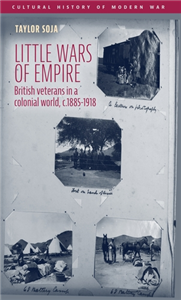
        Little wars of empire

        British veterans in a colonial world, c.1885–1918

        by Taylor Soja

        Little Wars of Empire is a group biography of British veterans who experienced multiple wars across the British empire. Throughout the nineteenth century, Britain was constantly at war in its colonies, defending against anti-colonial resistance or trying to expand its influence. The veterans of these wars did not disappear once they were over, and many of them went on to later experience World War I. By using personal sources such as letters, diaries, and photograph albums, this book works to show how colonial violence and British military history depend upon one another, and argues that colonial war fundamentally shaped the British experience of empire. This was true for all kinds of British veterans, from British Army soldiers and officers to nurses and military families, whose experiences demonstrate the central place of colonial violence to British life.

      • Trusted Partner
        The Arts
        March 2017

        Images of the army

        The military in British art, 1815-1914

        by J. W. M. Hichberger

        In an age when engraving and photography were making artistic images available to a much wider public, artists were able to influence public attitudes more powerfully than ever before. This book examines works of art on military themes in relation to ruling-class ideologies about the army, war and the empire. The first part of the book is devoted to a chronological survey of battle painting, integrated with a study of contemporary military and political history. The chapters link the debate over the status and importance of battle painting to contemporary debates over the role of the army and its function at home and abroad. The second part discusses the intersection of ideologies about the army and military art, but is concerned with an examination of genre representations of soldiers. Another important theme which runs through the book is the relation of English to French military art. During the first eighty years of the period under review France was the cynosure of military artists, the school against which British critics measured their own, and the place from which innovations were imported and modified. In every generation after Waterloo battle painters visited France and often trained there. The book shows that military art, or the 'absence' of it, was one of the ways in which nationalist commentators articulated Britain's moral superiority. The final theme which underlies much of the book is the shifts which took place in the perception of heroes and hero-worship.

      • Trusted Partner
        Humanities & Social Sciences
        February 2017

        Welsh missionaries and British imperialism

        The Empire of Clouds in north-east India

        by Andrew May

        In 1841, the Welsh sent their first missionary, Thomas Jones, to evangelise the tribal peoples of the Khasi Hills of north-east India. This book follows Jones from rural Wales to Cherrapunji, the wettest place on earth and now one of the most Christianised parts of India. As colonised colonisers, the Welsh were to have a profound impact on the culture and beliefs of the Khasis. The book also foregrounds broader political, scientific, racial and military ideologies that mobilised the Khasi Hills into an interconnected network of imperial control. Its themes are universal: crises of authority, the loneliness of geographical isolation, sexual scandal, greed and exploitation, personal and institutional dogma, individual and group morality. Written by a direct descendant of Thomas Jones, it makes a significant contribution in orienting the scholarship of imperialism to a much-neglected corner of India, and will appeal to students of the British imperial experience more broadly.

      • Trusted Partner
        Humanities & Social Sciences
        April 2010

        On the far Western front

        Britain's First World War in South America

        by Phillip A. Dehne

        This book uncovers a forgotten campaign of the First World War, the fight to dominate South America. Propelled by the fear of British businessmen, Britain created a complex economic war against local Germans, with the aim of permanently overturning German dominance in lucrative avenues of international trade. By utilizing archives in Britain and South America, Dehne produces a lively account of the way the campaign was conducted on both sides of the Atlantic. This book will persuade anyone interested in the First World War that the conflict must be examined beyond the battlefields of Europe. It comprises a significant contribution to the new field of the history of globalization, and it will appeal to anyone interested in the economic, diplomatic, and imperial history of the twentieth century. Suggesting new reasons for the emergence of anti-foreign populism in South American states, it will also be of interest to Latin American history students. ;

      • Trusted Partner
        Humanities & Social Sciences
        February 2017

        Wales and the British overseas empire

        Interactions and influences, 1650–1830

        by H.V. Bowen

        This unique collection of essays is the first book to explore the many relationships that developed between Wales and the British overseas empire between 1650 and 1830. Written by leading specialists in the field, the essays explore economic, social, cultural, political, and religious interactions between Wales and the empire. The geographical coverage is very broad, with examinations of the contributions made by Wales to expansion in the Atlantic world, Caribbean, and South Asia. The book explores Welsh influences on the emergence of 'British' imperialism, as well as the impact that the empire had upon the development of Wales itself. The book will be of interest to academic historians, postgraduate students, and undergraduates. It will be indispensable to those interested in the history of Wales, Britain, and the empire, as well as those who wish to compare Welsh imperial experiences with those of the English, Irish, and Scots.

      • Trusted Partner
      • Trusted Partner
        Humanities & Social Sciences
        March 2017

        Unfit for heroes

        Reconstruction and soldier settlement in the empire between the wars

        by Kent Fedorowich

        Research on soldier settlement has to be set within the wider history of emigration and immigration. This book examines two parallel but complementary themes: the settlement of British soldiers in the overseas or 'white' dominions, Australia, Canada, New Zealand and South Africa, between 1915 and 1930. One must place soldier settlement within the larger context of imperial migration prior to 1914 in order to elicit the changes in attitude and policy which occurred after the armistice. The book discusses the changes to Anglo-dominion relations that were consequent upon the incorporation of British ex-service personnel into several overseas soldier settlement programmes, and unravels the responses of the dominion governments to such programmes. For instance, Canadians and Australians complained about the number of ex-imperials who arrived physically unfit and unable to undertake employment of any kind. The First World War made the British government to commit itself to a free passage scheme for its ex-service personnel between 1914 and 1922. The efforts of men such as L. S. Amery who attempted to establish a landed imperial yeomanry overseas is described. Anglicisation was revived in South Africa after the second Anglo-Boer War, and politicisation of the country's soldier settlement was an integral part of the larger debate on British immigration to South Africa. The Australian experience of resettling ex-servicemen on the land after World War I came at a great social and financial cost, and New Zealand's disappointing results demonstrated the nation's vulnerability to outside economic factors.

      • Trusted Partner
        Humanities & Social Sciences
        March 2017

        Martial races

        The military, race and masculinity in British imperial culture, 1857–1914

        by Heather Streets

        This book explores how and why Scottish Highlanders, Punjabi Sikhs, and Nepalese Gurkhas became identified as the British Empire's fiercest, most manly soldiers in nineteenth century discourse. As 'martial races' these men were believed to possess a biological or cultural disposition to the racial and masculine qualities necessary for the arts of war. Because of this, they were used as icons to promote recruitment in British and Indian armies - a phenomenon with important social and political effects in India, in Britain, and in the armies of the Empire. Martial Races bridges regional studies of South Asia and Britain while straddling the fields of racial theory, masculinity, imperialism, identity politics, and military studies. Of particular importance is the way it exposes the historical instability of racial categories based on colour and its insistence that historically specific ideologies of masculinity helped form the logic of imperial defence, thus wedding gender theory with military studies in unique ways. Moreover, Martial Races challenges the marginalisation of the British Army in histories of Victorian popular culture, and demonstrates the army's enduring impact on the regional cultures of the Highlands, the Punjab and Nepal. This unique study will make fascinating reading for higher level students and experts in imperial history, military history and gender history.

      • Trusted Partner
        Humanities & Social Sciences
        March 2017

        Popular imperialism and the military, 1850-1950

        by John M. MacKenzie

        Colonial war played a vital part in transforming the reputation of the military and placing it on a standing equal to that of the navy. The book is concerned with the interactive culture of colonial warfare, with the representation of the military in popular media at home, and how these images affected attitudes towards war itself and wider intellectual and institutional forces. It sets out to relate the changing image of the military to these fundamental facts. For the dominant people they were an atavistic form of war, shorn of guilt by Social Darwinian and racial ideas, and rendered less dangerous by the increasing technological gap between Europe and the world. Attempts to justify and understand war were naturally important to dominant people, for the extension of imperial power was seldom a peaceful process. The entertainment value of war in the British imperial experience does seem to have taken new and more intensive forms from roughly the middle of the nineteenth century. Themes such as the delusive seduction of martial music, the sketch of the music hall song, powerful mythic texts of popular imperialism, and heroic myths of empire are discussed extensively. The first important British war correspondent was William Howard Russell (1820-1907) of The Times, in the Crimea. The 1870s saw a dramatic change in the representation of the officer in British battle painting. Up to that point it was the officer's courage, tactical wisdom and social prestige that were put on display.

      • Trusted Partner
        Humanities & Social Sciences
        November 2013

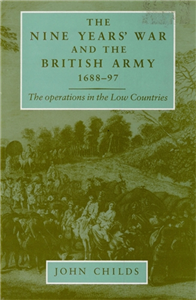
        The Nine Years' War and the British army 1688–97

        The operations in the low countries

        by John Childs

        Between 1689 and 1697 the British army fought as a member of the Grand Alliance against Louis XIV. Despite the military and political significance of the European conflict, this book is the first historical investigation for over a century dealing with the operations of the principal campaigns in the Low Countries. John Childs begins his comprehensive study by exploring the diplomatic origins of the Nine Years' War. Leading on from this political background, the author then focuses on the detailed organisation of the British, Dutch and other allied armies and the conduct of the operations. The specific campaigns are also examined and in particular the author looks at the strategic and tactical role played by the British. This campaign and operational study of the British army will be of interest to both specialist and general military historians, as well as to political historians. ;

      Subscribe to our

      newsletter