Your Search Results

      • Buddha's Light Publishing

        Buddha’s Light Publishing offers quality translations of classical Buddhist texts as well as works by contemporary Buddhist teachers and scholars. We embrace Humanistic Buddhism, and promote Buddhist writing which is accessible, community-oriented, and relevant to daily life. Founded in 1996 by Venerable Master Hsing Yun as the Fo Guang Shan International Translation Center, Buddha’s Light Publishing seeks to continue Master Hsing Yun’s goal of promoting the Buddha’s teachings by fostering writing, art, and culture.

        View Rights Portal
      • Verlag Barbara Budrich

        Verlag Barbara Budrich was founded in 2004 by Barbara Budrich. The publishing house provides high-quality specialized literature in Pedagogy, Gender Studies, Political Science, Social Work and Sociology for researchers, teachers and students. The publications include German as well as English books and journals in print and online with open access being a given.

        View Rights Portal
      • Trusted Partner
        Literature & Literary Studies
        January 2014

        Court and civic society in the Burgundian Low Countries c.1420–1530

        by Andrew Brown, Graeme Small

        This volume is the first ever attempt to unite and translate some of the key texts which informed Johan Huizinga's famous study of the Burgundian court, The Waning of the Middle Ages, a work which has never gone out of print. It combines these texts with sources that Huizinga did not consider, those that illuminate the wider civic world that the Burgundian court inhabited and the dynamic interaction between court and city. Through these sources, and an introduction offering new perspectives on recent historiography, the book tests whether Huizinga's controversial vision of the period still stands. Covering subjects including ceremonial events, such as the spectacles and gargantuan banquets that made the Burgundian dukes the talk of Europe, the workings of the court, and jousting, archery and rhetoric competitions, the book will appeal to students of late medieval and early modern Europe and to those with wider interests in court culture, ritual and ceremony.

      • Trusted Partner
      • Trusted Partner
        Political ideologies
        May 2017

        Neoliberal power and public management reforms

        by Professor Peter Triantafillou. Series edited by Mark Haugaard

        This book examines the links between major contemporary public sector reforms and neoliberal thinking. The key contribution of the book is to enhance our understanding of contemporary neoliberalism as it plays out in the public administration and to provide a critical analysis of generally overlooked aspects of administrative power. The book examines the quest for accountability, credibility and evidence in the public sector. It asks whether this quest may be understood in terms of neoliberal thinking and, if so, how? The book makes the argument that while current administrative reforms are informed by several distinct political rationalities, they evolve above all around a particular form of neoliberalism: constructivist neoliberalism. The book analyses the dangers of the kinds of administrative power seeking to invoke the self-steering capacities of society and administration itself.

      • Trusted Partner
        Humanities & Social Sciences
        August 2002

        The rise of the Nazis

        by Conan Fischer, Mark Greengrass

        How and why did the Nazis seize power in Germany? Nearly seventy years on, the question remains heated and important discoveries continue to challenge long standing assumptions. Beginmning with an overview of the historical context within which Nazism grew, looking at the foreign relations, politics and society of Weimar and in particular at the role of the elites in the rise of Nazism. The book questions the anatomy of Nazism itself: What lent Nazi ideology its coherence and credibility? What distinguished the Nazi's programme from their competitors' and how did they project it so effectively? How was Hitler able to put together and fund an organisation so quickly and effectively that it could launch a sustained assault on Weimar? Who supported the Nazis and what were their motives? Where, precisely, does Nazism belong in the history of Europe?. Since the publication of the first edition, important new works have appeared and this new scholarship has been incorporated into the text. ;

      • Trusted Partner
        The Arts
        September 2025

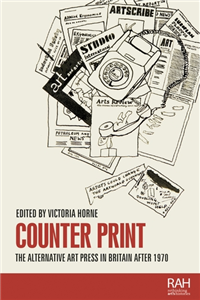
        Counter print

        The alternative art press in Britain after 1970

        by Victoria Horne

        The history of contemporary art is also a history of its newsletters, manifestos, magazines, pamphlets, and journals. Those periodical publications do not simply communicate or record ideas but have worked in exciting ways to shape art's practices, histories and communities. As a new generation of artists, activists and scholars seek to uncover the histories of alternative publishing and artistic networks, this book gathers original archival discoveries while offering methodologies for studying and thinking with those artefacts. As the first essay collection to focus on the periodical art press and the ways we study it, Counter print offers readers an alternative route into the past fifty years of contemporary art, one that is defiantly collaborative, border crossing and disruptive.

      • Trusted Partner
        Literature & Literary Studies
        May 2026

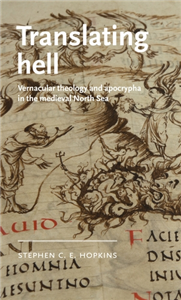
        Translating hell

        Vernacular theology and apocrypha in the medieval North Sea

        by Stephen C. E. Hopkins

        In the Middle Ages, hell was useful because it was vaguely defined. Canonical scriptures scarcely mention hell, leaving much to the imaginations of early Christians, who used it to sort out who belonged within the faith. This book explores how hell became a place for literary experiments with local challenges in theology and identity. Following the reception and transformations of two popular hell apocrypha, it argues that they served as this role because of their liminal textual authority. As noncanonical scriptures, apocrypha afforded medieval writers space to revise their hells (since they were not actually scripture), while also encouraging readers to revere those experiments as valid (since they seemed like scripture). The book brings together adaptations from early medieval England, Iceland, Ireland, and Wales, placing the early vernacular theologies of the North Sea in comparative conversation.

      • Trusted Partner
        Literature & Literary Studies
        January 2013

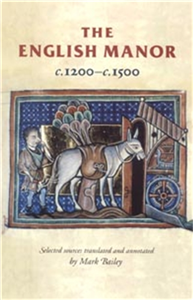
        The English manor c.1200–c.1500

        by Mark Bailey

        Provides a comprehensive introduction and essential guide to one of the most important institutions in medieval England and to its substantial archive. This is the first book to offer a detailed explanation of the form, structure and evolution of the manor and its records. Offers translations of, and commentaries upon, each category of document to illustrate their main features. Examples of each category of record are provided in translation, followed by shorter extracts selected to illustrate interesting, commonly occurring, or complex features. A valuable source of reference for undergraduates wishing to understand the sources which underpin the majority of research on the medieval economy and society.

      • Trusted Partner
        The Arts
        September 2025

        Do It Yourself

        Making political theatre

        by Common Wealth

        A unique guide to creating political theatre, produced by one of the UK's most exciting companies. Do It Yourself is a vital resource for anyone interested in exploring theatre culture grounded in and produced by working-class, multi-racial communities. Designed for artists, activists and community organisers, the book offers a step-by-step guide to creating political theatre that is relevant, impactful and rooted in the lives of everyday people. Common Wealth have spent fifteen years working at the cutting edge of political theatre. In Do It Yourself, they share their experimental and activist approach to performance-making, based on DIY principles and the belief that ground-breaking theatre can be made with anyone, anywhere, in ways that truly resonate with the communities it serves. Do It Yourself introduces Common Wealth's artistic and political ethos, provides unique insights into their most significant performances and offers practical exercises for creating your own work. But this is not just a manual. It is a celebration of culture as a collective endeavour, one that can challenge the status quo and inspire change.

      • Trusted Partner
        20th century history: c 1900 to c 2000
        January 2014

        Cricket and community in England

        by Peter Davies, Robert Light

      • Trusted Partner
        Literature & Literary Studies
        June 2002

        The English manor c.1200–c.1500

        by Rosemary Horrox, Simon Maclean, Mark Bailey

        Provides a comprehensive introduction and essential guide to one of the most important institutions in medieval England and to its substantial archive. This is the first book to offer a detailed explanation of the form, structure and evolution of the manor and its records. Offers translations of, and commentaries upon, each category of document to illustrate their main features. Examples of each category of record are provided in translation, followed by shorter extracts selected to illustrate interesting, commonly occurring, or complex features. A valuable source of reference for undergraduates wishing to understand the sources which underpin the majority of research on the medieval economy and society. ;

      • Trusted Partner
        March 2024

        Lebe leicht

        Im Innen Platz schaffen, um im Außen frei zu sein

        by Watkins, Light

        Aus dem amerikanischen Englisch von Judith Elze

      • Trusted Partner
      • Trusted Partner

        Till Stress Do Us Part

        Resilience in Relationships

        by Guy Bodenmann

      • Trusted Partner
      • Trusted Partner
        Biography & True Stories
        May 2025

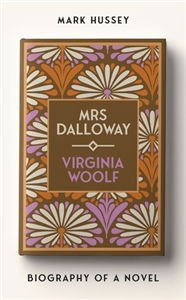
        Mrs Dalloway

        Biography of a novel

        by Mark Hussey

        A compelling biography of one of the most celebrated novels in the English language. The fourth and best-known of Virginia Woolf's novels, Mrs Dalloway is a modernist masterpiece that has remained popular since its publication in 1925. Its dual narratives follow a day in the life of wealthy housewife Clarissa Dalloway and shell-shocked war veteran Septimus Warren Smith, capturing their inner worlds with a vividness that has rarely been equalled. Mrs Dalloway: Biography of a novel offers new readers a lively introduction to this enduring classic, while providing Woolf lovers with a wealth of information about the novel's writing, publication and reception. It follows Woolf's process from the first stirrings in her diary through her struggles to create what was quickly recognised as a major advance in prose fiction. It then traces the novel's remarkable legacy to the present day. Woolf wrote in her diary that she wanted her novel 'to give life & death, sanity & insanity. to criticise the social system, & to show it at work, at its most intense.' Mrs Dalloway: Biography of a novel reveals how she achieved this ambition, creating a book that will be read by generations to come.

      • Trusted Partner
        Humanities & Social Sciences
        August 1999

        British Politics in an Age of Reform

        by Michael J. Turner, Mark Greengrass

        This work is a detailed examination of principal themes in the political history of late 18th- and early 19th-century Britain. It evaluates much recent research, links the politics of the elite with the politics of the people and seeks to explain significant developments with reference to both their long- and short-term causes. Among the issues addressed are the relative powers of crown, cabinet and parliament between 1760 and 1832; the impact on domestic politics of revolution and war abroad; the growth of radicalism and popular political activity; agitation for reform and the responses of government; the rise of party; the connections between extra-parliamentary pressure and instability; at the centre of power. ;

      • Trusted Partner
        Business, Economics & Law
        October 2021

        The pound and the fury

        by Jack Mosse

      • Trusted Partner
        Humanities & Social Sciences
        March 2026

        Negotiating identity conflicts in a fragmenting world order

        by Paul Willem Meerts, Mark Anstey

        At every level of human interaction new levels of identity-based tension are in evidence. Contributors to this book explore facets of fragmentation processes within systems of state and interstate organisation, how they influence the use of negotiation, and how negotiation might be used to effect renewed coherence. Following Anstey's (Ch1) introductory chapter framing the nature and shape of fragmentation dynamics, Zartman (Ch 2) argues that the use of negotiation as a process of conflict resolution is deeply shaped by identity groups whose internal coherence is dependent on sustaining a negative identity of others. International relations are no longer solely the realm of experienced diplomats but are shaped as Meerts (Ch3) points out by politicians seeking to be responsive to voting publics rather than wider concerns. Anstey digs into problems of fragmentation (Ch. 4) and Troitskiy (Ch 5) points out how a reluctant acceptance of the power of 'the other' can lead to a form of strategic stability in relations. Anstey and Meerts (Ch 6) point out in their analysis of the Israeli-Palestinian case as an identity conflict turned very bad. Guggenbuhl (Ch 7 ) reveals how structures and processes have been designed within the EU to prevent, contain and regulate conflicts to limit risks of confrontation and fragmentation. Schuessler (Ch 8) to advocates a shift away from a template or roadmap approach to EU membership to a cohesion based on non-dominance. There is still a strong desire on the part of some states, like Northern Macedonia, to become EU members, as reflected in Manton's (Ch 9). Paula Garzon and Frans Schram explain the success of the Colombia Peace Negotiations (Ch 10), while Odigie and da Rocha (Ch 11) analyse the struggle faced by ECOWAS to influence coup leaders in Mali to return to constitutional government and changes of government by constitutional means. Liang (Ch12) discusses how the internet as the modern vehicle of inter-state, inter-group and interpersonal communication has become weaponised. In Ch 13 Anstey draws some lessons from contributions to the compilation.

      Subscribe to our

      newsletter