
Franz Steiner Verlag / Berliner Wissenschafts-Verlag
Academic publishing house (ancient history of economics, history of science/medicine, geography, musicology, philosophy of law). Berliner Wissenschaft-Verlag is an imprint.
View Rights Portal Trusted Partner

Academic publishing house (ancient history of economics, history of science/medicine, geography, musicology, philosophy of law). Berliner Wissenschaft-Verlag is an imprint.
View Rights Portal
Atrium Verlag was founded 1935 in Switzerland in order to be able to continue publishing Erich Kästner's work, who was by then a forbidden author in the so-called Third Reich. Since the beginning Kästner's children's books are a world-wide success story and continue to fascinate readers in more than 25 countries all over the world. Moreover, he has written famous poem collections and adult novels reaching a broad audience. Atrium has started to publish more children's books that share Kästner's spirit and instantly connect with our young readers. Furthermore, Atrium publishes important contemporary fiction, mystery and non-fiction. WooW Books is focussed on children's books for readers aged 6-11, ranging from timeless classics to modern adventures and unconventional stories. As the name suggests, the program stands for special and surprising children´s literature that conjures a »wow-feeling« while reading. Arche Literatur Verlag is a traditional literary publisher that started in the 1940s with authors such as Friedrich Dürrenmatt, Max Frisch and Gottfried Benn. Today Arche publishes novels by outstanding international and German writers, telling stories about the rich variety of human relationships. Arche aims to reach women readers of all ages, both through content and through clear cover designs. The core of the brand is the “rich variety of human relationships” – deliberately targeting a female readership that feels addressed and entertained in a unique way by Arche.
View Rights Portal
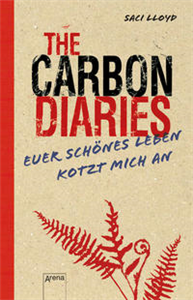
Klimawandel betrifft uns alle! Saci Lloyd zeigt eindrucksvoll die Auswirkungen einer globalen Katastrophe auf. Eine Geschichte, die wachrüttelt! Laura Brown kann es nicht fassen: Die britische Regierung erlässt ein Gesetz zum Schutz der Umwelt. Alle müssen von nun an mit einer CO2-Card für ihren Luxus bezahlen. Urlaub auf Ibiza, ein warmer Winterabend vor dem Fernseher, Tanzen in der Disko mit Lichtshow, Eiswürfel im Drink - das alles gehört der Vergangenheit an. Auch Lauras Bandproben mit den Dirty Angels. Doch es kommt schlimmer, denn Stromausfälle, Wirbelstürme und Überschwemmungen sind an der Tagesordnung. Und plötzlich zählt nur noch eines: Überleben.
Trusted Partner


CO2. A WORLD WITH NO TOMORROW is a fast-paced science thriller. For this story, Tom Roth takes movements such as Fridays for Future and the increasingly radical protests for climate change as his inspiration and point of departure. It seems that increasing numbers of people see themselves justified in resorting to radical measures in their efforts to save the planet and the future of humanity (children). And for the first time in history, the movement is emanating primarily from children and young people – whose future is at stake. Twelve children from twelve nations are kidnapped. They’ve been participating in a climate camp in Australia. From now on, one child will die every week unless the international community meets certain demands of the kidnappers for climate protection. As mankind waits with bated breath in anticipation of the first ultimatum expiring, the governments of the countries concerned are fighting over solutions. It soon becomes clear that this race is about much more than the lives of individuals, and that time knows no mercy. A topical issue of our times, highly emotional For readers of Marc Elsberg and Andreas Eschbach English outline and sample translation available
Trusted Partner

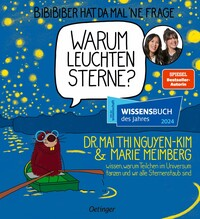
In diesem Sach-Bilderbuch haben Mai Thi Nguyen-Kim und Marie Meimberg auf über 100 Seiten all ihr Wissen in Antworten und Bildern vereint. Wenn Du dieses Buch liest, wirst Du verstehen, warum Sterne leuchten und was das mit tanzenden Teilchen, Luftdruck und Wärme zu tun hat. Mit dem Kohlenstoff-Kreislauf des Lebens, CO2 und Pflanzen. Mit der Entstehung des Universums, der Milchstraße und unserer Welt. Du wirst verstehen: Bei dieser kleinen Frage geht es um Leben und Tod. Und um Bausteine, die in Sternen entstehen. Bausteine, aus denen alles auf dieser Erde gebaut ist. Auch wir. Denn wir alle sind aus Sternenstaub. Wir schauen nicht nur in den Sternenhimmel. Wir sind ein Teil davon. Reise mit Marie und Mai zum Ursprung des Universums – und erlebe Erstaunliches! Wusstes du, dass wir alle Sternenstaub sind? Lüfte dieses und weitere überraschende Geheimnisse und staune, wie viele Wunder im Weltall stecken. Die promovierte Chemikerin Mai Thi Nguyen-Kim und die Kulturwissenschaftlerin Marie Meimberg haben ein Sachbuch für Kinder geschaffen, so großartig und vielfältig wie der Sternenhimmel. Wissenschaftlich fundiert und zugleich anrührend poetisch. Weckt den Forschergeist und die Freude an Wissenschaft bei Kindern ab 7 Jahren und begeistert auch erwachsene Fans des beliebten YouTube-Kanals „maiLab“.
Trusted Partner

 Trusted Partner

 Trusted Partner

Volker C. Dörr, geboren 1966, studierte Germanistik, Philosophie und Kunstgeschichte in Bonn. Seit 2002 lehrt er als Privatdozent am Germanistischen Seminar der Universität Bonn. Er ist u. a. Mitherausgeber der beiden Bände Mit Schiller. Briefe, Tagebücher und Gespräche vom 24. Juni 1794 bis zum 9. Mai 1805 innerhalb der Frankfurter Ausgabe von Goethes Werken. Joseph A. Kruse, 1944 in Dingden bei Bocholt (heute Hamminkeln) geboren, ist seit 1975 Direktor des Heinrich-Heine-Instituts in Düsseldorf; 1986 wurde er zum Honorarprofessor an der Heinrich-Heine-Universität Düsseldorf ernannt. Er gibt u. a. das Heine-Jahrbuch und die Heine-Studien heraus und hat zahlreiche Publikationen zu Heine und seiner Zeit sowie zu den Sammlungen des Heine-Instituts veröffentlicht.
Trusted Partner
Trusted Partner
Trusted Partner

Die mutige Klimaaktivistin, deren Schulstreik den Anstoß für die »Fridays for Future«-Bewegung gab und die Menschen auf der ganzen Welt inspiriert. Die Erfolgsserie Little People, Big Dreams jetzt im Miniformat für die ganz Kleinen. Kurze Einführungen in das Leben berühmter Persönlichkeiten, in einfachen Sätzen erzählt und perfekt zum Vorlesen für Kleinkinder.
Trusted Partner

 Trusted Partner
Trusted Partner
Trusted Partner

 Trusted Partner
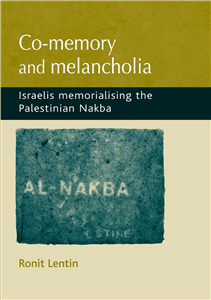
The 1948 war that led to the creation of the State of Israel also resulted in the destruction of Palestinian society when some 80 per cent of the Palestinians who lived in the major part of Palestine upon which Israel was established became refugees. Israelis call the 1948 war their 'War of Independence' and the Palestinians their 'Nakba', or catastrophe. After many years of Nakba denial, land appropriation, political discrimination against the Palestinians within Israel and the denial of rights to Palestinian refugees, in recent years the Nakba is beginning to penetrate Israeli public discourse. This book, available at last in paperback, explores the construction of collective memory in Israeli society, where the memory of the trauma of the Holocaust and of Israel's war dead competes with the memory claims of the dispossessed Palestinians. Against a background of the Israeli resistance movement, Lentin's central argument is that co-memorating the Nakba by Israeli Jews is motivated by an unresolved melancholia about the disappearance of Palestine and the dispossession of the Palestinians, a melancholia that shifts mourning from the lost object to the grieving subject. Lentin theorises Nakba co-memory as a politics of resistance, counterpoising co-memorative practices by internally displaced Israeli Palestinians with Israeli Jewish discourses of the Palestinian right of return, and questions whether return narratives by Israeli Jews, courageous as they may seem, are ultimately about Israeli Jewish self-healing rather than justice for Palestine.
Trusted Partner

 Trusted Partner

Despite the abundance and quality of recent historical writing on consumerism, it cannot be said that the modern Co-operative movement (Co-op) has been well served. It has also been by-passed in studies that locate Britons' identity in their consumption. The reasons for this can be found in the widely perceived decline of the Co-op since the 1950s, but also in various historiographical agendas that have resulted in its relative invisibility in modern British history. This book, by demonstrating the variety of broader issues that can be addressed through the Co-op and the vibrancy of new historical research into consumption, seeks to remedy this. Taking stock, both of the Co-op in a broader context and of new approaches to the history of consumption, combines the work of leading authorities on the Co-op with recent scholarly research. It explores the Co-op's distinctive interface between everyday issues and grander idealistic concerns. The chapters intersect to examine a broad range of themes, notably: the politics of consumerism including consumer protection, ethical and fair trading and alternatives to corporate commerce; design and advertising; the Co-op's relations with other components of the labour movement; and its ideology, image and memory. The collection looks at the Co-operative movement locally (through specific case studies), nationally and also in comparison to the European movement. This collection will appeal to academics, researchers, teachers and students of the economic, cultural and political history of twentieth-century Britain. It will also be of interest to academics and students of business studies, and co-operative members themselves. ;
Trusted Partner
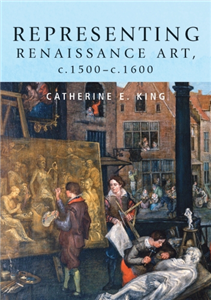
Representing Renaissance art, c.1500-c.1600 is a study of change and continuity in the iconographies of art and the visual representation of artists during the sixteenth century, especially in Italy and the Netherlands. The issue of how, and how far, artists obtained higher status for their profession during the Renaissance is a key question for the study of the early modern period. This book considers the maintenance of well-established traditions for the visual representation of artists, and also examines the new iconographies that emerged in the sixteenth century. By highlighting art and architecture that artists designed for their personal use, including the decoration of their houses, this study provides insight into the tastes and 'ways of looking' specific to artists. By examining the visual evidence we see the opinions both of artists who expressed their views in literary texts, and additionally those of artists who did not publish their ideas in written form.
Trusted Partner

This volume examines the underlying foundations on which the European Union's counter-terrorism and police co-operation policies have been built since the inception of the Treaty on European Union, questioning both the effectiveness and legitimacy of the EU's efforts in these two critically important security areas. Given the importance of such developments to the wider credibility of the EU as a security actor, this volume adopts a more structured analysis of key stages of the implementation process. These include the establishment of objectives, both at the wider level of internal security co-operation and in terms of both counter-terrorism and policing, particularly in relation to the European Police Office, the nature of information exchange and the 'value added' by legislative and operational developments at the European level. It also offers a more accurate appraisal of the official characterisation of the terrorist threat within the EU as a 'matter of common concern'. In doing so, not only does it raise important questions about the utility of the European level for organising internal security co-operation, but it also provides a more comprehensive assessment of the EU's activities throughout the lifetime of the Third Pillar, placing in a wider and more realistic context the EU's reaction to the events of 11 September 2001 and the greater prominence of Islamist terrorism. ;
Trusted Partner

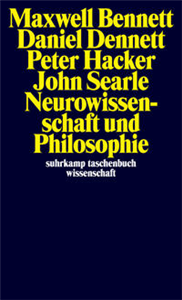
Als der Neurowissenschaftler Maxwell Bennett und der Philosoph Peter Hacker den Klassiker Philosophical Foundations of Neuroscience veröffentlichten, war dies die erste systematische Untersuchung der begrifflichen Grundlagen der Neurowissenschaften und der Startschuss für den bis heute intensiv geführten Kampf um die Deutungsmacht über den menschlichen Geist. Besonders kritisch fiel seinerzeit die Auseinandersetzung mit den einflussreichen Arbeiten von Daniel Dennett und John Searle aus – also mit jenen beiden Denkern, die von der neurowissenschaftlichen Seite gerne als philosophische Gewährsmänner herangezogen werden. In Neurowissenschaft und Philosophie diskutieren die vier kongenialen »Streithähne« miteinander.
Trusted Partner
Von allen deutschen Autoren, die nach 1945 zu schreiben begannen, ist Artmann ohne jeden Zweifel der vielseitigste, originellste und erfinderischste. So wie Artmann in fast allen Gattungen gearbeitet hat, auch den angeblich antiquierten, und ohne sich um die Tagesparolen der mal reine Dichtung betreibenden, mal engagierten, mal die Literatur totsagenden Kollegen zu kümmern, so hat er seine Quellen, seine Herkunft überall: in der Artusepik, in barocker Schäferpoesie, in den Wörterbüchern und Grammatiken von gut zwei Dutzend Sprachen, in Irland und im England des Sherlock Holmes, bei Villon und dem Wiener Vorstadtdialekt, Lorca, Gomez de la Serna, den Surrealisten und Dadaisten, in den Detektivheftchen der 20er Jahre und den Comic strips von damals bis heute. Unsere Auswahl versucht, nicht nur einen repräsentativen Querschnitt durch das Werk Artmanns zu geben, sondern gleichzeitig Verstreutes, an entlegensten Orten Publiziertes zu sammeln.



