
ZNN Network Literary and Illustrator Agency
- International Copyright, Licensing, and Literary Agency - International Illustrator Agency and Management Services - Creative Content Development Services
View Rights Portal
- International Copyright, Licensing, and Literary Agency - International Illustrator Agency and Management Services - Creative Content Development Services
View Rights Portal
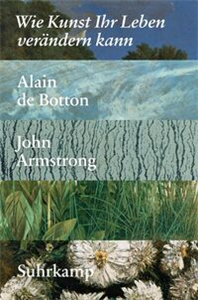
Wir alle lieben Kunst – wir gehen ins Museum und betrachten ein Gemälde, wir spazieren durch den Park und bewundern eine Skulptur, oder wir lassen unseren Blick an der Fassade eines imposanten Bauwerks entlanggleiten. Doch sehen wir die Kunst wirklich und nutzen wir sie für uns? Die Erfolgsautoren Alain de Botton und John Armstrong zeigen in ihrem erhellenden wie kurzweiligen Buch, wie wir das Potenzial von Kunst für uns ausschöpfen können – wie wir mit Vermeer einen Blick für die scheinbar nebensächlichen Details im Leben entwickeln können; wie wir uns Leonardo da Vincis Neugierde für die Funktionsweise von Dingen aneignen oder wie wir mit den hypnotischen Ozeanbildern von Hiroshi Sugimoto eine ganz besondere innere Ruhe finden können. Mit Werken von Caspar David Friedrich, Henri Matisse, Mies van der Rohe, Nan Goldin, Le Corbusier und vielen mehr
 Trusted Partner

Louise Armstrong, als Kind selbst Opfer sexueller Mißhandlungen, hat Gespräche mit fast 200 Frauen geführt, die ebenfalls im Kindesalter sexuell mißbraucht worden waren. Im vorliegenden Buch sind die Erfahrungen von 16 dieser Frauen und der Autorin selbst dargestellt. Dabei wird deutlich, was es mit den vielen Mythen um das wohlbehütete Geheimnis des Inzests in Wahrheit auf sich hat. Mythos: Inzest ist »tabu«. – Verschiedenen Schätzungen zufolge sind in Amerika mehr als 120 Millionen Frauen im Kindesalter sexuell mißbraucht worden. Kein anderes Tabu ist mit soviel Gewalt verbunden wie dieses. Louise Armstrong kommt zu dem Schluß, daß in Wahrheit nicht der Inzest das Tabu ist, sondern das »Sprechen« über den Inzest. Mythos: Bei den Mädchen handelt es sich um »verführerische« Jugendliche. – Tatsächlich waren die meisten Frauen, mit denen Louise Armstrong gesprochen hat, gerade drei, vier, fünf oder sechs Jahre alt, als der Mißbrauch begann. Mythos: Die Mädchen »laden dazu ein« und genießen es. – Die Berichte der Frauen zeigen, daß sie schreckliche Angst hatten und in extreme Verwirrung gestürzt wurden. Mythos: Die Mütter wissen es immer; oder sie glauben den Mädchen niemals. – Tatsächlich wissen die Mütter es oft, verschweigen es aber aus Angst vor den sozialen Folgen.
Trusted Partner

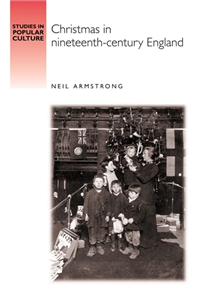
Despite its enduring popularity as a national festival, Christmas has been largely neglected by English historians. Neil Armstrong offers the first study to examine both the experience and representation of Christmas during the formative period of the nineteenth and early twentieth centuries. This book explores the origins of our deeply held notions of the traditional nature of Christmas and demonstrates how they were shaped by English modernity. A study of both continuity and change, Christmas in nineteenth-Ccntury England makes an important contribution to cultural and social history, and is essential reading for anyone interested in the history of childhood, the family, philanthropy, work and consumerism. Scholarly yet accessible, it will be enjoyed by academics, students and the general public alike. ;
Trusted Partner


Neil ist zwei Jahre alt, als er mit seinem Vater eine Flugshow besucht. Von dem Spektakel ist er so begeistert, dass er anschließend nur noch einen Wunsch hat: Er will selbst fliegen. Zunächst schickt er Modellflugzeuge in die Luft, aber schon mit sechzehn erwirbt er seine Fluglizenz. Er studiert Flugzeugbau, wird Pilot bei der US-Marine und fliegt Einsätze im Koreakrieg. Als die NASA nach Testpiloten sucht, bewirbt er sich. Und schreibt als Astronaut und Kommandant der Apollo 11 Geschichte. Am 24. Juli 1969 setzt er als erster Mensch der Welt einen Fuß auf die Oberfläche des Mondes. Little People, Big Dreams erzählt von den beeindruckenden Lebensgeschichten großer Menschen: Jede dieser Persönlichkeiten, ob Philosophin, Forscherin oder Sportler, hat Unvorstellbares erreicht. Dabei begann alles, als sie noch klein waren: mit großen Träumen.
Trusted Partner
Trusted Partner
Trusted Partner
Trusted Partner
Trusted Partner
The Arctic region has been the subject of much popular writing. This book considers nineteenth-century representations of the Arctic, and draws upon an extensive range of evidence that will allow the 'widest connections' to emerge from a 'cross-disciplinary analysis' using different methodologies and subject matter. It positions the Arctic alongside more thoroughly investigated theatres of Victorian enterprise. In the nineteenth century, most images were in the form of paintings, travel narratives, lectures given by the explorers themselves and photographs. The book explores key themes in Arctic images which impacted on subsequent representations through text, painting and photography. For much of the nineteenth century, national and regional geographical societies promoted exploration, and rewarded heroic endeavor. The book discusses images of the Arctic which originated in the activities of the geographical societies. The Times provided very low-key reporting of Arctic expeditions, as evidenced by its coverage of the missions of Sir John Franklin and James Clark Ross. However, the illustrated weekly became one of the main sources of popular representations of the Arctic. The book looks at the exhibitions of Arctic peoples, Arctic exploration and Arctic fauna in Britain. Late nineteenth-century exhibitions which featured the Arctic were essentially nostalgic in tone. The Golliwogg's Polar Adventures, published in 1900, drew on adult representations of the Arctic and will have confirmed and reinforced children's perceptions of the region. Text books, board games and novels helped to keep the subject alive among the young.
Trusted Partner
From the late eighteenth century to the early twentieth century, Liverpool was frequently referred to as the 'second city of the empire'. Yet, the role of Liverpool within the British imperial system and the impact on the city of its colonial connections remain underplayed in recent writing on both Liverpool and the empire. However, 'inconvenient' this may prove, this specially-commissioned collection of essays demonstrates that the imperial dimension deserves more prevalence in both academic and popular representations of Liverpool's past. Indeed, if Liverpool does represent the 'World in One City' - the slogan for Liverpool's status as European Capital of Culture in 2008 - it could be argued that this is largely down to Merseyside's long-term interactions with the colonial world, and the legacies of that imperial history. In the context of Capital of Culture year and growing interest in the relationship between British provincial cities and the British empire, this book will find a wide audience amongst academics, students and history enthusiasts generally.
Trusted Partner
For nearly half a century Anne Lake Prescott has been a force and an inspiration in Renaissance studies. A force, because of her unique blend of learning and wit and an inspiration through her tireless encouragement of younger scholars and students. Her passion has always been the invisible bridge across the Channel: the complex of relations, literary and political, between Britain and France. The essays in this long-awaited collection range from Edmund Spenser to John Donne, from Clément Marot to Pierre de Ronsard. Prescott has a particular fondness for King David, who appears several times; and the reader will encounter chessmen, bishops, male lesbian voices and Roman whores. Always Prescott's immense erudition is accompanied by a sly and gentle wit that invites readers to share her amusement. Reading her is a joyful education.
Trusted Partner
For nearly half a century Anne Lake Prescott has been a force and an inspiration in Renaissance studies. A force, because of her unique blend of learning and wit and an inspiration through her tireless encouragement of younger scholars and students. Her passion has always been the invisible bridge across the Channel: the complex of relations, literary and political, between Britain and France. The essays in this long-awaited collection range from Edmund Spenser to John Donne, from Clément Marot to Pierre de Ronsard. Prescott has a particular fondness for King David, who appears several times; and the reader will encounter chessmen, bishops, male lesbian voices and Roman whores. Always Prescott's immense erudition is accompanied by a sly and gentle wit that invites readers to share her amusement. Reading her is a joyful education.
Trusted Partner
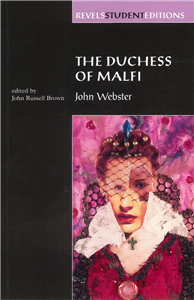
More widely studied and more frequently performed than ever before, John Webster's The Duchesss of Malfi is here presented in an accessible and thoroughly up-to-date edition. Based on the often reprinted Revels Plays Edition of 1964, the notes have been augmented to cast further light on Webster's amazing dialogue and on the stage action which it implies. An entirely new introduction sets the tragedy in the context of pre-Civil War England and gives a revealing view of its themes, action and visual imagery. From its well-documented early performances to the two productions seen in the West End of London in the 1995-96 season, a stage history gives an account of the play in performance. Students, actors, directors and theatre-goers will find here a reappraisal of Webster's artistry in the tragedy which stands in the very first rank of plays from perhaps the greatest age of English theatre, and reasons why it has lived on stage with renewed force in the last decades of the twentieth century. ;
Trusted Partner

This is a collection of essays on an important but overlooked aspect of early modern English life: the artistic and intellectual patronage of the Inns of Court and their influence on religion, politics, education, rhetoric, and culture from the late fifteenth through the early eighteenth centuries. This period witnessed the height of the Inns' status as educational institutions: emerging from fairly informal associations in the fourteenth century, the Inns of Court in the fifteenth and sixteenth centuries had developed sophisticated curricula for their students, leading to their description in the early seventeenth century as England's 'third university'. Some of the most influential politicians, writers, and divines - as well as lawyers - of Tudor and Stuart England passed through the Inns: men such as Edward Hall, Richard Hooker, John Webster, John Selden, Edward Coke, William Lambarde, Francis Bacon, and John Donne. This is the first interdisciplinary publication on the early modern Inns of Court, bringing together scholarship in history, art history, literature, and drama. The book is lavishly illustrated and provides a unique collection of visual sources for the architecture, art, and gardens of the early modern Inns ;
Trusted Partner
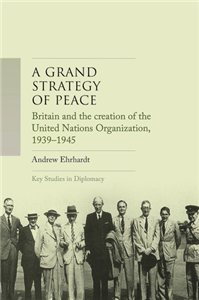
A grand strategy of peace is the first detailed account of Britain's role in the creation of the United Nations Organization during the Second World War. As a work of traditional diplomatic history that brings in elements of intellectual history, the book describes how British officials, diplomats, politicians, and writers - previously seen to be secondary actors to the United States in this period - thought about, planned for, and helped to establish a future international order. While in the present day, many scholars and analysts have returned to the origins of the post- 1945 international system, this book offers an exhaustive account of how the statesmen and more importantly, the officials working below the statesmen, actually conceived of and worked to establish a post-war world order.
Trusted Partner
Trusted Partner
Whether for reasons of family, food, shopping or religion, it's hard to imagine a British winter without Christmas, or to think of a more traditional national festival. But how and when did Christmas cards, pantomimes and advertising become part of that tradition? This book looks at how people in the nineteenth and early twentieth centuries experienced Christmas and how today's priorities and rituals began and endured. It explores the origins of our deeply held notions around Christmas traditions and demonstrates how those ideas were in fact shaped by the fast-paced modernisation of English life. A fascinating account of the development of many things we now take for granted, the book touches on the history of childhood and the family, philanthropy and work, and the beginnings of consumerism that shaped the Christmas we know today.
Trusted Partner
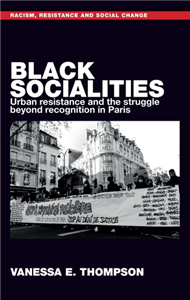
From author: This is a cutting-edge exploration of black urban politics in Parisian racialized working class and working poor districts, the formation of abolition geography, and the possibilities of new forms of political blackness. In Black Socialities. Urban resistance and the struggle beyond recognition in Paris, Vanessa E. Thompson argues that black urban politics in the French banlieues are multi-racial and spatially grounded towards abolition. Based on a close engagement with urban black activist practices against racial imagery in the city, policing and state racism, and housing insecurity, she shows how radical anti-racism goes beyond struggles for recognition and unfolds alongside new formations of political blackness that is based on urban conviviality. This form of black politics has much to teach us in this current conjuncture of liberal anti-racism and state recognition politics.
Trusted Partner

Jeffrey Richards is a regular radio and television commentator on popular culture. Covers the period from Ealing Studios to Dad's Army. A great read. ;



