
June 2023
Your Search Results
-
Promoted Content


-
Promoted Content

 Humanities & Social SciencesDecember 2024
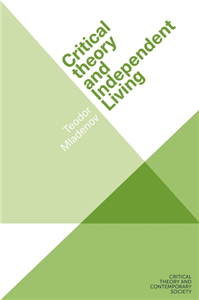
Critical theory and Independent Living
by Teodor Mladenov
Critical theory and Independent Living explores intersections between contemporary critical theory and disabled people's struggle for self-determination. The book highlights the affinities between the Independent Living movement and studies of epistemic injustice, biopower, and psychopower. It discusses in depth the activists' critical engagement with welfare-state paternalism, neoliberal marketisation, and familialism. This helps develop a pioneering comparison between various welfare regimes grounded in Independent Living advocacy. The book draws on the activism of disabled people from the European Network on Independent Living (ENIL) by developing case studies of the ENIL's campaigning for deinstitutionalisation and personal assistance. It is argued that this work helps rethink independence as a form of interdependence, and that this reframing is pivotal for critical theorising in the twenty-first century.
-
 Trusted Partner
 Humanities & Social SciencesOctober 2023
The illusion of the Burgundian state
by Élodie Lecuppre-Desjardin, Christopher Fletcher
On 25 January 1474, Charles the Bold, duke of Burgundy, appeared before his subjects in Dijon. Robed in silk, gold and precious jewels and wearing a headpiece that gave the illusion of a crown, he made a speech in which he cryptically expressed his desire to become a king. Three years later, Charles was killed at the battle of Nancy, an event that plunged the Great Principality of Burgundy into chaos. This book, innovative and essential, not only explores Burgundian history and historiography but offers a complete synthesis about the nature of politics in this region, considered both from the north and the south. Focusing on political ideologies, a number of important issues are raised relating to the medieval state, the signification of the nation under the 'Ancien Regime', the role of warfare in the creation of political power and the impact of political loyalties in the exercise of government. In doing so, the book challenges a number of existing ideas about the Burgundian state.
-
Trusted Partner
 Humanities & Social SciencesJuly 2023
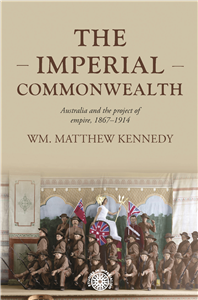
The imperial Commonwealth
Australia and the project of empire, 1867-1914
by Wm. Matthew Kennedy
From the late 1800s to the early 1900s, Australian settler colonists mobilised their unique settler experiences to develop their own vision of what 'empire' was and could be. Reinterpreting their histories and attempting to divine their futures with a much heavier concentration on racialized visions of humanity, white Australian settlers came to believe that their whiteness as well as their Britishness qualified them for an equal voice in the running of Britain's imperial project. Through asserting their case, many soon claimed that, as newly minted citizens of a progressive and exemplary Australian Commonwealth, white settlers such as themselves were actually better suited to the modern task of empire. Such a settler political cosmology with empire at its center ultimately led Australians to claim an empire of their own in the Pacific Islands, complete with its own, unique imperial governmentality.
-
Trusted Partner

 March 2020
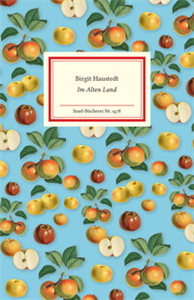
Im Alten Land
by Birgit Haustedt
Apfelbäume, so weit das Auge reicht, idyllische Fachwerkdörfer hinter dem Deich und am Horizont die Elbe: Das Alte Land ist eine uralte Kulturlandschaft am Wasser, die ihren eigenen Charakter bewahrt hat. Prächtige Bauernhöfe und Backsteinkirchen mit kostbaren Barockorgeln zeugen noch heute vom frühen Wohlstand der Altländer. Birgit Haustedt erzählt von den Anfängen im Mittelalter, von Deichbau und Sturmfluten, vom Alltag der kleinen Leute und von großer Handwerkskunst, von stolzen Bauern und mutigen Schiffern. Dazu ein Exkurs, welche Rolle das Alte Land in Lessings Leben und Goethes Faust spielte.
-
Trusted Partner
 Humanities & Social SciencesMarch 2025
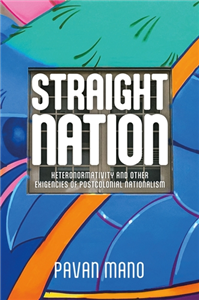
Straight nation
Heteronormativity and other exigencies of postcolonial nationalism
by Pavan Mano
In Straight Nation, Pavan Mano reveals the logic of straightness that sits at the heart of postcolonial nationalism in Singapore. Mano rejects the romantic notion of the nation as a haven of belonging, showing it to be a relentless force that is allied with heteronormativity to create a host of minoritized and xenologized figures. Through meticulous exploration and close reading of a swathe of texts, Mano unveils the instrumental role of sexuality in structuring the national imaginary. The book adroitly demonstrates how queerness is rendered foreign in postcolonial Singapore and functions alongside technologies of "race", gender, and class. A provocative critique of narrow contemporary identity politics and its concomitant stymying of a more ambitious political critique, Straight Nation sets out an argument that moves beyond the negativity of traditional critique into a space of (re)thinking, (re)building and (re)imagining.
-
Trusted Partner

 March 2024
Today Is a Good Day to Abolish the Patriarchy
by Bettina Schulte (ed.)
Do we still need feminism in Europe? Equality or difference feminism? A new generation of feminists has now broken away from the feminism of the 1960s. The old white Cis man has been discredited, by the "#MeToo" movement at the latest. Sexualised violence against women has been outlawed, perpetrators taken to court. So everything’s good? No, of course not. Men still dominate public discourse; men are unchallenged in leadership positions in politics, society and business; male power still prevails in the domestic environment as well. The extent to which men fight back when they feel threatened by feminism is also evident in the revival of authoritarian nationalist politicians in Europe and around the world. The seven authors shed light on feminist struggles in different areas of life, and illustrate the range of feminism today.
-
Trusted Partner
-
Trusted Partner
-
Trusted Partner
-
Trusted Partner
 Humanities & Social SciencesJanuary 2022
The illusion of the Burgundian state
by S. H. Rigby, Élodie Lecuppre-Desjardin, Christopher Fletcher
-
Trusted Partner
 Humanities & Social SciencesFebruary 2017
Country houses and the British Empire, 1700–1930
by Stephanie Barczewski
Country houses and the British empire, 1700-1930 assesses the economic and cultural links between country houses and the Empire between the eighteenth and twentieth centuries. Using sources from over fifty British and Irish archives, it enables readers to better understand the impact of the empire upon the British metropolis by showing both the geographical variations and its different cultural manifestations. Barczewski offers a rare scholarly analysis of the history of country houses that goes beyond an architectural or biographical study, and recognises their importance as the physical embodiments of imperial wealth and reflectors of imperial cultural influences. In so doing, she restores them to their true place of centrality in British culture over the last three centuries, and provides fresh insights into the role of the Empire in the British metropolis.
-
Trusted Partner
 Humanities & Social SciencesMarch 2017
Child, nation, race and empire
Child rescue discourse, England, Canada and Australia, 1850–1915
by Margot Hillel, Shurlee Swain, Andrew Thompson, John M. MacKenzie
Child, nation, race and empire is an innovative, inter-disciplinary, cross cultural study that contributes to understandings of both contemporary child welfare practices and the complex dynamics of empire. It analyses the construction and transmission of nineteenth-century British child rescue ideology. Locating the origins of contemporary practice in the publications of the prominent English Child rescuers, Dr Barnardo, Thomas Bowman Stephenson, Benjamin Waugh, Edward de Montjoie Rudolf and their colonial disciples and literature written for children, it shows how the vulnerable body of the child at risk came to be reconstituted as central to the survival of nation, race and empire. Yet, as the shocking testimony before the many official enquiries into the past treatment of children in out-of-home 'care' held in Britain, Ireland, Australia and Canada make clear, there was no guarantee that the rescued child would be protected from further harm.
-
Trusted Partner
-
Trusted Partner
Humanities & Social SciencesApril 2023
Monarchies and decolonisation in Asia
by Robert Aldrich, Cindy McCreery
With original case studies of a more than a dozen countries, Monarchies and decolonisation in Asia offers new perspectives on how both European monarchs who reigned over Asian colonies and Asian royal houses adapted to decolonisation. As colonies became independent states (and European countries, and other colonial powers, lost their overseas empires), monarchies faced the challenges of decolonisation, republicanism and radicalism. These studies place dynasties - both European and 'native' - at the centre of debate about decolonisation and the form of government of new states, from the sovereigns of Britain, the Netherlands and Japan to the maharajas of India, the sultans of the East Indies and the 'white rajahs' of Sarawak. It provides new understanding of the history of decolonisation and of the history of modern monarchy.
-
Trusted Partner
-
Trusted Partner
 Humanities & Social SciencesMarch 2023
Socialist republic
Remaking the British left in 1980s Sheffield
by Daisy Payling
Socialist republic is a timely account of 1980s left-wing politics in South Yorkshire. It explores how Sheffield City Council set out to renew the British Left. Through careful analysis of the Council's agenda and how it interacted with trade unions, women's groups, lesbian and gay rights groups and acted on issues such as peace, environmentalism, anti-apartheid and anti-racism, the book draws out the complexities involved in building a broad-based politics which aimed unite class and identity politics. Running counter to 1980s narratives dominated by Thatcherism, the book examines the persistence of social democracy locally, demonstrating how grassroots local histories can enrich our understanding of political developments on a national and international level. The book is essential reading for students, scholars, and activists with an interest in left-wing politics and history.
-
Trusted Partner
 Humanities & Social SciencesJune 2021
Armed non-state actors and the politics of recognition
by Anna Geis, Maéva Clément, Hanna Pfeifer, Emmanuel Pierre Guittet, Peter Lawler
-
Trusted Partner
-
Trusted Partner



