
Your Search Results


-
Promoted Content
-
Promoted Content

 Literature & Literary StudiesOctober 2018
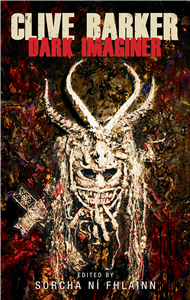
Clive Barker
Dark imaginer
by Sorcha Ní Fhlainn
Clive Barker: Dark imaginer explores the diverse literary, film and visionary creations of the polymathic and influential British artist Clive Barker. In this necessary and timely collection, innovative essays by leading scholars in the fields of literature, film and popular culture explore Barker's contribution to gothic, fantasy and horror studies, interrogating his creative legacy. The volume consists of an extensive introduction and twelve groundbreaking essays that critically reevaluate Barker's oeuvre. These include in-depth analyses of his celebrated and lesser known novels, short stories, theme park designs, screen and comic book adaptations, film direction and production, sketches and book illustrations, as well as responses to his material from critics and fan communities. Clive Barker: Dark imaginer reveals the breadth and depth of Barker's distinctive dark vision, which continues to fascinate and flourish.
-
 Trusted Partner

 March 2026
Racing Legends (Band 1) - Lewis Hamilton
101 Fakten über die Formel 1
by Maurice Hamilton, Cat Sims, Kanut Kirches
Komm mit in die Welt der schnellen Champions! Sieben Weltmeistertitel und über 100 Grand Prix‘ Siege – kein anderer Fahrer hat so viele Rekorde gebrochen wie er: Lewis Hamilton! Schon als Junge wollte er ganz nach vorn und mit Talent, Mut und harter Arbeit hat er es bis an die Spitze der Formel 1 geschafft.In dieser Reihe tauchen Kinder ab 8 Jahren in die aufregende Welt des Motorsports ein. Jeder Band erzählt den Werdegang einer berühmten Rennsportlegende – von den ersten Schritten im Kart bis zum großen Durchbruch in der Formel 1. Fundiert erzählt von Rennsportexperte Maurice Hamilton und damit ein Muss für alle kleinen Fans des Motorsports! Lewis Hamilton hautnah: Mehr als Rekorde und Siege – das Buch erzählt von den Träumen, Herausforderungen und der persönlichen Geschichte des Formel-1-Stars. Spannende Rennsport-Fakten: Zusätzlich wird spannendes Wissen über den Rennsport vermittelt: Technik, Boxenstopps, berühmte Strecken, die Arbeit der Teams und vieles mehr – ein perfekter Einstieg in die faszinierende Welt der Formel 1. Aktueller Trend: Formel 1 erlebt weltweit einen großen Boom – und Racing Legends richtet sich direkt an die jüngsten Motorsport-Fans. Coole Illustrationen: Die Geschichte wird durch viele Schwarz-Weiß-Illustrationen im Comic-Stil aufgelockert. Perfekt für Leseanfänger*innen: Kurze Kapitel, einfache Sätze und viele Illustrationen – ideal für den Lesestart! Experten-Wissen: Der Formel 1-Experte und Journalist Maurice Hamilton hat in seiner Karriere über 500 Grand-Prix-Rennen besucht – und gibt sein Wissen in Racing Legends weiter. Leseförderung mit Antolin: Der Titel ist bei Antolin gelistet und fördert spielerisch die Lesekompetenz.
-
Trusted Partner
 Humanities & Social SciencesSeptember 2024
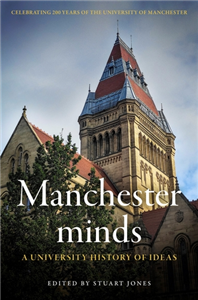
Manchester minds
A university history of ideas
by Stuart Jones
A bicentennial celebration of brilliant thinkers from The University of Manchester's history. The year 2024 marks two centuries since the establishment of The University of Manchester in its earliest form. The first of England's civic universities, Manchester has been home and host to a huge number of influential thinkers and generated world-changing ideas. This book presents a rich account of the remarkable contribution that people associated with The University of Manchester have made to human knowledge. A who's who of Manchester greats, it presents fascinating snapshots of pioneering artists, scholars and scientists, from the poet and activist Eva Gore-Booth to the economist Arthur Lewis, the computer scientist Alan Turing and the physicist Brian Cox.
-
Trusted Partner
-
Trusted Partner

 September 2013
Die irgendwie richtige Richtung
Eine Pilgerreise
by Gideon Lewis-Kraus
»Jakobsweg – Zielstrebigkeit – 10. Juni«. Was soll das? Er kann sich beim besten Willen nicht mehr erinnern, warum er das in sein Notizbuch geschrieben hat. Gideon ruft seinen Freund Tom an, und der weiß es. Sie sind zum gemeinsamen Pilgern verabredet. Am 10. Juni geht es los. Der Weg ist das Ziel, alles andere ist egal. Hauptsache, die Richtung stimmt, irgendwie. Santiago di Compostela ist weit entfernt, aber Berlin mit seinen Galerieeröffnungen, Bars und Clubs glücklicherweise auch. Pilgernd will er sich von den Zwängen der grenzenlosen Freiheit befreien. Und der ersten großen Krise seines Lebens entkommen, in die er geriet, als der Vater, ein schwuler Rabbi aus New Jersey, die Familie verließ, um mit seinem Freund zusammenzuziehen. Pilgernd kommt er dem eigenen Glück und dem Mysterium seiner Familie, Vaters verborgenem Leben, auf die Spur. Zum Schluss hat sich etwas verändert. Er hat sich verändert. Er hat das Rätsel seines Lebens gelöst. »Im Verlauf eines Jahres, im Verlauf dieses schönen, lebensklugen, drogen-, freundschaft- und sexverherrlichenden Buches wird Gideon Lewis-Kraus geradezu in eine Pilgerschaftsabhängigkeit geraten und von Ort zu Ort ziehen, fort aus der Welt der unendlichen Freiheiten oder der unendlichen Abhängigkeiten, hinüber in die Wanderwelt der Notwendigkeit.« Volker Weidermann, FAS
-
Trusted Partner
 September 2013
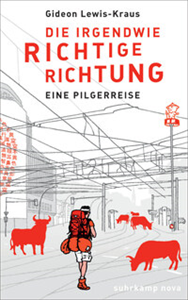
Die irgendwie richtige Richtung
Eine Pilgerreise
by Gideon Lewis-Kraus, Thomas Pletzinger
»Jakobsweg – Zielstrebigkeit – 10. Juni«. Was soll das? Er kann sich beim besten Willen nicht mehr erinnern, warum er das in sein Notizbuch geschrieben hat. Gideon ruft seinen Freund Tom an, und der weiß es. Sie sind zum gemeinsamen Pilgern verabredet. Am 10. Juni geht es los. Der Weg ist das Ziel, alles andere ist egal. Hauptsache, die Richtung stimmt, irgendwie. Santiago di Compostela ist weit entfernt, aber Berlin mit seinen Galerieeröffnungen, Bars und Clubs glücklicherweise auch. Pilgernd will er sich von den Zwängen der grenzenlosen Freiheit befreien. Und der ersten großen Krise seines Lebens entkommen, in die er geriet, als der Vater, ein schwuler Rabbi aus New Jersey, die Familie verließ, um mit seinem Freund zusammenzuziehen. Pilgernd kommt er dem eigenen Glück und dem Mysterium seiner Familie, Vaters verborgenem Leben, auf die Spur. Zum Schluss hat sich etwas verändert. Er hat sich verändert. Er hat das Rätsel seines Lebens gelöst. »Im Verlauf eines Jahres, im Verlauf dieses schönen, lebensklugen, drogen-, freundschaft- und sexverherrlichenden Buches wird Gideon Lewis-Kraus geradezu in eine Pilgerschaftsabhängigkeit geraten und von Ort zu Ort ziehen, fort aus der Welt der unendlichen Freiheiten oder der unendlichen Abhängigkeiten, hinüber in die Wanderwelt der Notwendigkeit.« Volker Weidermann, FAS
-
Trusted Partner
-
Trusted Partner

 March 2014
Der unvermeidliche Tod des Lewis Winter
Thriller
by MacKay, Malcolm / Englisch Gunkel, Thomas
-
Trusted Partner
-
Trusted Partner
-
Trusted Partner
-
Trusted Partner
 The ArtsJune 2022
Transmodern
An art history of contact, 1920–60
by Christian Kravagna, Marsha Meskimmon, Amelia Jones,
How can we reconfigure our picture of modern art after the postcolonial turn without simply adding regional art histories to the Eurocentric canon? Transmodern examines the global dimension of modern art by tracing the crossroads of different modernisms in Asia, Europe and the Americas. Featuring case studies in Indian modernism, the Harlem Renaissance and post-war abstraction, it demonstrates the significance of transcultural contacts between artists from both sides of the colonial divide. The book argues for the need to study non-western avant-gardes and Black avant-gardes within the west as transmodern counter-currents to mainstream modernism. It situates transcultural art practices from the 1920s to the 1960s within the framework of anti-colonial movements and in relation to contemporary transcultural thinking that challenged colonial concepts of race and culture with notions of syncretism and hybridity.
-
Trusted Partner
 The ArtsJune 2022
Transmodern
An art history of contact, 1920–60
by Christian Kravagna, Marsha Meskimmon, Amelia Jones,
How can we reconfigure our picture of modern art after the postcolonial turn without simply adding regional art histories to the Eurocentric canon? Transmodern examines the global dimension of modern art by tracing the crossroads of different modernisms in Asia, Europe and the Americas. Featuring case studies in Indian modernism, the Harlem Renaissance and post-war abstraction, it demonstrates the significance of transcultural contacts between artists from both sides of the colonial divide. The book argues for the need to study non-western avant-gardes and Black avant-gardes within the west as transmodern counter-currents to mainstream modernism. It situates transcultural art practices from the 1920s to the 1960s within the framework of anti-colonial movements and in relation to contemporary transcultural thinking that challenged colonial concepts of race and culture with notions of syncretism and hybridity.
-
Trusted Partner
 The ArtsJune 2022
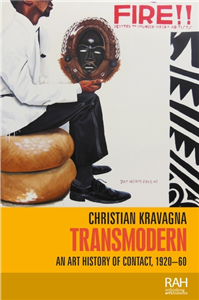
Transmodern
An art history of contact, 1920–60
by Christian Kravagna, Marsha Meskimmon, Amelia Jones,
How can we reconfigure our picture of modern art after the postcolonial turn without simply adding regional art histories to the Eurocentric canon? Transmodern examines the global dimension of modern art by tracing the crossroads of different modernisms in Asia, Europe and the Americas. Featuring case studies in Indian modernism, the Harlem Renaissance and post-war abstraction, it demonstrates the significance of transcultural contacts between artists from both sides of the colonial divide. The book argues for the need to study non-western avant-gardes and Black avant-gardes within the west as transmodern counter-currents to mainstream modernism. It situates transcultural art practices from the 1920s to the 1960s within the framework of anti-colonial movements and in relation to contemporary transcultural thinking that challenged colonial concepts of race and culture with notions of syncretism and hybridity.
-
Trusted Partner
-
Trusted Partner
 Humanities & Social SciencesJune 2005
Power and the people
A social history of central European politics, 1945–56
by Eleonore Breuning, Jill Lewis, Gareth Pritchard
This book covers various aspects of the social history of politics on both sides of the Iron Curtain in the period 1945 to 1956. The contributors come from a range of countries (Austria, Germany, Hungary, Slovakia and the United Kingdom) and comprise a mixture of established historians and younger scholars engaged in pioneering research. The individual chapters are organised into four sections dealing with workers, ethnic and linguistic minorities, youth, and women. In order to enhance the comparative character of the volume, the four chapters contained in each section consider the position of these social groups in, respectively, West Germany, East Germany, Austria, and either Czechoslovakia or Hungary. Major themes include the absence of popular revolutions in the aftermath of World War Two, the re-imposition of social control by post-war elites, the attempt to restore pre-war gender relations, and the failure of Communist parties to win popular support. The chosen time-frame saw most of the decisive developments which set the pattern for the remaining Cold War period and is therefore of key importance for any student of this topic. ;
-
Trusted Partner
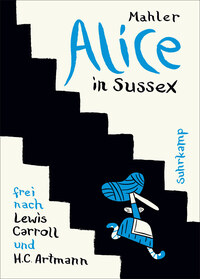 March 2013
Alice in Sussex
Frei nach Lewis Carroll und H.C. Artmann
by Nicolas Mahler, Andreas Platthaus, Nicolas Mahler, Lewis Carroll
Alice findet sich im Traumland wieder. Dort trifft sie auf das weiße Kaninchen, das Alice in seinen unterirdischen Bau führt, um dort nach einer illustrierten Ausgabe von H.C. Artmanns »Frankenstein in Sussex« zu suchen. Im Laufe der Handlung trifft Alice wiederholt auf das Kaninchen, das auch aus anderen literarischen Werken zitiert, sei es von Herman Melville oder E.M. Cioran. Anders als bei Carroll befindet sich diese Alice nicht im Wunderland, sondern in einem tiefen Haus unter der Erde. Dort begegnet sie in verschiedenen Stockwerken den bekannten Schöpfungen Lewis Carrolls: der pfeiferauchenden Raupe, der grinsenden Katze, der Suppenschildkröte und anderen mehr. Wiederholt werden von diesen Kreaturen die Schrecknisse der Kindheit und Jugend angesprochen. Als Alice, im Erdgeschoss des Hauses angekommen, Frankensteins Monster begegnet, erwacht sie aus ihrem schrecklichen Traum.
-
Trusted Partner
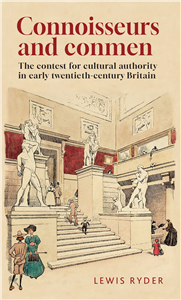 Humanities & Social SciencesApril 2026
Connoisseurs and conmen
The contest for cultural authority in early twentieth-century Britain
by Lewis Ryder
This book examines John Hilditch (1872-1930), a notorious collector of Chinese art who lied, hoaxed and manipulated in his struggle against museum experts to become a cultural authority. Previously overlooked as a pest with a dubious collection, this book uses Hilditch to interrogate how far the monumental social, cultural and political changes of the early twentieth century unsettled social and cultural hierarchies and how these hierarchies were remade. It shows how the cultural elites were forced to engage with the public and re-draw the boundaries of citizenship, expertise and high and low culture in response to unprecedented social mobility, the democratisation of culture and politics, as well as the effects of British imperialism which brought ordinary Britons access to antiquities as well as confidence to claim expertise over foreign cultures. The book will interest social and cultural historians of Modern Britain, museum scholars and art historians.
-
Trusted Partner

 July 1987
Das Buch des Alfred Kantor
by Alfred Kantor, Alfred Kantor, Johannes Eidlitz, Friedrich Heer
Theresienstadt - Auschwitz - Schwarzheide: Das sind die Leidensstationen des jungen tschechischen Künstlers Alfred Kantor in den Jahren 1941-1945. Im Juli 1945, zehn Wochen nach der Befreiung aus dreieinhalb Jahre dauernder Haft in Lagern des NS-Regimes, kam der damals zweiundzwanzigjährige Kantor nach Deggendorf in ein Lager für »Displaced Persons«. Dort schuf er in etwa zwei Monaten die in diesem Band vorgelegten 127 mit Wasserfarben kolorierten Zeichnungen, die er in einem von einem Buchbinder eigens angefertigten Buch mit leeren Blättern eintrug.




