
Gyeonggi Content Agency
GCA supports the planning, production, distribution, overseas expansion of contents including videos and films, music, publishing, webtoons and animations, games, etc
View Rights Portal
GCA supports the planning, production, distribution, overseas expansion of contents including videos and films, music, publishing, webtoons and animations, games, etc
View Rights Portal

The first in-depth, comprehensive study of Korean cinema offering original insight into the relationships between ideology and the art of cinema from East Asian perspectives. Combines issues of contemporary Korean culture and cinematic representation of the society and people in both North and South Korea. Covers the introduction of motion pictures in 1903, Korean cinema during the Japanese colonial period (1910-45) and the development of North and South Korean cinema up to the 1990s. Introduces the works of Korea's major directors, and analyses the Korean film industry in terms of film production, distribution and reception. Based on this historical analysis, the study investigates ideological constructs in seventeen films, eight from North Korea and nine from South Korea.

Contemporary focus, right up to date with material from 1980s and 90s. Wide-ranging analyses of major directors, themes, genres and issues, including historical film, genre cinema, women in film and autonomies.
 Trusted Partner
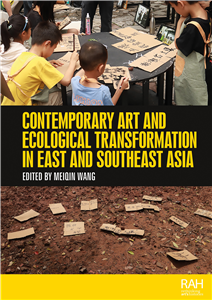
This anthology, presenting new research from fourteen scholars, delves into the interplay between contemporary art and ecological concerns in East and Southeast Asia. Focused on the concept of artistic remediation, the book unravels the diverse capacities of art to combat systemic anthropogenic destruction to the environment and ecology. At its core, the book articulates the ongoing ecological transformation in art and art history that embraces a paradigm shift in human-nature relationships, emphasizing interconnectedness of all life forms of the Earth. Bridging art studies, activism, and environmental studies, the book examines how artistic practices in the region have engaged with ecocritical reflection, biodiversity advocacy, sustainable practices, and environmental justice, among others. Providing a platform for critical and timely analysis of artistic interventions in the face of existential crises, the book acknowledges diverse voices of scholars who have situated their scholarship in the cultural and artistic specificities of various societies, locales, and communities in the region.
Trusted Partner

An exploration of the European Union with sections on conflict, intelligence and security, immigration and human rights, world economic development and environmental sustainability, high technologies and their growing impact.
Trusted Partner
 Trusted Partner
Trusted Partner
Trusted Partner
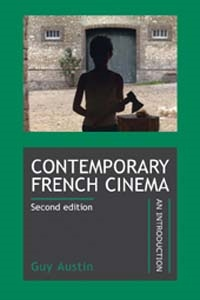
Contemporary French cinema is an essential introduction to popular French film of the last 35 years. It charts recent developments in all genres of French cinema with analyses of over 120 movies, from Les Valseuses to Caché. Reflecting the diversity of French film production since the New Wave, this clear and perceptive study includes chapters on the heritage film, the thriller and the war movie, alongside the 'cinéma du look', representations of sexuality, comedies, the work of women film makers and le jeune cinéma. Each chapter introduces the public reception and critical debates surrounding a given genre, interwoven with detailed accounts of relevant films. Confirmed as a major contribution to both Film Studies and French Studies, this book is a fascinating volume for students and fans of French film alike. ;
Trusted Partner

Contemporary French cinema is an essential introduction to popular French film of the last 35 years. It charts recent developments in all genres of French cinema with analyses of over 120 movies, from Les Valseuses to Caché. Reflecting the diversity of French film production since the New Wave, this clear and perceptive study includes chapters on the heritage film, the thriller and the war movie, alongside the 'cinéma du look', representations of sexuality, comedies, the work of women film makers and le jeune cinéma. Each chapter introduces the public reception and critical debates surrounding a given genre, interwoven with detailed accounts of relevant films. Confirmed as a major contribution to both Film Studies and French Studies, this book is a fascinating volume for students and fans of French film alike.
Trusted Partner

Contemporary French cinema is an essential introduction to popular French film of the last 35 years. It charts recent developments in all genres of French cinema with analyses of over 120 movies, from Les Valseuses to Caché. Reflecting the diversity of French film production since the New Wave, this clear and perceptive study includes chapters on the heritage film, the thriller and the war movie, alongside the 'cinéma du look', representations of sexuality, comedies, the work of women film makers and le jeune cinéma. Each chapter introduces the public reception and critical debates surrounding a given genre, interwoven with detailed accounts of relevant films. Confirmed as a major contribution to both Film Studies and French Studies, this book is a fascinating volume for students and fans of French film alike.
Trusted Partner

The first in-depth, comprehensive study of Korean cinema offering original insight into the relationships between ideology and the art of cinema from East Asian perspectives. Combines issues of contemporary Korean culture and cinematic representation of the society and people in both North and South Korea. Covers the introduction of motion pictures in 1903, Korean cinema during the Japanese colonial period (1910-45) and the development of North and South Korean cinema up to the 1990s. Introduces the works of Korea's major directors, and analyses the Korean film industry in terms of film production, distribution and reception. Based on this historical analysis, the study investigates ideological constructs in seventeen films, eight from North Korea and nine from South Korea. ;
Trusted Partner
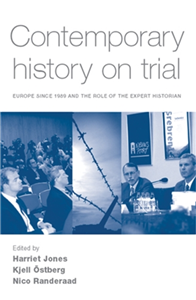
Is it right for historians to serve as 'expert witnesses' to past events? Since the end of the Cold War, a series of heated and politicised debates across Europe have questioned the 'truth' about painful episodes in the twentieth century. From the Holocaust to Srebrenica, inquiries and fact-finding commissions have become a common device employed by governments to deal with the pressure of public opinion. State-sponsored programmes of education and research attempt to encourage a common moral understanding of the lessons we learn from these painful memories. Contemporary historians have increasingly been drawn into these efforts since 1989 - in the courtroom, in the media, on commissions, as advisers. In a series of thoughtful essays, written by leading historians from across Europe, this volume considers the ethics and responsibilities that this new role entails. For anyone concerned with the role of the historian in contemporary society and how we arrive at a public understanding of history, this book is essential reading. ;
Trusted Partner

In the Western cultural production that puts individual or collective fear at its center, East/Central Europe has been portrayed as an othered space of horror - lawless, frightening zones where anything can happen. Incorporating articles on literature, film, visual arts, video games, music videos, and music festivals, Contemporary Slavic horror across media: Cursed zones is a pioneering anthology of academic essays devoted to Slavic horror fiction. The book focuses on works from the mid-20th century through the present, particularly the post-Soviet period. Assessing current trends in Czech, Polish, Russian, Slovak, Ukrainian, and East/Central European horror media, the book looks at similarities and idiosyncrasies of the genre in its Slavic variant. With this anthology we hope to tame 'the Easterner Other' and start exorcising 'monstrous' East/Central Europe.
Trusted Partner
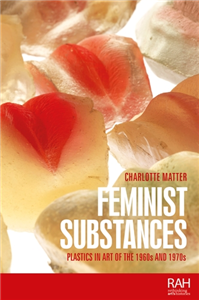
Numerous women artists engaged with industrial materials such as plastics in the 1960s and 1970s, contrary to what the discourse of the time would have us believe. As Feminist substances shows, their works offered unique approaches to plastics in art, introducing new material meanings through a feminist lens. With a focus on Europe and Latin America, the book discusses the practices of Carla Accardi, Lea Lublin and Alina Szapocznikow, combining close readings of selected artworks with broader considerations of their social contexts. It explores their use of Sicofoil, plexiglass, plastic inflatables, polyester resin and polyurethane foam to address key concerns of feminist thought in relation to social reproduction, motherhood, memory, desire and illness. Beyond commonplaces of plastics as generic bad materials, Feminist substances considers more complex ways of engaging with synthetic matter, taking into account our messy relationships with these controversial materials.
Trusted Partner


— An extraordinary story of migration — Contemporary history of the 70s and backgrounds to India, Afghanistan, Iran, Turkey, Bulgaria, the former Yugoslavia, the GDR and the Federal Republic of Germany He was the son of the Sikh priest, a successful 400-meter runner and, eventually, a migrant. In 1979, Bagicha Singh turned his back on his homeland and set off with a head full of dreams on the long, turbulent overland journey from India to Germany. It was the year the Soviet Union invaded Afghanistan and the Islamic Revolution raged in Iran. A year whose aftermath continues to shape the world to this day. More than 40 years later, his daughter tells the story of Bagicha's adventurous journey. The result is a touching document on origin, contemporary history, and the meaning of migration.
Trusted Partner
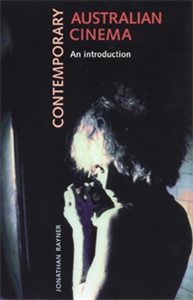
Provides an introduction to the products and context of the new Australian film industry which arose toward the end of the 1960s. Traces the development of Australian film, in terms of prominent directors and stars, consistent themes, styles and evolving genres. The evolution of the film genres peculiar to Australia, and the adaptation of conventional Hollywood forms (such as the musical and the road movie) are examined in detail through textual readings of landmark films. Films and trends discussed include: the period film and Picnic at Hanging Rock; the Gothic film and the Mad Max trilogy; camp and kitsch comedy and the Adventures of Pricilla, Queen of the Desert. The key issue of the revival (the definition, representation and propagation of a national image) is woven through analysis of the new Australian cinema. ;
Trusted Partner

Provides an introduction to the products and context of the new Australian film industry which arose toward the end of the 1960s. Traces the development of Australian film, in terms of prominent directors and stars, consistent themes, styles and evolving genres. The evolution of the film genres peculiar to Australia, and the adaptation of conventional Hollywood forms (such as the musical and the road movie) are examined in detail through textual readings of landmark films. Films and trends discussed include: the period film and Picnic at Hanging Rock; the Gothic film and the Mad Max trilogy; camp and kitsch comedy and the Adventures of Pricilla, Queen of the Desert. The key issue of the revival (the definition, representation and propagation of a national image) is woven through analysis of the new Australian cinema.
Trusted Partner
 Trusted Partner
This unique and exciting collection, inspired by the scholarship of literary critic Stephanie Trigg, offers cutting-edge responses to the writings of Geoffrey Chaucer for the current critical moment. The chapters are linked by the organic and naturally occurring affinities that emerge from Trigg's ongoing legacy; containing diverse methodological approaches and themes, they engage with Chaucer through ecocriticism, medieval literary and historical criticism, and medievalism. The contributors, trailblazing international specialists in their respective fields, honour Trigg's distinctive and energetic mode of enquiry (the symptomatic long history) and intellectual contribution to the humanities. At the same time, their approaches exemplify shifting trends in Chaucer scholarship. Like Chaucer's pilgrims, these scholars speak to and alongside each other, but their essays are also attentive to 'hearing Chaucer speak' then, now and in the future.
Trusted Partner
 Trusted Partner
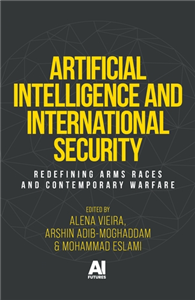
As artificial intelligence continues to transform modern warfare, the rapid development of AI-driven weaponry presents profound ethical, legal, and security challenges. Artificial Intelligence and International Security: Redefining Arms Races and Contemporary Warfare offers a critical examination of this emerging arms race, exploring issues of arms control, international law, diplomacy, and long-term security. Bringing together expert perspectives, this volume assesses the risks and implications of autonomous weapon systems while proposing solutions to ensure ethical AI deployment. Through a comprehensive analysis of this urgent issue, it seeks to contribute to global debates and inform policies that foster peace, stability, and the responsible use of AI in warfare.



