
Deutscher Apotheker Verlag
Specialist books in the fields of pharmacy - drug information - medicine.
View Rights Portal Trusted Partner

Specialist books in the fields of pharmacy - drug information - medicine.
View Rights Portal
The German Cultural Forum for Central and Eastern Europe publishes richly illustrated non-fiction books about the cultural history of those areas of Central and Eastern Europe where Germans used to, or still do live. The carefully edited titles with elaborated appendices are written by well-known experts who are able to present information about Central and Eastern Europe in an attractive way by cultural travel guides or historical overview books. The Cultural Forum also edits an annual and a bimonthly magazine, Blickwechsel ("Change of perspective") and Kulturkorrespondenz östliches Europa ("Cultural Correspondence Central and Eastern Europe"). Furthermore, the Forum organizes popular lectures, discussions, readings, exhibitions, concerts, journalist trips, writer residencies and prize-givings.
View Rights Portal Trusted Partner
Trusted Partner

 Trusted Partner

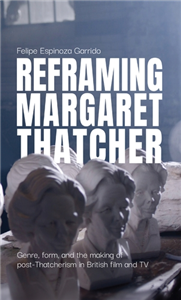
Against the backdrop of Britain's historically anti-Thatcherite films of the 1980s and 1990s, Reframing Margaret Thatcher outlines a decisive shift in the collective imagination of Thatcher. Drawing on genre, trauma, and queer studies, it demonstrates how post-Thatcherite films reflect upon their own entanglement in the polarization of the Thatcher years but also rewrite the clichéd Iron Lady. Chapters on The Iron Lady, This is England, Doomsday, 9 Dead Gay Guys, and the Sherlock TV series investigate various Thatcher imaginations, ranging from Thatcher as a lesbian mob boss, as prime minister in apocalyptic England, to Thatcher as an empty bust. This innovative study shows how the apparent depoliticization of British film makes visible new relations between genre, cinematic form, and imaginations of the past and offers fresh perspectives that both critique and reinterpret Thatcher's enduring impact.
Trusted Partner
Trusted Partner
Trusted Partner
Trusted Partner
Trusted Partner
Trusted Partner


"Ninja Academy 3. The Last Trip" entführt Leser zurück in die Welt von Sam, Svea, Momo, Bent und Li-Ho, die nach ihrem Erfolg im TESUTO nun als Ashigaru an der Ninja Academy ausgebildet werden. Doch die Ausbildung wird zur Nebensache, als gefährliche Herausforderungen und ein rätselhafter Verfolger die Gruppe in Atem halten. Momo's merkwürdiges Verhalten und das plötzliche Auftauchen von Sams Vater werfen neue Rätsel auf und stellen die Freundschaft der Fünf auf die Probe. Werden sie die drohenden Gefahren meistern und zusammenhalten können? Kai Lüftner liefert mit diesem dritten Band ein weiteres hochspannendes Abenteuer, das bis zur letzten Seite fesselt. Begleite Sam und seine Freunde auf ihrem Weg zum Ashigaru und erlebe den Alltag an der Ninja Academy mit all seinen Herausforderungen. Ein geheimnisvoller Verfolger und lebensgefährliche Situationen während des Trainings für eine Shinobi-Show bringen die Gruppe an ihre Grenzen. Die überraschende Ankunft von Sams Vater bringt ungeahnte Wendungen und emotionale Tiefen in die Geschichte. Temporeiche Action, kombiniert mit Kai Lüftners bewährtem Erzähltalent, macht diesen Band zu einem unvergesslichen Leseerlebnis. Im Zentrum des Geschehens stehen die unerschütterliche Freundschaft und die gemeinsamen Werte der Protagonisten, die sie durch alle Gefahren tragen.
Trusted Partner

Margaret Cavendish was one of the most prolific, complex and misunderstood writers of the seventeenth century. A contemporary of Descartes and Hobbes, she was fascinated by philosophical, scientific and imaginative advances, and struggled to overcome the political and cultural obstacles which threatened to stop her engagement with such discourses. Emma Rees examines how Cavendish engaged with the work of thinkers such as Lucretius, Plato, Homer and Harvey in an attempt to write her way out of the exile which threatened not only her intellectual pursuits but her very existence. What emerges is the image of an intelligent, audacious and intrepid early modern woman whose tale will appeal to specialists and general readers alike. ;
Trusted Partner
Trusted Partner
Trusted Partner
Trusted Partner
Trusted Partner
Trusted Partner

In den in diesem Band enthaltenen Texten wird nicht lediglich über bestimmte Figuren und Trends der zeitgenössischen französischen Philosophie und über deren Verbindung zu Deutschland gesprochen, Waldenfels kommt es vielmehr darauf an, mit solchen französischen Autoren und Texten weiterzudenken, die ihrerseits entscheidende Anregungen der deutschsprachigen Philosophie verdanken.
Trusted Partner

»Versprechen auf Deutsch« bietet die erweiterte Version der Rede, die Peter Sloterdijk in einer Matinee der Münchner Kammerspiele am Sonntag, dem 10. Dezember 1989, gehalten hat. Es versteht sich von selbst, daß die dramatischen Vorgänge des November 1989 den Bezugsrahmen für sämtliche Aussagen des vorliegenden Textes bilden. Die aktuellen Ergebnisse haben es unvermeidlich gemacht, diese Rede »über« das eigene Land als Rede »an« die deutsche Nation vorzutragen. Eine solche Adressierung folgt nicht so sehr dem fragwürdigen rhetorischen Vorbild Fichtes; sie ergibt sich vielmehr aus den Überlegungen des Autors über den Zusammenhang zwischen Sprache und Nationalität. Die historischen Umstände von 1989 sind nicht weniger bemerkenswert als die von 1808. Aber es liegt heute in der Natur der Sache, daß man sich »an« die Angehörigen einer wieder unruhig gewordenen Nation wenden muß, um etwas »über« die zu sagen.
Trusted Partner
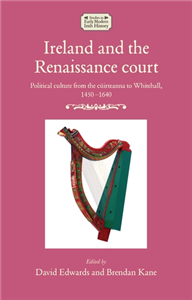
Ireland and the Renaissance court is an interdisciplinary collection of essays exploring Irish and English courts, courtiers and politics in the early modern period, c. 1450-1650. Chapters are contributed by both established and emergent scholars working in the fields of history, literary studies, and philology. They focus on Gaelic cúirteanna, the indigenous centres of aristocratic life throughout the medieval period; on the regnal court of the emergent British empire based in London at Whitehall; and on Irish participation in the wider world of European elite life and letters. Collectively, they expand the chronological limits of 'early modern' Ireland to include the fifteenth century and recreate its multi-lingual character through exploration of its English, Irish and Latin archives. This volume is an innovative effort at moving beyond binary approaches to English-Irish history by demonstrating points of contact as well as contention.





