Your Search Results

      • Crimson Dragon Publishing

        Crimson Dragon Publishing carries books that encourage readers of all ages by sparking the imagination. While we focus on the fantasy and science fiction genres, we also carry illustrated books for young readers that focus on social-emotional skills development and fictionalized non-fiction.

        View Rights Portal
      • Martini Maria Cristina | MMC Edizioni

        MMC EDIZIONI is a publishing house based in Rome.Born in 2001 as a generalist, along the time it has specialized almost exclusively in non-fiction, dedicated in particular (but not only) to the city of Rome.The main series, called "A walk with history" offers an alternative vision of the city through the historical reconnaissance and analysis of some of its urban furnishings that are not taken into consideration such as small fountains, clocks, inscriptions, sacred shrines, plaques. This series stands out for a particular graphic style and for the abundance of photographs, specially made for these books.Other series on Rome are instead dedicated to in-depth studies on specific historical and customs themes, or on the mysterious aspects of the city that also reveal its dark side.In the MMC catalogue are other non-fiction books on topics such as Music, Interculture, Anthropology and a series of stories for children encouraging solidarity, non-violence and respect for the environment

        View Rights Portal
      • Trusted Partner
        Humanities & Social Sciences
        June 2012

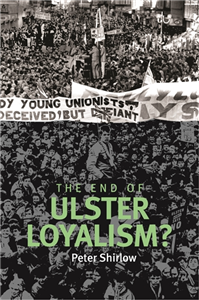
        The end of Ulster loyalism?

        by Peter Shirlow

        The end of Ulster loyalism? explores the dynamics and divisions within paramilitary groups since the mid-1970s. It, despite contrary public opinion, details and explains the nature of Loyalist conflict transformation. A key model of transition that is relevant to arenas beyond Northern Ireland. The book also discusses the nature and extent of loyalist violence and provides a rarely heard voice regarding State-led collusion. It locates Loyalist ideas and opinions that have been largely invisible and highlights how an extensive element of positive Loyalist renewal has been purposefully suppressed and unmentioned. It is a key text for any student of politics, criminology, human geography and conflict and conflict transformation and is particularly relevant to the scholarship of pro-State groups who are infrequently considered in academic deliberations. A book of both hope and despair that emerges from a destabilising past and a yet-to-be-decided future. ;

      • Trusted Partner
        Humanities & Social Sciences
        December 2014

        Human remains and mass violence

        Methodological approaches

        by Jean-Marc Dreyfus, Élisabeth Anstett, Jean-Marc Dreyfus, Élisabeth Anstett

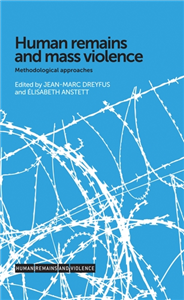
        This book outlines for the first time in a single volume the theoretical and methodological tools for a study of human remains resulting from episodes of mass violence and genocide. Despite the highly innovative and contemporary research into both mass violence and the body, the most significant consequence of conflict - the corpse - remains absent from the scope of existing research. Why have human remains hitherto remained absent from our investigation, and how do historians, anthropologists and legal scholars, including specialists in criminology and political science, confront these difficult issues? By drawing on international case studies including genocides in Rwanda, the Khmer Rouge, Argentina, Russia and the context of post-World War II Europe, this ground-breaking edited collection opens new avenues of research. Multidisciplinary in scope, this volume will appeal to readers interested in an understanding of mass violence's aftermath, including researchers in history, anthropology, sociology, law, politics and modern warfare. ;

      • Trusted Partner
        Humanities & Social Sciences
        August 2016

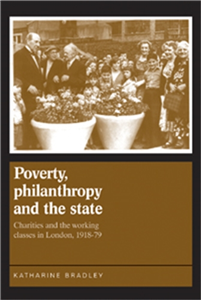
        Poverty, philanthropy and the state

        Charities and the working classes in London, 1918–79

        by Katharine Bradley

        This book looks at a number of charities in London between 1918 and 1979, and the ways in which they negotiated the growth of the welfare state and changes in the communities around them.These charities - the 'university settlements'- were founded in the 1880's and 1890's and brought young graduates such as William Beveridge & Clement Attlee to deprived areas of cities to undertake social work. It is of interest to those who wish to know more about the complexities of the relationships between charities, the welfare state and individuals in the course of the twentieth century. Bradley argues that whilst the settlements often had difficulties in sustaining their work with the vulnerable, they remained an important factor between the individual and the impacts of poverty. Aimed at scholars in the fields of history, social policy, sociology and criminology this book will also be of interest to practitioners in the voluntary sector and government. ;

      • Trusted Partner
        First World War
        November 2009

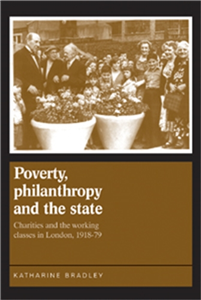
        Poverty, philanthropy and the state

        Charities and the working classes in London, 1918–79

        by Katharine Bradley

        This book looks at a number of charities in London between 1918 and 1979, and the ways in which they negotiated the growth of the welfare state and changes in the communities around them.These charities - the 'university settlements'- were founded in the 1880's and 1890's and brought young graduates such as William Beveridge & Clement Attlee to deprived areas of cities to undertake social work. It is of interest to those who wish to know more about the complexities of the relationships between charities, the welfare state and individuals in the course of the twentieth century. Bradley argues that whilst the settlements often had difficulties in sustaining their work with the vulnerable, they remained an important factor between the individual and the impacts of poverty. Aimed at scholars in the fields of history, social policy, sociology and criminology this book will also be of interest to practitioners in the voluntary sector and government.

      • Trusted Partner
        Humanities & Social Sciences
        May 2026

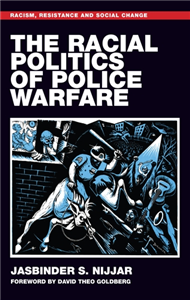
        The racial politics of police warfare

        by Jasbinder S. Nijjar

        Amid renewed anti-racist resistance to violent policing, The racial politics of police warfare unpacks the racisms that rationalise militarised policing in contemporary Britain. Jasbinder S. Nijjar shatters prevailing myths about British police as an impartial public service, by revealing it as an institution where racism and war reinforce one another. In examining flagship anti-gang and counter-terrorism policies and practices, the book offers a unique analysis of the relationship between anti-black and anti-Muslim racisms, to demonstrate how racialised populations are institutionalised as common enemies of modernity. Combining perspectives from sociology, history, criminology and social policy, Nijjar illustrates how British policing defends law and order and national security from the perceived threat of race through hyper-intrusive, pre-emptive and deathly measures. Accordingly, he gives a fresh take on resisting racial police warfare, calling for strategies that are at once political, collective, anti-militaristic and abolitionist.

      • Trusted Partner
        Humanities & Social Sciences
        March 2017

        Human remains and mass violence

        Methodological approaches

        by Jean-Marc Dreyfus, Jean-Marc Dreyfus, Élisabeth Anstett, Élisabeth Anstett

        This book outlines for the first time in a single volume the theoretical and methodological tools for a study of human remains resulting from episodes of mass violence and genocide. Despite the highly innovative and contemporary research into both mass violence and the body, the most significant consequence of conflict - the corpse - remains absent from the scope of existing research. Why have human remains hitherto remained absent from our investigation, and how do historians, anthropologists and legal scholars, including specialists in criminology and political science, confront these difficult issues? By drawing on international case studies including genocides in Rwanda, the Khmer Rouge, Argentina, Russia and the context of post-World War II Europe, this ground-breaking edited collection opens new avenues of research. Multidisciplinary in scope, this volume will appeal to readers interested in an understanding of mass violence's aftermath, including researchers in history, anthropology, sociology, law, politics and modern warfare. The research program leading to this publication has received funding from the European Research Council under the European Union's Seventh Framework Programme (FP/2007-2013) / ERC Grant Agreement n° 283-617.

      • Trusted Partner
        Humanities & Social Sciences
        April 2008

        Policing the peace in Northern Ireland

        Politics, crime and security after the Belfast Agreement

        by Jon Moran

        This timely and controversial book shows how crime, and the authorities' response to crime, became central to the peace process in Northern Ireland. At times, paramilitary activity threatened to destabilise the peace in Northern Ireland after 1998, but crime was central to maintaining capacity should the groups return to war. Over time, the reduction of crime was central to these groups' own attempts to reform and official judgements as to whether they were genuinely demobilising. The state's response to crime added controversy. Police reform produced the Police Service of Northern Ireland (PSNI) and the new Organised Crime Task Force signalled the importance of crime control, but the Assets Recovery Agency, supposedly the 'magic bullet' for organised crime, misfired. Law enforcement was also deeply affected by the British state's response to paramilitary crime. By 2007, peace was apparently secure and paramilitaries were 'de-criminalising', but this often chaotic process was marked with questions about the British state's adherence to the rule of law. Incorporating first-hand research in the PSNI, the book will be of interest to general readers and scholars of Irish Studies, criminology, and British and comparative politics. ;

      • Trusted Partner
        Society & culture: general
        May 2017

        Human remains and mass violence

        Methodological approaches

        by Edited by Jean-Marc Dreyfus, Élisabeth Anstett

        This book outlines for the first time in a single volume the theoretical and methodological tools for a study of human remains resulting from episodes of mass violence and genocide. Despite the highly innovative and contemporary research into both mass violence and the body, the most significant consequence of conflict - the corpse - remains absent from the scope of existing research. Why have human remains hitherto remained absent from our investigation, and how do historians, anthropologists and legal scholars, including specialists in criminology and political science, confront these difficult issues? By drawing on international case studies including genocides in Rwanda, the Khmer Rouge, Argentina, Russia and the context of post-World War II Europe, this ground-breaking edited collection opens new avenues of research. Multidisciplinary in scope, this volume will appeal to readers interested in an understanding of mass violence's aftermath, including researchers in history, anthropology, sociology, law, politics and modern warfare. The research program leading to this publication has received funding from the European Research Council under the European Union's Seventh Framework Programme (FP/2007-2013) / ERC Grant Agreement n° 283-617.

      • Trusted Partner
        November 2021

        Femicide

        Violence against women

        by Julia Cruschwitz, Carolin Haentjes

        In Germany, 132 women were murdered by their (ex-)partners over the past year, according to police statistics. An attempted murder happened every other day – the real figure is in all probability much higher. Julia Cruschwitz and Carolin Haentjes unveil their book on femicides in Germany with research from interviews with academics, criminologists, police officers, social workers, lawyers, survivors, witnesses and relatives and their analysis of scientific reports. Their work highlights how the issue of femicides affects the whole of society, but there are sensible ways to protect women more effectively from male violence. All we must do is take steps to follow these.

      Subscribe to our

      newsletter