
The Arts
June 2026

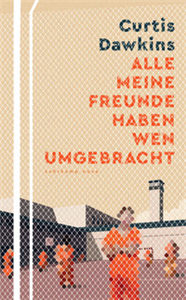
Curtis Dawkins schreibt aus ungewöhnlicher Perspektive. Den Weg des Schriftstellers hatte er eingeschlagen, in namhaften Magazinen veröffentlicht, geheiratet, drei Kinder bekommen. Dann tötete er auf Crack einen Mann. Jetzt sitzt er lebenslänglich im Knast. Und dort schreibt er Literatur, die taumeln lässt. Zwischen Härte und Schönheit, zwischen Gut und Böse, zwischen Liebe und Hass. Dieses Buch ist die kraftvolle literarische Anverwandlung eines Schicksals, es erzählt von Männern hinter Gittern und ihren Versuchen, etwas von dem zurückzugewinnen, was unwiderruflich verloren ist. Es spricht von Freiheit, Liebe und Familie aus der Sicht derer, die ihr Recht darauf verwirkt haben. Curtis Dawkins findet dafür eine massive Sprache, einen Sound voller Sehnsucht, Humor und Tragik. Alle meine Freunde haben wen umgebracht wird so zu einem neuen und streitbaren Meisterwerk amerikanischen Erzählens.
 Trusted Partner
Trusted Partner
Trusted Partner

 Trusted Partner

 Trusted Partner
Trusted Partner
Trusted Partner
Trusted Partner
Trusted Partner
Trusted Partner
Trusted Partner


Dave Haslam presents conversations with creative trailblazers. Over forty years, DJ, writer and broadcaster Dave Haslam has interviewed some of the most fascinating figures in music, literature, film and art. Creative journeys gathers revelatory conversations with creative characters including Neneh Cherry, Maxine Peake, Lemn Sissay, Andrew Weatherall, Raymond Carver and Jeremy Deller. From politics and performance to art, fame and addiction, Haslam's interviewees speak with honesty about their creative journeys. Viv Albertine discusses 'Typical Girls' and Paddy Considine recalls Dead Man's Shoes. Jarvis Cocker goes deep into 'This is Hardcore'. Terry Hall and Miki Berenyi speak about childhood trauma. Bernard Sumner recalls the loss of Ian Curtis. Jonathan Franzen talks about torturing his characters. There's darkness but much humour too. The interviews provide fascinating stories of unorthodox, creative artists navigating negativity and personal setbacks to become celebrated cultural icons.
Trusted Partner

This volume proposes new insights into the uses of classical mythology by Shakespeare and his contemporaries, focusing on interweaving processes in early modern appropriations of myth. Its 11 essays show how early modern writing intertwines diverse myths and plays with variant versions of individual myths that derive from multiple classical sources, as well as medieval, Tudor and early modern retellings and translations. Works discussed include poems and plays by William Shakespeare, Christopher Marlowe and others. Essays concentrate on specific plays including The Merchant of Venice and Dido Queen of Carthage, tracing interactions between myths, chronicles, the Bible and contemporary genres. Mythological figures are considered to demonstrate how the weaving together of sources deconstructs gendered representations. New meanings emerge from these readings, which open up methodological perspectives on multi-textuality, artistic appropriation and cultural hybridity.
Trusted Partner

Volumes of influence explores the work of a number of important books and key writers within the academic disciplines of politics and international relations. It revisits and re-evaluates some of the landmark or classic books in politics and international relations, and assesses the contribution of some of the most influential writers who have played a significant role in the development of these disciplines, who defined their subjects, set agendas and inspired. They remain significant and relevant, offering insights that help in understanding and analysing contemporary problems, issues and debates. The book's chapters - written by specialists in their fields - discuss and evaluate: - 'Walter Bagehot, 'The English constitution' (1867) - Maurice Duverger, 'Political parties' (1953) - Seymour Martin Lipset and Stein Rokkan, 'Cleavage structures, party - systems and voter slignments' (1967) - Gerald Curtis, 'Campaigning Japanese style' (1971) - Steven Lukes, 'Power: A radical view' (1974) - Richard Crossman, 'The diaries of a Cabinet Minister' (1975) - Charles Lindblom, 'Politics and markets' (1977) - George Kennan, 'American diplomacy' (1951) - Graham Allison, 'Essence of decision' (1971) - Charles Beitz, 'Political theory and international relations' (1979) - Samuel Huntington, 'The clash of civilizations' (1993) The book will appeal and be of interest to academics and to students of politics and international relations, highlighting the importance of going back and studying some of the foundation literature in their subjects - books and authors which stand the test of time. ;
Trusted Partner
Trusted Partner

Postmodern, postcolonial and post-truth are broadly used terms. But where do they come from? When and why did the habit of interpreting the world in post-terms emerge? And who exactly were the 'post boys' responsible for this? Post-everything examines why post-Christian, post-industrial and post-bourgeois were terms that resonated, not only among academics, but also in the popular press. It delves into the historical roots of postmodern and poststructuralist, while also subjecting more recent post-constructions (posthumanist, postfeminist) to critical scrutiny. This study is the first to offer a comprehensive history of post-concepts. In tracing how these concepts found their way into a broad range of genres and disciplines, Post-everything contributes to a rapprochement between the history of the humanities and the history of the social sciences.
Trusted Partner
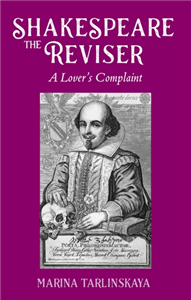
The project researches the difference between a revision vs. a rewriting. The book explores the English poems and plays of the Early New English period, from the sixteenth to the beginning of seventeenth century, with over 50 entries examined. The main material is the poem A Lover's Complaint; the play Double Falsehood by Lewis Theobald; the revised and rewritten post-Restoration plays such as Richard II (revised by Lewis Theobald), and The Fatal Secret (rewritten Webster's The Duchess of Malfi) by Lewis Theobald. An example of authorial revision is Sonnets 2 and 138.
Trusted Partner
 Trusted Partner


Komm mit in die Welt der schnellen Champions! Sieben Weltmeistertitel und über 100 Grand Prix‘ Siege – kein anderer Fahrer hat so viele Rekorde gebrochen wie er: Lewis Hamilton! Schon als Junge wollte er ganz nach vorn und mit Talent, Mut und harter Arbeit hat er es bis an die Spitze der Formel 1 geschafft.In dieser Reihe tauchen Kinder ab 8 Jahren in die aufregende Welt des Motorsports ein. Jeder Band erzählt den Werdegang einer berühmten Rennsportlegende – von den ersten Schritten im Kart bis zum großen Durchbruch in der Formel 1. Fundiert erzählt von Rennsportexperte Maurice Hamilton und damit ein Muss für alle kleinen Fans des Motorsports! Lewis Hamilton hautnah: Mehr als Rekorde und Siege – das Buch erzählt von den Träumen, Herausforderungen und der persönlichen Geschichte des Formel-1-Stars. Spannende Rennsport-Fakten: Zusätzlich wird spannendes Wissen über den Rennsport vermittelt: Technik, Boxenstopps, berühmte Strecken, die Arbeit der Teams und vieles mehr – ein perfekter Einstieg in die faszinierende Welt der Formel 1. Aktueller Trend: Formel 1 erlebt weltweit einen großen Boom – und Racing Legends richtet sich direkt an die jüngsten Motorsport-Fans. Coole Illustrationen: Die Geschichte wird durch viele Schwarz-Weiß-Illustrationen im Comic-Stil aufgelockert. Perfekt für Leseanfänger*innen: Kurze Kapitel, einfache Sätze und viele Illustrationen – ideal für den Lesestart! Experten-Wissen: Der Formel 1-Experte und Journalist Maurice Hamilton hat in seiner Karriere über 500 Grand-Prix-Rennen besucht – und gibt sein Wissen in Racing Legends weiter. Leseförderung mit Antolin: Der Titel ist bei Antolin gelistet und fördert spielerisch die Lesekompetenz.
Trusted Partner

This book offers an accessible critical introduction to the work of Graham Swift, one of Britain's most significant contemporary authors. Through detailed readings of his novels and short stories from 'The Sweet Shop Owner' (1980) to 'The Light of Day' (2003), Daniel Lea lucidly addresses the key themes of history, loss, masculinity and ethical redemption, to present a fresh approach to Swift. This study proposes that one of the side-effects of modernity has been the destruction of traditional pathways of self and collective belief, leading to a loss of understanding between individuals about their duties to each other and to society. Swift's writing returns repeatedly to the question of what we can believe in when all the established markers of identity - family, community, gender, profession, history - have become destabilised. Lea suggests that Swift increasingly moves towards a notion of redemption through a lived ethical practice as the only means of finding solace in a world lacking a central symbolic authority. ;
Trusted Partner
Trusted Partner
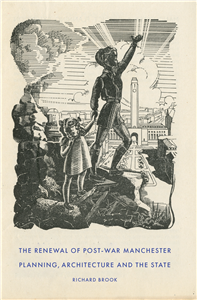
A compelling account of the project to transform post-war Manchester, revealing the clash between utopian vision and compromised reality. Urban renewal in Britain was thrilling in its vision, yet partial and incomplete in its implementation. For the first time, this deep study of a renewal city reveals the complex networks of actors behind physical change and stagnation in post-war Britain. Using the nested scales of region, city and case-study sites, the book explores the relationships between Whitehall legislation, its interpretation by local government planning officers and the on-the-ground impact through urban architectural projects. Each chapter highlights the connections between policy goals, global narratives and the design and construction of cities. The Cold War, decolonialisation, rising consumerism and the oil crisis all feature in a richly illustrated account of architecture and planning in post-war Manchester.
Trusted Partner
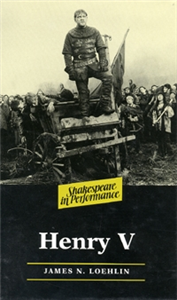
This study examines the profound changes that twentieth-century performance has wrought on Shakespeare's complex drama of war and politics. What was accepted at the turn of the century as a patriotic celebration of a national hero has emerged in the modern theatre as a dark and troubling analysis of the causes and costs of war. The book details the theatrical innovations and political insights that have turned one of Shakespeare's most traditional-bound plays into one of his most popular and provocative. Henry V gives details analyses of several important modern productions. Beginning with a consideration of the play's political significance in Elizabethan London, the book goes on the reveal its subsequent reinvention, both as patriotic pageant and anti-war manifesto. Individual chapters consider important productions by the Royal Shakespeare Company, and other British and North American companies, as well as the landmark film versions. A compelling account of the theatrical revolution that has transformed one of Shakespeare's most challenging plays. ;



