
DIO AZ
DIO AZ is a leading independent Moroccan publisher focusing on children's literature. We create engaging, educational books that inspire and broaden horizons.
View Rights Portal
DIO AZ is a leading independent Moroccan publisher focusing on children's literature. We create engaging, educational books that inspire and broaden horizons.
View Rights Portal
Dar Ihyaa El Ouloum Azzahera (DIO AZ) is an independent publishing house based in Casablanca, Morocco, established in 1975. They publish works in French, English, and Arabic, with a recent focus on expanding their children's book collection.
View Rights Portal

Eine tödliche Jagd von Arizona bis Los Angeles Florence »Florida« Baum ist alles andere als die arme, verfolgte Unschuld, für die sie sich im Frauengefängnis von Arizona ausgibt ‒ zumindest behauptet das ihre ehemalige Zellengenossin Diosmary »Dios« Sandoval. Denn Dios kennt die Wahrheit über Floridas Verbrechen und weiß, was diese sogar vor sich selbst verbirgt: dass sie nie ein Opfer der Umstände war, eine glücklose Zuschauerin, die von einem üblen Typen auf Abwege geführt wurde. Dios weiß, dass Dunkelheit auch in Frauen lebt, selbst wenn die Welt sich weigert, sie zu sehen. Und sie ist entschlossen, Florida die Augen zu öffnen und deren wahres Ich zum Vorschein zu bringen. Als beide Frauen auf Bewährung freikommen, wird Dios' Fixierung auf Florida zu einer gefährlichen Besessenheit, und es beginnt eine tödliche Jagd von Arizona bis in die trostlosen Straßen des Los Angeles, wo Detective Lobos, auch sie eine Frau mit Gewaltpotential, schon wartet. Es kommt zu einem atemberaubenden Showdown.
 Trusted Partner
Trusted Partner
Trusted Partner


A grand strategy of peace is the first detailed account of Britain's role in the creation of the United Nations Organization during the Second World War. As a work of traditional diplomatic history that brings in elements of intellectual history, the book describes how British officials, diplomats, politicians, and writers - previously seen to be secondary actors to the United States in this period - thought about, planned for, and helped to establish a future international order. While in the present day, many scholars and analysts have returned to the origins of the post- 1945 international system, this book offers an exhaustive account of how the statesmen and more importantly, the officials working below the statesmen, actually conceived of and worked to establish a post-war world order.
Trusted Partner
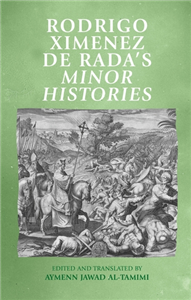
This work provides the first complete English translation of works by Toledan archbishop Rodrigo Ximénez de Rada (1170-1247 CE), whose 'Minor Histories' are sequels to his larger 'Gothic History' and thus round off his grand history of Spain project that he began at the request of King Ferdinand III. The 'Minor Histories' include Rodrigo's 'History of the Arabs' that can be considered the first surviving Western monograph focused on Arab and Islamic history and thus occupies a unique position in the medieval Latin corpus of writings. In addition to the translation, this book provides a thorough and accessible introduction to the life and works of Rodrigo, making sense of the context in which he wrote and his historical method. The translations are thoroughly annotated including cross-references to other Latin and Arabic sources for comparison.
Trusted Partner
Trusted Partner

In the first monograph to fully examine the intersecting networks of Jacobites and travellers to the continent, Filet considers how small states used official diplomacy and deployed soft power - embodied by educational academies - to achieve foreign policy goals. This work uses little-known archival materials to explain how and why certain small states secretly supported the Jacobite cause during the crucial years surrounding the 1715 rising, while others stayed out of Jacobite affairs.At the same time, the book demonstrates how early modern small states sought to cultivate good relations with Britain by attracting travellers as part of a wider trend of ensuring connections with future diplomats or politicians in case a Stuart restoration never came.This publication therefore brings together a study of Britain, small states, Jacobitism, and educational travel, in its nexus at continental academies.
Trusted Partner

Instead of modernity goes to the very heart of comparative cultural study: the question of what happens when intimate, dynamic connections are made over place and time, what it is to feel at home amid the lavish diversity of culture. This ambitious interdisciplinary book reconsiders foundational figures of the modern western canon, from Darwin to Cameron, Baudelaire to Whistler. It weaves together brain images from France, preserved insects from the Americas, glass in London, poetry from Argentina, paintings from Spain. Flaubert, Whitman, and Nietzsche find themselves with Hostos from Puerto Rico and Gorriti from Argentina. The book ranges over theoretical fields: trauma and sexuality studies, theories of visuality, the philosophy of sacrifice and intimacy, the thought of Wittgenstein. Instead of modernity is an adventure in the practice of comparative writing: resonances join suggestively over place and time, the textures of words, phrases and images combine to form moods.
Trusted Partner
 Trusted Partner
Trusted Partner
Trusted Partner
Trusted Partner
Trusted Partner
Trusted Partner
Trusted Partner
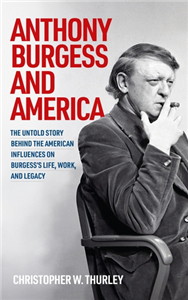
Anthony Burgess and America is a biographical and critical analysis of Burgess's commentary on and relationship with the United States of America. Utilising Burgess's entire canon and newly discovered materials to assess Burgess's views on America, this book also evaluates the American inspirations in five Burgess novels. This essential addition to Burgess scholarship tells the story of a nearly unexplored area of Burgess's life. For the first time ever, Burgess's American experiences, work, and documented communication, lectures, interviews and public utterances are brought together to assess where these commentaries overlapped with his fiction. The result is a complex personal and public history about one of Britain's greatest twentieth century authors and their immersion into and interaction with American culture in the second half of the twentieth century.
Trusted Partner
Colonial war played a vital part in transforming the reputation of the military and placing it on a standing equal to that of the navy. The book is concerned with the interactive culture of colonial warfare, with the representation of the military in popular media at home, and how these images affected attitudes towards war itself and wider intellectual and institutional forces. It sets out to relate the changing image of the military to these fundamental facts. For the dominant people they were an atavistic form of war, shorn of guilt by Social Darwinian and racial ideas, and rendered less dangerous by the increasing technological gap between Europe and the world. Attempts to justify and understand war were naturally important to dominant people, for the extension of imperial power was seldom a peaceful process. The entertainment value of war in the British imperial experience does seem to have taken new and more intensive forms from roughly the middle of the nineteenth century. Themes such as the delusive seduction of martial music, the sketch of the music hall song, powerful mythic texts of popular imperialism, and heroic myths of empire are discussed extensively. The first important British war correspondent was William Howard Russell (1820-1907) of The Times, in the Crimea. The 1870s saw a dramatic change in the representation of the officer in British battle painting. Up to that point it was the officer's courage, tactical wisdom and social prestige that were put on display.
Trusted Partner

 Trusted Partner
Trusted Partner
Trusted Partner
Penny politics offers a new way to read early Victorian popular fiction such as Jack Sheppard, Sweeney Todd, and The Mysteries of London. It locates forms of radical discourse in the popular literature that emerged simultaneously with Brittan's longest and most significant people's movement. It listens for echoes of Chartist fiction in popular fiction. The book rethinks the relationship between the popular and political, understanding that radical politics had popular appeal and that the lines separating a genuine radicalism from commercial success are complicated and never absolute. With archival work into Newgate calendars and Chartist periodicals, as well as media history and culture, it brings together histories of the popular and political so as to rewrite the radical canon.
Trusted Partner
Trusted Partner
Trusted Partner



