
Daniel Goleman - Foreign Audio
Please contact anaban@gmail.com for information
View Rights Portal

Learnetic is an innovative educational digital publisher, content developer and eLearning technology provider. We are a technology-based company with over 20 years of experience operating in international educational publishing business. We offer a complete suite of advanced software applications supporting all stages of ePublishing, providing our partners with professional Authoring Tools, eLearning Platforms and ready-made interactive learning content.
View Rights Portal

This book offers an accessible critical introduction to the work of Graham Swift, one of Britain's most significant contemporary authors. Through detailed readings of his novels and short stories from 'The Sweet Shop Owner' (1980) to 'The Light of Day' (2003), Daniel Lea lucidly addresses the key themes of history, loss, masculinity and ethical redemption, to present a fresh approach to Swift. This study proposes that one of the side-effects of modernity has been the destruction of traditional pathways of self and collective belief, leading to a loss of understanding between individuals about their duties to each other and to society. Swift's writing returns repeatedly to the question of what we can believe in when all the established markers of identity - family, community, gender, profession, history - have become destabilised. Lea suggests that Swift increasingly moves towards a notion of redemption through a lived ethical practice as the only means of finding solace in a world lacking a central symbolic authority. ;
 Trusted Partner
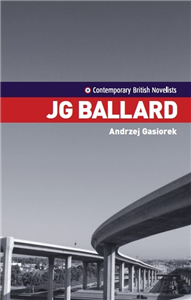
This book offers a comprehensive account of the work of J.G. Ballard, regarded by several critics as one of the most significant fiction writers of recent times. Ballard's early science-fiction writing earned him plaudits as one of the most innovative and individual voices in the field, but his development as a writer has taken him far beyond the confines of any single genre. This book traces Ballard's career from his early science-fiction short stories and novels to his most recent work, particularly his timely reflections on the role of violence in contemporary social life. It argues that Ballard's writing is characterised by a distinctive vision of the post-war world and its possible futures, and suggests that his far-reaching analyses of the present age make him one of the indispensable commentators of our time. ;
Trusted Partner
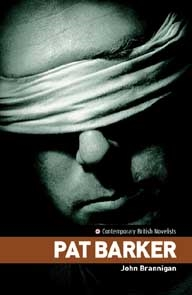
This book provides a comprehensive account and critical analysis of the literary career of Pat Barker. It offers readings of Barker's innovations in narrative form, her revisionist perspectives on history, class and gender, and her preoccupation with themes of trauma, haunting and terror. It also analyses the reasons for her success and significance as a novelist. The chapters draw on contemporary theories of critical realism, gender and social identities, memory and narrative, in order to outline the debates with which Barker's work has consistently engaged. Brannigan argues that Barker is one of the most important writers in modern English literary history. She is principally renowned and widely acclaimed for her 'Regeneration' trilogy, the last volume of which, 'The Ghost Road', won the Booker Prize in 1995. In recent novels, Barker has continued to deal with controversial and shocking themes, including child murderers and the meanings of 'terror' in the contemporary world. ;
Trusted Partner

Irvine Welsh's fiction has defined an era, and this first full-length study provides a sustained textual and contextual analysis of all his work, from 'Trainspotting' and 'The Acid House' to 'Glue' and 'Porno'. A detailed chronological survey also considers the appropriateness of cultural, postmodern and postcolonial theories to Welsh's incendiary fiction. Kelly gives a fascinating insight into the writer's formal and political ambitions, placing him in the context of the 'brat pack' which exploded onto the Scottish literary scene in the 1990s. He explores the social, class and political conditioning of Welsh's early life, and its impact on his motivations for writing. Clearly written and accessible, this will be a key resource for students and academics alike. Choose 'Irvine Welsh'! ;
Trusted Partner
Trusted Partner
Trusted Partner
Trusted Partner
Trusted Partner
Trusted Partner
Trusted Partner
Trusted Partner
Trusted Partner
Trusted Partner

Daniel Calparsoro, a director who has made a crucial contribution to contemporary Spanish and Basque cinema, has provoked strong reactions from the critics. Reductively dismissed as a works of crude violence by those lamenting a 'lost golden age' of Spanish filmmaking, Calparsoro's films in fact reveal a more complex interaction with trends and traditions in both Spanish and Hollywood cinema. This book is the first full-length study of the director's work, from his early social-realist films set in the Basque Country to his later forays into the genres of the war and horror. It offers an in-depth film-by-film analysis while simultaneously exploring the director's position in the contemporary Spanish context, the tension between directors and critics and the question of national cinema in an area - the Basque Country - of heightened national and regional sensitivities.
Trusted Partner

Daniel Calparsoro, a director who has provided a crucial contribution to the contemporary scene in Spanish and Basque cinema, has provoked strong reactions from the critics. Reductively dismissed as a purveyor of crude violence by those critics lamenting a 'lost golden age' of Spanish filmmaking, Calparsoro's films reveal in fact a more complex interaction with trends and traditions in both Spanish and Hollywood cinema. This book is the first full-length study of the director's work, from his early social realist films set in the Basque Country to his later forays into the genres of the war and horror film. It offers an in-depth film-by-film analysis, while simultaneously exploring the function of the director in the contemporary Spanish context, the tension between directors and critics, and the question of national cinema in an area - the Basque Country - of heightened national and regional sensitivities. ;
Trusted Partner

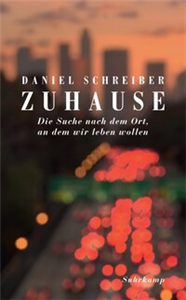
Früher war Zuhause der Ort, von dem man kam – und heute? Daniel Schreiber über die vielleicht wichtigste Suche unseres Lebens. Wo gehören wir hin? Was ist unser Zuhause in einer Zeit, in der sich immer weniger Menschen sinnstiftend dem Ort verbunden fühlen, an dem sie geboren wurden? In seinem persönlichen und viel gerühmten Essay beschreibt Daniel Schreiber den Umschwung eines kollektiven Gefühls: Zuhause ist nichts Gegebenes mehr, sondern ein Ort, nach dem wir uns sehnen, zu dem wir suchend aufbrechen. Schreiber blickt auf Philosophie, Soziologie und Psychoanalyse, und zugleich erzählt er seine eigene Geschichte: von Vorfahren, die ihr Leben auf der Flucht verbrachten. Von der Kindheit eines schwulen Jungen in einem mecklenburgischen Dorf. Von der Suche nach dem Platz, an dem wir bleiben können.
Trusted Partner


Der Bestsellerautor Daniel Glattauer lässt in seinem neuen Roman Menschen zu Wort kommen, die keine Stimme haben – ein Sittenbild unserer privilegierten Gesellschaft.Die Binders und die Strobl-Marineks gönnen sich einen exklusiven Urlaub in der Toskana. Tochter Sophie Luise, 14, durfte gegen die Langeweile ihre Schulfreundin Aayana mitnehmen, ein Flüchtlingskind aus Somalia. Kaum hat man sich mit Prosecco und Antipasti in Ferienlaune gechillt, kommt es zur Katastrophe.Was ist ein Menschenleben wert? Und jedes gleich viel? Daniel Glattauer packt große Fragen in seinen neuen Roman, den man nicht mehr aus der Hand legen kann und in dem er all sein Können ausspielt: spannende Szenen, starke Dialoge, Sprachwitz. Dabei zeichnet Glattauer ein Sittenbild unserer privilegierten Gesellschaft, entlarvt deren Doppelmoral und leiht jenen seine Stimme, die viel zu selten zu Wort kommen.
Trusted Partner

Daniel Guérins Untersuchung - bei dem hier angezeigten Band handelt es sich um der Kampf der Bourgeoisie auf dem Wege zur Macht gegen die »bras nus« - gegen die »bras nus«, auf die die Bourgeoisie zur Installierung ihrer Macht gleichzeitig angewiesen war. In seiner Darstellung der Ereignisse kritisiert Guérin unter anderem die verbreitete Vorstellung, Robespierre habe als entschiedener Verteidiger der bras nus gewirkt. Ferner setzt sich Guérin ausführlich mit der Frage des Klassenkampfes auf dem Lande und der revolutionären Rolle der armen Bauern auseinander.
Trusted Partner


Witziger Comicroman für alle ab 9. Von der Bestsellerautorin von „Hugo“ und „Collins geheimer Channel“; mit urkomischen Bildern von Daniel Stieglitz. „Boah, Leute, seit mein Vater die Idee hatte, dass wir zu seiner Freundin aufs Land ziehen, dreht er voll durch. Will nur noch frische Luft atmen, im Garten statt am Schreibtisch arbeiten und entschleunigen. Keine Ahnung, was das heißen soll. Und dann dieser Jan, der Sohn von Papas Freundin. Ein echtes Landei … Mit dem soll ich nicht nur in einem Bauernhaus wohnen, sondern auch noch jeden Tag in irgendeine Dorfschule gehen. No way - ohne mich! Wir sind ja keine Brüder! Zum Glück hat der genauso wenig Bock auf mich wie ich auf ihn. Deswegen haben wir uns gleich einen Plan überlegt, damit ich möglichst schnell mein altes Leben in der City zurückbekomme. Bye, bye, Landleben!“ Donnie kann es nicht fassen, als sein Vater beschließt, mit ihm aufs Land zu ziehen. Keine Privatschule mehr, keine Limousine und nicht mal Haushälterin Ursula kommt mit. Und WLAN gibt es nur im Hühnerstall! Wie soll sich Donnie da bloß zurechtfinden? Jan, der Sohn von Papas Freundin, freut sich genauso wenig über das Patchwork-Experiment und möchte Donnie möglichst schnell wieder loswerden. Also raufen sich die beiden zusammen und schmieden einen wasserdichten Plan, damit das Experiment „Landleben mit Bruder“ ganz schnell ein Ende findet. „Donnie & Jan. Ziemlich beste Brüder“ erzählt vom turbulenten Alltag einer Patchwork-Familie und zwei ziemlich ungleichen Stiefbrüdern. Voll witziger Ideen von der mehrfach ausgezeichneten Erfolgsautorin Sabine Zett und rasend komisch illustriert von Karikaturist Daniel Stieglitz. Für Kinder ab 9 und alle, die Spaß an lustigen Büchern haben. Kerstin Gier: „Ich durfte das Buch gestern schon mit den Ferienkindern testen, und die hatten unheimlich viel Spaß mit den ziemlich besten Brüdern. Und ich auch!“ ** Die Arena-Fun-Bücher ** Altersübergreifende Geschichten Für alle von 8-11 Jahren Ansprechendes Text-Bild-Leseerlebnis Kurze Kapitel, überschaubare Textmenge Fördert die Lesebegeisterung und Lesekompetenz Beschert schnell Erfolgserlebnisse



